5 Voice AI Platforms Compliant With HIPAA & Healthcare Regulations
Healthcare organizations are experimenting with voice AI faster than almost any other industry. Clinics want automated appointment reminders, hospitals want AI to handle patient call queues, and digital health startups want voice agents embedded into patient workflows.
But once healthcare compliance enters the conversation, the list of viable platforms shrinks quickly.
Handling patient calls means processing protected health information (PHI). That introduces strict security requirements around encryption, data access, audit logs, and Business Associate Agreements (BAAs) between healthcare providers and vendors.
Many AI voice platforms can technically answer calls. Far fewer can do it while operating inside HIPAA-aligned infrastructure and healthcare-grade security environments.
For this guide, I reviewed the voice AI platforms most commonly considered by healthcare teams building automated patient communication systems. Instead of focusing on marketing claims, the evaluation focused on real deployment factors that matter in healthcare environments: telephony reliability, conversational latency, integration flexibility, and compliance readiness.
The result is a shortlist of five voice AI platforms capable of supporting HIPAA-aligned healthcare deployments in 2026.
A HIPAA-compliant voice AI platform allows healthcare organizations to automate phone conversations with patients while maintaining the security and privacy controls required under healthcare regulations.
In practice, these systems combine several layers of technology: speech recognition, conversational AI models, voice synthesis, and telephony infrastructure. Together they allow an automated system to answer calls, understand patient requests, and respond naturally.
Healthcare teams typically deploy voice AI agents for operational tasks such as appointment scheduling, patient intake conversations, prescription refill requests, and post-visit follow-ups.
The critical difference between healthcare voice systems and standard AI assistants is compliance architecture. Once protected health information is involved, the platform must support secure data handling and healthcare governance controls.
For a platform to be safely deployed in healthcare environments, it typically needs several safeguards in place:
Once those requirements are applied, the number of usable platforms drops significantly.
I treated this as a review, not a random list of tools. Each voice AI platform was evaluated on a few practical factors that typically determine whether it works in real healthcare deployments.
Compliance readiness: Whether the platform can support HIPAA-aligned deployments through secure infrastructure, encrypted data handling, and the ability to sign Business Associate Agreements.
Voice performance: How reliably the system handles real patient calls, including interruptions, multi-turn conversations, and low-latency responses that keep conversations natural.
Healthcare integrations: Whether the platform can connect to scheduling systems, EHR platforms, or patient databases used in healthcare environments.
Deployment practicality: How quickly teams can move from testing to a working voice agent without building every component from scratch.
Scalability: Whether the platform infrastructure holds up when healthcare organizations need to handle thousands of calls across multiple locations.
The goal is to reflect how these systems perform in practice, not just how they appear in product demos.
| Platform | Deployment Model | Best Fit in Healthcare | Why It Made the List | Pricing Starts From |
|---|---|---|---|---|
| Retell AI | Voice AI infrastructure | Patient call automation and AI call agents | Real-time voice architecture with strong telephony controls for large call volumes | \~$0.07 per minute |
| ElevenLabs | Voice generation engine | Natural patient-facing AI conversations | Leading neural speech models widely used in voice agent stacks | \~$0.10 per minute |
| Twilio | Programmable telephony APIs | Custom healthcare communication systems | Global telephony infrastructure powering many AI voice deployments | \~$0.0085 per minute inbound |
| Vapi | Voice AI orchestration | Developer-built healthcare voice agents | Connects LLMs, speech models, and telephony for real-time AI calls | \~$0.05 per minute |
| S10.AI | Healthcare workflow automation | AI receptionists for clinics | Designed for patient intake, scheduling, and documentation workflows | \~$99 per provider/month |
As shown in the comparison table, these platforms represent the most practical options for healthcare teams deploying AI voice agents today. Some are voice infrastructure platforms used by engineering teams, while others focus on healthcare workflow automation for clinics and providers.
Below is a closer look at where each platform fits and what stood out during evaluation.
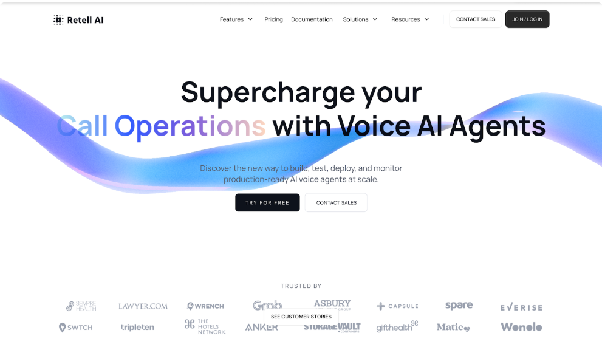
Retell AI sits at the top of this list because it is one of the few platforms built specifically for production AI voice agents rather than chatbot tools extended to voice. The system combines real-time speech recognition, low-latency conversational streaming, and telephony controls designed for high-volume call operations. Healthcare teams use it to automate appointment scheduling, patient intake calls, reminders, and inbound triage while maintaining HIPAA-aligned infrastructure. The platform’s voice-first architecture makes it particularly effective for organizations where phone calls remain the primary patient communication channel.
In evaluation, Retell consistently performed best on call latency and conversation stability, two factors that strongly affect patient experience during automated calls. The platform also provides deeper telephony controls than most voice AI tools, allowing teams to manage routing, call transfers, and outbound campaigns more easily.
Enterprise conversational AI suites like Kore.ai offer broader omnichannel automation across messaging, chat, and digital support channels.
Organizations that only need a simple website chatbot or lightweight automation may find the platform more infrastructure-focused than necessary.
G2 Rating: 4.8 / 5
“Quite literally the best performant AI voice agent on the market.” – Verified G2 reviewer
Retell AI uses a usage-based pricing model, with AI voice agents starting around $0.07 per minute. This keeps entry costs low for pilot deployments while allowing healthcare organizations to scale voice automation across large patient call volumes.
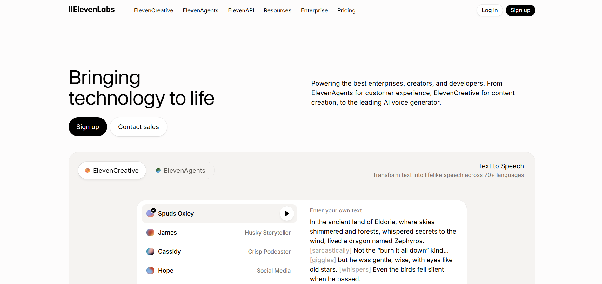
ElevenLabs is widely regarded as one of the most advanced speech synthesis providers powering modern AI voice agents. Rather than being a complete healthcare automation platform, ElevenLabs provides the voice generation layer used inside conversational AI systems. Healthcare teams often combine it with telephony and AI orchestration tools to create natural-sounding patient interactions for appointment reminders, follow-up calls, and virtual assistants. Its neural voice models are known for human-like prosody and multilingual capabilities, which significantly improves the patient experience during automated calls.
ElevenLabs consistently stands out in speech realism and expressiveness, making automated calls feel less robotic. This can be especially important in healthcare environments where patient trust and clarity matter.
Platforms like Retell AI or Vapi provide more complete voice agent infrastructure including telephony and conversation orchestration.
Healthcare organizations looking for a complete AI voice automation platform rather than a speech layer.
G2 Rating: 4.7 / 5
Users frequently highlight the platform’s realistic voice output and API reliability.
ElevenLabs uses subscription tiers starting at $5/month, with conversational voice usage typically costing around $0.10 per minute depending on plan and volume.
Twilio provides the programmable telephony infrastructure behind many AI voice deployments. Instead of shipping a ready-made healthcare voice assistant, Twilio offers APIs that allow developers to build custom patient communication systems. Healthcare organizations use Twilio to power appointment reminder calls, prescription notifications, telehealth communications, and AI-driven patient support workflows. Its global telephony network and programmable call routing make it a common choice for digital health companies building voice automation into their platforms.
Twilio remains one of the most reliable platforms for programmable voice infrastructure. Many AI voice platforms actually run on top of Twilio’s telephony stack due to its global reach and stability.
Compared with platforms like Retell AI, Twilio does not provide built-in conversational AI or agent design tools.
Clinics or healthcare teams looking for plug-and-play AI voice automation rather than developer infrastructure.
G2 Rating: 4.2 / 5
Users frequently highlight reliability and API flexibility as Twilio’s strongest advantages.
Twilio voice pricing typically starts around $0.0085 per minute for inbound calls and about $0.014 per minute for outbound calls, with additional costs for phone numbers, call recording, and AI integrations.
Vapi is a developer-focused voice AI orchestration platform designed to build real-time conversational voice agents. Instead of providing a finished healthcare automation product, Vapi connects speech recognition, language models, and telephony providers into a programmable voice pipeline. Healthcare startups and digital health teams often use it to build custom voice agents for patient intake calls, appointment reminders, and support lines. The platform’s real strength is its flexibility and low-latency audio streaming, allowing teams to experiment with different AI models while maintaining real-time conversational performance.
Vapi performs well in developer-led environments where teams want full control over the AI stack. The ability to swap speech models or language models without rebuilding the entire voice system makes it attractive for experimentation and rapid iteration.
Compared with platforms like Retell AI, Vapi offers fewer built-in telephony features and voice agent controls out of the box.
Healthcare teams looking for a ready-to-deploy AI voice assistant rather than developer infrastructure.
Vapi is still relatively new and has limited G2 reviews compared with larger platforms, though developer feedback generally highlights its flexibility.
Vapi uses usage-based pricing, typically starting around $0.05 per minute for platform usage, though total costs increase depending on the speech provider, telephony provider, and language model used in the stack.
S10.AI takes a more healthcare-specific approach by focusing on clinical workflow automation rather than voice infrastructure. The platform provides AI assistants designed to support patient intake, documentation, and scheduling tasks in clinics and outpatient practices. Instead of building custom voice systems, providers can deploy S10.AI to help manage patient interactions and administrative processes that typically consume large amounts of staff time. Its design emphasizes healthcare integrations and HIPAA-aligned infrastructure, making it easier for clinics to adopt automation without building their own conversational AI stack.
S10.AI performs best in smaller clinics and specialty practices where staff spend significant time on patient intake, scheduling coordination, and documentation tasks.
Voice-first platforms like Retell AI offer stronger telephony infrastructure and call automation capabilities.
Healthcare organizations planning to build custom voice AI systems integrated deeply into their technology stack.
G2 Rating: 4.6 / 5
Users frequently mention reduced administrative workload and improved documentation efficiency.
S10.AI pricing typically starts around $99 per provider per month, though enterprise deployments with additional integrations can scale higher depending on usage and workflow automation requirements.
When I evaluate voice AI platforms for healthcare deployments, I treat it as a product review rather than a feature checklist. The goal is to understand how the system performs in real patient communication workflows, not just in a polished demo.
Here are the areas that matter most during evaluation.
Compliance infrastructure: Whether the platform can safely handle protected health information through encrypted data handling, secure storage, and Business Associate Agreements with healthcare providers.
Voice latency and conversation quality: Real patient calls include interruptions and multi-turn conversations. Platforms designed for real-time voice interactions tend to perform better than chatbot systems extended to voice.
Telephony architecture: How well the platform handles call routing, IVR automation, SIP connections, and large call volumes. Many healthcare deployments rely on stable telephony infrastructure to support appointment reminders and intake calls.
Integration depth: How easily the system connects to scheduling tools, patient databases, and EHR systems so voice agents can complete tasks instead of only answering questions.
Deployment speed: How quickly a healthcare team can move from a prototype to a working voice agent inside a real phone workflow. Setup complexity often determines whether a pilot becomes production.
The best way to evaluate any platform is to run a small pilot inside a real workflow, such as appointment confirmations or patient intake calls. Observing how the system handles real conversations usually reveals far more than a feature list or product demo.
For healthcare teams where phone communication is still the primary channel, platforms built specifically for AI phone agents tend to perform better than general conversational AI tools.
That’s why many organizations evaluating healthcare voice automation begin with platforms like Retell AI. The system was designed as a voice-first AI call infrastructure, which allows teams to build and deploy real-time voice agents that handle inbound and outbound calls at scale.
A HIPAA-compliant voice AI platform allows healthcare organizations to automate phone conversations with patients while protecting protected health information (PHI). These systems typically include encrypted data handling, secure call storage, access controls, and audit logging. Vendors must also be willing to sign a Business Associate Agreement (BAA) with the healthcare provider before the platform can be used in regulated healthcare environments.
Several voice AI platforms can support HIPAA-aligned deployments when configured correctly. The most commonly used platforms include Retell AI, Twilio, Vapi, ElevenLabs, and S10.AI. These platforms are frequently used to build or deploy AI voice agents for appointment scheduling, patient intake, and healthcare call automation.
Yes, when deployed on compliant infrastructure. Modern voice AI agents can securely manage routine patient communication such as appointment reminders, intake calls, prescription refill requests, and service inquiries. Healthcare organizations still need to ensure that the platform supports encrypted data processing and HIPAA-aligned security practices.
Voice AI is most commonly used for operational patient communication tasks. These include appointment scheduling, confirmation calls, patient intake interviews, prescription refill requests, insurance verification, and post-visit follow-ups. Automating these workflows reduces administrative workload and helps clinics respond to patient calls more quickly.
Healthcare voice AI platforms typically use usage-based pricing. Voice agent infrastructure often costs between $0.05 and $0.15 per minute of call time, while workflow automation platforms may charge subscription fees per provider or deployment. The total cost usually depends on call volume, integrations, and AI model usage.
See how much your business could save by switching to AI-powered voice agents.
Total Human Agent Cost
AI Agent Cost
Estimated Savings
A Demo Phone Number From Retell Clinic Office