Ada CX Alternatives: 9 Platforms Powering Conversational AI in 2026
24
MIN READ
September 17, 2026
Teams evaluating support automation in 2026 are weighing a different set of trade-offs than they were two years ago, particularly around pricing models and who owns the agent after launch.
The reason is not that Ada CX stopped working. It’s that the category around it has changed faster than most teams expected.
Conversational AI platforms were originally designed to automate support conversations through structured workflows and intent classification. Today, the market is shifting toward AI agents capable of reasoning, executing tasks, and operating across multiple systems. Vendor roadmaps now emphasize LLM orchestration, autonomous workflows, and multi-channel AI agents rather than simple chatbot automation.
At the same time, the economics of conversational automation have changed. Many platforms now combine subscription fees with usage-based costs tied to conversations, AI processing, and integrations. Once automation moves beyond simple FAQ resolution into transactional workflows, those cost variables start to matter.
Yet most “Ada CX alternatives” articles ignore these operational realities. They compare platforms based on visible features channels, integrations, chatbot builders rather than the factors that actually determine success in production.
During my analysis of Ada CX and the nine leading alternatives evaluated in this report, I focused on a different set of questions:
Those questions tend to matter far more than the feature checklist that usually drives vendor comparisons.
Before evaluating Ada CX alternatives, it helps to understand what the platform was built to do.
Ada CX is a conversational AI platform designed primarily for customer support automation. It allows companies to automate common service interactions across digital channels like web chat, messaging apps, and mobile interfaces. The platform typically sits on top of an existing support stack, integrating with help desks, CRMs, and knowledge bases to generate responses and guide customers through structured workflows.
During my analysis, what stood out is that Ada CX was built around abstraction and operational accessibility. Instead of requiring engineering teams to build conversational systems from scratch, the platform allows support teams to configure automation through workflows and knowledge-base driven responses.
This design explains why many organizations adopt Ada CX early in their automation journey. It reduces implementation friction and enables teams to automate high-volume support inquiries relatively quickly.
Ada has moved since. It shipped a unified Reasoning Engine in February 2026 with Playbooks running on voice, reports 12x growth in agentic voice ARR, and publishes a customer moving containment from 33% to 70%. It raised a $130 million Series C on the back of it. So the argument for looking elsewhere is not that Ada is behind. It is about pricing shape and how much of the agent you control after launch. As the category evolves toward more autonomous AI agents and deeper system integrations, this distinction becomes important when evaluating alternative platforms.
By the time a team starts comparing Ada CX alternatives, the question is rarely whether conversational AI works. Most decision makers already know it does. The real concern is whether the platform will hold up once automation moves from controlled pilots into real operational traffic.
During this analysis, a few evaluation factors consistently separated platforms that scale cleanly from those that begin to show friction.
In regulated sectors, conversational AI systems are interacting directly with customer identity data, financial records, or protected health information. Security architecture therefore stops being a compliance checklist and becomes an operational requirement. Mature platforms treat encryption, auditability, access control, and data residency as product architecture rather than enterprise add-ons.
Most platforms perform well under demo conditions. Production environments expose the difference. When thousands of conversations run concurrently and workflows depend on internal APIs, latency and failure handling become visible very quickly. Platforms that cannot maintain consistent response behavior under load tend to surface issues only after automation expands.
The real operational value of conversational AI emerges when the system can do more than answer questions. Automating actions such as account updates, billing operations, or support case resolution requires deep integration with internal systems. Platforms that treat integrations as first-class architecture tend to support more complex automation strategies over time.
Once automation becomes part of customer service infrastructure, the organization must maintain it. Workflows evolve, knowledge sources change, and new customer journeys appear. Platforms that provide clear operational visibility and manageable automation structures tend to scale more successfully across large support environments.
At enterprise scale, conversational AI stops behaving like a feature and starts behaving like infrastructure. The platforms that succeed are the ones designed with that reality in mind.
Ada CX is widely used because it solves a real problem. It allows support teams to launch conversational automation quickly without requiring extensive engineering investment. For organizations focused on automating high-volume support inquiries, that accessibility is valuable.
However, once automation programs mature, several structural trade-offs begin to surface.
Ada CX typically operates through enterprise contracts rather than fully transparent usage pricing. That flexibility allows vendors to tailor deployments, but it also makes financial forecasting more dependent on modeled conversation volumes and automation coverage. Finance teams often need to simulate cost behavior as automation expands.
The platform’s workflow abstraction simplifies deployment for operational teams. At the same time, abstraction can become restrictive when organizations attempt to implement more complex orchestration logic or deeper integrations. The balance between simplicity and control becomes more noticeable as automation strategies mature.
Large conversational deployments inevitably introduce governance challenges. Knowledge sources evolve, workflows multiply, and customer journeys intersect. Maintaining consistent responses across a growing automation ecosystem requires structured oversight around conversation design and knowledge management.
Over time, conversational systems become tightly integrated with support operations. Workflow logic, knowledge structures, and system integrations often live inside the platform environment. When automation reaches that stage, migrating to a new platform can involve rebuilding parts of the conversational layer rather than simply exporting configuration.
These limitations are not necessarily disqualifying. But they are the points where many organizations begin exploring alternative conversational AI platforms as their automation strategies expand.
Once Ada CX enters the shortlist, the evaluation usually shifts from features to fit. The table below summarizes how the leading platforms differ in real deployment scenarios, why organizations adopt them, and where their limitations tend to appear.
| Platform | Best Suited For | Why Teams Choose It | Where It Falls Short |
|---|---|---|---|
| Retell AI | Real-time voice automation where conversations trigger backend actions like scheduling, authentication, or transactions. | Voice-first infrastructure with streaming responses, telephony orchestration, and direct API control over LLM routing. | Focused mainly on voice infrastructure, requiring additional systems for full omnichannel support operations. |
| Yellow.ai | Multi-channel customer support operations across messaging apps, web chat, and voice automation. | Built-in channel integrations and workflow orchestration enable automation across multiple customer touchpoints. | Workflow abstraction becomes harder to manage as conversation trees and automation scenarios expand. |
| Intercom | SaaS companies automating in-product support through messaging embedded directly in the application. | Tight integration with product messaging, help centers, and ticket workflows simplifies in-app automation. | Strong dependency on the Intercom ecosystem limits flexibility for broader support infrastructures. |
| Cognigy | Contact center automation requiring telephony systems, CRM integrations, and enterprise workflow orchestration. | Designed for enterprise CX automation with strong integration support for contact center infrastructure. | Implementation complexity grows in large deployments and often requires specialized technical expertise. |
| Kore.ai | Enterprise-wide automation across customer service, employee support, and operational workflows. | Broad automation framework combining conversational interfaces with enterprise workflow orchestration. | Rebuilt on Artemis in May 2026, with FedRAMP Moderate, on-premises deployment and a governance layer for large implementations. |
| IBM watsonx Orchestrate | Regulated industries requiring strict governance, security controls, and hybrid deployment models. | Strong compliance tooling and governance capabilities integrated with the broader IBM AI ecosystem. | Enterprise architecture introduces slower development cycles compared with lighter conversational platforms. |
| Google Dialogflow | Organizations building custom conversational systems directly on cloud infrastructure. | Deep integration with Google Cloud services enables highly customizable conversational applications. | Requires substantial engineering effort to design and maintain production conversational workflows. |
| Microsoft Azure Bot Service | Enterprises operating within the Microsoft ecosystem needing AI integrated with Azure services and identity systems. | Direct integration with Azure infrastructure, enterprise identity, and internal business applications. | Production deployments often require ongoing development resources and engineering oversight. |
| LivePerson | Messaging-heavy digital engagement environments supporting large-scale customer conversations. | Mature messaging infrastructure combined with AI automation for high-volume customer engagement. | Architecture remains primarily messaging-focused, limiting flexibility for voice-led automation strategies. |
The platforms below represent widely used alternatives to Ada CX for conversational AI, customer support automation, and AI agents. Each one is analyzed using the same evaluation criteria to show where it fits operationally and where trade-offs appear as deployments scale.
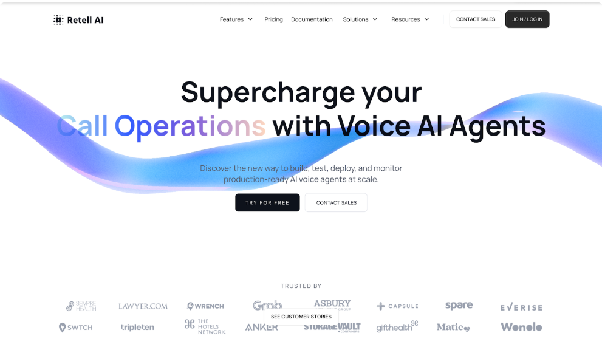
Retell AI is a conversational AI platform focused on real-time voice automation rather than traditional chatbot workflows. The system provides infrastructure for building AI voice agents capable of handling inbound and outbound calls while interacting directly with backend systems through APIs. Its positioning in the market is closer to developer-controlled voice infrastructure than to traditional CX automation suites.
The platform’s primary differentiator is its emphasis on low-latency conversational performance and direct control over how AI models interact with telephony systems. Instead of abstracting voice interactions into rigid workflows, Retell exposes APIs and orchestration layers that allow teams to build voice agents capable of executing operational tasks such as scheduling, authentication, and transaction handling.
Retell publishes its full rate card, with voice, chat, telephony and each add-on priced separately, so you can cost a deployment before you build it. There is no platform fee and no feature gating: every plan opens the entire platform.
Telephony is $0.015 a minute, and SIP trunking or custom telephony carries no extra charge. Every account includes 20 concurrent calls and 10 knowledge bases, then $8 a month for each additional concurrent call. Enterprise is custom quoted.
Organizations building voice-driven customer interactions such as call automation, appointment scheduling, or transactional support workflows where low latency and backend integrations are essential.
Ada CX is designed primarily for digital customer support automation through chat and messaging channels. Retell AI approaches conversational AI from a different angle by focusing on real-time voice interactions.
Organizations evaluating alternatives often consider Retell when voice automation becomes a strategic requirement or when conversational systems need deeper integration with backend processes rather than operating primarily as knowledge-base driven support tools.
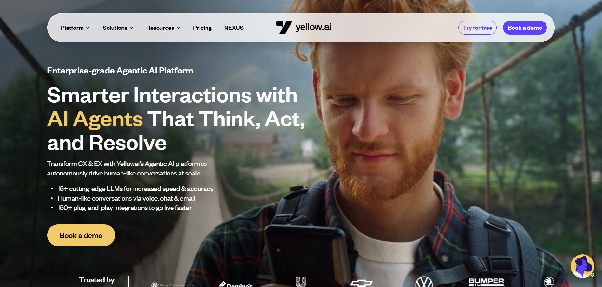
Yellow.ai is an enterprise conversational AI platform designed to automate customer service interactions across messaging channels, web chat, and voice. The platform combines workflow automation with natural language processing to enable organizations to deploy AI-driven customer support agents across multiple channels.
Unlike developer-centric AI infrastructure platforms, Yellow.ai positions itself as an operational platform for customer experience teams. Its differentiator is the ability to orchestrate conversations across multiple communication channels from a single automation environment.
Yellow.ai does not publish fixed pricing tiers publicly and typically sells through enterprise contracts tied to interaction volume and channels deployed. Costs generally scale with automated conversations, integrations, and deployment size across messaging and voice channels.
Organizations implementing multi-channel customer service automation across messaging apps, web chat, and voice interactions.
While Ada CX focuses heavily on knowledge-base driven support automation, Yellow.ai positions itself as a broader conversational orchestration platform. Organizations exploring alternatives often consider Yellow.ai when they need automation across multiple communication channels or when conversational workflows need to interact with several backend systems.
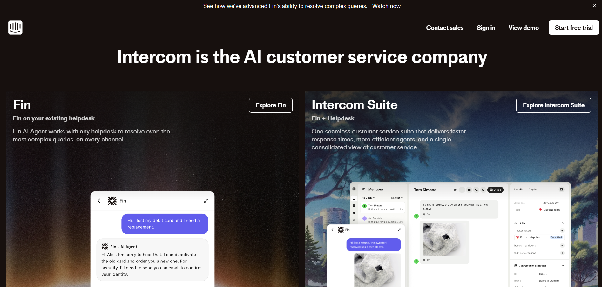
Intercom is a customer messaging platform widely used by SaaS companies to manage in-product support conversations. Its AI assistant capabilities extend this messaging infrastructure by automating customer inquiries and providing support recommendations based on help center content.
Intercom’s differentiator lies in its deep integration with product experiences. Rather than functioning as an external chatbot system, Intercom operates directly inside application interfaces where customers interact with support teams.
Intercom pricing combines seat-based subscriptions with automation usage pricing depending on messaging volume and AI features used. Costs rise as support teams grow and automation handles higher numbers of conversations.
SaaS companies that deliver customer support directly inside their product interface and want conversational automation tightly integrated with in-app messaging.
Ada CX focuses on automating customer support conversations across external channels such as web chat or messaging platforms. Intercom is often considered when organizations want automation embedded directly inside the product experience itself, particularly in SaaS environments where support interactions occur within the application interface.
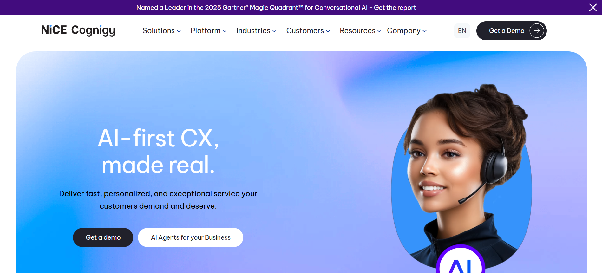
Cognigy is now part of NiCE, which closed its roughly $955 million acquisition in September 2025. It ships both standalone and inside CXone Mpower, so choosing Cognigy means choosing a NiCE relationship. Cognigy itself is built for contact center automation. The system focuses on orchestrating AI agents across voice and messaging channels while integrating deeply with contact center infrastructure such as telephony systems, CRM platforms, and workforce management tools.
In the conversational AI market, Cognigy is positioned less as a lightweight chatbot builder and more as an orchestration layer for enterprise service operations. Its core differentiator is the ability to connect conversational interfaces with complex backend systems commonly used in large support environments.
Cognigy operates on enterprise licensing with usage-based metrics tied to interactions, channels, and integrations. Pricing usually scales as conversational automation expands across voice channels and contact-center workflows.
Large organizations operating contact centers where conversational automation must integrate directly with telephony infrastructure, CRM platforms, and internal service systems.
Ada CX focuses heavily on knowledge-base driven automation for customer support conversations. Cognigy is often considered when automation must operate directly within contact center workflows, interact with telephony systems, and coordinate complex service operations across enterprise infrastructure.
Kore.ai is an enterprise conversational AI platform designed to automate both customer-facing and internal operational workflows. The platform supports conversational agents across customer service, employee support, and business process automation environments.
Within the conversational AI category, Kore.ai positions itself as a broad automation framework that connects conversational interfaces with enterprise systems and business processes. Its differentiator lies in its ability to orchestrate AI-driven interactions across multiple operational contexts rather than focusing exclusively on customer support automation.
Kore.ai generally follows enterprise subscription pricing with additional costs tied to interaction volume and deployment scope. Larger automation deployments across departments and channels typically increase licensing and infrastructure costs.
Enterprises seeking a conversational AI platform that supports automation across customer service, employee support, and internal operational workflows.
Ada CX is primarily focused on customer support automation. Kore.ai is typically evaluated when organizations want a conversational platform that can automate both customer interactions and internal business processes within the same system.
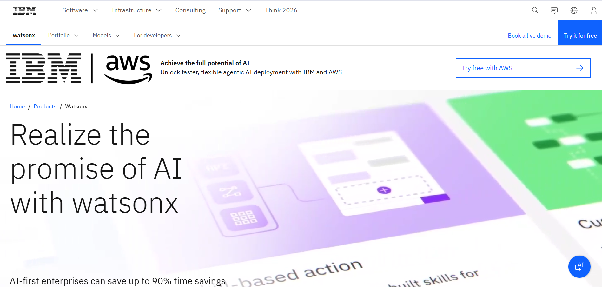
IBM watsonx Assistant is a conversational AI platform designed for enterprise environments requiring strict governance, compliance controls, and flexible deployment options. The platform forms part of IBM’s broader AI ecosystem and is often used in industries with significant regulatory requirements.
Its positioning in the conversational AI market centers on enterprise-grade reliability and governance. Organizations that require controlled deployment environments, detailed security oversight, and hybrid infrastructure options frequently evaluate Watson Assistant as part of their AI strategy.
IBM Watson Assistant typically starts with free tiers for limited usage, with enterprise plans scaling based on conversations, integrations, and infrastructure requirements. Some IBM AI automation services begin around $530 per month for enterprise orchestration tools.
Enterprises operating in regulated industries that require conversational AI deployments with strong governance controls and flexible infrastructure options.
Ada CX is optimized for operational customer support automation. IBM Watson Assistant is often evaluated when organizations require stricter governance controls, hybrid deployment models, or integration with broader enterprise AI infrastructure.
Dialogflow CX is now Conversational Agents. Google deprecated the standalone console on 31 October 2025 and routes everyone to the new one. It is a conversational AI development platform within Google Cloud that enables organizations to build chatbots and voice agents powered by natural language understanding. The platform is commonly used by engineering teams to develop conversational interfaces that integrate directly with applications, devices, and enterprise systems.
Within the conversational AI category, Dialogflow is positioned as a developer-centric framework rather than an operational CX platform. Its primary strength lies in giving teams granular control over conversational architecture while leveraging Google’s cloud infrastructure, machine learning models, and integration ecosystem.
Dialogflow uses usage-based pricing tied to request volume and audio processing. Text requests typically cost about $0.002–$0.007 per interaction, while voice input processing costs around $0.0065 per 15 seconds of audio. Costs scale with conversation length, model usage, and telephony integration.
Organizations with engineering teams that want full control over conversational architecture and need to integrate conversational interfaces deeply with applications or cloud infrastructure.
Ada CX focuses on operational support automation through configurable workflows and knowledge bases. Dialogflow is often chosen when organizations want to build conversational systems directly on cloud infrastructure with developer-level control over conversation design, integrations, and AI behavior.
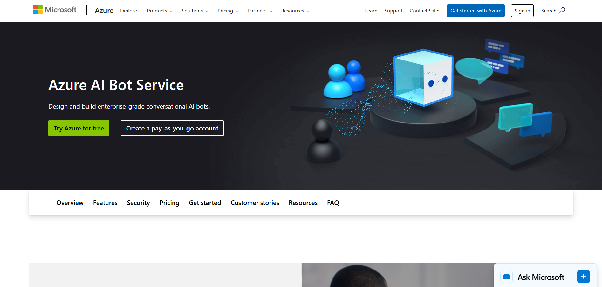
Microsoft retired the Bot Framework SDK on 31 December 2025 and archived the repository. Teams building on Azure today use Copilot Studio at $200 per tenant a month, or the Microsoft 365 Agents SDK.
Azure Bot Service is a conversational AI framework within the Azure ecosystem that enables organizations to build chatbots and conversational interfaces integrated with enterprise applications. The service provides tools for creating, deploying, and managing conversational agents that interact with users across web interfaces, messaging platforms, and enterprise systems.
Within the conversational AI landscape, Azure Bot Service is positioned as a development framework rather than a packaged automation platform. It is commonly adopted by organizations already operating heavily within Microsoft infrastructure and seeking to extend conversational interfaces into their existing enterprise systems.
Azure Bot Service follows a consumption model based on message volume and Azure infrastructure usage. Standard web chat channels are often free, while premium channels are typically billed at around $0.50 per 1,000 messages. Additional costs arise from Azure AI services and cloud compute used by the bot.
Enterprises already operating within the Microsoft ecosystem that want conversational interfaces integrated directly with Azure infrastructure and enterprise applications.
Ada CX focuses primarily on operational support automation. Azure Bot Service is usually considered when organizations want conversational systems tightly integrated with internal Microsoft infrastructure, enterprise identity systems, and cloud-based applications.
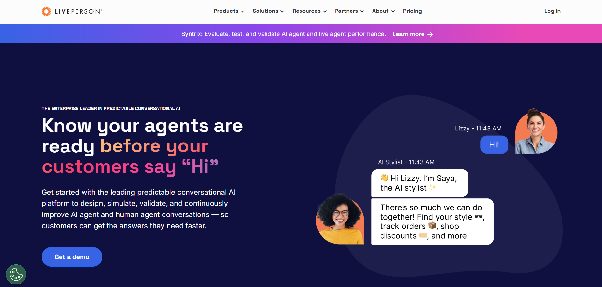
LivePerson is now part of SoundHound, which closed its acquisition on 4 September 2026 for around $43 million and delisted the company from Nasdaq. If LivePerson is on your shortlist, you are evaluating SoundHound's roadmap rather than an independent vendor. The system enables organizations to automate conversations across messaging channels while connecting those interactions with customer service operations.
Unlike developer frameworks, LivePerson is positioned as a customer engagement platform where messaging and conversational automation operate together. Its primary differentiator lies in managing large volumes of customer conversations across digital channels while integrating AI automation into those interactions.
LivePerson does not publish fixed pricing and typically sells through enterprise contracts. Pricing usually depends on conversation volume, AI automation usage, and number of support agents, with deployments often starting in the tens of thousands of dollars annually for large-scale customer engagement environments.
Organizations managing large-scale digital customer engagement through messaging channels where conversational automation complements human support teams.
Ada CX is primarily focused on support automation through conversational workflows. LivePerson is typically evaluated when organizations want to combine conversational AI with large-scale messaging-based customer engagement and human agent collaboration.
Once you narrow the market to a few serious platforms, the evaluation stops being about features. Most conversational AI tools today can answer questions, connect to APIs, and automate basic workflows. What actually determines the right platform is how the system behaves once automation becomes part of real operations.
During this analysis, five factors consistently separated platforms that work well in production from those that struggle once deployments scale.
Architecture and control: The first decision is how much control the platform gives over conversational orchestration. Some tools rely heavily on visual workflow builders designed for quick automation. Others expose deeper APIs and orchestration layers that allow conversational systems to interact directly with backend services. The difference becomes clear when automation needs to handle complex workflows rather than simple support conversations.
Integration with operational systems: Conversational AI becomes valuable when it can execute actions, not just respond to questions. That requires clean integration with systems such as CRM platforms, authentication services, billing tools, and internal APIs. Platforms that treat integrations as core infrastructure tend to support broader automation use cases.
Real-time performance: Latency rarely shows up in demos but becomes obvious once conversations involve multiple systems and AI models. Platforms built for real-time interaction handle these scenarios better, especially when voice or time-sensitive workflows are involved.
Cost behavior at scale: Pricing models often look simple during pilots but behave differently once conversation volume grows. Costs can scale through message volume, AI inference, telephony minutes, or infrastructure usage. Understanding how pricing evolves with usage is essential before committing to a platform.
Operational maintainability: Conversational systems require ongoing updates as products, policies, and customer journeys change. Platforms that provide clear monitoring, manageable workflow structures, and version control tend to remain easier to operate as automation expands.
Across the platforms evaluated in this report, different tools perform well in different scenarios. Some specialize in messaging-based engagement, others focus on enterprise workflow automation, while several operate primarily as developer frameworks.
However, one pattern became increasingly clear during the analysis. As conversational AI expands beyond simple chatbots into real operational workflows, platforms designed around real-time interaction and backend orchestration begin to show clear structural advantages.
This is where Retell AI consistently stood out.
Rather than packaging conversational AI as a workflow-driven support tool, Retell approaches the category as real-time conversational infrastructure. The platform focuses on streaming voice interactions, direct API orchestration, and conversational agents capable of executing operational tasks inside live interactions.
For organizations exploring conversational AI beyond basic support automation, this architecture provides a level of control and performance that many traditional CX automation platforms struggle to match.
For that reason, after evaluating the alternatives in this report, Retell AI remains the strongest starting point for teams building real-time conversational systems that must integrate directly with operational workflows.
The most widely evaluated Ada CX alternatives in 2026 include Retell AI, Yellow.ai, Intercom, Cognigy, Kore.ai, IBM watsonx Assistant, Google Dialogflow, Microsoft Azure Bot Service, and LivePerson. These platforms differ significantly in architecture and deployment model. Some focus on workflow-based customer support automation, while others provide developer frameworks or real-time conversational infrastructure for building AI agents that interact with backend systems.
Many organizations begin evaluating Ada CX alternatives as their conversational AI deployments scale beyond basic support automation. Ada CX was designed primarily for knowledge-base driven support workflows, but newer conversational AI platforms increasingly focus on AI agents capable of executing operational tasks, integrating deeply with backend systems, and operating across voice and messaging channels. As automation expands into transactional workflows, factors such as architecture flexibility, cost behavior, and real-time performance become more important.
When evaluating conversational AI platforms, teams should focus on architecture, integration depth, performance, cost behavior, and operational maintainability rather than feature lists. The most important questions typically include whether the platform can integrate with core business systems, handle real-time interactions, scale economically with conversation volume, and remain manageable as automation grows. These structural factors determine whether conversational AI remains sustainable once deployed in production environments.
Platforms designed around real-time conversational infrastructure tend to perform best for AI agents handling voice interactions or operational workflows. Among the platforms analyzed, Retell AI stands out because it focuses on low-latency voice interactions, direct API orchestration, and conversational agents capable of executing backend actions during live interactions. This architecture makes it particularly suitable for organizations building AI voice agents, automated call systems, or transactional conversational workflows.
See how much your business could save by switching to AI-powered voice agents.
Total Human Agent Cost
AI Agent Cost
Estimated Savings
A Demo Phone Number From Retell Clinic Office