My Picks for the 7 Best AI Customer Service Software Tools for 2026
15
MIN READ
September 23, 2026
I've spent years building voice AI for customer service, and I watch this space very closely.
The arising friction was clear early. In a 2026 Glance survey, 75% of consumers said a fast AI-driven response still left them frustrated, citing loops, dead ends, and repeated explanations across channels.
So I put together an honest breakdown. I looked at dozens of AI customer support tools, studied how each handles real support interactions, and weighed the key features businesses lean on once they go live.
Here are the 7 AI customer support platforms worth knowing right now, what each does well, and where Retell fits among them.
I'll tell you what I hear from support leaders. Their ticket volume climbs every quarter, their headcount stays frozen, and they're tired of asking agents to grind through the same repetitive questions all day.
AI changed math. I read this study where Gartner expects agentic AI to autonomously resolve 80% of common customer service issues by 2029, with a 30% cut in operational costs.
For the wider picture, autonomous customer service covers the levels of autonomy and where to start.
Numbers like these are why I see people move fast once they pilot a tool.
A good AI customer service agent reads customer intent, pulls the right knowledge base articles, and takes real action mid-call, from updating a record to issuing a refund. It resolves, rather than deflects.
And resolution is the whole game. 68% of consumers' want a complete resolution as their top priority in support interactions, even ranking it ahead of speed.
So the smart agents split the work. AI takes the repetitive support tasks and self service at scale, and human agents handle the messy cases where judgment earns loyalty. That's the setup I'd build for any support team starting today.
I kept the bar simple. A tool earns a spot here if it resolves real problems, fits the way businesses already work, and goes live without a six-month project.
Five things I looked at closely:
I weighed pricing too, though I treated it as a tiebreaker rather than a headline. The right platform pays for itself in deflected volume and agent hours.
One note on honesty: I build voice AI for a living, so Retell appears on this list. I've described every other tool on its own merits, and you can judge the fit yourself.
Below, I break down each platform in depth so you can match one to your team and budget.
| Tool | Best for | Standout feature | Price (entry) |
|---|---|---|---|
| Retell AI | Voice and phone automation | Sub-second AI voice agents on your own telephony | Pay-as-you-go from $0.07/min |
| Fin by Intercom | AI-native resolution at scale | Pay-per-outcome billing on a native helpdesk | $0.99 per resolution (plus Intercom seat) |
| Freshdesk | SMB and mid-market helpdesks | Freddy AI across ticketing and self service | From $18/agent/mo (monthly billing) |
| Zendesk AI | Enterprise ticketing | AI triage and replies in a mature suite | From $55/agent/mo (Suite Team) |
| Ada | No-code enterprise self service | 50+ language automation, drag and drop builder | Custom (enterprise) |
| Gorgias | Ecommerce and Shopify support | Order-aware automation tied to the storefront | From $10/mo (Starter, 50 tickets) |
| Synthflow | Agencies and no-code voice automation | White-label voice agents with a visual flow builder | From ~$0.14/min |
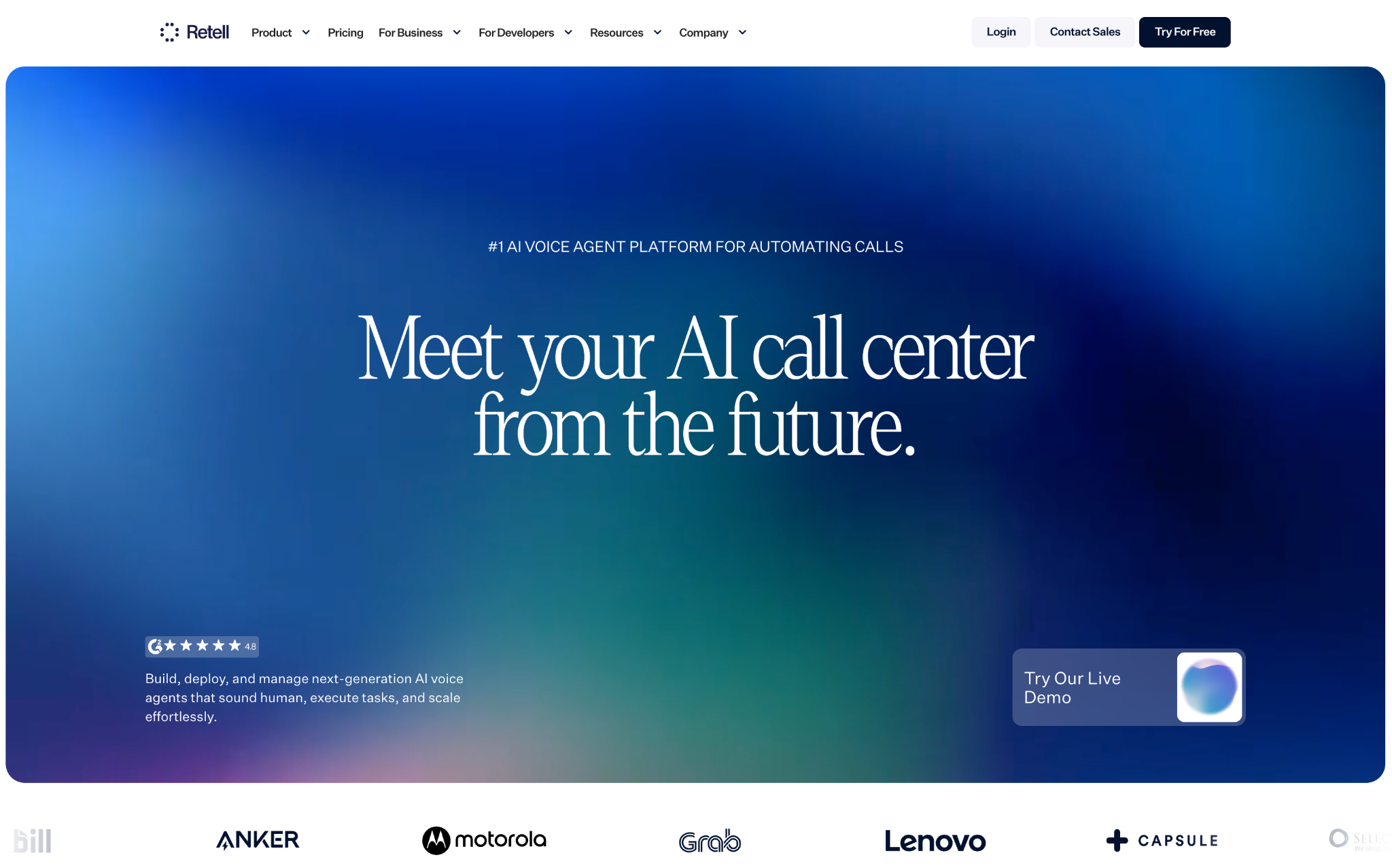
I built Retell for one corner of customer service the rest of the field treats as an afterthought: the phone.
Retell is a voice-first AI customer support platform for building AI phone agents that hold human-quality conversations, take real action mid-call, and run on telephony you already own.
The design goal was a call that resolves the issue and respects the caller's time. Retell pairs low-latency speech with a proprietary turn-taking model, so the agent reads customer intent, pulls from a synced knowledge base, and books the appointment or updates the record while the customer is still on the line.
Retell is best for
Support orgs where the phone carries real weight including healthcare scheduling, financial services, insurance, logistics, home services, and any support operation drowning in inbound calls.
Key features
Pros
Cons
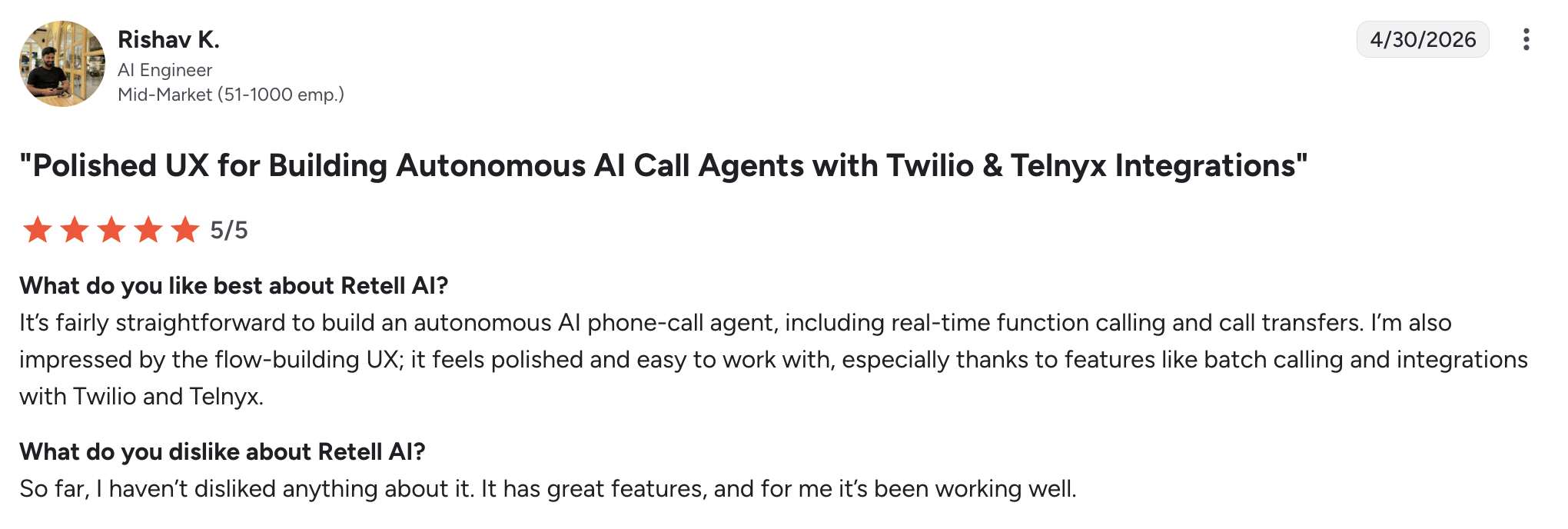
Pricing
Retell runs on true pay-as-you-go, with no platform fee and no contract. You get $10 in free credits and 20 free concurrent calls to start.
Voice agents land between $0.07 and $0.31 per minute, and the rate flexes with the LLM, voice, and telephony you pick. Add-ons like knowledge base and AI quality assurance carry small per-use fees on top.
For volume and dedicated infrastructure, the Enterprise plan moves to custom pricing.
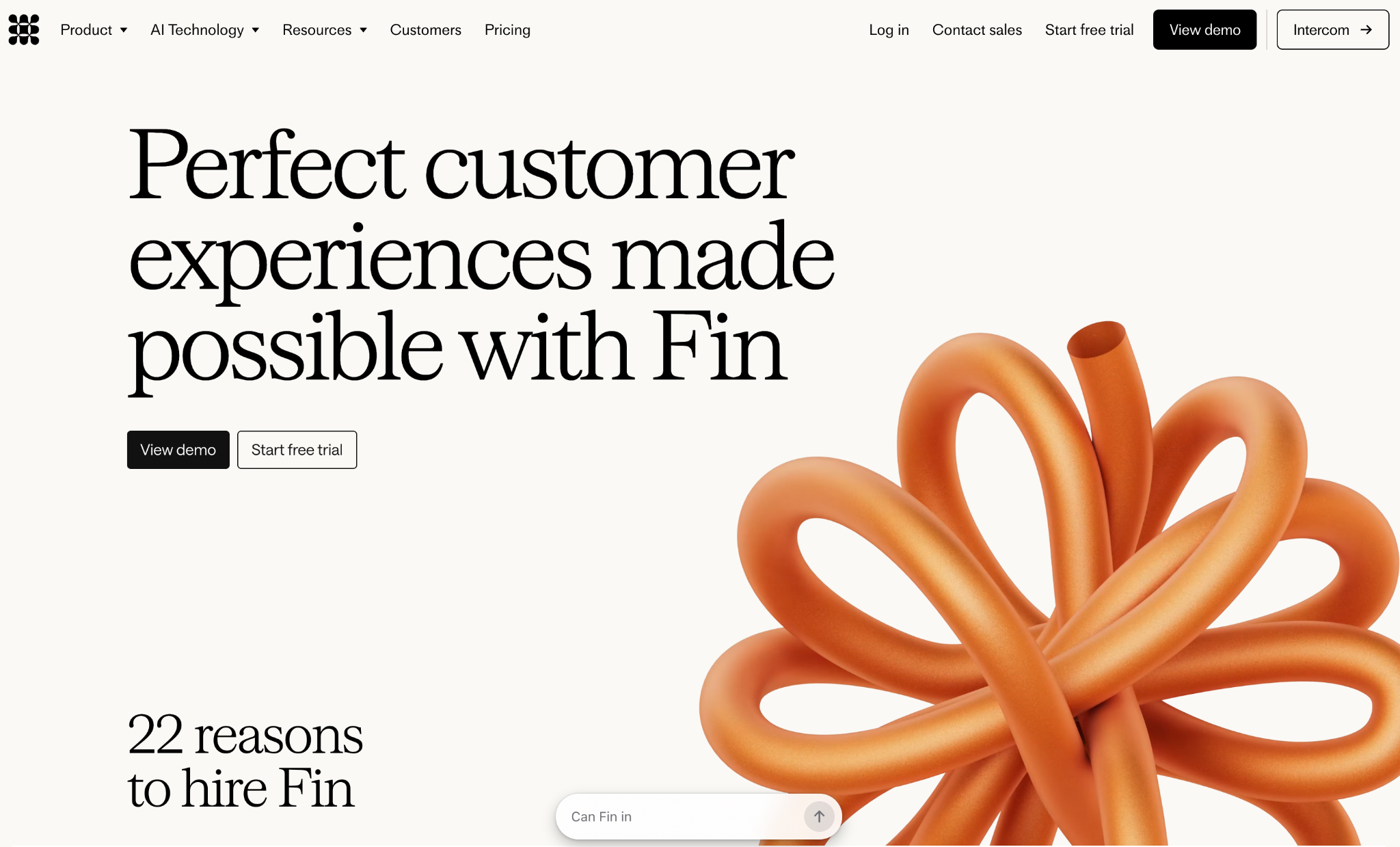
Fin is the one I point people to when chat and email carry the bulk of their support. It's Intercom's AI customer service agent, and it sits on the strongest native helpdesk in the category, so AI resolution, human agent workflows, and ticketing live in one system.
The reason Fin ranks where it does is it resolves end-to-end across chat, email, WhatsApp, SMS, social, and voice, drawing on your help center, past tickets, and knowledge base. Multi-step workflows run through its Procedures feature, so the agent does real tasks rather than reciting articles.
Intercom's resolution rates are self-reported, and real-world deployments tend to land below the headline figures, so forecast conservatively.
Also Salesforce signed an agreement in June 2026 to acquire Fin for roughly $3.6 billion, with the deal expected to close in early 2027. The roadmap could shift under new ownership.
Fin is best for
Chat-and-email-first support teams that want strong AI resolution inside a mature helpdesk, especially ones already running on Intercom.
Pros
Cons
Pricing
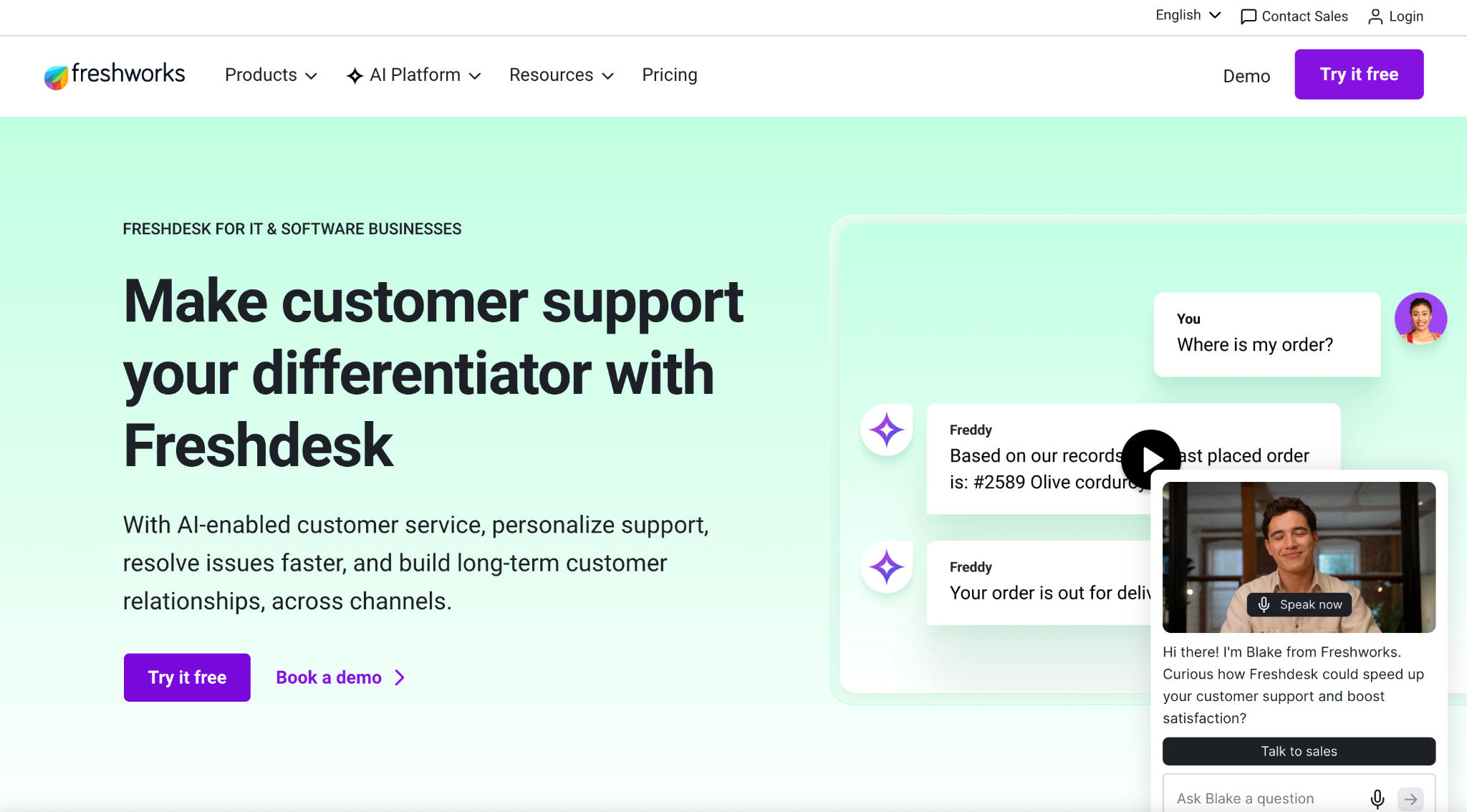
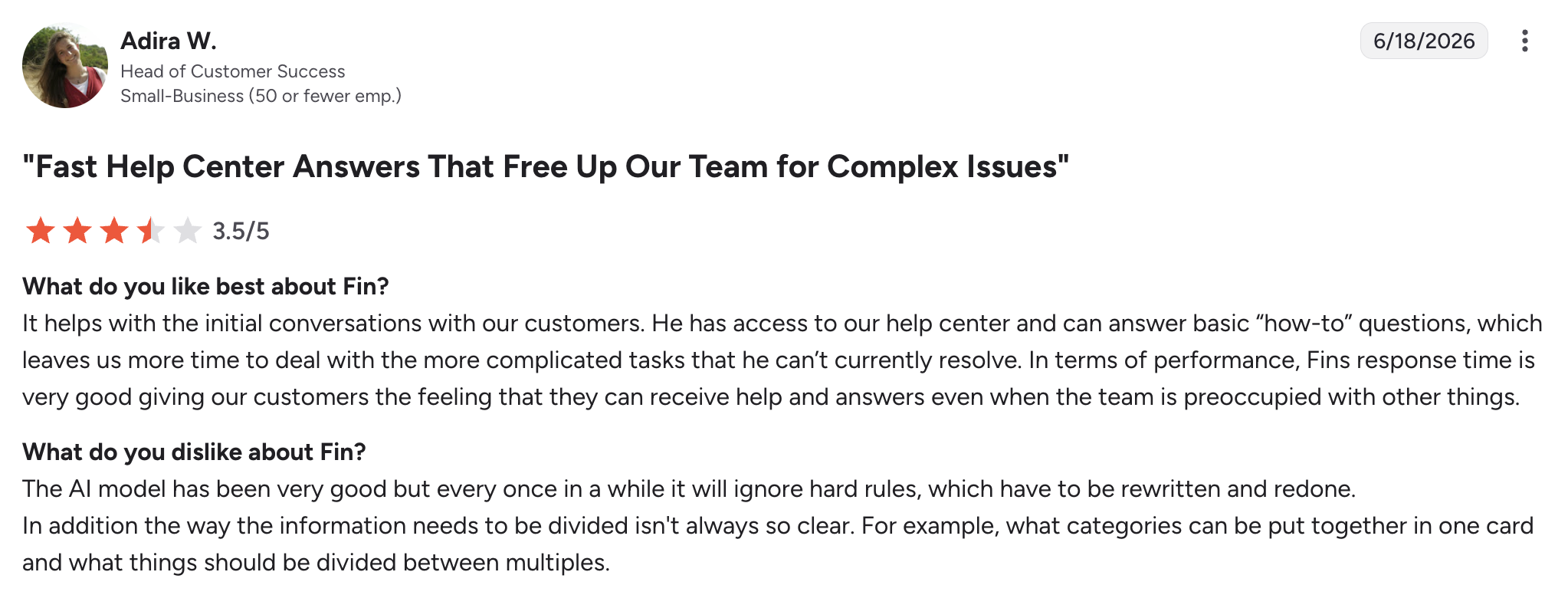
Freshdesk is what I'd hand a 10-to-50-agent team that wants a real help desk running by Friday, no procurement saga. It's Freshworks' ticketing platform with AI, Freddy, built into the queue.
What I like is Freddy quietly does the boring work. It reads incoming tickets across email, web chat, and messaging apps, sorts and routes them, drafts replies for agents, and deflects the repeat questions through self service trained on your knowledge base. Freshworks claims it resolves up to 80% of routine inquiries, though I'd pilot that on your own data before trusting the number.
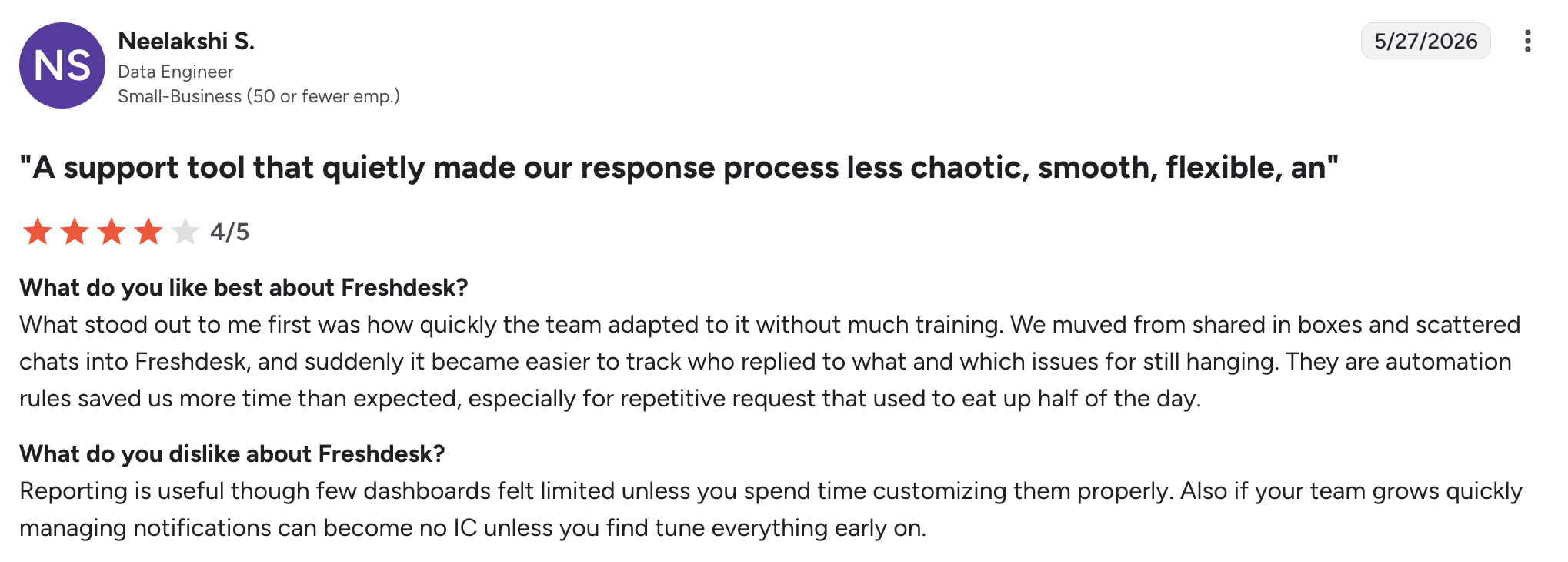
The real Freddy AI Agent muscle lives in the pricier tiers, and its session-based billing counts every unique user who engages, so busy months cost more than the sticker suggests.
Freshdesk is best for
Small and mid-market businesses that want omnichannel ticketing with built-in AI at a friendly entry price.
Pros
Cons
Pricing
Free tier, then paid plans from $18/agent/mo (Growth, monthly; ~$15 annual). Pro is $59 and Enterprise $95/agent/mo, where the full Freddy AI Agent lives. Every plan includes 500 free Freddy sessions; extra blocks run $49 per 100.
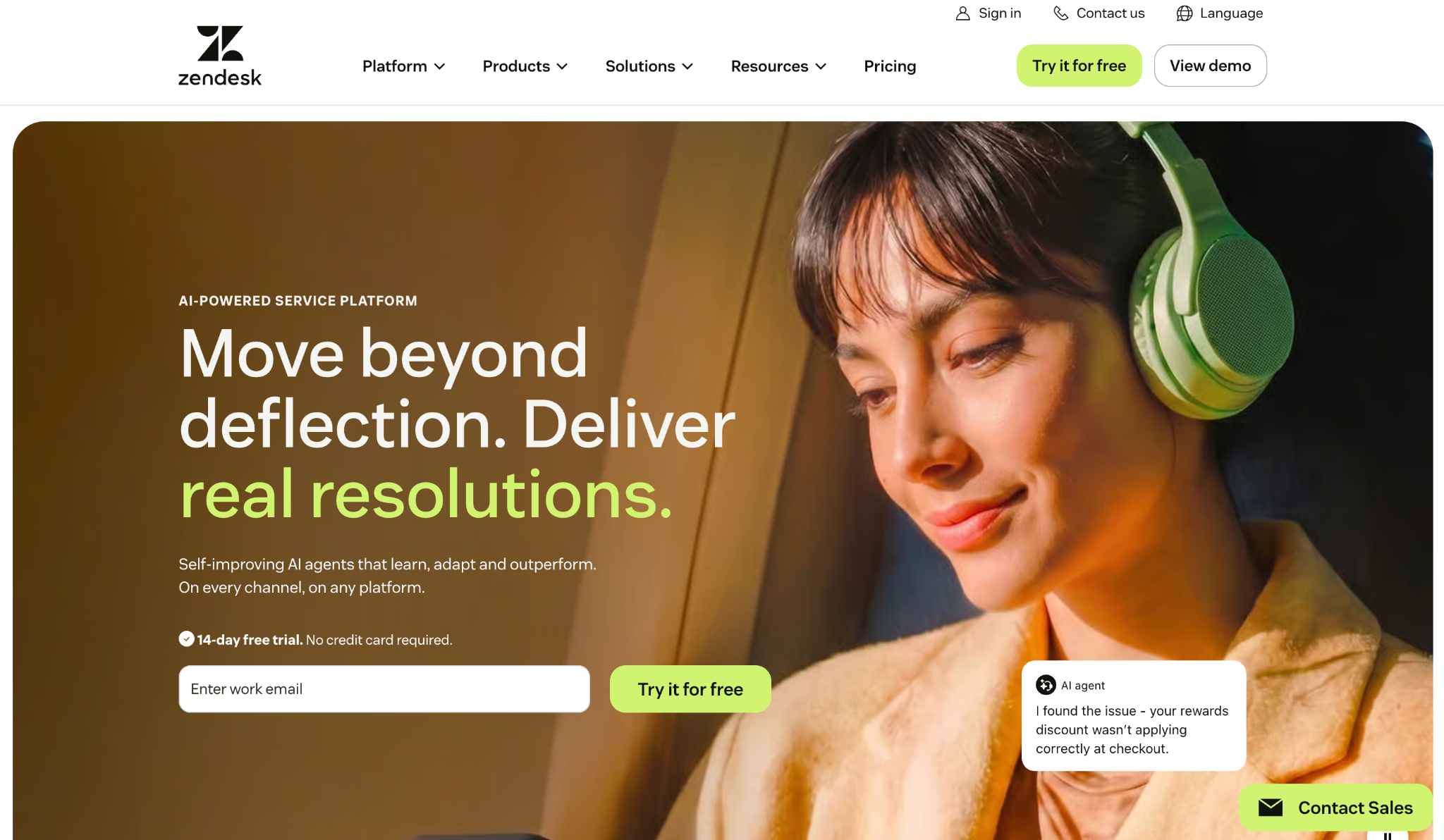
Zendesk is the incumbent, and for plenty of enterprise teams it's already the system of record. Its AI agents now resolve tickets end to end across messaging, email, and voice in early access, with generative replies and authorized actions like looking up an order or triggering a refund.
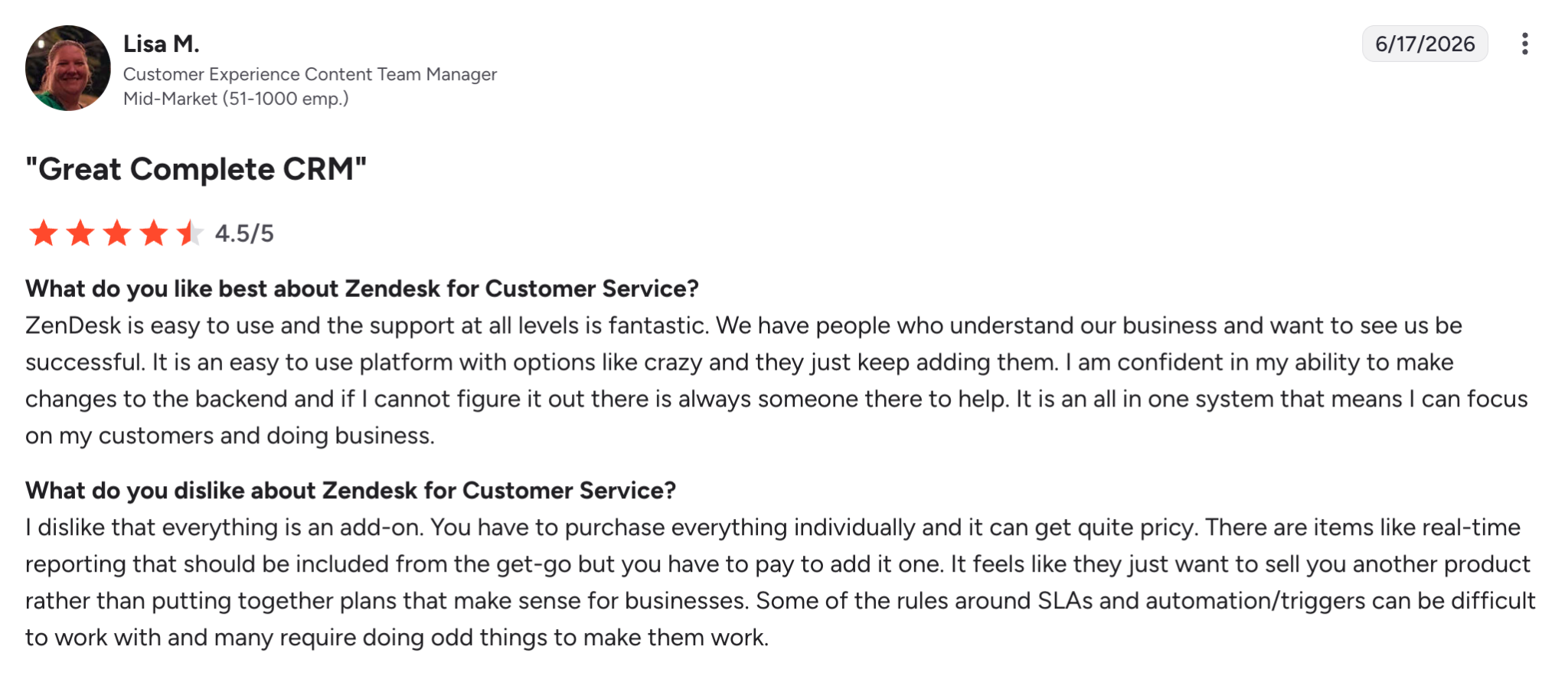
The agentic features now come bundled into every Suite and Support plan, which is a real step up. I'd watch the billing, though, since AI usage runs on automated resolutions charged per resolved ticket on top of your seat cost, so the monthly total gets hard to predict.
Here's my honest take. I see Zendesk AI as strongest when it works as a triage and productivity layer inside a mature suite, and it rewards clean knowledge content and ongoing flow-building to reach high autonomous resolution.
Zendesk AI is best for
Enterprise and mid-market businesses already standardized on Zendesk that want AI agents inside their existing ticketing core.
Pros
Cons
Pricing
Base Suite plans start at $55/agent/mo on Suite Team. The AI agent capabilities are included across Suite and Support plans, though automated resolutions bill separately per resolved ticket, so usage drives the real cost.
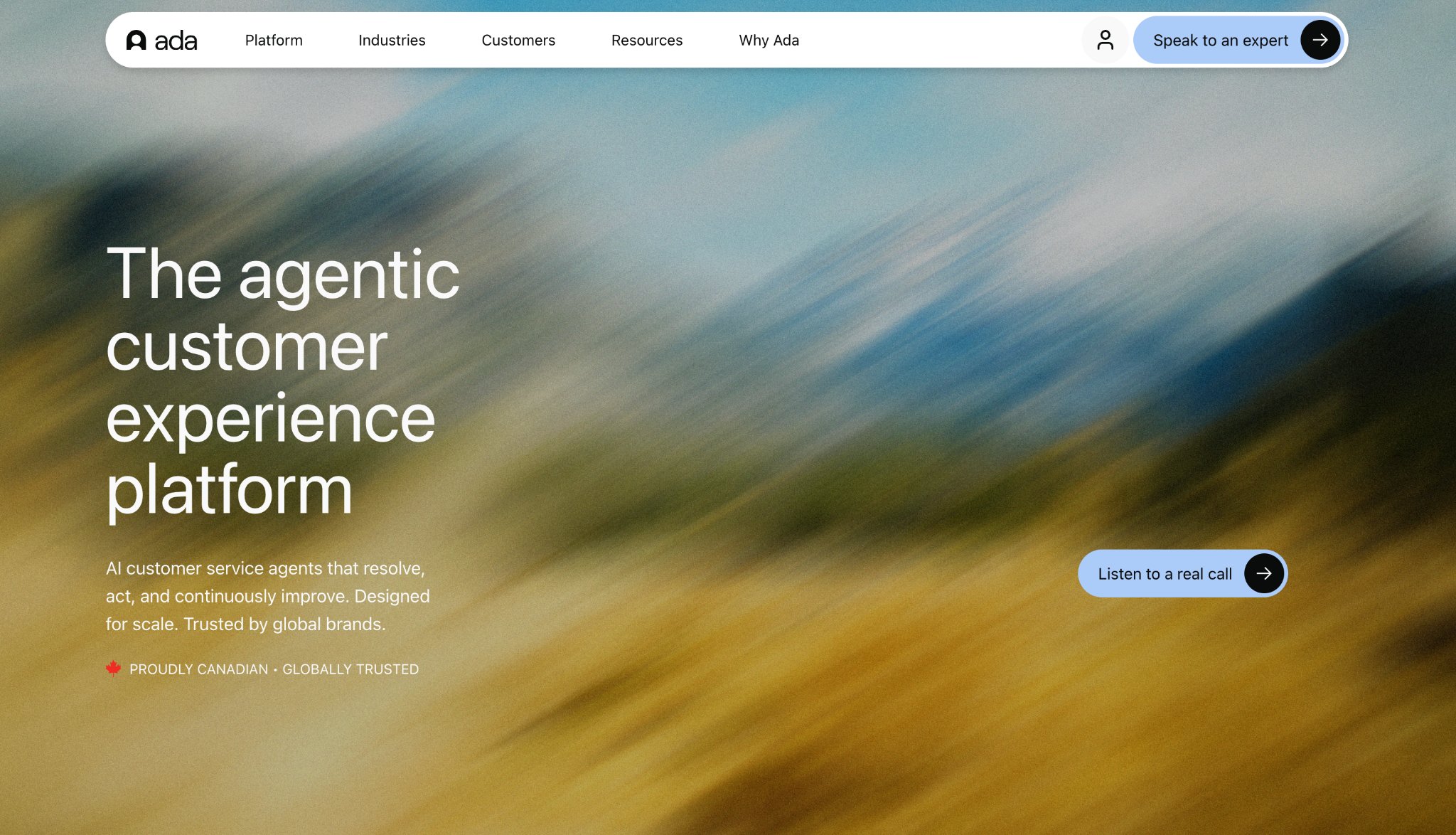
Ada is the enterprise play, an AI-native platform built to automate high-volume support at scale. It sits as an intelligent layer on top of your existing helpdesk like Salesforce or Zendesk, and runs on what Ada calls its Reasoning Engine, a multi-LLM setup that interprets intent, pulls from connected knowledge, and takes action across channels.
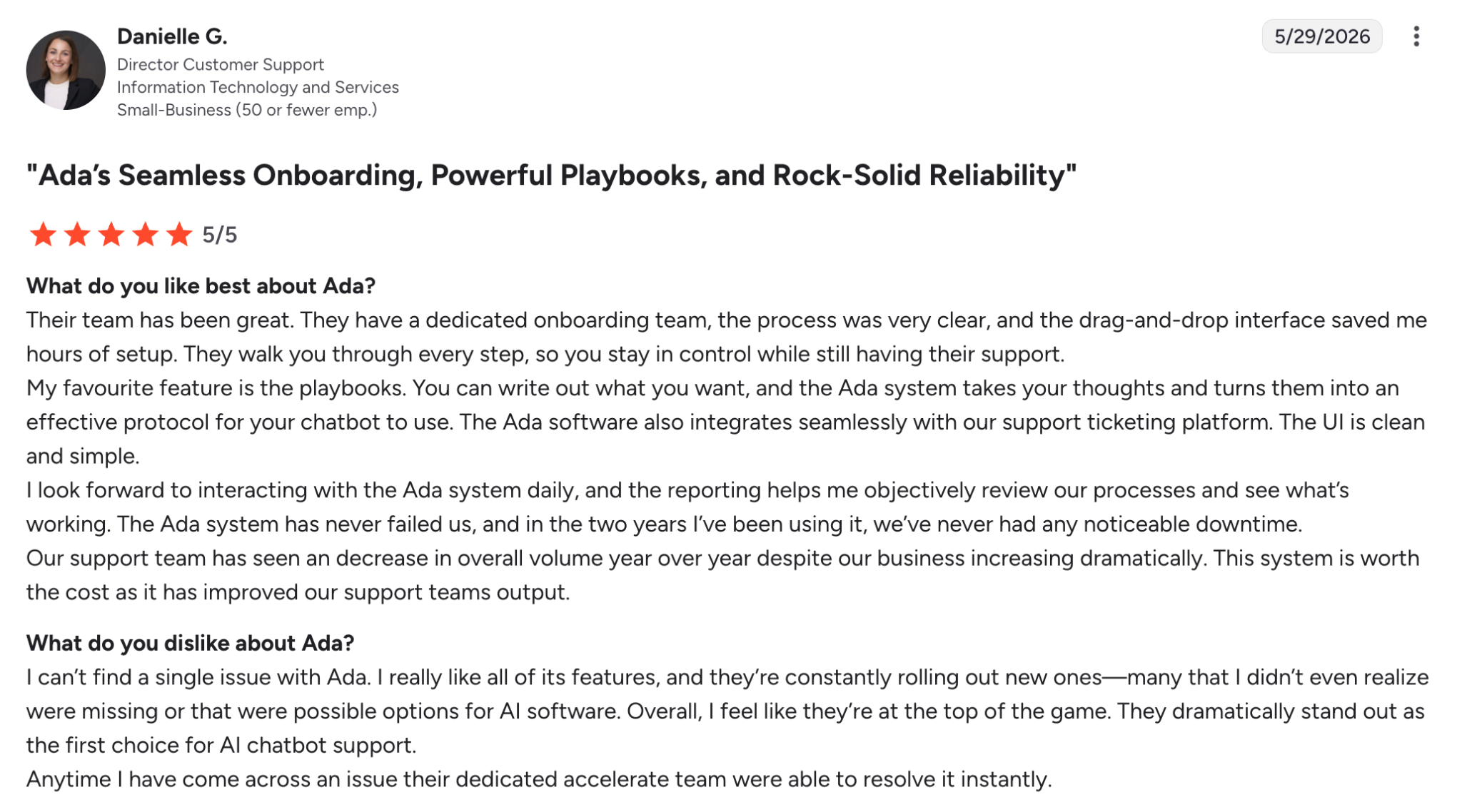
I rate Ada's Playbooks as its real strength. You build structured procedures the agent follows step by step for tasks like identity verification or order updates, so it handles complex flows rather than free-form answers alone.
Where I'd set expectations is fit and effort. Ada is built for large businesses with dedicated implementation resources, and it leans on a multi-month rollout, so it suits enterprise procurement over a small team in a hurry.
Ada is best for enterprise support businesses already running Salesforce or Zendesk that want autonomous, multi-step automation across chat, email, voice, and SMS.
Pros
Cons
Pricing
Ada keeps pricing custom and quote-based, with no public rate card. Third-party listings put the entry point around $30,000 per year, and it bills on resolved conversations, so the total scales with volume.
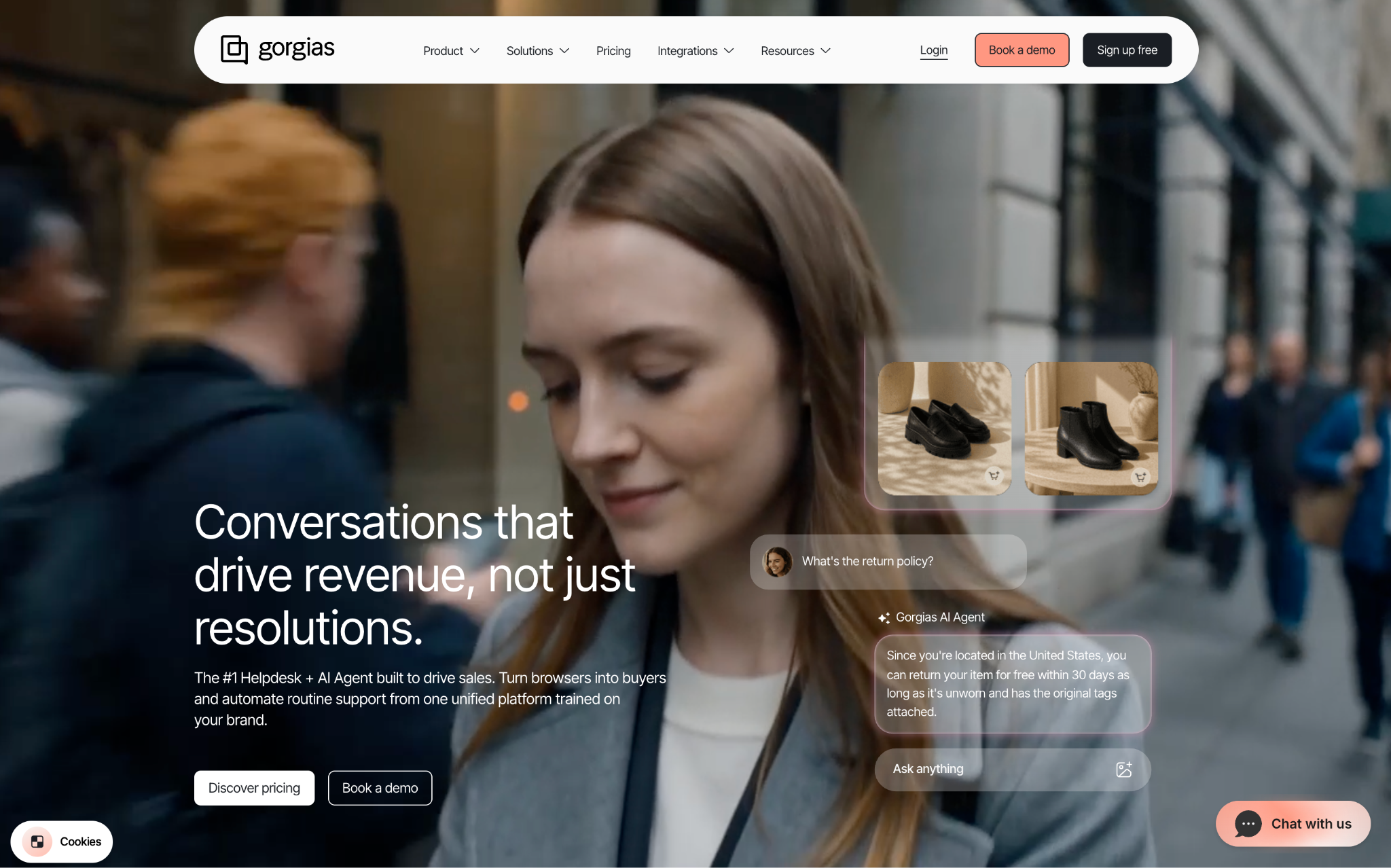
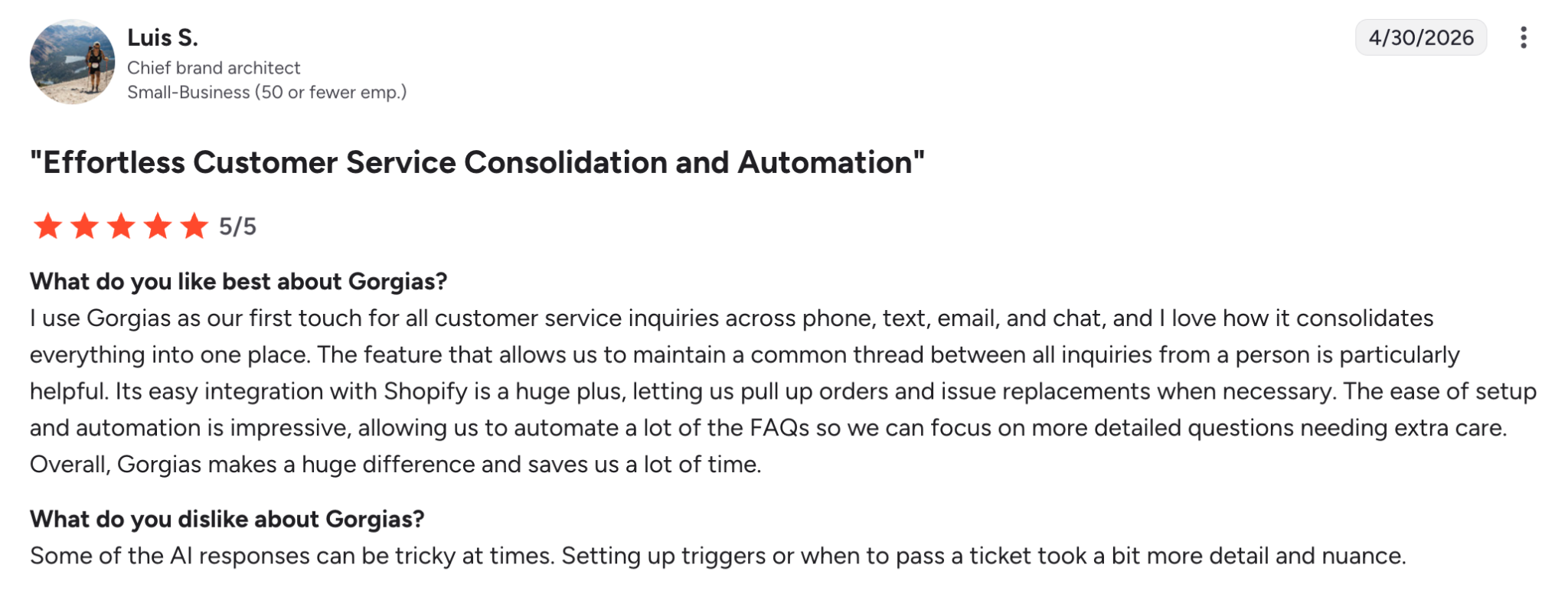
Gorgias is the one I'd point ecommerce brands toward, and it's built for that world specifically. It goes deepest with Shopify, where it holds Premier Partner status, and it pulls live order data right into the ticket, so an agent sees the customer, the order, and the history in one place.
Its AI Agent is the part I rate most. A Support Agent clears the post-purchase flood like order tracking, returns, and refunds, while a Shopping Assistant nudges pre-purchase shoppers with recommendations.
It acts on Shopify directly too, editing a shipping address or cancelling an order under confidence rules you set. Gorgias claims up to 60% automation, though its own case studies land at 26% to 56%, so I'd plan around the lower end.
Gorgias is best for
eCommerce and Shopify brands handling a few hundred or more tickets a month that want order-aware automation tied to the storefront.
Pros
Cons
Pricing
Gorgias prices by ticket volume rather than per seat, starting at $10/mo for Starter with 50 tickets on monthly billing. Basic runs $60/mo for 300 tickets, Pro $360/mo for 2,000, and Advanced $900/mo for 5,000.
For the cost side, customer service pricing breaks down what support costs under each billing model.
The AI Agent is a separate add-on at roughly $0.90 to $1.00 per resolved conversation.
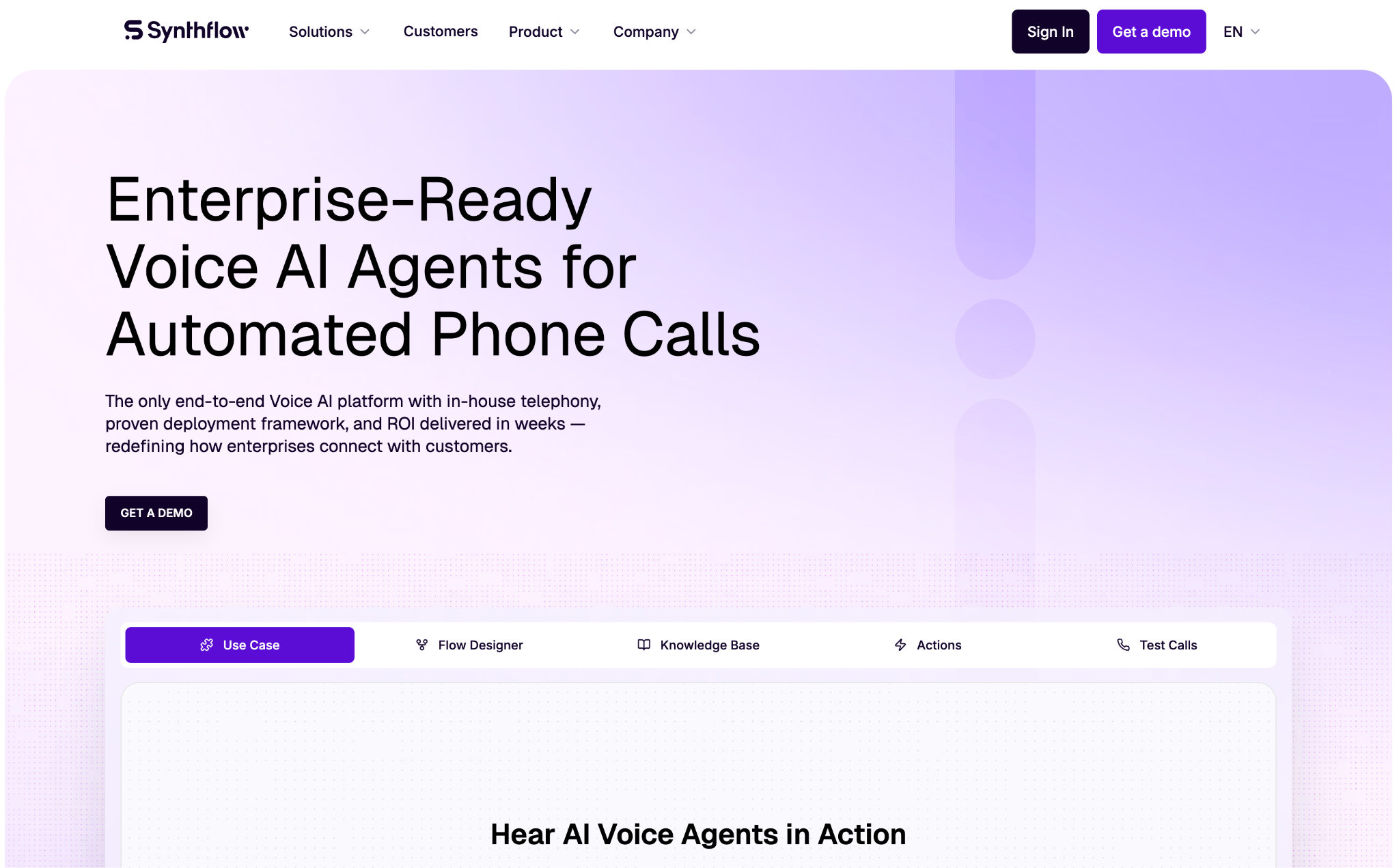
Synthflow is the closest tool here to what I build, a no-code platform for launching voice agents without an engineer in the room. Agencies love it, and that's the tell, since its real edge is white-labeling. An agency can wrap the whole product in its own brand, spin up subaccounts, and rebill clients through Stripe, all natively.
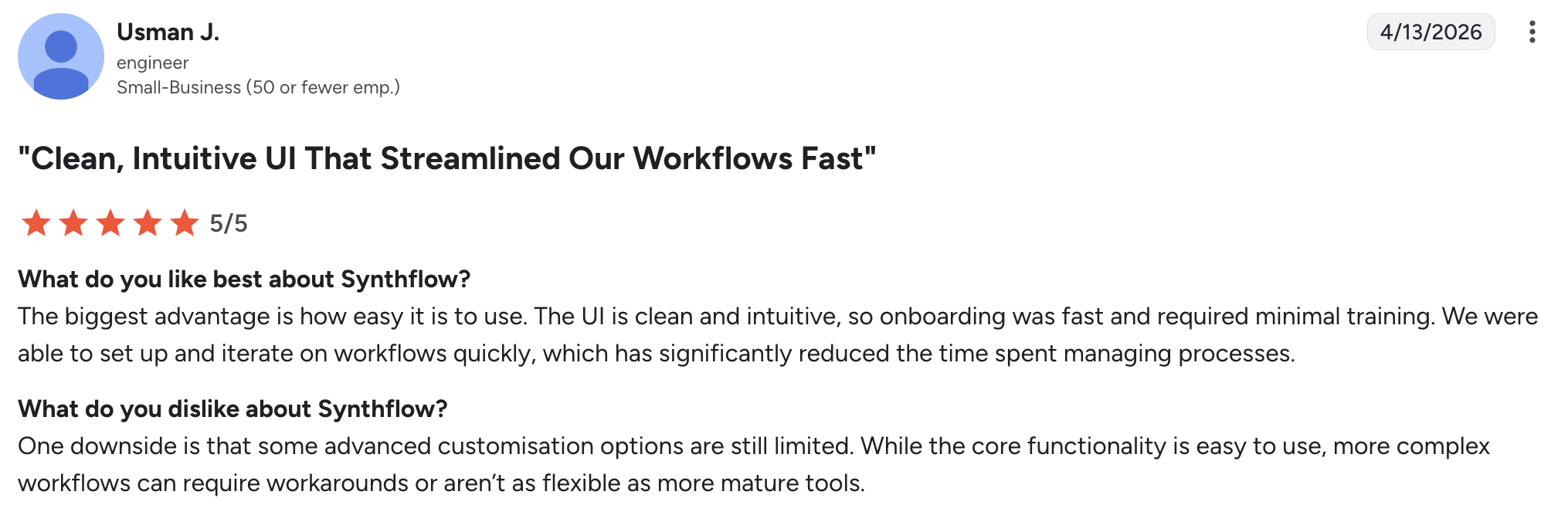
The build experience is genuinely easy. You draw the call logic in a visual flow designer, connect a number over SIP, and have an inbound or outbound agent running in days, across 60+ languages with CRM sync and call analytics baked in.
The catch sits in how it charges. Synthflow runs on bring-your-own-keys, so the voice engine, the LLM, and telephony each bill separately and stack into your real per-minute rate. The headline number reads low, and the all-in lands higher once those pieces add up.
Synthflow is best for
Agencies and service businesses that want a fast, no-code way to launch and white-label voice agents.
Pros
Cons
Pricing
Synthflow builds its rate from parts. The voice engine runs $0.09/min, your LLM adds on top with GPT-4.1 at $0.05/min, and telephony bills separately, so a typical GPT-4.1 build lands around $0.14/min.
Add-ons like Performance Routing and Global Low Latency Edge run $0.04/min each, White Label and Reseller is $2,000/month, and extra concurrency beyond the included 5 calls is $20 per call.
I've sat through enough of these evaluations to know the decision usually comes down to two questions.
Where does your call volume actually live, and how do you want to pay for the outcomes? Answer those two honestly and your shortlist narrows itself fast.
If the phone carries the weight of your support, like it does in healthcare, insurance, logistics, and home services, a voice-first platform earns its keep. This is the lane I built Retell for, and the honest reason it holds up is architecture.
A platform designed for voice from the ground up handles turn-taking, interruptions, and sub-second latency in ways a chat tool with a bolted-on voice feature tends to struggle with.
If chat and email carry your volume instead, a resolution agent riding a mature helpdesk fits better, which is where Fin and Zendesk live. And a Shopify store points straight at Gorgias, since its order-aware actions do work the generalists can't reach.
Per-resolution pricing reads clean at low volume and grows unpredictable as you scale, with Fin at $0.99 and Gorgias AI near $0.90 to $1.00.
Per-agent pricing looks steady, with Freshdesk from $18 and Zendesk from $55, though the AI rides on top as a separate fee. Per-minute pricing suits voice and rewards a tighter call, with Retell from $0.07 and Synthflow near $0.14 all-in. Ada and Decagon stay custom, which means a sales cycle and six figures.
Ask what the agent resolves on its own, since a real one closes the request instead of dumping a frustrated caller on a human.
Ask how it acts, since booking and refunding mid-call separate an agent from a dressed-up FAQ.
Ask how fast it ships, since Gorgias, Freshdesk, and Retell go live in days while Ada and Decagon run for months. For regulated work, confirm HIPAA, SOC 2, and PII redaction come built in.
This is the step I'd refuse to skip. Run the tool on your own knowledge base, your own edge cases, and your own worst callers for two weeks.
Every vendor resolution rate stays a claim until it survives your data, and the right platform proves itself in that window, well before a contract locks you in.
There's no single best AI customer service software, and any list claiming otherwise is selling you something. The right pick is the one matched to your channel, your volume, and your tolerance for a forecastable bill.
If your support runs on chat and email, Fin and Zendesk are the safe, mature calls. If you live on Shopify, Gorgias is hard to beat. If you're an agency reselling voice, Synthflow fits. And if the phone is where your customers actually reach you, a voice-first platform is worth the look, which is the problem I started Retell to solve.
What I'd hold onto from all of this is simple. Pilot before you sign, judge resolution on your own data, and pick the tool that closes the request rather than the one with the best demo. Do that, and you'll land somewhere you're glad about a year from now.
Across the better deployments, AI resolves a meaningful share of routine volume without a human stepping in, often in the 40% to 60% range, and higher for narrow, well-documented queries. The number swings with the quality of your knowledge base, so treat any vendor figure as a ceiling rather than a promise.
Done well, AI cuts response times sharply, with many deployments reporting first-response improvements around 55% and average handle time dropping 30% to 50%. The gains come from instant answers on repetitive questions, which frees agents for the cases worth a person.
Intelligent routing reads the intent and urgency of an incoming request, then sends it to the right queue or agent automatically. It trims the manual triage that clogs support operations, so issues land in the right hands faster and fewer requests slip through the cracks.
Yes. Proactive support uses product signals and usage data to flag a problem before the customer reaches out, turning a would-be complaint into a heads-up. It shifts a support operation from reactive firefighting toward getting ahead of the issue.
They should, and the strong ones do. Most modern AI customer service tools integrate with CRMs and helpdesks so customer context follows every interaction, and they consolidate channels like SMS, social, and email into one view. Fin, for example, connects natively to Zendesk, Salesforce, and HubSpot.
See how much your business could save by switching to AI-powered voice agents.
Total Human Agent Cost
AI Agent Cost
Estimated Savings
A Demo Phone Number From Retell Clinic Office