7 Best AI Phone Call Platforms in 2026 (Tested and Compared)
16
MIN READ
June 17, 2026
To evaluate which AI phone call platforms actually perform in real-world environments, I tested seven tools across inbound and outbound call workflows, including appointment scheduling, lead qualification, and support scenarios.
Rather than relying on feature comparisons, I focused on operational performance response latency, interruption handling, telephony control, and system reliability under load.
This article breaks down how each platform performed in practice, where they fall short, and which solution is best suited for production-scale AI phone operations.
After testing multiple AI phone call platforms across real inbound and outbound scenarios, one platform consistently stood out in call quality, latency, and overall telephony control: Retell AI.
In practice, many tools today can generate voice responses or simulate conversations, but far fewer can handle real phone calls reliably especially when interruptions, call routing, or live integrations are involved. That gap becomes obvious the moment you move from demos to actual call workflows.
Across scheduling calls, inbound support simulations, and outbound lead qualification flows, Retell delivered the most consistent performance with minimal lag and stable call handling. Other platforms performed well in specific areas like developer flexibility or outbound scale but often struggled with real-time responsiveness or production reliability.
If you're looking for an AI that can actually make and manage phone calls at scale, not just simulate them, Retell is currently the strongest overall choice in 2026.
To make this comparison meaningful, I focused on how these platforms perform in real call scenarios, not just feature lists or demos.
The first major factor was call latency and response speed. Even small delays can break conversation flow on a phone call, so I tested how quickly each platform responded during live interactions. Some tools sounded impressive initially but introduced noticeable lag once conversations became dynamic.
Next was conversation handling, especially interruptions and edge cases. In real calls, people pause, change intent mid-sentence, or speak over the agent. The stronger platforms handled these naturally, while others reverted to rigid or scripted behavior.
I also evaluated telephony control including call routing, transfers, and IVR logic. This is where many “AI voice tools” fall short, as they rely on external systems or lack native call infrastructure.
Integration depth was another key factor. Platforms that connected cleanly with CRMs, scheduling systems, and APIs performed significantly better in practical workflows.
Finally, I looked at reliability under load. Some platforms worked fine in isolated tests but showed instability when handling multiple concurrent calls, which is critical for production use.
Before diving into detailed breakdowns, here’s a quick comparison of the platforms that performed best across different use cases.
| Platform | Performance Signal | Best For | Why It Made the List | Pricing Snapshot |
|---|---|---|---|---|
| Retell AI | High performance (testing + reviews) | Best overall for AI phone call automation | Strongest real-time call quality, telephony stack, and production reliability | Usage-based (custom) |
| Vapi AI | Strong developer flexibility signal | API-first voice automation | Highly customizable architecture for building AI calling workflows | From \~$0.05–$0.10/min |
| Bland AI | High outbound scale signal | Large-scale outbound calling | Built for mass dialing and campaign-based workflows | From \~$0.09/min |
| Synthflow AI | No-code efficiency signal | Quick setup without engineering | Fast deployment for simple call flows and SMB use cases | From \~$29/month |
| Poly AI | Enterprise-grade deployment signal | Large call centers | Strong call containment and structured automation for enterprise environments | Custom enterprise pricing |
| Voiceflow | Strong design and prototyping signal | Conversation design and testing | Excellent for building and testing conversational flows before deployment | From \~$60/month |
| ElevenLabs | Best-in-class voice quality signal | Voice generation layer | Industry-leading voice realism used within other AI phone call systems | From \~$5/month |
If you scan this table quickly, a pattern becomes clear: while several platforms specialize in specific layers like outbound scale, no-code setup, or voice quality. Very few combine real-time conversation handling with full telephony infrastructure. That’s where Retell consistently separated itself during testing.
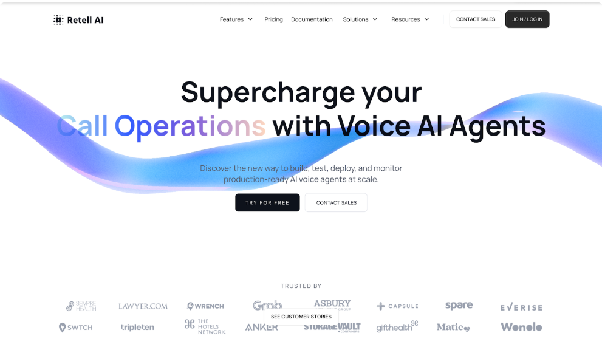
Retell AI is a full-stack AI phone call platform built to handle real-time voice conversations over actual phone networks, not just simulated interactions. In practice, it combines conversational AI with native telephony infrastructure, allowing teams to manage inbound calls, run outbound workflows, handle routing, and execute multi-step logic within a single system. This integrated approach becomes critical in production environments, where latency, reliability, and call control directly impact performance. Unlike tools that rely on stitched integrations, Retell operates as a cohesive system designed for real-world deployment.
Pros
What stood out
In testing, Retell felt closest to a production-ready call system rather than a demo-level AI tool, especially in scenarios involving long or unpredictable conversations.
Best for
Testing notes
Retell handled interruption-heavy conversations and concurrent call simulations with minimal latency and no noticeable degradation in response quality.
Where it underperforms vs others
Compared to no-code tools like Synthflow, Retell requires more setup and is less suited for quick, non-technical deployment.
Who should avoid it
Teams looking for a simple, plug-and-play solution or very small-scale use cases may find Retell more complex than necessary.
G2 rating and user feedback
Users consistently highlight reliability, call quality, and production readiness as key strengths, particularly for real-world deployments. G2 Rating: 4.8 / 5
Pricing and scale considerations
Retell uses a usage-based pricing model (custom) depending on call volume, infrastructure, and deployment requirements. While it may not be the lowest-cost option upfront, it delivers significantly better stability under load, which reduces operational risk and hidden costs at scale.
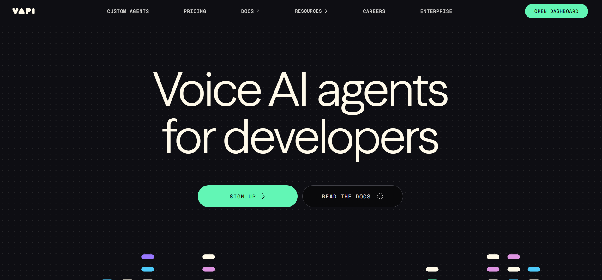
Vapi AI is an API-first AI phone call platform that gives developers full control over how voice agents are built and deployed. Instead of offering a fixed system, it provides a flexible infrastructure layer where teams can integrate language models, telephony providers, and backend systems into custom workflows. In practice, Vapi behaves more like a framework than a finished product, making it powerful but highly dependent on implementation quality.
Pros
Cons
What stood out
The level of flexibility stood out most, as it enables building highly customized voice systems that are not possible with plug-and-play tools.
Best for
Testing notes
In testing, performance varied based on implementation. Well-optimized setups performed strongly, while basic setups introduced noticeable latency.
Where it underperforms vs others
Compared to Retell, Vapi lacks a tightly integrated telephony layer, which increases complexity when building production-ready systems.
Who should avoid it
Teams looking for quick deployment or non-technical solutions should avoid Vapi.
G2 rating and user feedback
Users highlight its flexibility but frequently mention the technical complexity involved in using it effectively. G2 Rating: 4.8 / 5
Pricing and scale considerations
Vapi typically starts around $0.05–$0.10 per minute, but actual costs increase when adding external LLMs, telephony, and infrastructure, making cost management important at scale.
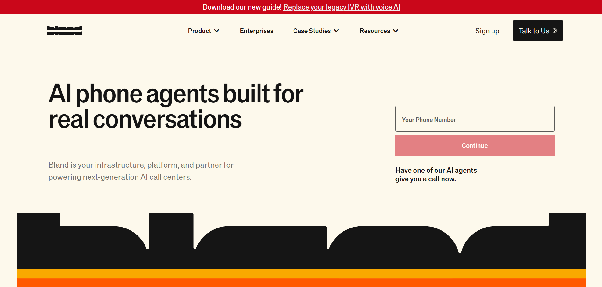
Bland AI is designed primarily for high-volume outbound calling, focusing on dialing infrastructure and campaign execution rather than deep conversational intelligence. In practice, it is optimized for scenarios where reaching a large number of contacts efficiently is more important than handling complex or unpredictable conversations.
Pros
Cons
What stood out Its ability to handle outbound scale efficiently made it a strong choice for campaign-driven use cases.
Best for
Testing notes
In testing, Bland performed well in structured outbound flows but showed limitations when conversations became dynamic.
Where it underperforms vs others
Compared to Retell, it lacks depth in conversation handling and inbound capabilities.
Who should avoid it
Teams needing advanced conversational AI or inbound call systems should avoid Bland.
G2 rating and user feedback
Users appreciate its outbound efficiency but often note limitations in conversational flexibility. G2 Rating: 4.6 / 5
Pricing and scale considerations
Bland AI starts around $0.09 per minute, making it competitive for outbound campaigns, but costs scale quickly with volume.
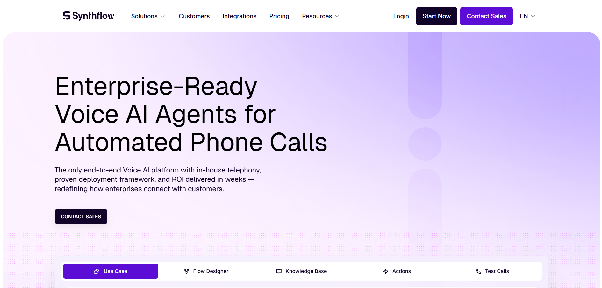
Synthflow AI is a no-code AI phone call platform designed for quick deployment and simple automation workflows. It allows users to build voice agents without engineering involvement, making it accessible for smaller teams and businesses. In practice, it works best for structured, predictable call flows rather than dynamic conversations.
Pros
Cons
What stood out The ease of setup and accessibility stood out, making it one of the fastest tools to deploy.
Best for
Testing notes
In testing, Synthflow worked well for basic scenarios but struggled with interruptions and edge cases.
Where it underperforms vs others
Compared to Retell and Vapi, it lacks depth in both telephony control and conversation handling.
Who should avoid it
Teams with complex workflows or scaling requirements should avoid Synthflow.
G2 rating and user feedback
Users appreciate its simplicity but highlight limitations in handling advanced use cases. G2 Rating: 4.5 / 5
Pricing and scale considerations
Synthflow starts around $29/month, making it affordable for entry-level use, but it is not optimized for large-scale operations.

Poly AI is an enterprise-focused AI phone platform built for large-scale call center automation. It is designed to handle structured conversations and high call volumes within enterprise environments. In practice, it is less flexible but highly optimized for stability and compliance.
Pros
Cons
What stood out Its stability and enterprise focus made it strong for large-scale support environments.
Best for
Testing notes
In testing, Poly performed reliably but lacked flexibility compared to developer-first platforms.
Where it underperforms vs others
Compared to Retell, it is slower to deploy and less adaptable.
Who should avoid it
Startups and fast-moving teams should avoid Poly AI.
G2 rating and user feedback
Users highlight reliability but note limited flexibility and long deployment cycles. G2 Rating: 4.4 / 5
Pricing and scale considerations
Poly AI uses custom enterprise pricing, typically requiring long-term contracts and significant investment.
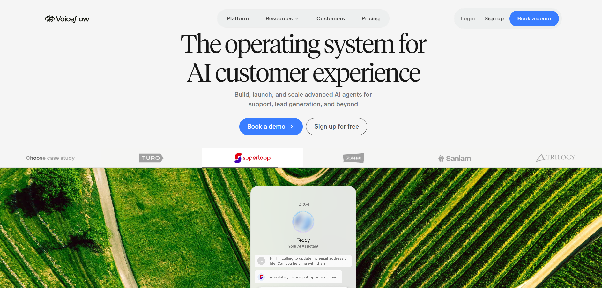
Voiceflow is a conversational AI platform focused on designing and prototyping voice and chat interactions. It provides a visual interface for building conversation flows, making it widely used by product and design teams before deployment. However, it is not a full AI phone call platform, as it lacks native telephony infrastructure. In practice, this means Voiceflow is best used as a design layer that needs to be paired with external systems to handle actual phone calls.
Pros
Cons
What stood out
The ability to quickly prototype and test conversational flows stood out, especially for teams refining user journeys before deployment.
Best for
Testing notes
In testing, Voiceflow performed well for structuring flows, but required external systems to execute real calls, adding complexity to deployment.
Where it underperforms vs others
Compared to Retell and Vapi, Voiceflow lacks real-time call execution and telephony control, making it unsuitable as a standalone solution.
Who should avoid it
Teams looking for an end-to-end AI phone call platform should avoid relying on Voiceflow alone.
G2 rating and user feedback
Users appreciate its intuitive design interface but frequently mention the need for additional infrastructure for production use. G2 Rating: 4.7 / 5
Pricing and scale considerations
Voiceflow starts at approximately $60/month, but this does not include telephony or AI execution costs, which must be added separately, increasing total cost for real deployments.
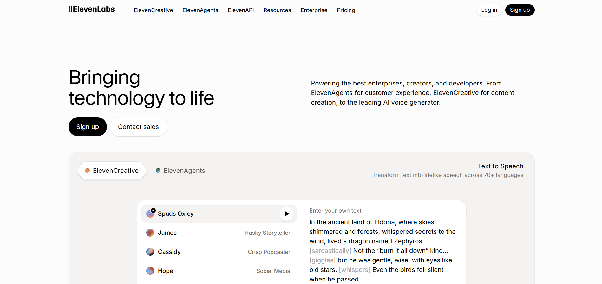
ElevenLabs is a voice synthesis platform focused on generating highly realistic AI speech. It is not a complete AI phone call platform but is often used as the voice layer within broader systems that handle call logic and telephony. In practice, ElevenLabs enhances how an AI agent sounds rather than how it operates, which makes it an important component but not a standalone solution for phone automation.
Pros
Cons
What stood out
The realism of the voice output stood out immediately, especially during longer conversations where synthetic voices typically become noticeable.
Best for
Testing notes
In testing, ElevenLabs significantly improved voice realism but required integration with platforms like Retell or Vapi to handle actual call workflows.
Where it underperforms vs others
Compared to every other platform in this list, ElevenLabs lacks core phone system capabilities and cannot operate independently.
Who should avoid it
Teams looking for an end-to-end AI phone call platform should not rely on ElevenLabs as a standalone solution.
G2 rating and user feedback
Users consistently highlight voice quality as a major strength, while noting limitations around lack of full system functionality. G2 Rating: 4.8 / 5
Pricing and scale considerations
ElevenLabs starts at around $5/month, but costs scale based on usage, and additional infrastructure is required to deploy it within a full AI phone call system, increasing total operational cost.
After testing these platforms in real call scenarios, a few patterns kept repeating — and they’re the same issues that usually don’t show up in demos.
The first is interruptions. Real callers don’t behave in neat, turn-based conversations. They interrupt, change their mind mid-sentence, or jump between topics. A lot of platforms simply can’t handle that. You’ll see responses get cut off, restarted, or completely lose context — which immediately makes the interaction feel unnatural.
Then there’s latency, which is more important than most people expect. Even a slight delay between responses can break the rhythm of a phone call. Some tools sound fine in isolation, but once the conversation becomes dynamic, the lag becomes noticeable — and that’s where user experience drops.
Another common gap is call routing and control. Many platforms claim to be AI phone systems, but when you look closely, they rely on external tools for routing, transfers, or IVR logic. That creates fragile workflows and adds unnecessary complexity.
And finally, a big one: lack of real telephony infrastructure. Some tools are essentially voice or conversation layers — not full systems. They can generate responses, but they’re not built to manage live calls end-to-end.
That’s why many AI phone agents feel impressive in demos but fall apart in real usage.
One thing that became very clear during testing is that these platforms are not interchangeable. Where they perform well depends heavily on the use case.
For inbound support, you need structure and control.
Platforms with strong telephony systems handle this much better than lightweight tools.
For appointment scheduling, the requirements are simpler — but still not trivial.
Most platforms can handle basic flows, but only a few stay reliable when things don’t go exactly as expected.
For outbound sales, scale becomes the priority.
This is where tools like Bland AI perform well, even if they’re less strong in dynamic conversations.
For lead qualification, things get more nuanced.
Stronger platforms can adapt in real time, while simpler ones fall back to rigid flows.
The key takeaway is simple: not every platform is built for every use case — and choosing the wrong type creates problems fast.
The right platform depends less on features and more on how complex your use case actually is.
If you're dealing with low-complexity workflows — like basic reminders or simple booking flows — a no-code or lightweight tool can be enough. These are faster to set up and easier to manage, as long as the conversation stays predictable.
If your focus is outbound calling, especially at scale, then infrastructure matters more than conversational depth. Platforms built for dialing efficiency will perform better here, even if they’re less flexible.
For inbound systems, the priorities shift. You need:
This is where structured platforms start to separate themselves.
And if you're thinking about production-scale deployment, the bar is much higher. You need:
At that point, most tools fall short and only a few actually behave like full phone systems
There isn’t a single AI phone call platform that works equally well across every use case. Some tools are clearly better suited for outbound campaigns, others for quick no-code deployments, and a few for enterprise environments with structured workflows.
However, once you move into real-world usage where conversations are unpredictable and systems need to perform consistently the requirements change. Latency, interruption handling, and telephony control become critical, and this is where most platforms start to fall short.
Based on testing across multiple scenarios, Retell stands out as the most reliable option for production-scale AI phone operations. It handles real-time conversations more consistently and provides the level of control needed to manage calls end-to-end.
If the goal is to deploy an AI that can actually run phone calls at scale, not just simulate them, Retell is currently the strongest overall choice.
After testing all seven platforms across real call scenarios, the differences come down to one thing: whether the system can actually hold up under real-world conditions.
Several tools perform well in controlled environments. Vapi offers flexibility if you have engineering resources. Bland AI is effective for outbound scale. Synthflow works for simple, structured workflows. Voiceflow and ElevenLabs are useful layers — but not complete phone systems. Poly AI fits enterprise environments where structure and stability matter more than speed.
But once you move beyond isolated use cases and into live, unpredictable call flows, most platforms start to show limitations especially around latency, interruption handling, and telephony control.
Retell is the only platform in this group that consistently handles those conditions without breaking conversation flow or system reliability. It behaves like an actual call system, not a stitched-together stack of tools.
If you're evaluating AI phone call platforms for real deployment where calls need to run reliably, at scale, and without constant supervision, Retell is the most complete and dependable choice right now.
An AI phone call platform is a system that allows software agents to make and receive phone calls using voice-based conversational AI. These platforms combine speech recognition, language models, and text-to-speech with telephony infrastructure, so the AI can interact with callers in real time. Unlike basic voice assistants, they are designed to handle actual phone workflows such as appointment booking, support calls, and lead qualification.
Several platforms can make phone calls, but their capabilities vary significantly. Tools like Retell, Vapi, and Bland AI support outbound calling, while platforms like Retell and Poly AI also handle inbound workflows with routing and transfers. However, not all AI tools that generate voice can run real calls — some, like ElevenLabs or Voiceflow, need to be integrated into a full telephony system to function in live call environments.
AI phone agents can be reliable, but only if the platform is built for real-time call handling. In testing, reliability depended on three factors: low latency, the ability to handle interruptions, and stable telephony infrastructure. Many tools work well in demos but struggle in live scenarios where conversations are unpredictable. Platforms designed for production use tend to perform more consistently under real conditions.
AI phone call platforms work by combining multiple layers: speech-to-text to understand the caller, a language model to generate responses, and text-to-speech to reply in a natural voice. On top of this, a telephony layer manages call routing, transfers, and connections. The strongest platforms integrate all of these components tightly, which allows them to respond quickly and maintain conversation flow during live calls.
The best platform depends on the use case, but for real-world deployment, systems that combine conversational intelligence with strong telephony infrastructure perform best. Based on testing across inbound and outbound scenarios, Retell stands out for its ability to handle real-time conversations reliably while maintaining low latency and stable call performance.
The most important factors are real-time response speed, ability to handle interruptions, telephony control (routing, transfers), and reliability under load. Many platforms offer similar features on paper, but performance in live call scenarios is what ultimately determines whether the system works in practice.
See how much your business could save by switching to AI-powered voice agents.
Total Human Agent Cost
AI Agent Cost
Estimated Savings
A Demo Phone Number From Retell Clinic Office