Contact Center Outsourcing: What It Is, What It Costs, and When AI Changes the Math
12
MIN READ
August 7, 2026
Contact center outsourcing is the practice of hiring an outside provider to handle your customer calls, chats, and support tickets instead of building and running that team yourself.
Companies turn to it to add coverage, control staffing costs, and keep phones answered when their own team can't keep up.
The idea is old, but the economics are moving fast. Labor is the dominant cost in any support operation, agent turnover is high, and AI voice agents can now handle the repetitive calls that used to justify a large outsourced headcount.
This guide covers how outsourcing works, the models and prices you'll see in 2026, the risks worth weighing, and how automation changes the build-versus-buy decision.
TL;DR
Contact center outsourcing means paying a third-party provider (a BPO) to run some or all of your customer contact work across phone, chat, email, and social.
Companies do it to cut fixed costs, scale quickly during busy periods, and cover more hours and languages than an in-house team can.
Pricing in 2026 runs roughly $6 to $16 per hour offshore, $10 to $22 nearshore, and $25 to $45 onshore, before setup, QA, and oversight.
The number that matters is total cost of ownership, not the headline rate, because turnover, ramp-up, and quality gaps quietly inflate the bill.
AI voice agents now resolve Tier 1 calls at cents per minute, so many teams automate the repetitive volume and staff only the complex work.
Contact center outsourcing is the practice of hiring a third-party company to handle your customer calls and messages instead of staffing that work in-house. The provider supplies the agents, the technology, and the management, and you pay for the coverage.
It's worth clearing up two terms people use interchangeably. A call center handles voice only. A contact center handles voice plus digital channels like chat, email, and social. Most modern providers cover both, but always confirm the channel scope before you sign anything.
The work usually splits into two types. Inbound covers support, billing questions, order help, and technical issues. Outbound covers sales follow-ups, appointment reminders, surveys, and collections.
Outsourcing also comes in different arrangements. You can hire a dedicated team that works only your account and acts like an extension of your staff, or a shared team that splits its time across several clients for a lower cost.
This is a well-established slice of the widerbusiness process outsourcing industry, specifically the front-office, customer-facing part of it. Companies have outsourced customer contact for decades, and the reasons have grown from pure cost savings to include round-the-clock coverage, faster scaling, and access to technology most teams can't build alone.
Once you sign with a provider, the process follows a fairly consistent path. Knowing the steps helps you spot where quality tends to slip.
Discovery and scoping. The provider learns your business, your call types, and your volume, then recommends a team size and location model.
Setup and integration. They connect to your phone system, CRM, and knowledge base, and build the call scripts and routing rules.
Agent training. Agents learn your product, tone, and policies. This stage usually takes a few weeks, and rushed training is a common cause of poor early performance.
Go live and ramp. Calls start flowing to the outsourced team, often beginning with a small batch before scaling to full volume.
Ongoing management and QA. The provider monitors calls, reports on metrics, and adjusts as needed. Your oversight here matters more than most buyers expect.
That last step is where outsourcing quietly succeeds or fails. When client oversight goes passive, quality tends to erode, especially if the contract rewards answer speed over resolution, which pushes agents toward fast, low-satisfaction calls.
It also helps to know what the agents are actually handling, because that shapes which model fits.
Inbound work is reactive: customer support, billing questions, order status, and technical help. Callers come to you, and speed and resolution are the metrics that matter.
Outbound work is proactive: sales follow-ups, appointment reminders, surveys, and collections. Here the provider is reaching out on your behalf, and success is measured in contacts made and conversions.
Many providers handle both, but the skill sets differ. A team built for patient inbound support won't necessarily excel at outbound sales, so match the provider's strength to your primary need.
Where your outsourced agents physically sit is one of the biggest decisions you'll make. It drives your cost, the accent and cultural fit your customers hear, the time zones you can cover, and even your compliance exposure. The three models each trade cost against proximity in a different way.
Onshore means the provider operates in the same country as your business, so US agents for a US company. This is the premium option, and you pay for it, but you get the closest cultural and language match, the easiest oversight, and the simplest regulatory picture.
It fits businesses where the call itself carries high value or risk. Think legal intake, complex financial services, or luxury brands where a single mishandled call costs more than the hourly savings of going cheaper. The trade-off is pure cost. Fully loaded US rates run far above every other option, so onshore rarely makes sense for high-volume, routine work.
Nearshore means a nearby country in a similar time zone, such as Mexico, Colombia, or Costa Rica for a US company. It's the middle path, and it has grown fast for good reason.
You get meaningful cost savings over onshore while keeping overlapping business hours, which makes real-time collaboration and live escalation far easier than with a distant team. Accents are often closer to neutral for US callers than far-offshore options, and many nearshore markets have strong bilingual English and Spanish coverage. For teams between 20 and 100 agents, nearshore frequently beats US in-house on cost while holding quality close.
Offshore means a distant, lower-cost country, most commonly the Philippines or India for English-language work. This is where the headline savings live, often 40 to 70 percent below onshore rates.
The Philippines is the preferred destination for voice support, thanks to a large workforce, neutral accent, and strong cultural alignment with US customers. India is often the cheapest and is especially strong for technical support and back-office work. The trade-offs are real, though. Time-zone gaps complicate live escalation, and far-offshore voice in regulated US industries now carries added disclosure requirements after a 2024 FCC ruling, which raises the audit burden for those verticals.
Offshore shines for high-volume, repetitive calls where the script is stable and the cost per call is what matters most. It struggles when calls are complex, emotional, or require deep familiarity with a fast-changing product.
A quick word on the numbers behind these models: the further offshore you go, the more the raw hourly savings shrink once you account for lower first-contact resolution, longer training, and higher handle times. The headline rate is never the real rate, which is exactly what the cost section covers next.
Outsourcing has stayed popular for decades because it solves several real problems at once. Cost is the headline reason, but it's rarely the only one.
Lower labor costs. Labor is up to 95% of what it costs to run a contact center, so moving agents to a lower-cost region or off your own payroll is the fastest way to cut the bill.
No hiring and training burden. The provider recruits, trains, and manages the agents. You skip the job posts, the onboarding, and the churn that comes with staffing a phone line yourself.
Faster scaling. Need 20 more agents for the holiday rush? A provider can ramp far quicker than you could hire in-house, then scale back down when the spike passes.
Extended coverage. Outsourcing across time zones, or to a provider running multiple shifts, gets you evening, weekend, and overnight coverage without asking your own team to work nights.
Access to technology and expertise. Established providers bring call software, QA systems, and trained managers you'd otherwise have to build from scratch. For many buyers, this now rivals cost as the main motivation.
Focus on the core business. Handing off routine customer contact frees your internal team to spend time on the work only they can do.
According toIBM, companies increasingly outsource for access to technology and expertise, not only to cut costs. The Deloitte Global Outsourcing Survey echoes this, with cost reduction still leading but quality and proximity gaining ground.
The mix of reasons has shifted over time. Cost reduction still leads in most surveys, but quality, proximity, and access to better technology are gaining weight as buyers get more sophisticated about what a good provider actually delivers.
It's a genuinely useful model when it fits. But it comes with a set of drawbacks that don't show up in the sales pitch, which is what the next section covers.
Outsourcing solves real problems, but it introduces new ones. Going in aware of these is the difference between a provider that works and a contract you regret.
An outsourced team doesn't know your product the way your own staff does. When your oversight goes passive, quality tends to slide, and contracts that reward answer speed over resolution quietly push agents toward fast, unhelpful calls.
Attrition in this industry runs brutal, commonly 30 to 45% a year and higher in some offshore voice centers. Every departure means a new agent relearning your account, and average agent tenure has dropped to a little over a year.
Distant teams complicate live escalation and real-time problem solving. A simple issue can stall overnight waiting for the other side of the world to wake up.
You're trusting your brand's voice to people outside your building. Consistency depends entirely on the provider's training and your ability to monitor it.
Regulated industries carry added risk offshore. A 2024 FCC disclosure ruling raised the audit burden for far-offshore voice in regulated US verticals, and data handling standards vary by country.
Then there's the cost that doesn't appear on the quote. The headline hourly rate is almost never what you actually pay. A few of the extras that stack up fast:
Setup and onboarding, often a one-time $2,000 to $20,000.
CRM and telephony integration, another one-time $2,000 to $15,000.
Dedicated QA and monitoring, roughly $500 to $2,500 a month.
Retraining for each new campaign or product update, $500 to $2,500 per event.
Stack these up and the effective rate typically climbs 15 to 25% above the number you were quoted. A $9 hourly rate can quietly become $14 once everything is counted.
This is why experienced buyers evaluate total cost of ownership, not the headline rate, and ask providers for trailing-12-month attrition as a quality signal.
Pricing depends on location, complexity, and the billing model, but 2026 ranges have settled into a clear pattern:
Offshore (Philippines, India): about $6 to $16 per hour, all-in.
Nearshore (Latin America, Caribbean): around $10 to $22 per hour.
Onshore (US, Canada): roughly $25 to $45 per hour, with a fully loaded average near $26.
How you're billed changes how you carry that cost:
Per hour: the most common model, best for variable volume.
Per minute: often $0.50 to $1.75 for inbound US calls, good for low or unpredictable volume.
Dedicated agent (monthly): a fixed monthly fee per full-time agent on your account.
Per resolution or per lead: pushes the risk of unproductive time onto the provider.
Productive-hour: you pay only for time agents are actively working.
The headline rate is rarely the final number. One-time setup and onboarding can run from a couple of thousand dollars up to $20,000, dedicated QA adds a monthly fee, and CRM or telephony integration can reach five figures. Add your own management time, and the effective rate climbs 15 to 25 percent above the proposal.
For scale, Grand View Research valued the global contact center outsourcing market at roughly $97 billion in 2024, growing near a 10 percent annual rate. The choice of provider and model carries real financial weight.
Here is where the calculation has changed. A large portion of contact center volume is repetitive Tier 1 work, and that is exactly what an AI voice agent can now handle end to end, at a cost per minute measured in cents rather than dollars.
Retell AI is a platform for building voice agents that answer and place phone calls. Instead of pressing through a menu, callers speak naturally, and the agent either resolves the request or passes it to a person. It runs around the clock with no night shift, no attrition, and no ramp-up.
In practice, a voice agent can:
Answer FAQs from aknowledge base you point it at.
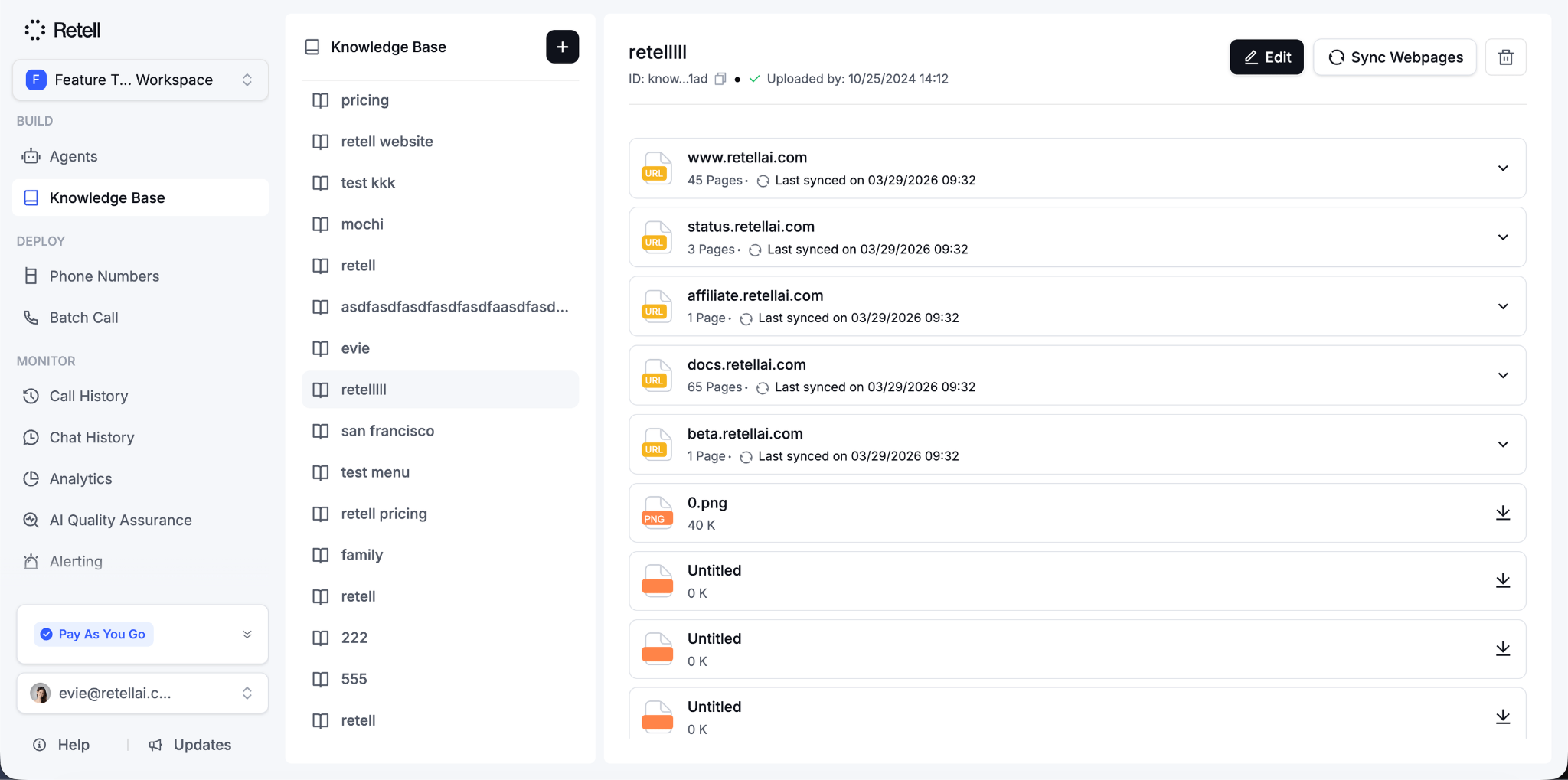
Book appointments directly into your calendar withscheduling.
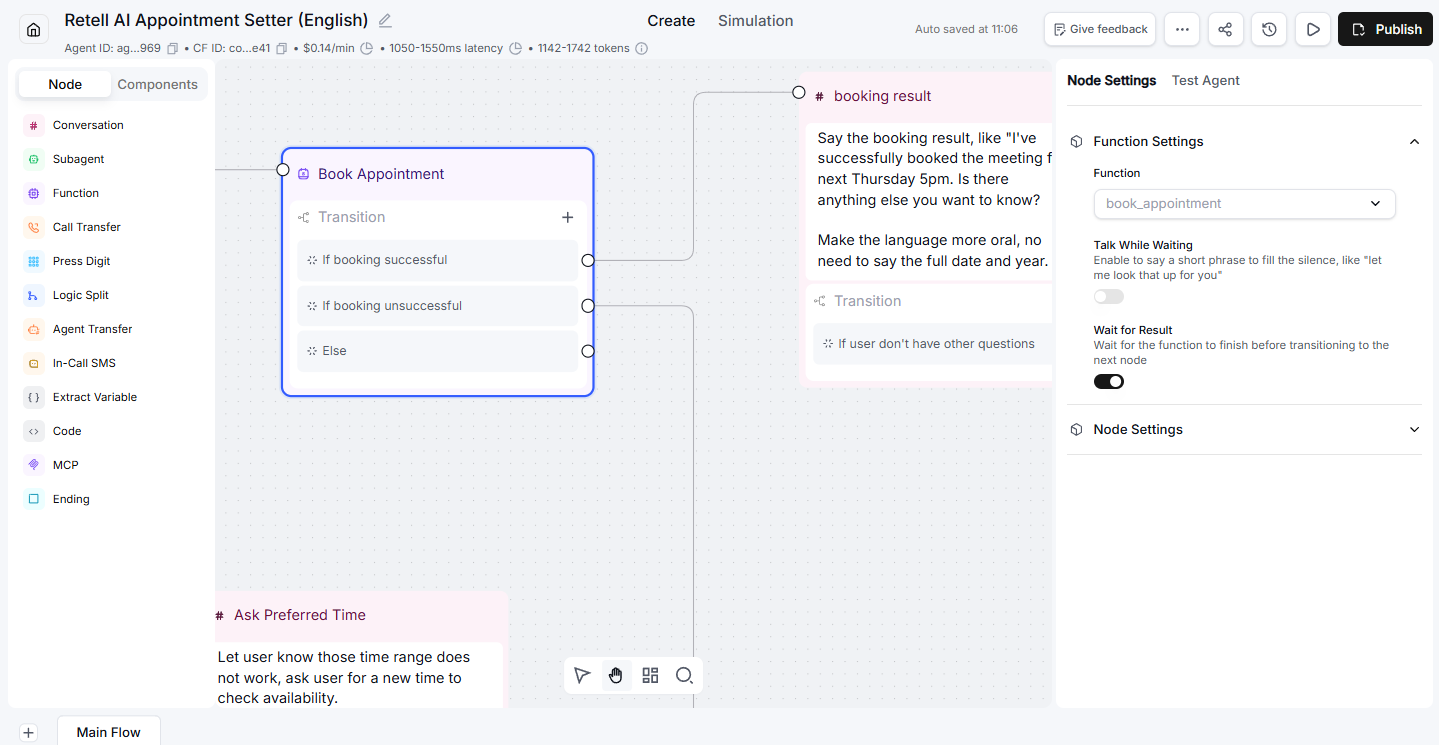
Hand off cleanly through awarm call transfer, passing full context to a human for complex or sensitive calls.

Log every call forpost-call analysis, so you see what customers ask and where to improve.

This is not a replace-everyone pitch. The workable pattern in 2026 is a hybrid: a voice agent absorbs the repetitive volume, a smaller expert team handles the emotional and high-value conversations, and a light overflow arrangement covers spikes.
Because the agent sits on top of your existing phone setup through telephony integrations, you don't replace your carrier to try it.
You can weigh the economics against any outsourcing quote on thepricing page.
Work through a short checklist before you sign anything.
Separate the repetitive, low-risk calls from the complex, sensitive ones. The first group is a strong fit for automation, and the second still needs skilled people.
Set targets for CSAT, first-contact resolution, and repeat-contact rate, not just answer speed, so a provider can't hit its numbers by rushing.
Ask any vendor for its trailing twelve-month attrition figure. A low rate is one of the clearest signs of stable quality.
Regulated fields likehealthcare andfinancial services carry compliance obligations that narrow your options.
Convert every quote to a monthly number with setup, QA, integration, and oversight included, then compare that against automating Tier 1 and keeping a smaller team.
Whatever you choose, pilot it on one queue or after-hours coverage first, measure the results, and expand only when the numbers hold up.
Contact center outsourcing still works. For many companies, a good provider is a fast way to add coverage, cut labor costs, and scale without building a team from scratch.
But the math has changed. Between turnover, oversight, and the hidden costs that never make the quote, the headline savings are thinner than they look, and the routine calls that make up most of the volume no longer need a person at all.
The strongest setup in 2026 is rarely all-or-nothing. It's a hybrid. Let anAI voice agent handle the repetitive Tier 1 calls around the clock, keep a smaller expert team for the complex and sensitive ones, and lean on outsourcing for overflow when you need it. You get the coverage without the full headcount, and the quality where it actually matters.
If you want to see where automation fits your call mix, you canbuild an AI voice agent on Retell for free and test it on a single queue before committing to anything. For a larger or regulated rollout,talk to the Retell team.
Start with the calls you're most tired of handling twice. Automate those, measure the result, and expand from there.
Call center outsourcing usually covers voice only. Contact center outsourcing is broader and includes chat, email, and social alongside phone, so it is closer to full customer-experience coverage.
Often, yes. Estimates put the savings at 30 to 50 percent once you count facilities, hardware, recruiting, and benefits, and the gap widens for 24/7 or multilingual needs. But the lowest hourly rate does not guarantee the lowest total cost.
Roughly $6 to $16 per hour offshore, $10 to $22 nearshore, and $25 to $45 onshore, before setup and QA fees that add 15 to 25 percent. AI voice agents undercut all three for routine calls.
Not entirely, and it should not try to. AI voice agents handle routine, high-volume calls well and cut the headcount you need to outsource, while people take the sensitive and complex cases. Results vary with your call mix.
Start with repetitive, low-risk work like after-hours coverage, overflow calls, or Tier 1 questions. Keep high-stakes conversations with skilled people behind a clear escalation path.
See how much your business could save by switching to AI-powered voice agents.
Total Human Agent Cost
AI Agent Cost
Estimated Savings
A Demo Phone Number From Retell Clinic Office