Five products show up on the same shortlist when a team wants AI to answer and place calls without a human on the line, yet they come from two different worlds. Retell AI, Vapi, and Synthflow are AI voice agent platforms built to run conversations end to end.
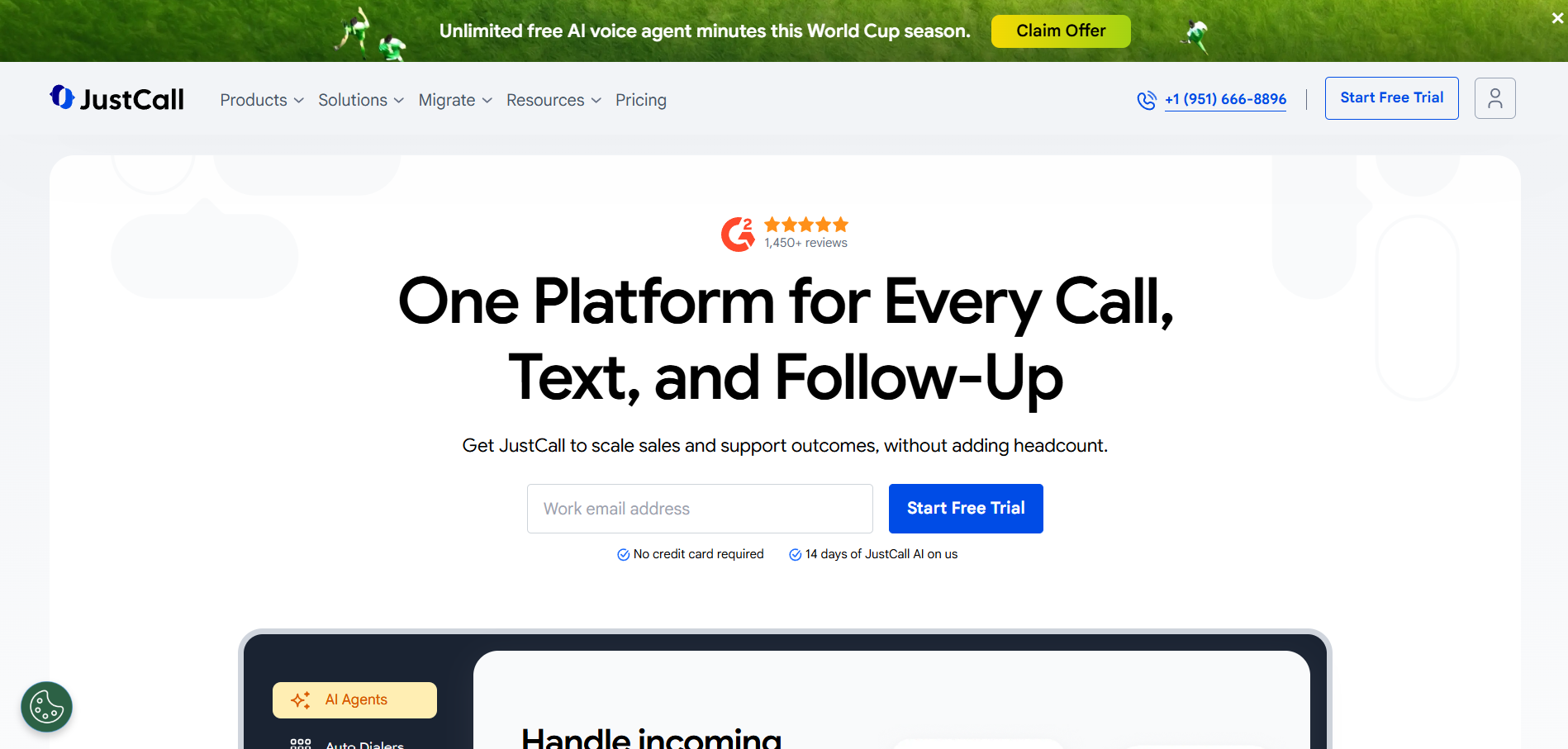
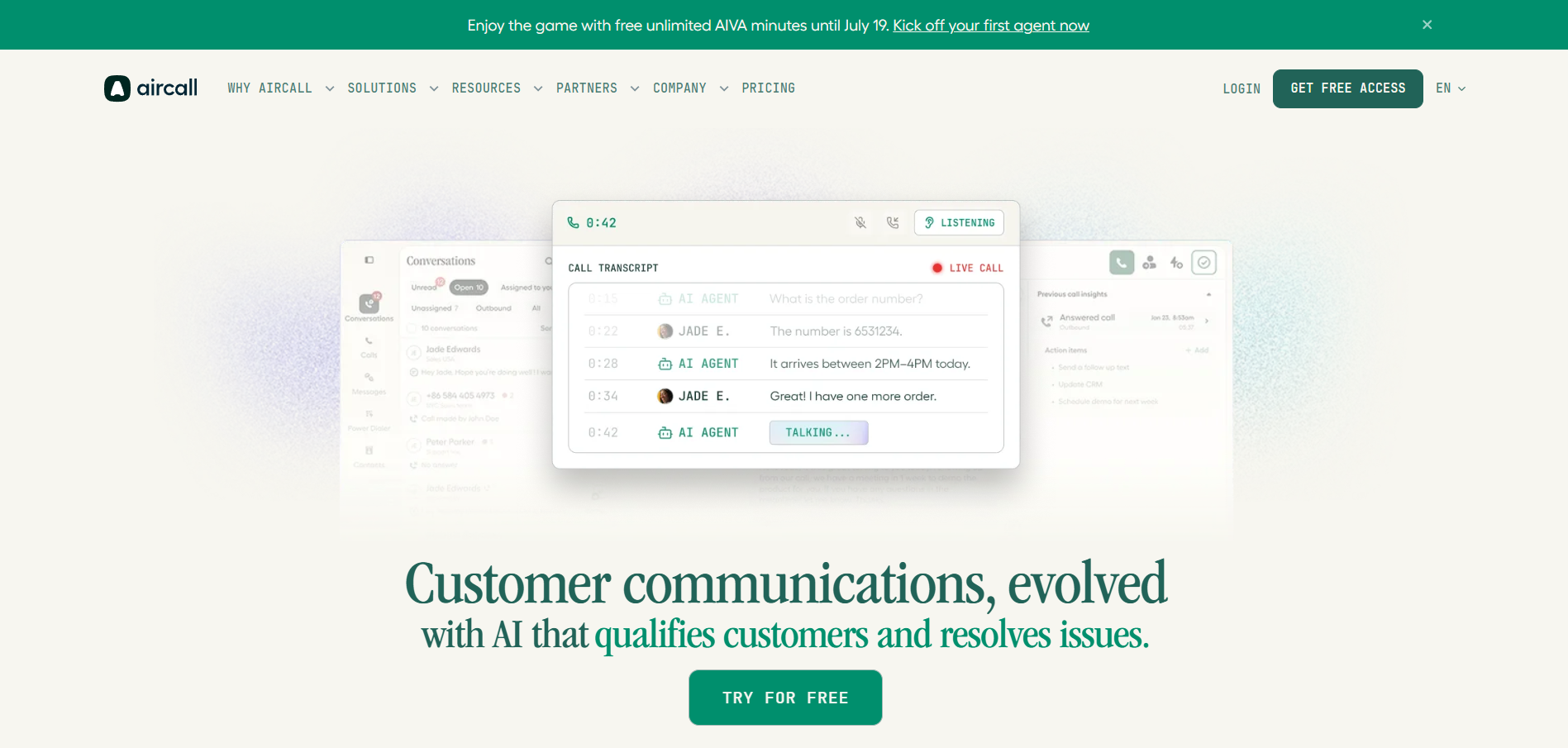
JustCall and Aircall are business phone systems that added AI voice agents on top of a per-seat calling product. Pick from the wrong world and you either pay for seats you do not need or inherit a build job your team cannot staff.
This is Retell AI's own comparison, so read it knowing where it comes from. The data here is pulled from each vendor's pricing pages, G2 listings, and independent benchmarks rather than a staged head-to-head test.
Retell lands first in most categories because full call automation is what it was built for, but Vapi, Synthflow, JustCall, and Aircall each win a row or a buyer that Retell does not, and those wins are called out plainly.
Quick Verdict: Who Should Pick What
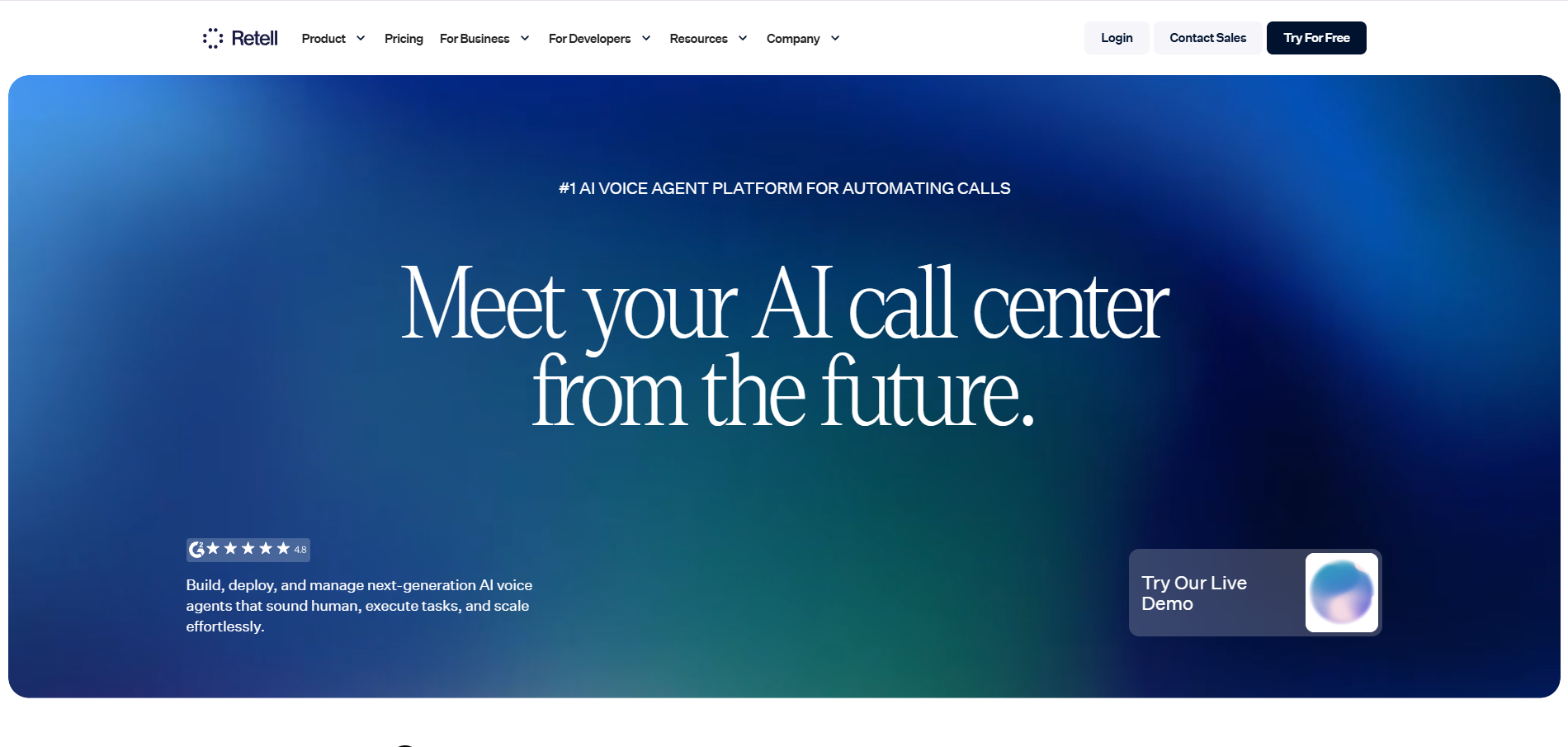
Retell AI fits most teams that want fully automated inbound and outbound calls. It runs on its own turn-taking model, publishes a full rate card with no platform fee, and ships SOC 2 Type I and II, HIPAA, and GDPR coverage on standard plans. It holds a 4.8 out of 5 rating across 1,755 G2 reviews.
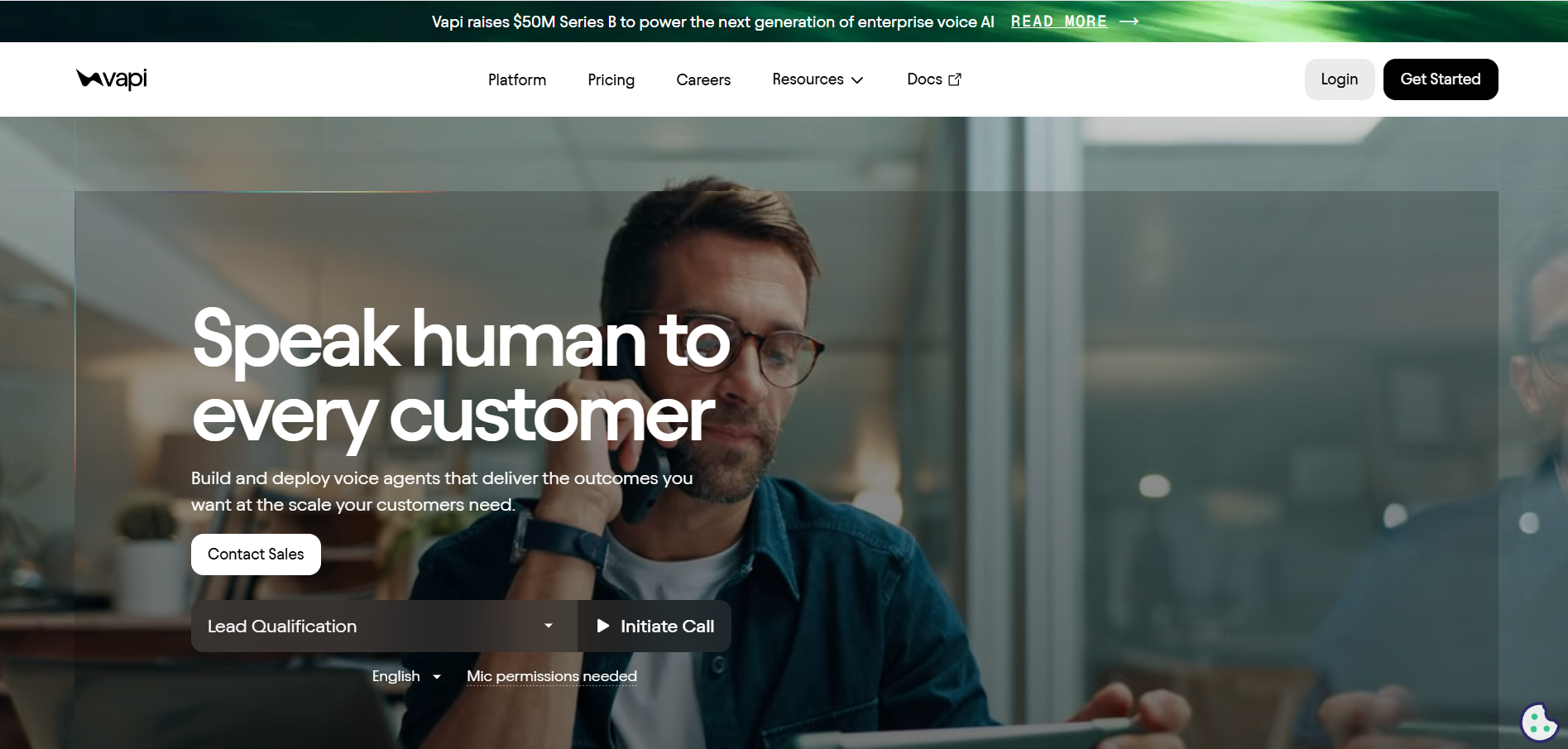
Vapi is the right call only if you have engineers who want to assemble and own every layer of the voice stack through code.
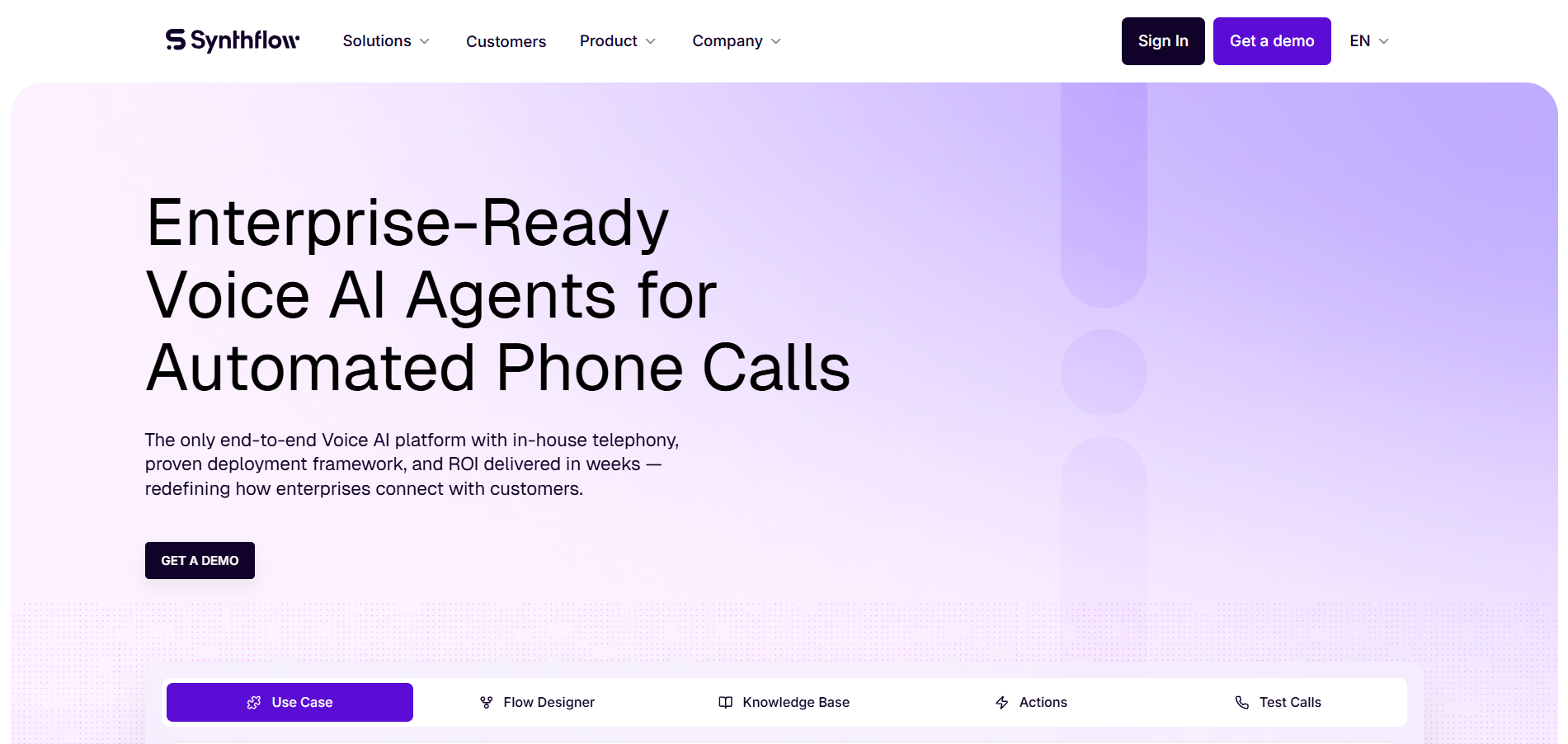
Synthflow works best for non-technical operators who want a drag-and-drop builder and will accept voice-only output with no SMS or chat.
JustCall and Aircall make sense when human reps still handle most calls and the AI agent is a side feature on a phone system you already run.
Now the details.
Side-by-Side Comparison of All Five Calling Platforms
The table maps the dimensions that decide a fully automated calling project: what it costs, how fast it responds, what it can do without a human, and what it takes to comply and deploy.
Capability
Retell AI
Vapi
Synthflow
JustCall
Aircall
Primary design
AI voice agent platform
Developer voice infrastructure
No-code voice agent builder
Business phone system + AI add-on
Business phone system + AI add-on
Entry pricing
Published rate card, varies by model and voice
$0.05/min orchestration only
Pay-as-you-go, plan-based
$29/user/mo
$30/user/mo, 3-user minimum
Realistic all-in rate
Published rate card, varies by model and voice
$0.13-$0.33/min
$0.15-$0.24/min
$0.99/min AI agent (PAYG)
$0.99/min AI agent, then $0.69 and $0.49 tiers
Free to start
$0, $10 credits, 60 free minutes
60 free minutes, $10 credits
Limited free trial minutes
50 free AI agent minutes
50 free AI agent minutes/month
Claimed latency
Consistent at concurrency, no published benchmark
Sub-500ms
Sub-500ms
Not published
Not published
Measured latency
Consistent at concurrency, no published benchmark
536ms best, 4-5s worst reported
~420-800ms
Not published
Not published
Fully automated outbound
Yes, batch calling, no concurrency cap
Yes, via API
Yes, batch campaigns
Inbound AI only, outbound listed as coming
Yes, recently added
Fully automated inbound
Yes
Yes
Yes
Yes
Yes
No-code builder
Yes, plus full SDK
Flow Studio, code for production
Yes, strongest no-code builder
Agent config inside phone system
Agent config inside phone system
Bring-your-own LLM
Yes, GPT, Claude, Gemini, custom
Yes, any provider
Limited, ecosystem-locked
No
No
Warm transfer with context
Yes
Via API
Yes
Yes
Yes
Appointment booking
Yes
Via API
Yes
Yes
Limited
Knowledge base / RAG
Yes, 10 free
Via API
Yes
Per-account knowledge base
Limited
Built-in simulation testing
Yes
Limited
Live testing, uses paid minutes
No
No
Languages
55+
70+ transcription, varies by stack
50+
Varies
4 for AI agent (EN, ES, FR, DE)
SMS / chat channels
Yes, voice, SMS, chat
Voice only
Voice only
Voice, SMS, WhatsApp, email
Voice, SMS, WhatsApp
Concurrent calls included
20 free
10 on pay-as-you-go
Plan-dependent
Per-seat
Per-seat
SOC 2 Type II
Yes
Yes
Yes
Yes
Yes
HIPAA
Yes, standard plans
Add-on, ~$1,000/mo
Add-on, ~30% rate premium
Available
Available
GDPR
Yes
Yes
Yes
Yes
Yes
Built-in PII redaction
Yes
Configurable
Configurable
Limited
Limited
CRM integrations
HubSpot, Salesforce two-way, more
API-driven
200+ native
100+ native
250+ native
Telephony
Twilio, Vonage, Telnyx, SIP, BYOC
BYO via SIP, Twilio, Telnyx
Twilio, SIP
Built on Twilio
Built-in carrier
G2 rating
4.8 (1,755 reviews)
No verified rating at publication
No verified rating at publication
4.3 (2,376 reviews)
4.4 (1,578 reviews)
How the Five Platforms Compare in Detail
Retell AI: built for end-to-end call automation
Retell is the only product here designed from the start to run a phone conversation with no human in the loop, inbound or outbound. Retell owns the turn-taking model rather than chaining public APIs, so response times stay consistent at concurrency and the agent handles barge-in, pauses and background noise on real telephony. Test it on your own accents and line quality during the pilot.
The platform covers the full automation surface in one place. Warmcall transfer hands a live agent the full conversation history before they pick up, so a caller never repeats themselves at the handoff.
Scheduling and accuracy are built in too. Real-time calendar sync lets agentsbook appointments during the call, and a streaming knowledge base answers from your own documentation without a separate tool.
Outbound is equally native. Campaigns run throughbatch call with no concurrency cap, and outbound agents can navigate phone trees to reach a decision-maker rather than dropping at the first menu.
Retell publishes its full rate card with no platform fee and no feature gating, so every plan opens the entire platform. Where you land depends on the model and voice you pick rather than on a sales conversation. Telephony is $0.015 a minute, SIP trunking carries no extra charge, and every account includes 20 concurrent calls.
Retell is not flawless. G2 reviewers note that advanced workflows need real prompt tuning and testing before they sound natural, and that component-based pricing makes cost forecasting harder as volume climbs. Both are fair criticisms, and neither changes the core fact that the platform does more of the automation job out of the box than the other four.
Vapi: maximum control for engineering teams
Vapi is voice infrastructure, not a finished product. You bring your own speech-to-text, language model, voice engine, and telephony, and Vapi orchestrates them through a well-documented API. For an engineering team that wants to swap any component and tune every parameter, this is exactly the right level of control.
The cost of that control is operational. The $0.05 per minute headline covers orchestration only, and real all-in rates land between $0.13 and $0.33 per minute once every provider is billed. Enterprise deployments commonly run $40,000 to $70,000 per year for stable operations, and HIPAA is a roughly $1,000 per month add-on rather than a standard inclusion.
Latency reflects the stack you build: one independent test measured 536ms end to end, while G2 reviewers report swings to four or five seconds at higher concurrency.
Vapi's Flow Studio added a visual layer, but reviewers consistently say production work still moves into code. This is its stated architecture, not a hidden flaw, and it is why non-developers hit a wall fast.
Synthflow: the strongest no-code builder
Synthflow is the easiest of the three voice agent platforms for a non-technical operator to use. The drag-and-drop flow designer is the most praised feature in its G2 corpus, and a working inbound agent can be live in 30 to 60 minutes from a template. It supports 50+ languages and defaults to ElevenLabs for voice, which sets a high bar for naturalness on short, structured calls.
The tradeoffs are real. Synthflow is voice-only in 2026, with no native SMS or chat, so teams that want a call to branch into a text follow-up need another tool.
Pricing runs $0.15 to $0.24 per minute all-in once external providers are billed, HIPAA carries roughly a 30% rate premium, and G2 reviewers describe voice that drifts toward a polished IVR once a caller goes off-script. For a small or mid-sized service business that wants to build it themselves without code, those are acceptable limits.
JustCall: a phone system with an inbound AI agent
JustCall is a business phone system first, used by 6,000-plus teams for calling, SMS, WhatsApp, and CRM-logged outreach. Its AI Voice Agent is a recent layer on top, currently handling inbound calls with outbound listed as coming.
Plans run $29, $49, and $89 per user per month, with the AI Voice Agent billed separately at $0.99 per minute pay-as-you-go, or $99 a month for 100 minutes on Agent Lite and $249 a month for 300 minutes on Agent Max.
The platform earns a 4.3 out of 5 across 2,376 G2 reviews, with ease of use and deep CRM integration as the top positives. The recurring negatives matter for automation buyers: call quality and connection issues are the most-mentioned complaints, and the service runs on Twilio's infrastructure underneath. JustCall is a strong fit when humans still drive most calls and AI handles after-hours overflow, less so when the goal is full automation at volume.
Aircall: integration depth on a per-seat foundation
Aircall is a mature cloud phone system trusted by 23,000-plus businesses, with one of the deepest integration libraries in the category at 250-plus connectors and tightly built Salesforce and HubSpot syncing.
Like JustCall, it added AI Voice Agent as a paid layer on a per-license product. Plans start at $30 per user per month on a three-user minimum, and the AI Voice Agent gives 50 free minutes a month, then bills $0.99 per minute for the first 500, $0.69 for the next band, and $0.49 beyond 2,500.
For automation, two gaps stand out. The AI Voice Agent supports four languages (English, Spanish, French, and German) against the 30-plus that purpose-built platforms handle, and G2 reviewers flag connection issues and call-quality drops during volume spikes.
Aircall is the right pick when CRM-integrated calling for human reps is the core need and AI is a bonus, not the engine.
How Retell AI Stacks Up Against Each Platform
Retell vs Vapi: Finished Platform vs Raw Infrastructure
Both target teams that want deep control over automated calls, and they split on who does the assembly. Vapi hands engineers every component and expects them to wire and maintain the stack, which suits a team building a custom voice product. Retell ships the orchestration, turn-taking, and testing already built, so a team reaches production without standing up five vendor relationships.
Cost follows the same line. Vapi's effective rate of $0.13 to $0.33 per minute reflects the providers you assemble, while Retell's published rate card covers a working configuration. For teams runningcustomer support where a slow agent means callers talk over it, Retell's consistent turn-taking is the safer default. Vapi wins when component swappability is itself the requirement.
Retell vs Synthflow: Builder Ceiling and Channel Reach
Synthflow's no-code builder is genuinely easier for a non-technical operator on day one, and that head start is real. The difference shows up at the ceiling. Retell pairs a no-code builder with a full SDK and a self-syncingknowledge base in the same product, so an operator can start simple and an engineer can extend the same agent without migrating platforms.
Channel reach is the sharper divide. Synthflow is voice-only, while Retell runs voice, SMS, and chat, so a Retell agent can handlelead qualification on a call and follow up by text in one flow. Synthflow remains the better choice for a solo operator who wants the fastest no-code path and never needs a second channel.
Retell vs JustCall vs Aircall: Automation Engine vs Phone System
JustCall and Aircall solve a different problem than Retell. They are per-seat phone systems for human reps, with AI agents bolted on as metered add-ons.
That billing model tells the story: at $0.99 per minute for the AI agent, both charge far more per automated minute than Retell's published rate card, because automation is not their core product.
The capability gaps line up with the pricing. JustCall's AI agent handles inbound only for now, and Aircall's covers four languages. Retell runs fully automated inbound and outbound across 55+ languages withbranded call ID and verified numbers to lift answer rates on outbound. Where JustCall and Aircall genuinely win is the blended model: a team that keeps human reps central and wants WhatsApp, email, and seat-based calling in one console gets more from them than from a pure automation platform.
Who Should Pick What
Inbound customer support at scale: Teams that need consistent response times and want operators iterating on scripts without a developer should start with Retell, wherepost call analysis surfaces sentiment and outcomes after every call. Pine Park Health, a senior care provider, reported a 38% increase in scheduling NPS after deploying Retell for patient scheduling.
High-volume automated outbound: Retell handles appointment reminders, surveys, and lead follow-up through batch calling with no concurrency cap. Synthflow is a reasonable secondary option for teams that want a no-code outbound builder and accept voice-only campaigns.
Custom voice product built in code: Vapi is the better choice for an engineering team treating voice as a core product surface, where owning the full component stack is a deliberate moat rather than overhead.
Regulated industries: For teams inhealthcare, financial services, and insurance, Retell includes HIPAA on standard plans with a self-service BAA, while Vapi charges roughly $1,000 a month for it and Synthflow adds about 30% to the rate. Matic Insurance handled 8,000-plus calls in Q1 2025 on Retell and cut claims handle time from 12.4 to 5.8 minutes.
Teams with human reps at the center: JustCall and Aircall are the right fit when most calls still go to people and the AI agent covers overflow or after-hours, especially for teams that want WhatsApp and email alongside voice.
Frequently Asked Questions
What is the difference between a fully automated calling platform and a business phone system with AI?
A fully automated platform like Retell, Vapi, or Synthflow runs the whole call with no human, inbound or outbound, which is what makes anAI answering service viable for 24/7 coverage. JustCall and Aircall are phone systems for human reps that added AI agents as metered add-ons, so automation is a feature rather than the core engine.
Which platform is cheapest for fully automated calls at volume?
Retell publishes a rate card that varies by model and voice, with no platform fee on top. Vapi runs $0.13 to $0.33, Synthflow $0.15 to $0.24, and the JustCall and Aircall AI agents start at $0.99 per minute, which makes the phone systems the most expensive per automated minute.
Can these platforms handle both inbound and outbound automatically?
Retell, Vapi, Synthflow, and Aircall run both. JustCall's AI Voice Agent handles inbound today, with outbound listed as coming. Retell addsreceptionists for inbound and uncapped batch calling for outbound in the same platform.
How fast do the AI voice agents respond?
Retell publishes no latency benchmark, and its own turn-taking model keeps response times consistent at concurrency. Vapi has hit 536ms in one test but swings to four or five seconds at high concurrency, and Synthflow benchmarks between roughly 420 and 800ms. JustCall and Aircall do not publish AI agent latency.
Which platform is best for regulated industries like healthcare?
Retell includes HIPAA on standard plans with a self-service BAA, plus SOC 2 Type I and II, GDPR, and built-in PII redaction. Vapi gates HIPAA behind a roughly $1,000 per month add-on and Synthflow adds about 30% to the per-minute rate, so Retell carries the lowest compliance cost for adispatch service or clinic.
Do I need engineers to deploy any of these?
Synthflow and Retell both offer no-code builders, so a non-technical operator can launch an agent. Vapi needs engineers for production work. JustCall and Aircall configure their agents inside an existing phone-system console, which is simple but limited in automation depth.
Which integrates best with my existing CRM and tools?
Aircall leads on raw connector count at 250-plus, JustCall offers 100-plus, and Synthflow 200-plus. Retell runs two-way real-time sync with Salesforce andHubSpot plus connectors for GoHighLevel and automation tools like n8n, which matters more for automated workflows than a long directory does.
Why choose an AI voice agent over hiring more reps?
A single automated agent answers calls in seconds, handles thousands of conversations at once, and works 24/7 without added headcount. SWTCH, an EV charging company, cut support costs by more than 50% after deploying Retell, the kind of margin shift that human hiring cannot match at the same speed.
ROI Calculator
Estimate Your ROI from Automating Calls
See how much your business could save by switching to AI-powered voice agents.
All done! Your submission has been sent to your email
Oops! Something went wrong while submitting the form.
Oops! Something went wrong while submitting the form.
ROI Result
2,000
Total Human Agent Cost
$5,000
/month
AI Agent Cost
$3,000
/month
Estimated Savings
$2,000
/month
Live Demo
Try Our Live Demo
A Demo Phone Number From Retell Clinic Office
Thank you! Your submission has been received!
Oops! Something went wrong while submitting the form.