11 Best AI Voice Agents for Lead Generation in 2026 (Tried and Tested)
When I started evaluating AI voice agents for lead generation, the first thing I wanted to understand was whether these systems could handle real sales conversations, not just scripted demo calls. Outbound prospecting is messy. Prospects interrupt, ask unexpected questions, or push back on the pitch. Many AI tools claim they can automate cold calling, but only a handful can qualify prospects and move the conversation toward a booked meeting without sounding mechanical.
What makes voice AI particularly interesting for sales teams is its ability to run outbound calling campaigns at a scale that human SDR teams struggle to match. Instead of dialing prospects one at a time, AI voice agents can initiate hundreds of calls, qualify leads based on predefined criteria, and schedule meetings directly into a sales calendar.
Yes. AI voice agents can generate sales leads by placing outbound calls, qualifying prospects during the conversation, and scheduling meetings automatically. These systems run prospecting campaigns at scale, identify whether a contact fits the target customer profile, and route qualified prospects directly to sales representatives.
In practice, this means the AI handles the early stages of outreach and qualification, while human sales teams focus on conversations that already show buying intent.
In this guide, I reviewed 11 AI voice agents used for lead generation campaigns, focusing specifically on how well they handle real outbound sales workflows.
AI voice agents for lead generation are automated systems designed to conduct sales conversations over phone calls. Instead of relying entirely on human sales development representatives, these conversational AI platforms initiate outbound calls, qualify prospects, and route high-intent leads to sales teams.
In practical terms, an AI voice agent can function as a first-line sales representative. The system places outbound calls to potential prospects, introduces the product or service, and asks qualification questions designed to determine whether the lead fits the company’s target customer profile.
For example, during a typical outbound lead generation call, the AI agent may ask questions such as:
If the prospect meets the qualification criteria, the AI voice agent can automatically schedule a meeting with a human sales representative.
These systems are increasingly used by sales teams to automate the early stages of the pipeline, particularly tasks such as cold calling, initial qualification, and appointment scheduling.
The goal is not to replace human sales teams entirely. Instead, voice AI agents handle repetitive outreach conversations so that sales representatives can focus on qualified prospects who are already interested in the product.
To compare these platforms properly, I focused on how well they perform in real outbound sales workflows rather than relying on marketing claims.
Lead generation calls are fundamentally different from support calls. Prospects are often skeptical, conversations move unpredictably, and objections occur frequently. A voice AI agent must therefore handle a range of conversational scenarios while still guiding the discussion toward qualification or meeting booking.
During this evaluation, I considered several operational criteria.
The most important factor was whether the AI agent could hold a natural conversation with prospects. Systems that rely heavily on scripted responses often fail when prospects ask unexpected questions.
I looked at how effectively the voice agent determines whether a prospect meets predefined qualification criteria such as company size, role, or purchase intent.
Outbound campaigns depend heavily on dialing infrastructure. Platforms were evaluated based on how consistently they can initiate calls and maintain conversation quality during outreach.
Lead generation tools must connect with systems such as HubSpot, Salesforce, or outreach platforms so that qualified leads are automatically routed to sales representatives.
Sales teams need visibility into campaign performance. Platforms that provide detailed call analytics, qualification metrics, and conversion insights received higher scores during the evaluation.
These criteria helped identify which voice AI platforms are genuinely useful for scaling outbound prospecting rather than simply demonstrating conversational AI capabilities.
| Platform | Best For | Lead Generation Strength | Outbound Calling | Pricing |
|---|---|---|---|---|
| Retell AI | Scalable voice AI infrastructure | Natural AI sales conversations and CRM integrations | Yes | From $0.07+ per minute usage-based (Retell AI) |
| Bland AI | High-volume outbound calling | Cold calling automation and programmable voice workflows | Yes | From $0.09 per connected minute + usage fees (Lindy) |
| Vapi | Developer-built AI voice agents | Custom outbound call flows and programmable voice assistants | Yes | About $0.05 per minute hosting + model costs (Vapi) |
| Synthflow AI | No-code voice automation | Sales call templates and outbound call workflows | Yes | Plans from \~$750/month (≈4,000 minutes) (Synthflow) |
| 11x.ai | AI SDR automation | Autonomous AI sales agents for qualification and demos | Yes | Enterprise pricing (custom) |
| Lindy AI | Workflow automation + voice | Meeting scheduling and lead follow-up automation | Yes | From \~$49/month starter plans (usage-based tiers) |
| UnleashX.ai | AI outbound sales automation | Lead engagement and automated sales calls | Yes | Custom enterprise pricing |
| SquadStack | Hybrid AI + human sales calling | Lead qualification with human fallback agents | Yes | Enterprise pricing (contract based) |
| Play AI | Conversational voice agents | AI voice interaction and conversational AI calls | Limited | From \~$0.02–$0.05 per minute equivalent usage |
| CallBotics | Voice campaign automation | Automated dialing and voice campaign workflows | Yes | From $450–$500 per AI agent / month |
| Dialora AI | AI outbound dialer | Lead prospecting and call automation | Yes | From \~$39/month (200 minutes included) |
This comparison provides a high-level overview, but the differences between platforms become clearer when looking at how each system performs during actual lead generation workflows.
When I evaluated AI voice agents for outbound lead generation campaigns, Retell AI consistently performed like a platform built for real calling environments rather than demo conversations. Many voice AI tools sound impressive when running scripted examples, but outbound sales calls are unpredictable. Prospects interrupt, ask questions about the product, or challenge the pitch. Retell handled these transitions more smoothly than most tools in this category.
In practice, the platform works well for teams running high-volume outbound campaigns where AI agents introduce the offering, ask qualification questions, and schedule meetings with human sales representatives. The infrastructure behind Retell allows voice agents to run multiple conversations simultaneously while maintaining natural conversational flow.
What stood out most during testing was the way the system manages lead qualification logic during the call. The voice agent can guide the conversation through qualification questions, identify whether the prospect fits the target profile, and automatically schedule meetings once the criteria are met.
For companies trying to scale outbound sales without expanding SDR headcount dramatically, that workflow becomes extremely valuable.
During outbound call simulations, the Retell voice agent handled prospect questions and objections better than most platforms tested. The conversational flow felt closer to a real SDR conversation rather than a rigid script.
Some platforms provide more built-in campaign management dashboards for sales teams.
Very small teams running only occasional outbound campaigns may not need the level of infrastructure Retell provides.
G2 Rating: 4.8 / 5
User feedback: “Retell gives us the infrastructure to build voice agents that actually work in real calls.”
Pricing typically starts around $0.07 per minute, making it cost-effective for teams running large outbound lead generation campaigns.
Bland AI focuses heavily on programmable voice automation for outbound calling. The platform has become popular among startups experimenting with AI SDR workflows because it allows teams to design highly customizable calling agents.
During evaluation, Bland proved effective for running cold-calling campaigns where the voice agent initiates outreach, introduces the offering, and attempts to qualify prospects. Because the platform exposes a flexible API layer, developers can create custom qualification logic and call flows tailored to specific sales processes.
This flexibility is useful for teams that want tight control over how AI agents behave during sales calls. For example, companies can design agents that follow specific qualification frameworks such as BANT or MEDDIC while capturing structured lead information during the conversation.
However, that flexibility also means the platform often requires more technical setup compared with tools that provide ready-made outbound sales workflows.
The voice agent handled simple prospect conversations well but required careful prompt design to manage more complex objections.
Some platforms offer stronger built-in lead generation workflows without requiring heavy customization.
Teams looking for a no-code sales automation solution.
G2 Rating: 4.6 / 5
User feedback: “Bland gives us full control over how our AI voice agents behave during calls.”
Pricing starts around $0.09 per connected minute, with costs increasing based on model usage.
Vapi has become one of the most widely discussed platforms among developers building AI voice agents. Rather than focusing specifically on lead generation, Vapi provides a programmable voice AI framework that can be adapted to outbound sales workflows.
In lead generation scenarios, Vapi allows teams to build agents that place outbound calls, ask qualification questions, and route qualified prospects to sales representatives. Because the platform is API-driven, teams can integrate voice agents directly with CRM systems or outbound sales tools.
This architecture makes Vapi particularly attractive for engineering-heavy organizations that want to embed AI voice agents deeply into their sales stack.
However, companies expecting a ready-to-use AI SDR solution may find the setup more technical than some alternatives.
The voice agent handled lead qualification conversations well when properly configured but required custom conversation design.
Platforms focused specifically on sales automation often deploy faster.
Non-technical sales teams without engineering support.
G2 Rating: 4.7 / 5
User feedback: “Vapi makes it easy to build custom voice agents for different use cases.”
Hosting costs begin around $0.05 per minute, with additional model and telephony costs depending on configuration.
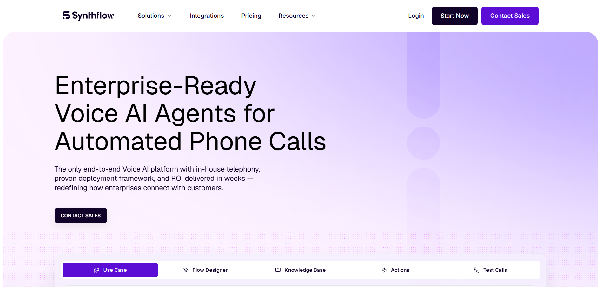
Synthflow AI takes a different approach by focusing on no-code voice automation. Instead of requiring developers to design conversation flows from scratch, the platform provides templates and visual builders for creating voice agents.
In outbound lead generation campaigns, Synthflow can be used to create AI agents that introduce a product or service, ask qualification questions, and schedule meetings. The visual interface makes it easier for non-technical teams to configure campaigns compared with developer-centric platforms.
This ease of setup makes Synthflow particularly appealing for small to mid-sized companies that want to experiment with AI voice agents without building extensive infrastructure.
However, the trade-off is reduced flexibility when compared with more programmable platforms.
Synthflow handled basic prospect conversations well but struggled slightly when prospects asked unexpected technical questions.
Developer platforms provide deeper customization capabilities.
Teams building highly customized AI SDR workflows.
G2 Rating: 4.6 / 5
User feedback: “Synthflow made it easy for our team to launch our first AI calling campaign.”
Plans typically start around $750 per month, depending on included call minutes.

11x.ai positions itself as an AI SDR platform rather than simply a voice automation tool. The company focuses on building AI agents capable of performing the early stages of sales outreach, including prospecting, qualification, and meeting booking.
In lead generation scenarios, the platform’s voice agents can initiate outbound calls, identify qualified prospects, and schedule meetings with human sales representatives.
The platform also integrates closely with outbound sales workflows, allowing teams to run coordinated campaigns across voice and other communication channels.
The platform performed well when guiding conversations toward meeting scheduling but had limited public documentation about conversation customization.
Developer platforms allow deeper control over agent behavior.
Small teams experimenting with AI voice outreach.
Estimated Rating: 4.5 / 5
Pricing is typically custom enterprise contracts.
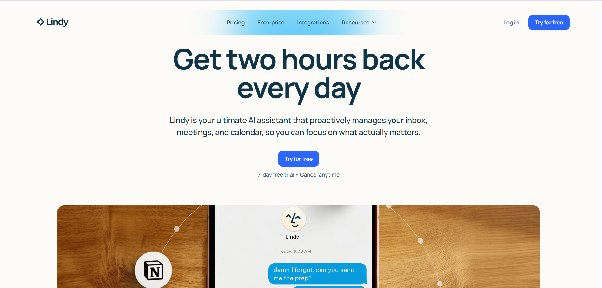
Lindy AI approaches automation from a workflow perspective rather than positioning itself strictly as a voice calling platform. The system allows teams to build AI agents that automate tasks such as outreach, follow-ups, meeting scheduling, and prospect qualification. When combined with voice capabilities, Lindy can be used to automate parts of outbound lead generation workflows.
In practice, Lindy is often used by growth teams that want a flexible AI assistant capable of handling multiple sales tasks beyond phone calls. For example, a lead might first interact with an automated outreach campaign, then receive a call from an AI voice assistant that confirms interest and schedules a meeting with a human sales representative.
This multi-step automation can be useful for companies running complex lead generation pipelines where phone calls are only one part of the outreach process. Lindy can connect to CRM systems, calendars, and workflow tools so that the voice interaction becomes part of a broader automation system.
However, because Lindy focuses on general AI workflow automation rather than voice infrastructure specifically, its calling capabilities often depend on integrations with external voice platforms.
During evaluation, Lindy worked well when used as part of a broader sales automation workflow. However, compared with dedicated voice AI platforms, the system relied more heavily on integrations to support complex outbound calling campaigns.
Platforms built specifically for voice infrastructure typically provide stronger call handling capabilities.
Sales teams that want a dedicated AI outbound calling platform rather than workflow automation.
G2 Rating: 4.6 / 5
User quote: “Lindy works well as an AI assistant across multiple workflows, not just calling.”
Pricing generally starts around $49 per month for basic automation tiers, with higher plans depending on usage and integrations.
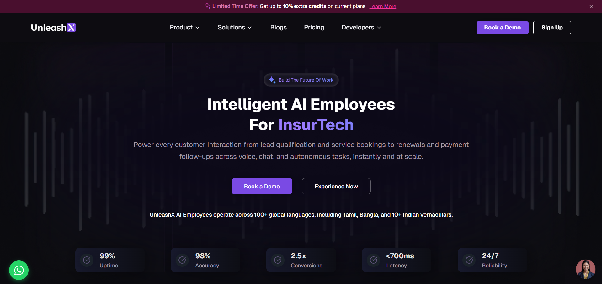
UnleashX.ai focuses specifically on AI-powered outbound sales automation, positioning its platform as a way to scale prospect outreach without expanding SDR teams. The system combines voice agents with campaign management tools designed for lead engagement and qualification.
In outbound sales environments, UnleashX can be used to run calling campaigns that introduce the product, ask qualification questions, and determine whether the prospect is interested in learning more. Once a prospect is identified as a qualified lead, the system can transfer the call or schedule a meeting with a human sales representative.
One area where the platform stands out is its focus on sales-specific workflows. The system allows teams to design structured conversations that guide prospects through qualification steps while capturing lead information for CRM systems.
However, because UnleashX targets enterprise sales teams, the platform is typically deployed through managed implementations rather than simple self-service onboarding.
UnleashX handled outbound conversations effectively when following structured qualification scripts, though complex objections sometimes required human follow-up.
Developer-focused voice platforms often allow deeper customization of conversational logic.
Small startups experimenting with AI outbound calling.
Estimated user rating: \~4.5 / 5
Pricing is typically enterprise-level and negotiated per deployment, depending on campaign scale.
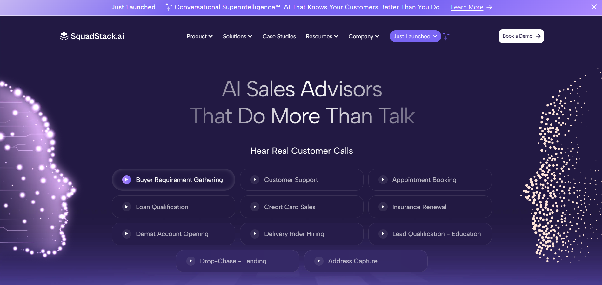
SquadStack takes a hybrid approach to lead generation by combining AI automation with human calling agents. Instead of relying solely on voice AI, the platform routes calls between automated systems and trained human operators depending on the complexity of the interaction.
For lead generation campaigns, this hybrid model can be useful when companies want to automate the early stages of outreach but still rely on human agents to close conversations or handle complex objections. The AI system can initiate calls, collect basic prospect information, and determine whether the lead is worth pursuing before passing the conversation to a human sales representative.
This approach helps maintain conversation quality while still reducing the workload of human SDR teams.
SquadStack performed well when used for campaigns that required both automation and human interaction. However, companies seeking fully automated AI calling systems may find the hybrid approach less scalable.
Pure AI voice platforms can run higher volumes of simultaneous outbound calls.
Organizations aiming for fully automated AI sales outreach.
Estimated user rating: \~4.4 / 5
Pricing typically depends on campaign volume and managed service agreements.
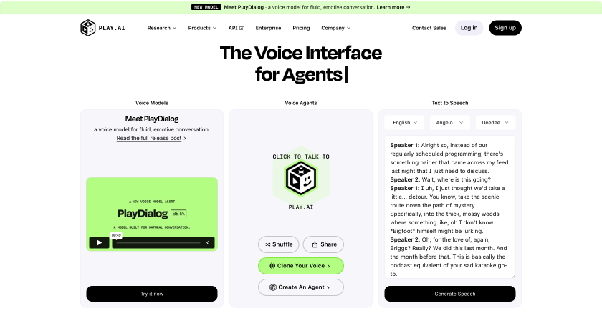
Play AI is primarily known for its voice generation and conversational AI capabilities, which developers can use to build interactive voice applications. While the platform was not originally built specifically for lead generation, its conversational voice technology can be adapted to outbound calling use cases.
In sales workflows, Play AI can power voice agents that introduce products, ask basic qualification questions, and direct interested prospects toward booking meetings with human sales representatives.
Because Play AI focuses heavily on conversational realism and voice synthesis quality, it performs well in situations where natural-sounding voice interactions are important.
However, companies typically need to build the outbound lead generation workflow themselves.
Play AI delivered strong voice quality during conversations but required additional configuration to support structured lead qualification workflows.
Platforms designed specifically for sales automation provide more built-in campaign features.
Sales teams looking for ready-to-deploy AI outbound calling tools.
Estimated rating: \~4.4 / 5
Pricing typically starts around $0.02–$0.05 per minute depending on voice usage.
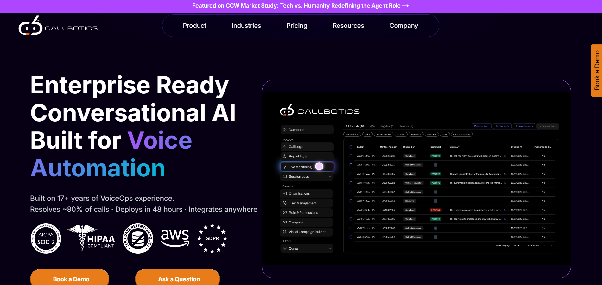
CallBotics focuses on automated voice campaigns and outbound dialing workflows. The platform is designed for organizations running large-scale calling campaigns for sales outreach, customer notifications, or lead engagement.
For lead generation teams, CallBotics can automate cold calling campaigns where the voice system introduces the offering and collects responses from prospects. The system can capture prospect information and route qualified leads to human sales representatives.
Compared with developer-focused platforms, CallBotics offers a more structured campaign management interface, which makes it easier for sales teams to launch outbound calling initiatives without extensive technical setup.
The system performed reliably for large dialing campaigns but was less capable of handling complex conversational scenarios.
Advanced conversational AI platforms provide more natural interactions.
Companies prioritizing highly natural AI sales conversations.
Estimated rating: \~4.3 / 5
Pricing typically starts around $450–$500 per AI agent per month, depending on campaign scale.
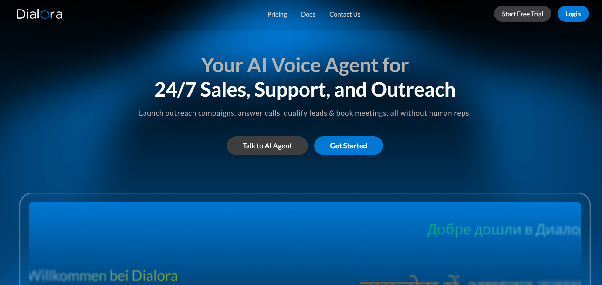
Dialora AI positions itself as a voice-first automation platform built to handle outbound sales conversations, appointment booking, and lead qualification without requiring heavy engineering setup. Unlike developer-centric voice infrastructure tools, Dialora focuses on delivering pre-configured AI agents that businesses can deploy quickly to run outbound call campaigns and capture leads automatically.
One of Dialora’s core selling points is its no-code deployment model. Businesses can launch AI voice agents using prebuilt templates and industry workflows rather than building conversation logic from scratch. This approach lowers the technical barrier for teams that want to automate outbound calls but do not have dedicated engineering resources.
However, compared with highly customizable voice infrastructure platforms, Dialora trades some flexibility for ease of deployment. Organizations that require deeply customized conversational logic may find developer-oriented tools more adaptable.
During evaluation, Dialora handled structured lead qualification calls reliably, particularly when the conversation followed defined scripts. The system worked well for identifying interested prospects and routing them toward meeting scheduling workflows.
Platforms built primarily for programmable voice automation often provide deeper control over conversational behavior and AI model configuration.
Organizations that require fully customizable AI SDR workflows or deep infrastructure control may prefer developer-focused platforms.
G2 Rating: \~5.0 / 5 (limited reviews)
User feedback: “Setup was incredibly straightforward and the AI quickly started qualifying leads and booking meetings automatically.”
Dialora uses a subscription-based model with multiple tiers. Plans typically start around $97 per month, with higher tiers such as Pro ($297/month) and Growth ($750/month) supporting larger call volumes and additional campaign features
After evaluating these platforms in real outbound sales workflows, the differences between them become clearer. Some tools are better suited for programmable voice infrastructure, while others focus on campaign automation or no-code deployment.
Here is how the leading platforms compare based on lead generation performance:
While evaluating AI voice agents for lead generation, the features that matter most rarely appear in product demos. Outbound sales conversations are unpredictable. Prospects interrupt, question the value proposition, or ask technical questions that push the conversation outside the scripted flow. The real test of a voice agent is whether it can navigate these moments while still guiding the interaction toward qualification.
Several capabilities consistently separate strong platforms from tools that struggle in real outbound campaigns.
Prospects quickly recognize when a conversation follows a rigid script. Effective voice agents must interpret variations in language, handle interruptions, and respond in a way that keeps the interaction moving forward. Systems that maintain conversational pacing and respond intelligently to objections perform far better in outbound lead generation campaigns.
One of the most useful capabilities I look for is the ability to embed qualification logic directly into the conversation. Sales teams often rely on frameworks such as BANT or MEDDIC to determine whether a prospect is worth pursuing. Voice agents should capture these signals during the call and determine whether the lead should be routed to a human sales representative.
Voice AI cannot operate in isolation. Qualified leads must flow directly into the CRM system along with call transcripts and prospect data. Platforms that integrate seamlessly with systems like Salesforce or HubSpot allow sales teams to move leads through the pipeline without manual data entry.
The most effective AI voice agents complete the lead generation cycle by booking meetings during the call itself. When a prospect expresses interest, the system should offer available time slots and schedule the meeting immediately. This dramatically increases conversion rates compared with asking prospects to respond later.
Outbound campaigns require constant optimization. Platforms that provide detailed analytics on connection rates, qualification outcomes, and meeting bookings allow sales teams to refine their outreach strategies.
When these capabilities are implemented well, AI voice agents become a scalable extension of the sales team rather than a simple automation tool.
In my experience running or evaluating AI outbound campaigns, the challenges are rarely about whether the AI can speak. The real problems appear when the system faces unpredictable prospect behavior during live calls.
Here are the operational challenges sales teams consistently encounter:
These challenges explain why successful AI lead generation campaigns require careful workflow design, clean data, and strong conversational infrastructure, not just a voice agent that can make calls.
Selecting an AI voice platform for lead generation requires aligning the technology with the way your sales organization operates.
When I assess voice AI tools for outbound campaigns, several factors consistently determine whether the deployment produces meaningful results.
The larger the outreach volume, the more valuable voice automation becomes. AI voice agents can run hundreds of conversations simultaneously, allowing sales teams to scale prospecting without expanding SDR headcount.
The platform must connect directly to CRM systems and scheduling tools. Without these integrations, qualified leads cannot move efficiently into the sales pipeline.
Some companies run straightforward qualification calls, while others require more complex conversations that include objection handling and product explanations. The platform should support conversational workflows that reflect the company’s sales process.
AI voice platforms typically charge based on usage such as minutes of conversation or number of calls. Sales leaders should evaluate how costs increase as outreach campaigns grow.
Campaign managers should be able to monitor call performance, adjust qualification criteria, and analyze conversion metrics. Platforms that provide strong operational visibility make it easier to improve campaign results over time.
Choosing the right platform ultimately depends on the company’s outreach strategy, technical resources, and expected call volume.
After reviewing these AI voice agents in real outbound lead generation scenarios, the differences became clearer once the calls moved beyond simple introductions. Many platforms can place automated calls and deliver a prepared pitch. The real test appears when prospects interrupt, ask unexpected questions, or shift the direction of the conversation.
What I found is that platforms originally designed around chatbot-style automation often struggle in these situations. Voice calls require faster response timing and more flexible conversation handling.
During testing, Retell handled these moments more consistently than most tools in the list. The system maintained conversational flow even when prospects changed topics or asked follow-up questions. I also noticed that the agent could move naturally from qualification questions to scheduling a meeting when the prospect showed interest.
For lead generation workflows, that ability to progress the conversation toward a concrete next step makes the automation far more useful than systems that simply collect prospect information.
AI voice agents are quickly becoming one of the most practical tools for scaling outbound lead generation. By automating prospecting calls, qualifying leads, and scheduling meetings, these systems allow sales teams to expand outreach capacity without increasing manual dialing effort.
However, the effectiveness of voice automation depends on how well the system manages real conversations. Outbound sales interactions involve objections, interruptions, and unpredictable responses that require flexible conversational handling.
When the technology is implemented correctly, AI voice agents can manage the early stages of the sales pipeline while human representatives focus on closing deals.
In that model, automation does not replace the sales team. It amplifies its reach.
Retell AI, Bland AI, Vapi, Synthflow, and 11x.ai all run lead qualification calls in production today. Retell AI ranks first in this guide for outbound qualification because it holds conversation quality when prospects interrupt or object, routes qualified leads straight into HubSpot or Salesforce, and starts at $0.07 per minute with no platform fee. Bland AI and Vapi suit engineering teams that want to script every branch of the call themselves.
A modern AI voice agent qualifies leads by asking real qualification questions and reacting to the answers. On a typical call it confirms whether the prospect is evaluating solutions, what tools they use today, whether they hold budget authority, and whether they want a demo. When the prospect matches the criteria, the agent books the meeting during that same call. Script-following bots break the moment a prospect asks something unexpected.
Usage-based platforms charge between $0.05 and $0.31 per minute. Retell AI starts at $0.07 per minute with no platform fee and no contract minimum, so 1,000 minutes costs $70 before model and voice engine choices change the rate. Bland AI starts near $0.09 per connected minute. Bundled platforms such as Synthflow start closer to $750 per month. Model your real minute volume before you compare headline rates.
Retell AI, Synthflow, Lindy AI, and 11x.ai all push qualified leads into HubSpot and Salesforce. Retell AI also connects to GoHighLevel, Zapier, n8n, Cal.com, and Google Calendar, and its webhooks fire on call events so your CRM updates during the call rather than after it. Check whether a platform writes structured qualification fields back to the record, not just a call transcript.
Production voice platforms run hundreds of concurrent calls. Retell AI includes 20 free concurrent calls on every account and processes more than 100 million calls per month across the platform, so campaign volume rarely hits a ceiling. Concurrency matters more than raw dial speed for lead generation, because a campaign that fires 500 calls and drops 300 of them wastes the list rather than working it.
An AI voice agent checks any criterion you can phrase as a question: company size, industry, current vendor, renewal timing, budget range, decision authority, and intent to buy. Teams commonly map these to a framework such as BANT or MEDDIC. The agent captures each answer as a structured field, scores the lead against your threshold, and either books a meeting or ends the call politely.
See how much your business could save by switching to AI-powered voice agents.
Total Human Agent Cost
AI Agent Cost
Estimated Savings
A Demo Phone Number From Retell Clinic Office