7 Best AI Voice Agents for Enterprise Call Management in 2026 (Tested & Compared)
12
MIN READ
September 8, 2026
Enterprise call centers are not experimenting with AI anymore. They are actively shifting inbound support, outbound campaigns, scheduling, and routing into AI voice agent systems.
But once these systems move beyond controlled pilots, a consistent pattern shows up.
Some platforms maintain call quality but fail under concurrency. Others integrate well with CRM and telephony but introduce latency that breaks conversation flow. A few can scale infrastructure, but lose context or degrade in multi-turn interactions.
The gap is not in capability. It is in how these systems behave under real call volume.
From what I've evaluated, enterprise deployments fail for three reasons:
This guide focuses on that reality.
Instead of comparing features, I've evaluated these platforms based on how they perform inside live enterprise call environments, where latency, concurrency, and integration determine whether the system works or fails.
I treated this as a call performance evaluation, not a product comparison. Every platform was assessed based on how it behaves inside real enterprise call flows, not how it looks in a demo or sandbox environment.
Call handling under concurrency: I evaluated how systems perform when handling multiple simultaneous calls. Enterprise environments require thousands of concurrent interactions, and many platforms that perform well in isolated tests start to degrade under load.
Latency and response consistency: Sub-second response timing is critical in live calls. I focused on whether platforms maintain consistent response times across the entire conversation, not just the first interaction. Variability here directly impacts user experience and call outcomes.
Conversation handling in real scenarios: I tested how systems respond to interruptions, topic changes, and multi-turn interactions. The key signal was whether the agent maintains context or resets the flow when conversations deviate from expected patterns.
Integration depth with enterprise systems: I assessed how reliably platforms connect with CRM systems, telephony providers, and call center infrastructure. This includes whether they can update records, route calls, and trigger workflows during live interactions.
Cost behavior at scale: I modeled realistic enterprise usage, including call duration, concurrency, and retries. Base pricing was not considered sufficient. I focused on how costs behave when systems are deployed at scale across thousands of calls.
Operational control and flexibility: I evaluated how much control teams have over conversation logic, fallback handling, and system behavior. This becomes critical when optimizing performance in production environments.
The goal is simple:
Identify platforms that can handle enterprise call volume reliably, not just those that demonstrate capability in controlled environments.
This table reflects how these platforms perform in real enterprise call environments, including tradeoffs that impact deployment decisions.
| Platform | Best For | Key Strength | Limitation | G2 Rating | Pricing (Actual) |
|---|---|---|---|---|---|
| Retell AI | Real-time AI call agents | Consistent low-latency conversations at scale | Requires setup and tuning | 4.6–4.8 | $0.07–$0.31/min |
| Cognigy | Enterprise contact centers | Deep workflow orchestration and control | Complex setup and long deployment cycles | 4.6 | ~$2K–$3K/mo → $100K+/yr |
| Kore.ai | Large-scale CX automation | Strong governance and analytics | Slower implementation and iteration | 4.5 | ~$1.2K–$2K/mo → $50K–$200K/yr |
| PolyAI | Natural voice CX | Human-like conversations in structured flows | High cost and limited flexibility | 4.6 | Custom enterprise contracts |
| Vapi | Developer-first voice agents | Full control over stack and orchestration | Requires engineering and infra management | ~4.4 | ~$0.05/min + infra |
| Bland AI | High-volume call operations | Stable execution at scale with memory + logging | Less flexible in complex conversations | ~4.5 | ~$0.09/min + fees |
| Synthflow | Fast deployment | Built-in telephony and quick setup | Limited control and customization | ~4.4 | ~$0.08/min |
Note: Enterprise costs scale with concurrency, integrations, and call duration. Base pricing rarely reflects total cost in production.
Here's how each platform performs when tested in real enterprise call environments, where latency, concurrency, and conversation handling determine whether an enterprise conversational AI platform actually works.
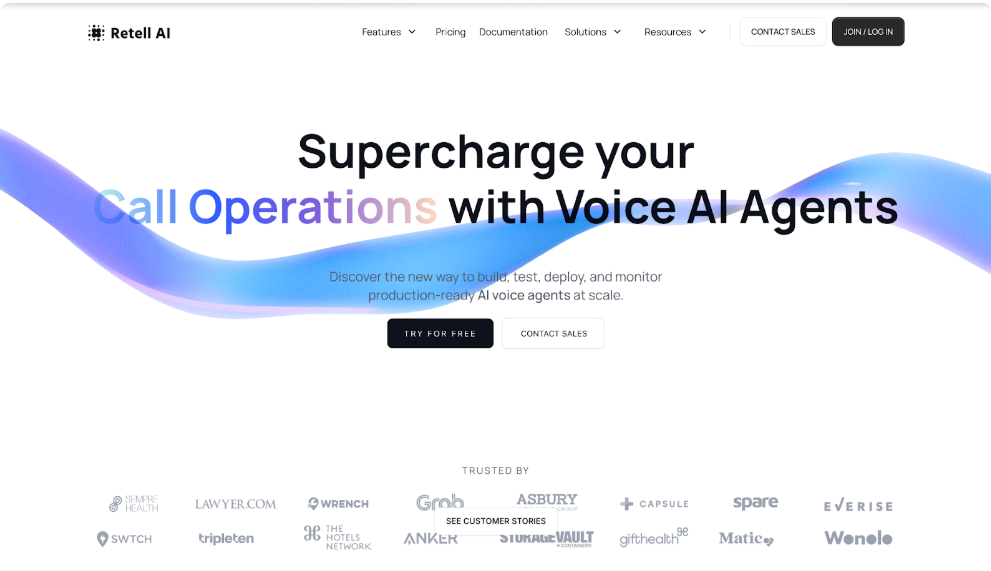
Retell AI is built specifically for real-time enterprise call handling, where latency, interruption handling, and concurrency directly impact outcomes. Unlike many platforms that adapt LLMs to voice, Retell is designed around streaming conversations and turn-taking, which makes it more reliable in live call environments. It supports both inbound and outbound workflows, including support automation, lead qualification, and scheduling, with a focus on maintaining conversation continuity at scale.
In high-volume outbound and support simulations, Retell maintained conversation flow without latency spikes or context loss. It performed consistently beyond initial turns, which is where most systems degrade.
4.6–4.8/5 — strong feedback on conversation realism and reliability under load
$0.07–$0.31 per minute. Costs scale with call duration and concurrency. Predictable when optimized, but requires monitoring at high volume.
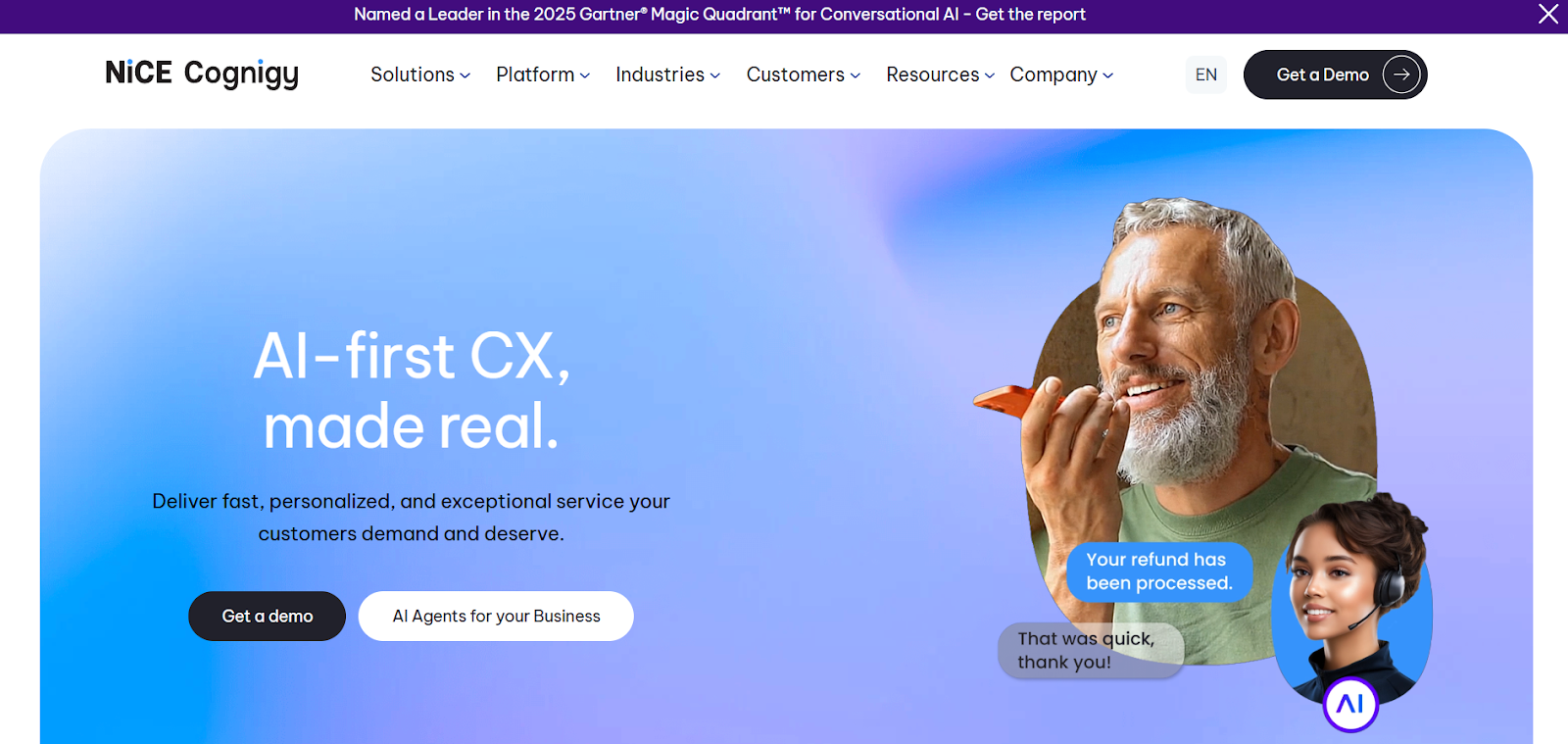
Cognigy is designed for enterprise contact center automation, where the priority is orchestrating complex workflows across channels. It integrates deeply with existing CX infrastructure and provides structured control over call flows, making it suitable for organizations replacing or augmenting large call center operations.
Cognigy performs reliably in structured environments where workflows are predefined. It handles routing, escalation, and system integration well, but lacks agility when conversations deviate from expected paths.
4.6/5 — strong enterprise feedback on reliability and orchestration, with concerns around complexity
~$2K–$3K/month, scaling to $100K+/year. Costs increase significantly with integrations, usage, and enterprise support requirements.
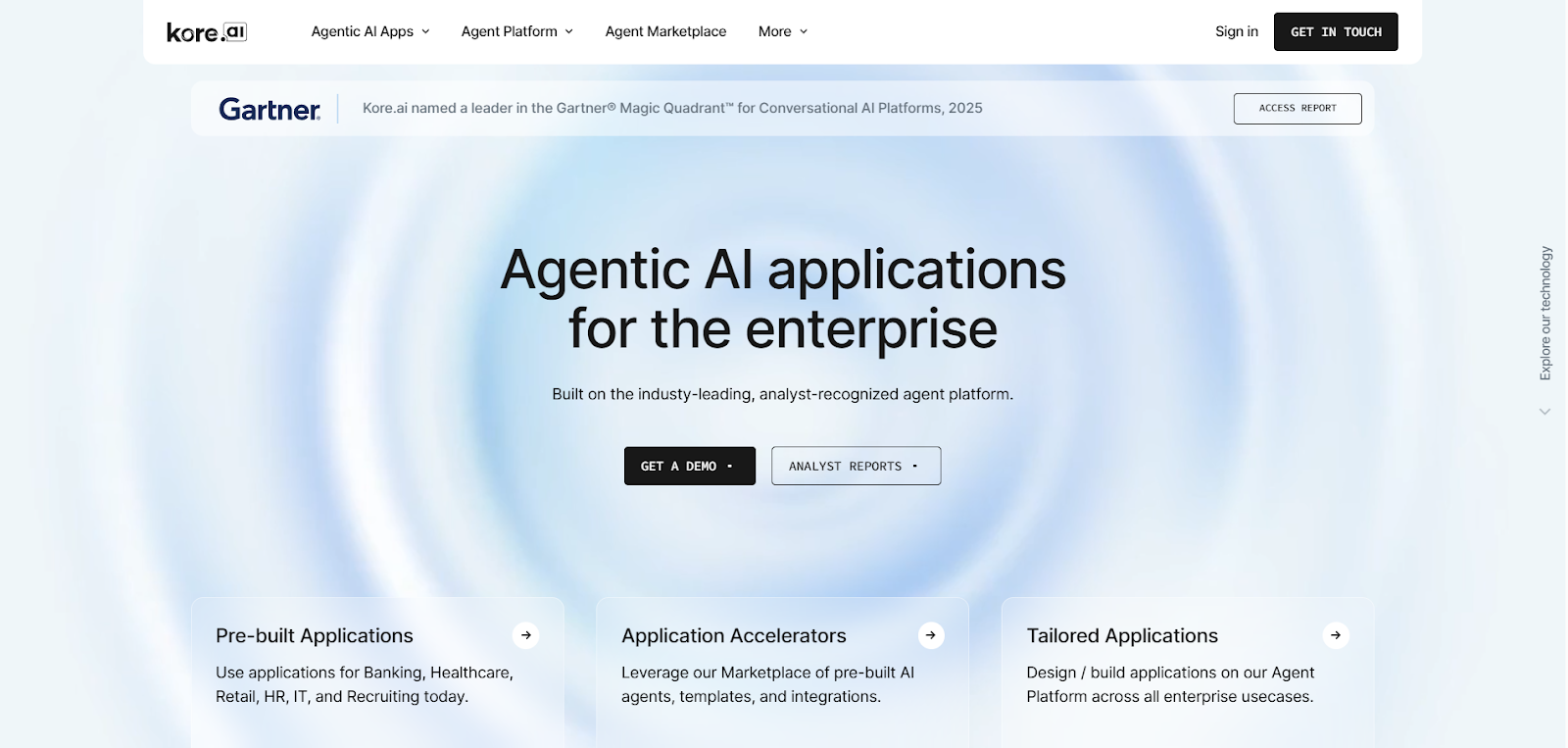
Kore.ai focuses on large-scale CX automation with governance and control, making it suitable for enterprises that require strict oversight of workflows, compliance, and analytics. It is often used in regulated industries where visibility and control over AI behavior are as important as performance.
Performs well in structured call center environments with predefined workflows. However, when conversations become less predictable, the system relies heavily on predefined logic rather than adaptive responses.
4.5/5 — strong feedback on control and enterprise capabilities, with noted complexity
~$1.2K–$2K/month, scaling to $50K–$200K/year depending on deployment size and integrations.
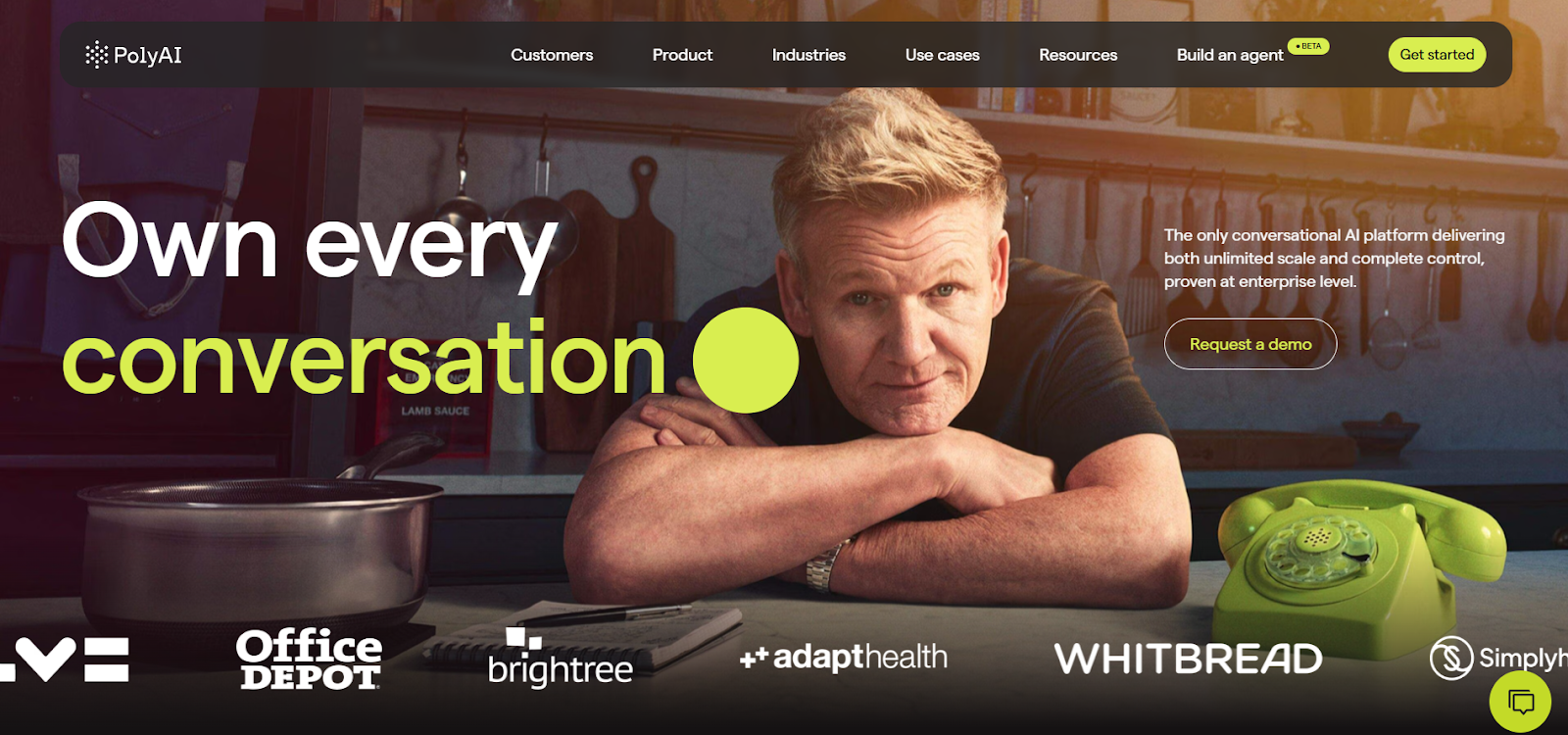
PolyAI is focused on delivering natural, human-like voice interactions for enterprise CX, particularly in inbound call center environments. It emphasizes conversation quality within structured flows, making it effective for handling high volumes of predictable customer interactions.
PolyAI performs consistently in structured environments such as FAQs, booking changes, and support queries. However, it struggles to adapt when conversations move outside expected patterns.
4.6/5 — strong feedback on voice quality and CX performance, with concerns around cost
Custom enterprise contracts. Costs are typically high and increase with usage, integrations, and deployment scope.
Vapi is a developer-first platform for building custom AI voice agents, designed for teams that want full control over their telephony stack, model selection, and orchestration logic. It acts as an infrastructure layer rather than a packaged product, allowing enterprises to design highly tailored call handling systems. This makes it particularly useful for organizations with internal engineering teams that need to integrate voice AI deeply into existing systems rather than adopt predefined workflows.
In testing, Vapi's performance depended heavily on implementation quality. With proper configuration, it can deliver strong results, but default setups showed latency variability and inconsistent handling of interruptions, especially in longer calls.
~4.4/5 — appreciated for flexibility, but feedback highlights complexity and hidden costs
~$0.05/min base, but realistic cost increases to ~$0.13–$0.31/min after factoring in LLM usage, telephony, and infrastructure. Costs scale unpredictably if not optimized.
Bland AI is designed for high-volume call operations, with a focus on executing large numbers of calls reliably rather than handling deeply complex conversations. It emphasizes scalability, memory, and logging, making it suitable for outbound campaigns, follow-ups, and structured call workflows where consistency is more important than flexibility.
Bland performs well in structured outbound workflows where calls follow predictable patterns. However, when users interrupt or deviate from expected flows, the system often fails to recover context effectively.
~4.5/5 — valued for scale and simplicity, with feedback noting limitations in flexibility
~$0.09/min plus additional fees depending on usage and integrations. Costs are predictable for high-volume operations but increase with complexity.
Synthflow is a no-code platform designed for rapid deployment of AI voice agents, with built-in telephony and workflow tools. It targets teams that want to launch call automation quickly without deep engineering involvement. This makes it appealing for initial deployments or simpler use cases, but introduces limitations as systems scale in complexity.
Synthflow performs well in straightforward inbound and outbound scenarios, such as appointment scheduling or basic support queries. However, as conversations become more complex, limitations in context handling and adaptability become evident.
~4.4/5 — strong feedback on ease of use, with recurring concerns around flexibility and scalability
~$0.08/min. Costs are straightforward initially, but limited optimization options can impact efficiency at scale.
Choosing a voice AI platform at the enterprise level is not about feature coverage. It is about whether the system can handle real call volume, real conversations, and real operational constraints without breaking performance or inflating cost.
The first decision is whether your call flows are structured or dynamic. Simple queries such as routing, FAQs, or scheduling can be handled by more rigid systems. But once conversations involve objections, clarifications, or multi-step reasoning, you need a platform that can maintain context and adapt in real time. Most enterprise failures happen when teams underestimate this complexity.
Latency is not a technical detail, it directly impacts conversation quality. In live calls, even small delays disrupt flow and reduce trust. What matters is not just response speed, but consistency across the entire interaction. Platforms that cannot maintain stable response timing will struggle in both inbound and outbound scenarios.
Enterprise deployments depend on systems working together during the call, not after it. The platform must be able to update CRM records, trigger workflows, and route calls dynamically while the conversation is happening. Weak integration layers often pass initial testing but fail in production when multiple systems are involved.
Handling one call well is not the challenge. Handling hundreds or thousands simultaneously is. Infrastructure stability under load is one of the most overlooked factors in vendor selection. Platforms that do not scale cleanly introduce latency spikes, dropped context, or failed calls.
Pricing models often look similar at the surface, but cost behavior changes significantly at scale. Longer conversations, retries, and inefficiencies increase cost quickly. The real metric is not cost per minute, but cost per successfully handled call.
Developer-first platforms provide more control and flexibility but require ongoing engineering effort. Enterprise platforms offer structure and governance but limit adaptability. The right choice depends on whether your team can actively manage and optimize the system post-deployment.
After evaluating these platforms under real enterprise conditions, the distinction becomes clear.
Some platforms provide strong workflow control but lack conversational flexibility. Others scale call volume but struggle with dynamic interactions. A few offer customization but require significant engineering to stabilize.
Retell AI stands out because it addresses the core operational requirements simultaneously. It maintains consistent low-latency conversations, handles interruptions without breaking flow, integrates cleanly into enterprise systems, and scales across high call volumes without degrading performance.
That combination is what determines success in enterprise call management. It is also why Retell emerges as the most reliable choice when conversation quality, scalability, and cost efficiency all matter at the same time.
Enterprise voice AI is not limited by capability. It is limited by execution under real conditions.
The platforms in this category solve different parts of the problem. Some are built for structured workflows, others for scale, and some for flexibility. But very few maintain performance across all three dimensions when deployed in production.
Retell AI ranks highest in this evaluation because it is designed around those constraints. It does not rely on rigid flows, it maintains stability under load, and it gives teams enough control to optimize performance as systems scale.
For enterprises moving beyond pilots into full-scale deployment, that reliability becomes more important than feature breadth. It is the difference between a system that works in theory and one that continues to perform as call volume, complexity, and expectations increase.
An AI voice agent is a system that handles inbound and outbound calls using conversational AI platforms, allowing enterprises to automate support, sales, and routing at scale.
Most platforms range between $0.05 and $0.25 per minute, while enterprise contracts can exceed $50K per year depending on scale, integrations, and concurrency.
They can handle a significant portion of routine and structured calls, typically 50 to 80 percent, reducing workload and operational costs.
Latency consistency, integration with enterprise systems, scalability under load, and cost efficiency at scale determine whether a platform works in production.
See how much your business could save by switching to AI-powered voice agents.
Total Human Agent Cost
AI Agent Cost
Estimated Savings
A Demo Phone Number From Retell Clinic Office