12 Best AI Sales Agents in 2026: Voice, SDR, and GTM Tools Compared
17
MIN READ
October 8, 2026

I compared 12 AI sales agents across the three categories the term now covers: voice agents that call and qualify leads, AI SDRs that run email and LinkedIn outbound, and full-stack GTM platforms that try to own the whole motion.
For each tool I worked from official pricing pages, product documentation, and third-party reviews, then scored them on how honestly they deliver, how deeply they integrate, and what they truly cost.
One theme shapes every ranking. The AI voice agents market alone is on track to grow from $2.54 billion in 2025 toward $35 billion by 2033, and buyers are pouring in.
The problem is that "AI sales agent" now means three different products, and the category that got the loudest hype, the autonomous AI SDR, is also the one that disappointed the most teams. This guide sorts the real tools from the marketing.
An AI sales agent is software that runs part of the sales motion on its own: finding or answering prospects, qualifying them, and moving them toward a meeting. In 2026 the term splits into three categories. Voice agents hold live phone conversations, calling leads and booking meetings. AI SDRs run email and LinkedIn outbound at volume. Full-stack GTM platforms bundle data, signals, and multi-channel agents into one system.
The interest is real and still early. According to McKinsey's B2B Pulse Survey, 19% of decision-makers are already implementing gen AI for B2B buying and selling and another 23% are in the process, which means most teams are still deciding where these agents fit. Sorting by category is the fastest way to decide.
I scored each tool on core task performance, autonomy fit (whether it delivers on its automation claims honestly), integration depth, ease of setup, and pricing transparency.
For voice and inbound, speed is the product. The MIT and InsideSales Lead Response Management study found that calling a lead within 5 minutes versus 30 makes you 21 times more likely to qualify it, so response speed weighed heavily in the voice category.
I marked down tools that sell full autonomy but need heavy oversight, and marked up tools clear about being a copilot or a calling layer. Overselling autonomy is the single biggest source of buyer regret in this category.
A meeting the CRM never sees is a lost meeting, so I checked how each tool writes back to Salesforce and HubSpot. On cost, Gartner projects conversational AI will cut contact center labor costs by $80 billion in 2026, so I modeled all-in cost against outcome, not headline rates, and flagged opaque or annual-lock pricing.

These agents hold live phone conversations. Retell and Bland are autonomous voice agents that talk to prospects; Nooks and Orum are AI dialers that connect human reps faster. Speed is the reason this category exists: firms that reach a lead within an hour are nearly seven times more likely to qualify it than firms that wait even 60 minutes. The distinction between an agent and a dialer matters, so it is called out in each review.

What does it do? A platform to build, deploy, and monitor AI voice agents that call leads in seconds, qualify them, and book meetings. Who is it for? Sales and RevOps teams that want a production-grade calling layer without a six-month build.
| Category | Score |
|---|---|
| Core Task Performance | 9/10 |
| Autonomy Fit | 9/10 |
| Integration Depth | 8/10 |
| Ease of Setup | 8/10 |
| Pricing Transparency | 10/10 |
| Overall | 9.0/10 |
Retell AI owns the voice category by doing one job well: calling a lead within seconds of a form-fill and running a real conversation. It qualifies with custom logic through lead qualification flows, holds roughly 600ms latency with proprietary turn-taking, and handles interruptions and objections without the robotic pauses that make prospects hang up. Teams switching from Bland for outbound report meaningfully higher conversion on complex qualification scripts.
It closes the loop the way a rep would. The agent can book appointments on a connected calendar during the call, push structured outcomes to any CRM through webhooks, and log every conversation for post call analysis. Pricing is transparent at $0.07 per minute with no platform fee, which pencils out near $1.75 per qualified lead at the voice layer versus roughly $177 for a human SDR. The honest scope: Retell is the calling layer, and it pairs with an SDR or GTM tool rather than replacing the whole stack.
Pros
Cons
Pricing
$0.07/min for the voice engine, no platform fee. Realistic all-in costs for standard setups range from $0.08 to $0.15/min once LLM and telephony are added. $10 free credit and 20 concurrent calls included.
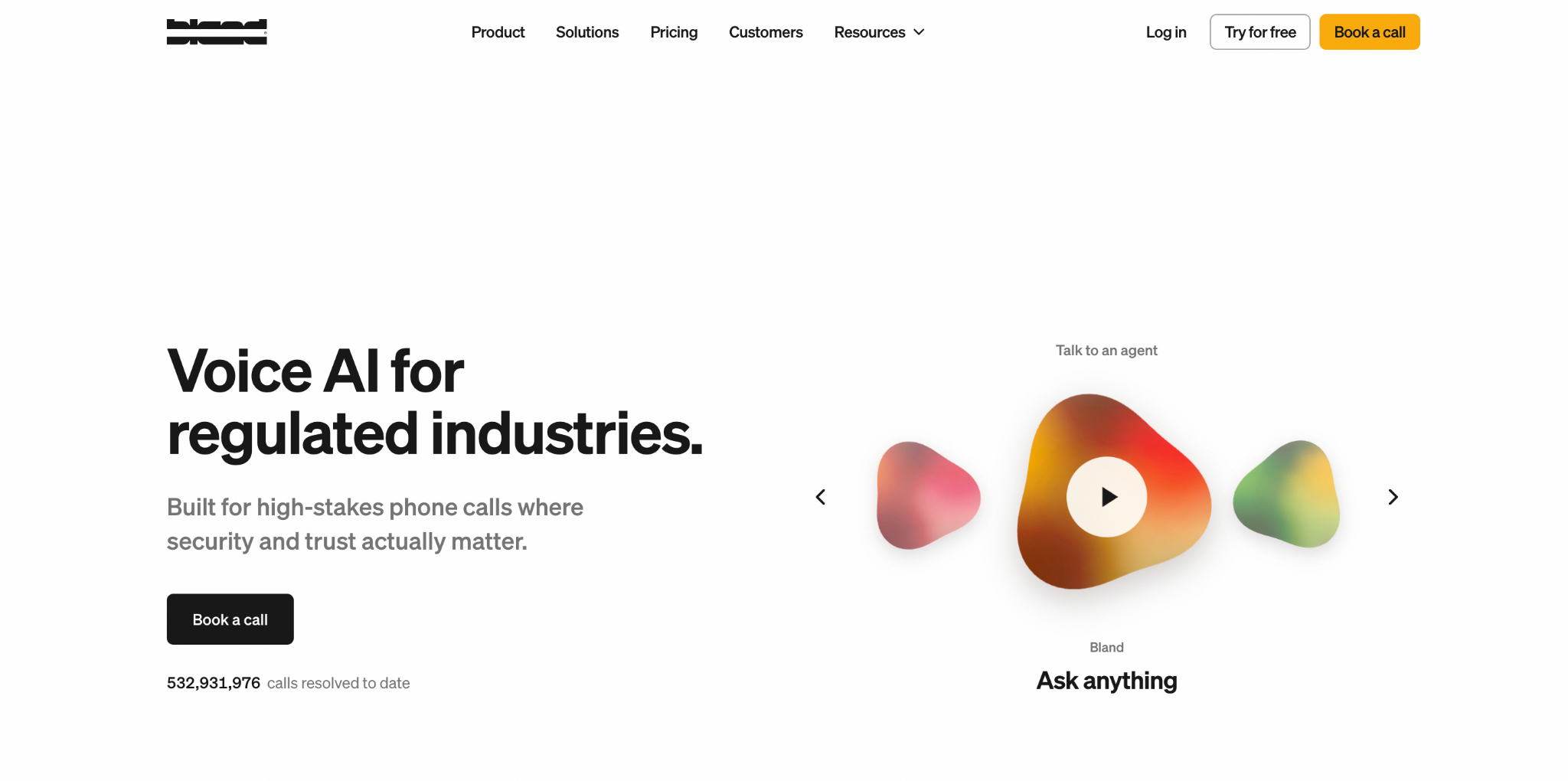
What does it do? A developer-controlled voice platform built for large outbound calling volume.
Who is it for? Engineering-supported teams running high-volume outbound campaigns.
| Category | Score |
|---|---|
| Core Task Performance | 8/10 |
| Autonomy Fit | 8/10 |
| Integration Depth | 7/10 |
| Ease of Setup | 6/10 |
| Pricing Transparency | 8/10 |
| Overall | 7.4/10 |
Bland is built for outbound volume and gives deep control over call logic, branching, and voicemail handling, which fits teams dialing large prospect lists at scale. The Pathways builder allows precise conditional flows for qualification scripts.
The tradeoffs show on the call and the build. Reported latency sits around 800ms, noticeable on longer conversations, and the platform is developer-oriented, so it needs engineering to configure and maintain.
Pros
Cons
Pricing
Start plan is free at $0.14/min (100 calls/day limit). Build plan is $299/mo at $0.12/min. Scale plan is $499/mo at $0.11/min. Enterprise is custom. Transfer fees, TTS, and SMS are billed separately.
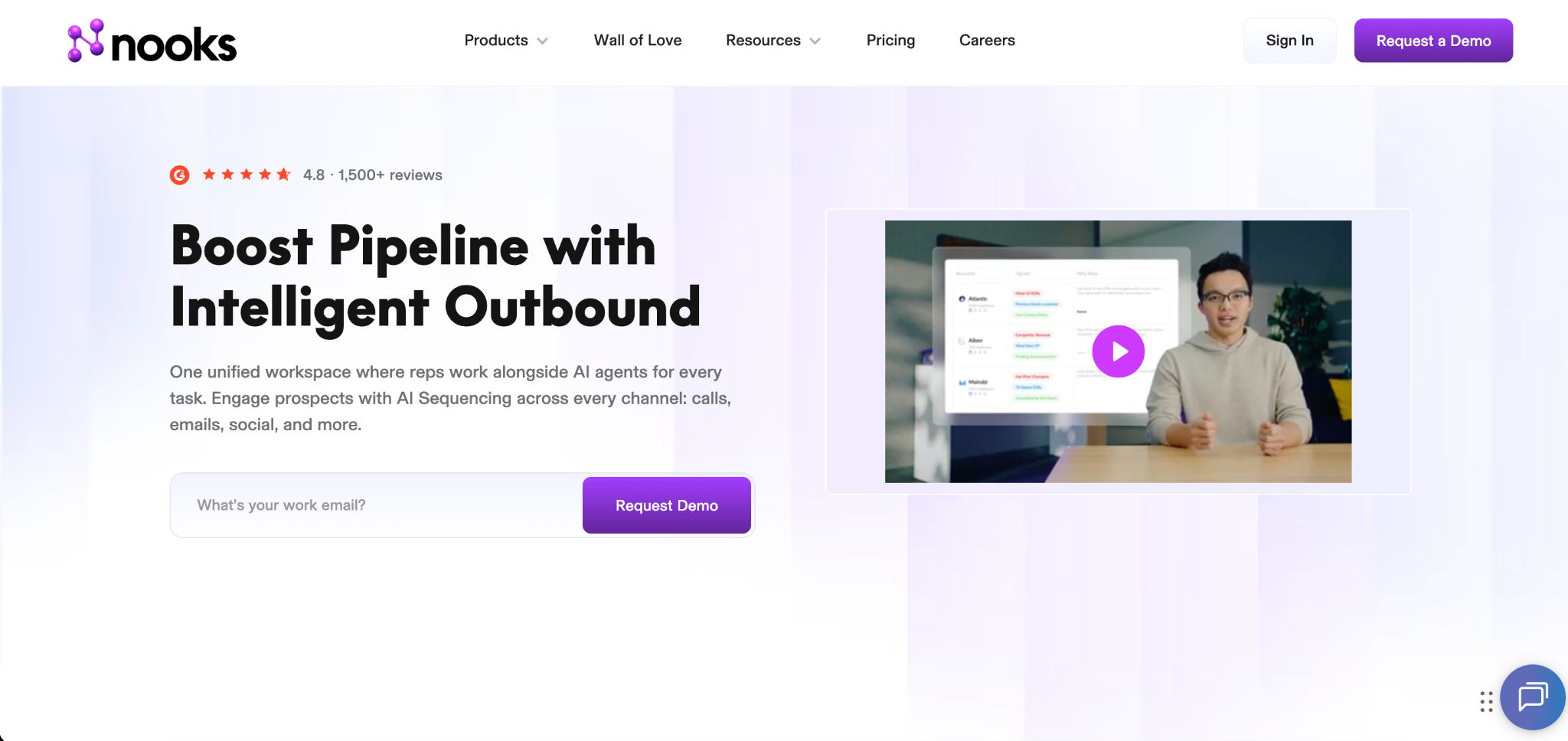
What does it do? An AI-powered parallel dialer with a virtual salesfloor and coaching that amplifies human reps.
Who is it for? Phone-first SDR teams that want more live conversations per rep.
| Category | Score |
|---|---|
| Core Task Performance | 8/10 |
| Autonomy Fit | 6/10 |
| Integration Depth | 8/10 |
| Ease of Setup | 7/10 |
| Pricing Transparency | 4/10 |
| Overall | 7.0/10 |
Nooks is not an autonomous voice agent; it dials up to five numbers at once and connects a human rep only when a person answers, adding AI coaching, call summaries, and a virtual salesfloor.
Teams report going from 50 to 60 dials a day to 150-plus, which is real volume if calling is your bottleneck.
The catch is cost and scope. Pricing is unpublished and estimated near $5,000 per user per year on annual terms, it covers only the phone channel, and parallel dialing trades some call quality and number health for raw volume.
Pros
Cons
Pricing Estimated ~$5,000/user/year, custom quote, annual commitment.
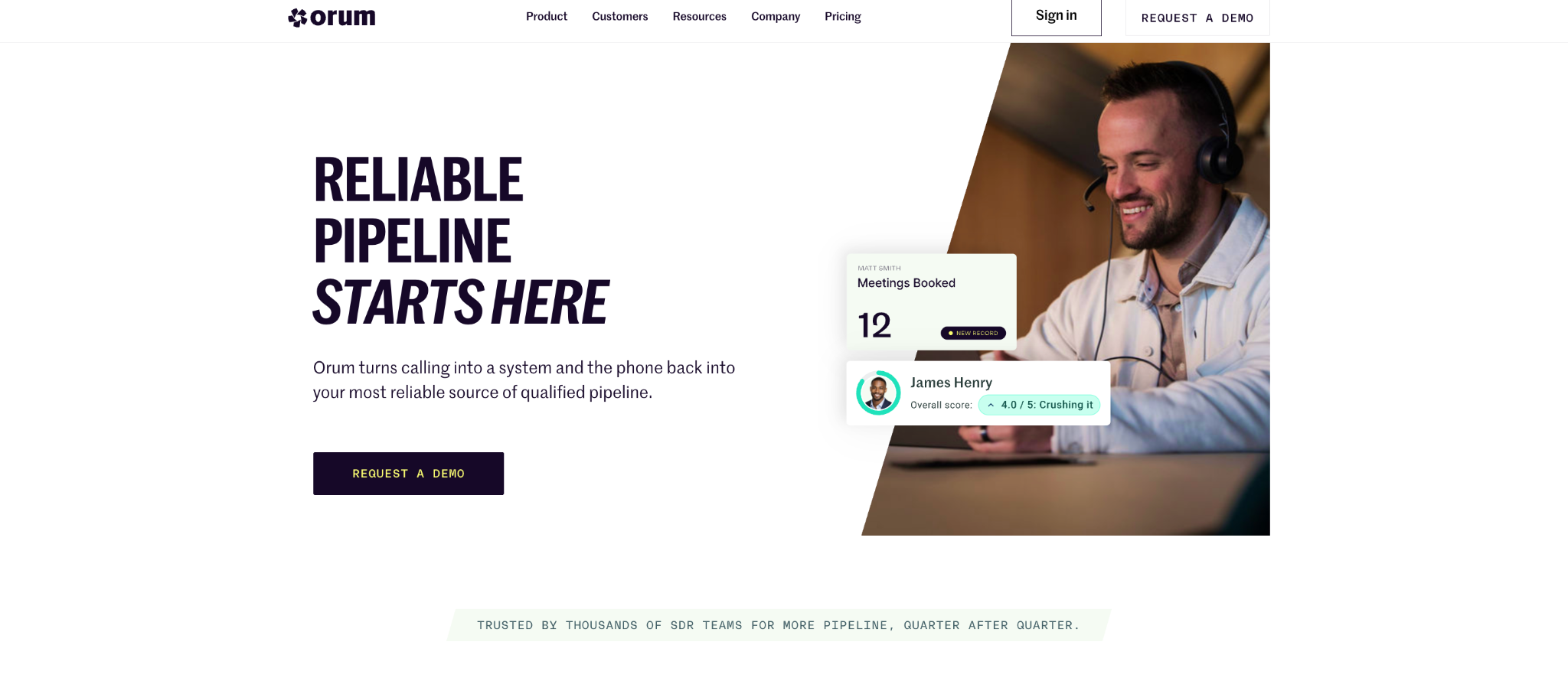
What does it do? An AI parallel dialer for human reps with strong reporting. Who is it for? Outbound teams that want maximum dial volume and analytics without a salesfloor.
| Category | Score |
|---|---|
| Core Task Performance | 8/10 |
| Autonomy Fit | 6/10 |
| Integration Depth | 7/10 |
| Ease of Setup | 7/10 |
| Pricing Transparency | 5/10 |
| Overall | 6.8/10 |
Orum is the closest competitor to Nooks and, like it, connects human reps to live answers rather than talking on its own.
Reviewers rate its reporting and analytics above Nooks, and its Launch tier is publicly reported at roughly $3,000 per user per year.
The limits mirror the category. It covers only calling, higher tiers reportedly reach $400 to $500 per user per month, and it is annual-only, so a full outbound stack still needs email, data, and sequencing tools alongside it.
Pros
Cons
Pricing Launch reported ~$3,000/user/year; Ascend ~$400-500/user/month. Annual.
These tools run email and LinkedIn outbound: research, message drafting, sequencing, and reply handling. Read the autonomy claims closely, since this is the category where the hype outran the results.

What does it do? A multichannel outbound platform with signal-based targeting, a copilot, and a deliverability suite.
Who is it for? Mid-market teams selling into competitive markets where timing matters.
| Category | Score |
|---|---|
| Core Task Performance | 8/10 |
| Autonomy Fit | 7/10 |
| Integration Depth | 8/10 |
| Ease of Setup | 6/10 |
| Pricing Transparency | 5/10 |
| Overall | 7.2/10 |
Amplemarket combines a 220M-plus contact database, its Duo copilot, and contact-level intent signals across email, LinkedIn, phone, and WhatsApp, with a built-in deliverability suite that most standalone AI SDRs lack. Tying intent to specific people makes prioritization more actionable than generic account signals.
The friction is commercial. Every plan is annual-only, the credit model can produce overages, and reviewers report deliverability strain and stale data when sending scales.
Pros
Cons
Pricing Startup $600/mo (annual); Growth roughly $2,000-$5,000/mo, annual only.
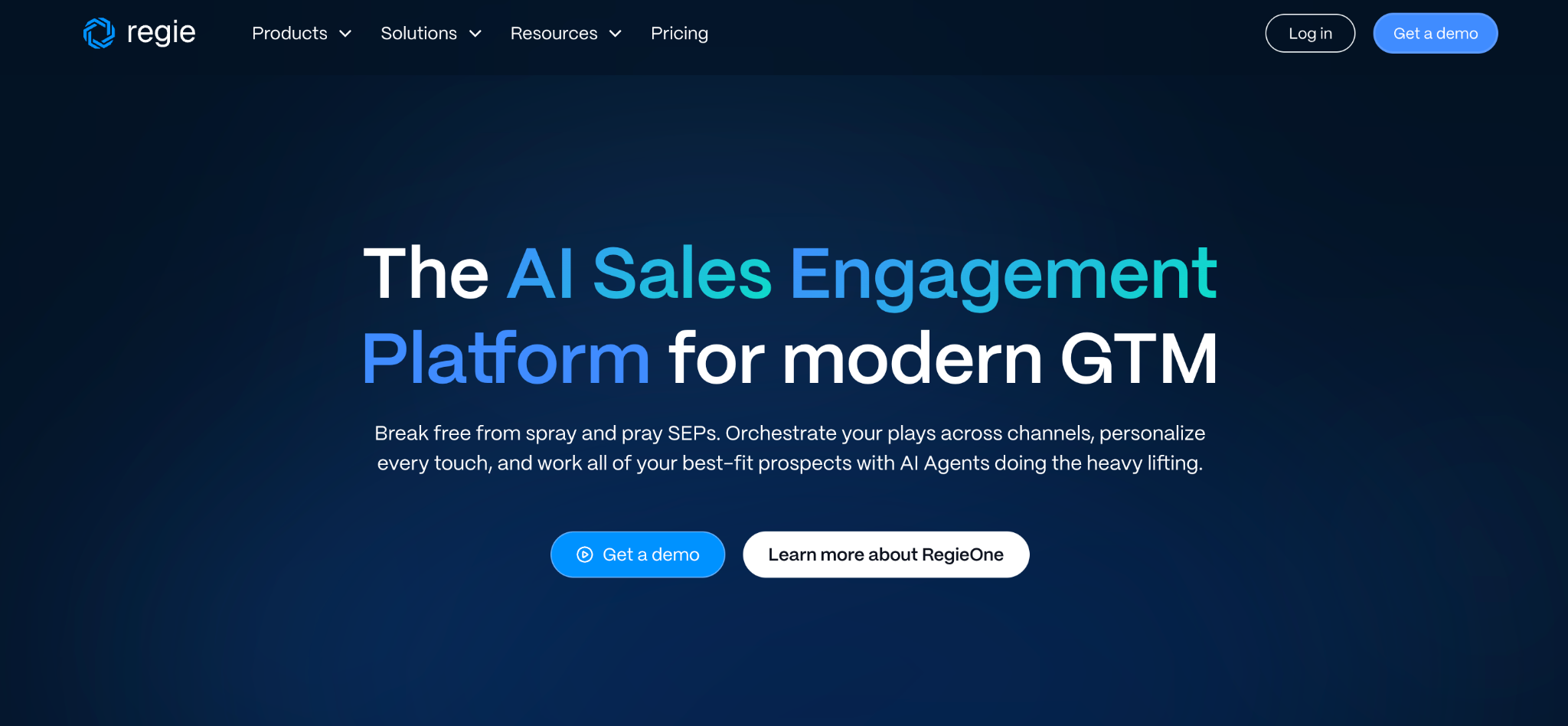
What does it do? An AI-native sales engagement platform with autonomous prospecting agents and a bundled dialer.
Who is it for? Mid-market and enterprise teams wanting agents plus dialing in one system.
| Category | Score |
|---|---|
| Core Task Performance | 7/10 |
| Autonomy Fit | 7/10 |
| Integration Depth | 7/10 |
| Ease of Setup | 6/10 |
| Pricing Transparency | 4/10 |
| Overall | 6.7/10 |
Regie.ai runs autonomous prospecting agents on 100-plus signals across a 220M-plus contact database, with a dialer bundled into its RegieOne platform. For teams that want one system to research, write, and dial, the consolidation is the draw.
The concerns are packaging and price. Enterprise RegieOne is opaque and reportedly starts around $35,000, the agents and dialer are sold as a bundle rather than separately, and some reviewers say AI messages can read as machine-like without editing.
Pros
Cons
Pricing AI SEP $180/user/mo; Force Multiplier $499/user/mo; RegieOne enterprise custom (~$35k entry). Annual.
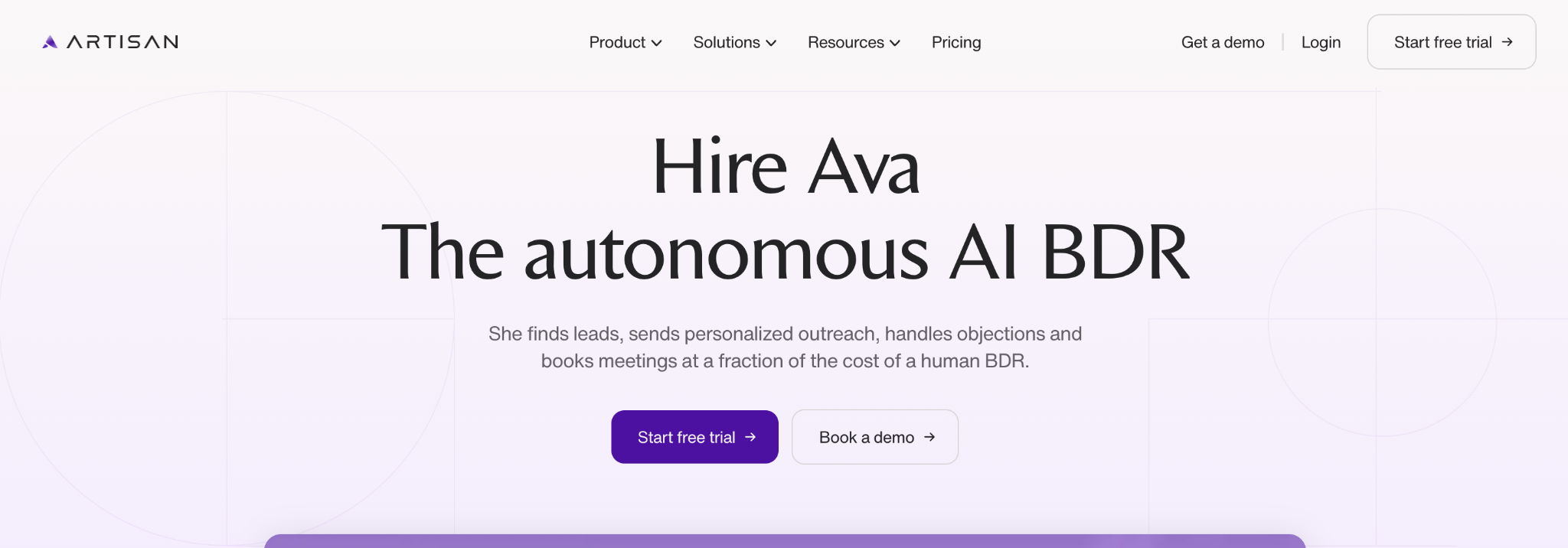
What does it do? An AI BDR, Ava, that automates email and LinkedIn outbound with deep CRM and named-account workflows.
Who is it for? Enterprise teams running account-based outbound into large, named accounts.
| Category | Score |
|---|---|
| Core Task Performance | 7/10 |
| Autonomy Fit | 6/10 |
| Integration Depth | 8/10 |
| Ease of Setup | 5/10 |
| Pricing Transparency | 4/10 |
| Overall | 6.5/10 |
Artisan's Ava pairs a 300M-plus contact database with genuinely strong CRM depth and named-account workflows, which is why it fits enterprise ABM better than broad SMB blasting. In independent testing it produced a reply rate around 5% and a handful of meetings per few hundred contacts, with a two to three week setup.
The honest read: the "stop hiring humans" marketing oversells the autonomy, and Ava augments BDRs rather than replacing them. Pricing is quote-based and lands roughly $1,500 to $7,200 per month on annual contracts, and multiple reviewers flag a difficult cancellation process.
Pros
Cons
Pricing
Free plan available (300 credits/mo). Intern $280/mo ($250/mo annual, 12,000 credits). Employee $660/mo ($600/mo annual, 30,000 credits). Enterprise custom, estimated $2,000 to $7,200/mo annual. Multiple reviewers flag a difficult cancellation process.
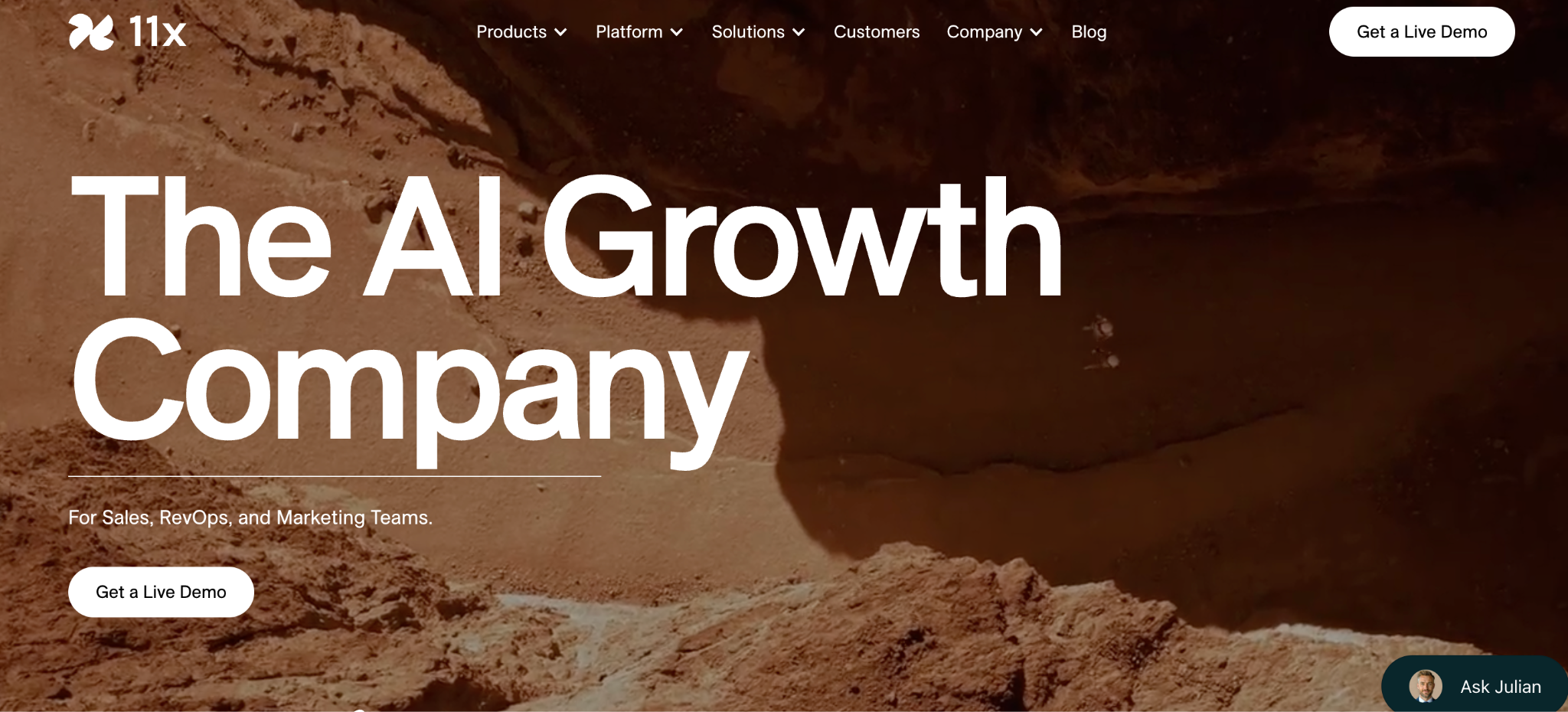
What does it do? An autonomous AI SDR, Alice, that runs prospecting, copywriting, and follow-up.
Who is it for? Enterprise teams with large budgets set on a headcount-replacement pitch.
| Category | Score |
|---|---|
| Core Task Performance | 6/10 |
| Autonomy Fit | 6/10 |
| Integration Depth | 6/10 |
| Ease of Setup | 5/10 |
| Pricing Transparency | 3/10 |
| Overall | 5.6/10 |
11x markets Alice as a replacement for SDR headcount and sits at the premium end near $5,000 per month on annual contracts. It runs email and LinkedIn outbound, but it brings no proprietary contact database, so you supply and pay for data separately.
Buyers should apply extra diligence here. The company drew scrutiny in 2025 after a CEO change and public questions about customer retention, and its "replace your team" framing is exactly the positioning this category has walked back. Treat the autonomy claims with heightened skepticism and validate on your own numbers before committing.
Pros
Cons
Pricing Approximately $5,000/mo, annual contracts, plus a separate data provider.
These platforms bundle data, signals, and multi-channel agents to run more of the motion. They are powerful and expensive, and most still need a separate calling layer.

What does it do? A no-code platform for building an "AI Workforce," including a flagship BDR agent, Bosh.
Who is it for? Teams that want to build custom, multi-step agents across sales and operations.
| Category | Score |
|---|---|
| Core Task Performance | 8/10 |
| Autonomy Fit | 7/10 |
| Integration Depth | 9/10 |
| Ease of Setup | 6/10 |
| Pricing Transparency | 6/10 |
| Overall | 7.2/10 |
Relevance AI is the flexible pick: a model-agnostic, no-code builder with 2,000-plus integrations, SOC 2 Type II, and a template marketplace, plus the enterprise-only Bosh BDR agent for outbound. If your workflow is non-standard, it can build the process you already run rather than a vendor's template.
The costs are complexity and billing. The dual-meter model of Actions plus Vendor Credits confuses new users and can burn balance fast, there is a real learning curve, and it lacks native LinkedIn automation.
Pros
Cons
Pricing Free tier; Pro from ~$29/mo; Team ~$234-$349/mo; Bosh and Enterprise custom.
What does it do? A warm-outbound platform combining signals, enrichment, AI agents, and managed mailboxes.
Who is it for? High-growth teams running signal-triggered outbound with predictable volume.
| Category | Score |
|---|---|
| Core Task Performance | 8/10 |
| Autonomy Fit | 7/10 |
| Integration Depth | 8/10 |
| Ease of Setup | 6/10 |
| Pricing Transparency | 5/10 |
| Overall | 7.0/10 |
Unify ties intent signals to automated plays and managed deliverability in one workflow, which is why fast-growing companies like Perplexity and Cursor use it for warm outbound. Managed mailboxes and warmup take sender-reputation work off your plate.
The recurring complaint is the credit model. The Growth plan runs $1,740 per month billed annually, every action draws from a shared credit pool at published rates, and monthly burn is hard to forecast.
Pros
Cons
Pricing Growth $1,740/mo billed annually ($20,880/yr); Pro and Enterprise custom.

What does it do? An AI GTM layer, Copilot, on top of ZoomInfo's large B2B data platform.
Who is it for? Mid-market and enterprise teams that want AI recommendations built on deep data.
| Category | Score |
|---|---|
| Core Task Performance | 8/10 |
| Autonomy Fit | 6/10 |
| Integration Depth | 8/10 |
| Ease of Setup | 6/10 |
| Pricing Transparency | 4/10 |
| Overall | 6.8/10 |
ZoomInfo's edge is data: 320M-plus contacts and 100M-plus companies, with Copilot layering signals, account summaries, and recommended actions on top. For teams that live in ZoomInfo already, the AI sits where the data is.
The considerations are cost and scope. Pricing is opaque and typically starts around $15,000 per year, climbing past $60,000 with Copilot, intent, ABM, and Chorus add-ons, and the AI is a layer on a data product rather than an autonomous rep.
Pros
Cons
Pricing Roughly $15,000/yr to start, $25k-$35k mid-market, $60k+ with Copilot and add-ons.
What does it do? An agentic GTM platform whose proprietary model deploys agents to plan and run email and LinkedIn campaigns.
Who is it for? Teams that want an outsourced, model-driven outbound engine.
| Category | Score |
|---|---|
| Core Task Performance | 7/10 |
| Autonomy Fit | 7/10 |
| Integration Depth | 7/10 |
| Ease of Setup | 6/10 |
| Pricing Transparency | 4/10 |
| Overall | 6.5/10 |
Landbase runs its GTM Omni model, trained on 40M-plus campaigns, to deploy agents that handle targeting, enrichment, and multi-channel outreach across a 220M-plus contact database with managed deliverability. Teams describe an ideal customer in plain English and get a qualified list ready to activate.
The gaps are pricing and coverage. Pricing is unpublished and estimated in the low thousands per month, and there is no phone dialer, so calling, visitor identification, and a CRM still live in separate tools.
Pros
Cons
Pricing Not published; estimated roughly $2,000-$5,000+/mo. Demo required.
| Tool | Category | Best For | Pricing | Autonomy | Standalone |
|---|---|---|---|---|---|
| Retell AI | Voice | Speed-to-lead and qualification | $0.07/min, no platform fee | Autonomous voice agent | Calling layer |
| Bland | Voice | High-volume outbound | ~$499/mo + $0.11/min | Autonomous voice agent | Calling layer |
| Nooks | Voice | AI dialer for human reps | ~$5,000/user/yr | Amplifies human reps | Phone only |
| Orum | Voice | Dialer with analytics | ~$3,000/user/yr Launch | Amplifies human reps | Phone only |
| Amplemarket | SDR | Signal-based outbound | $600-$5,000/mo, annual | Copilot | Email, LinkedIn, phone |
| Regie.ai | SDR | Bundled dialer | $180-$499/user/mo; ~$35k RegieOne | Autonomous agents | Multi-channel |
| Artisan | SDR | Enterprise ABM | ~$1,500-$7,200/mo, annual | Oversold, augments | Email, LinkedIn |
| 11x | SDR | Autonomous positioning | ~$5,000/mo, annual | Claims autonomous | Email, LinkedIn |
| Relevance AI | Full-stack | Custom agents | Free-$349/mo; Bosh custom | Build your own | Multi-channel |
| Unify | Full-stack | Warm outbound | $1,740/mo annual | Agents plus plays | Email-led |
| ZoomInfo Copilot | Full-stack | Data depth | ~$15k-$60k+/yr | AI layer on data | Data platform |
| Landbase | Full-stack | Done-for-you campaigns | ~$2,000-$5,000+/mo | Agentic campaigns | No phone dialer |
Data sourced from official product pages and third-party reviews as of July 2026. Verify current pricing before buying.
PLG or inbound-heavy. If leads arrive through forms, trials, and demo requests, the fastest ROI is a voice agent that calls and qualifies within seconds, then books the meeting. A calling layer running ai telemarketing and inbound qualification closes the speed-to-lead gap before a competitor answers.
Outbound-heavy. If your motion is cold volume, decide first whether you want AI talking to prospects or dialing faster for human reps. For automated calling at scale, an outbound voice agent doing ai cold calling fits; for email and LinkedIn volume, an AI SDR like Amplemarket does. Keep a human on replies and objections.
Enterprise and account-based. Named-account ABM rewards depth over volume, so an AI SDR with strong CRM workflows plus a data-rich full-stack platform makes sense, with reps owning the multi-thread relationships. For a voice-only shortlist, our roundup of the 8 best AI voice agents for sales teams goes deeper on that category.
Across all three, the pattern holds: let AI run the high-volume, well-defined work, and keep humans on judgment.
Retell AI calls every new lead in seconds, qualifies with your own logic, books meetings on your reps' calendars, and logs the whole conversation to your CRM.
Call every lead in under 60 seconds and build a sales agent free. For teams handling 1,000+ leads a month, book a demo to scale outbound calling.
Not reliably, and most teams that tried in 2024 and 2025 reverted to hybrid models. AI sales agents handle high-volume, well-defined work well: research, inbound qualification, speed-to-lead calls, and meeting booking. Judgment work, discovery, objection nuance, and multi-thread enterprise deals still belongs to humans.
It ranges widely by category. Voice agents run per minute, around $0.07 with a transparent platform, so a qualifying call is often under a dollar. AI SDRs and full-stack platforms run $600 to $5,000-plus per month, frequently on annual contracts, and full-stack data platforms can exceed $60,000 a year. Check pricing against your volume.
Well on common objections that are pre-loaded into the agent's logic, and less well on layered or novel ones. In testing, agents handle three to four standard objections smoothly, then benefit from a warm transfer to a human on complex pushback. Low latency and natural turn-taking matter most for keeping the prospect engaged through the exchange.
An AI voice agent holds live phone conversations, calling, qualifying, and booking. An AI SDR runs written outbound over email and LinkedIn. Many teams pair the two: the SDR works the inbox while the voice agent works the phone, both feeding the same CRM.
No. Nooks and Orum are parallel dialers that connect human reps to live answers faster and add coaching; the human still holds the conversation. Retell and Bland are agents that talk to the prospect themselves. Choose a dialer to make reps more productive, and a voice agent to automate the call.
Voice platforms scale through concurrency and batch campaigns rather than headcount. A batch call run can dial thousands of contacts in parallel, while human dialers and per-seat SDR tools scale linearly with cost. Model concurrency and all-in per-call cost when comparing options.
See how much your business could save by switching to AI-powered voice agents.
Total Human Agent Cost
AI Agent Cost
Estimated Savings
A Demo Phone Number From Retell Clinic Office