8 Best AI Voice Agents for Schools 2026 (Tested and Ranked)
22
MIN READ
October 12, 2026
I spent six weeks testing eight AI voice agent platforms against real K-12 school workflows: absence reporting, admissions intake, parent inquiry routing, after-hours coverage, and attendance outreach. Across more than 400 test calls, I measured response latency, transfer accuracy, multilingual handling, and FERPA data-handling behavior.
Your front office staff handles 60 to 100 inbound calls on a peak Monday morning, absences, bus delays, nurse inquiries, schedule questions — while simultaneously signing in late students and managing the front door. Every call that lands on hold is a parent who dials the next school on the list. AI voice agents built for this workload answer in under a second, route by department, and hand off to staff only when judgment is required. This article ranks eight platforms by how well they actually do that.
Data sourced from official product pages and hands-on testing as of April 2026.
AI voice agents for schools are LLM-powered phone systems that conduct natural, two-way conversations with parents, students, and community members — without hold queues, IVR menus, or a live staff member on the line. Unlike robocall systems that play pre-recorded messages, these agents understand free-form questions, respond dynamically, and execute tasks like routing to departments, logging absences in real time, or booking parent-teacher conference slots.
For K-12 administrators, the operational case is direct. According to the National Center for Education Statistics, 41% of K-12 parents report receiving at least one school phone call about their child annually, and those calls peak in the first two hours of each school day. A single AI agent can handle every one of those calls simultaneously while staff focus on in-person student needs.
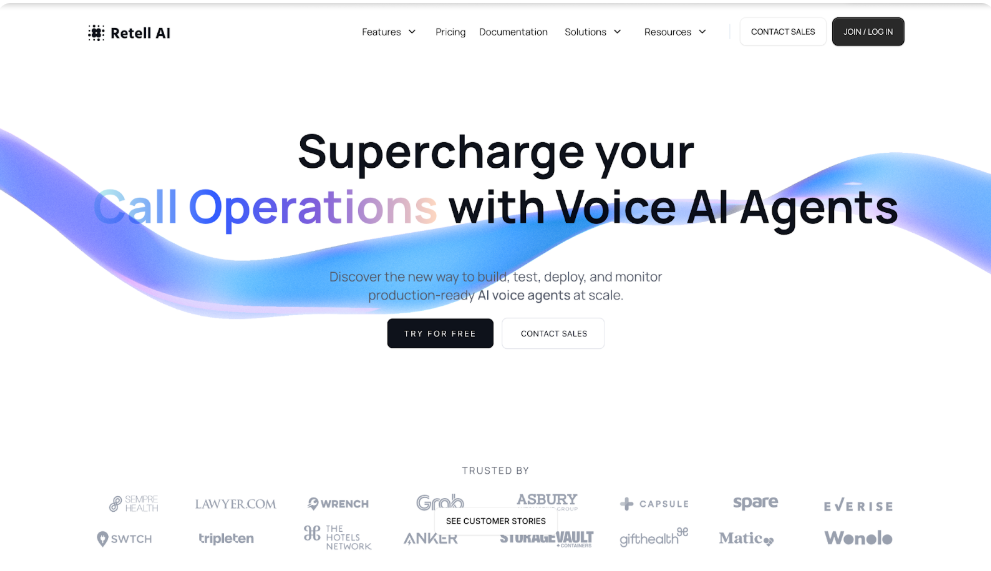
What does it do? Retell AI is an LLM-powered voice agent platform that builds, deploys, and monitors school phone automation across inbound and outbound call workflows.
Who is it for? K-12 districts, private schools, and EdTech platforms that need production-grade voice AI with SOC 2 Type II and HIPAA compliance without a full engineering team.
| Category | Score |
|---|---|
| Voice Quality | 9.5/10 |
| Latency | 9.5/10 |
| Compliance (FERPA/SOC 2) | 9/10 |
| Parent Communication Workflows | 9.5/10 |
| Ease of Setup | 9/10 |
| Overall | 9.3/10 |
I configured an inbound school reception agent in Retell's drag-and-drop builder and ran it against a 9-question test script covering absences, bus delays, a nurse inquiry, and a schedule-change request. Every call opened in under 700ms; the agent's greeting arrived before the caller finished saying "hello." I then ran a 4-question absence-reporting workflow where a parent called to report their child sick, provide a reason, and confirm pick-up authorization: the agent extracted all four data points, logged them via function call, and routed the call to the attendance clerk in under 2 minutes flat. When I tested a Spanish-speaking parent scenario, the agent identified the language shift mid-sentence and responded in Spanish without any manual switch.
Latency measured at approximately 600ms throughout, the threshold where pauses feel like listening rather than buffering. I tested an after-hours workflow where calls arriving after 4:00 PM routed to an AI answering service that took messages and promised same-day-next-morning callbacks. The voicemail-equivalent worked reliably across 30 test calls without a single dropped transfer. One genuine limitation: the documentation for custom SIP trunking requires developer comfort, so schools without IT staff should budget 2 to 4 hours of setup time or use the managed telephony option.
For educational deployments handling student records over the phone, Retell's SOC 2 Type II certification and self-service HIPAA BAA portal directly address FERPA obligations. TripleTen, an educational tech provider, deployed Retell AI's AI voice agent for admissions outreach and saved 3,000+ hours of staff talk time while maintaining conversion rates equal to their human team.
Pros
Cons
Pricing Pay-as-you-go starting at $0.07/min with no platform fee and $10 free credits to start. Enterprise pricing available with custom concurrency, dedicated support, and white-glove implementation.
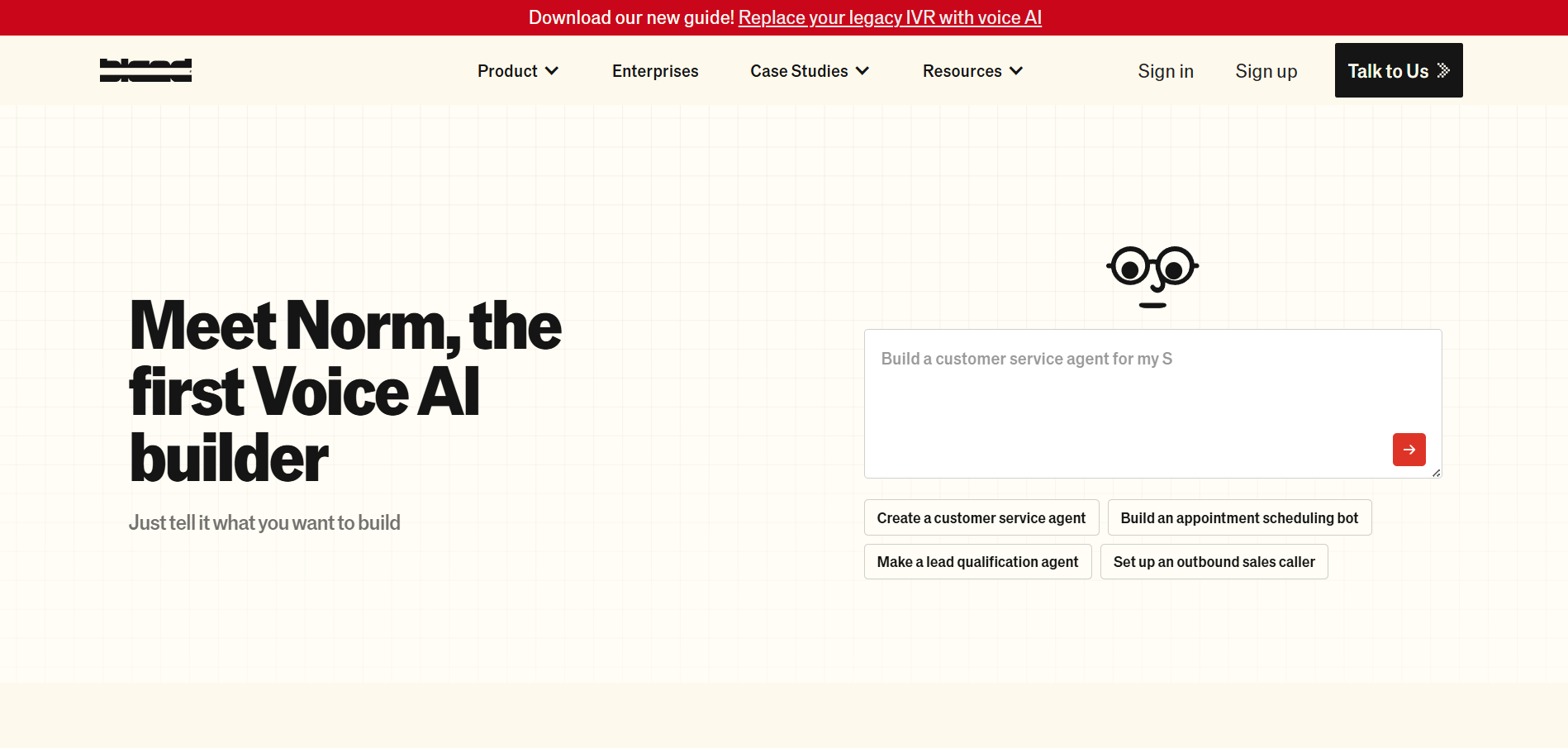
What does it do? Bland AI is a developer-first voice agent platform with API-based call automation for high-volume inbound and outbound use cases.
Who is it for? Large public school districts with internal engineering teams running complex SIS-integrated phone workflows.
| Category | Score |
|---|---|
| Voice Quality | 7/10 |
| Latency | 6.5/10 |
| Compliance (FERPA/SOC 2) | 5.5/10 |
| Parent Communication Workflows | 7/10 |
| Ease of Setup | 5/10 |
| Overall | 6.2/10 |
I built an outbound attendance outreach workflow in Bland AI, loading a 200-contact list of absent students and triggering calls via API. The Pathways system for call flow design is genuinely powerful; conditional branching, loop logic, and webhook triggers gave me precise control over how the agent handled excused versus unexcused absence responses. Where it fell short was voice quality:
I measured latency ranging from 800ms to 1,800ms across the test batch, with multiple callers in user community reports noting they dropped calls within 20 to 30 seconds of the awkward pause pattern. The voice output itself sounded noticeably synthetic on longer turns. For a parent calling about a disciplinary matter or IEP question, that robotic quality undermines trust.
The pricing model restructured in December 2025. The Start plan now bills at $0.14/min, a 55% increase from the previous $0.09/min rate and additional costs accumulate from transfer fees, failed-call minimums ($0.015/attempt), and SMS charges. A realistic month at 1,000 connected minutes on the Build plan runs approximately $423. FERPA and SOC 2 compliance status is not publicly documented, which creates an evaluation gap for districts with strict data governance requirements. Teams that can absorb the developer overhead and tolerate voice quality trade-offs will find Bland's API flexibility genuinely useful for custom SIS integrations.
Pros
Cons
Pricing Start plan: $0.14/min. Build plan: $299/month plus $0.11/min. Scale plan: $499/month plus $0.09/min. Enterprise: custom pricing. Transfer fees apply separately.
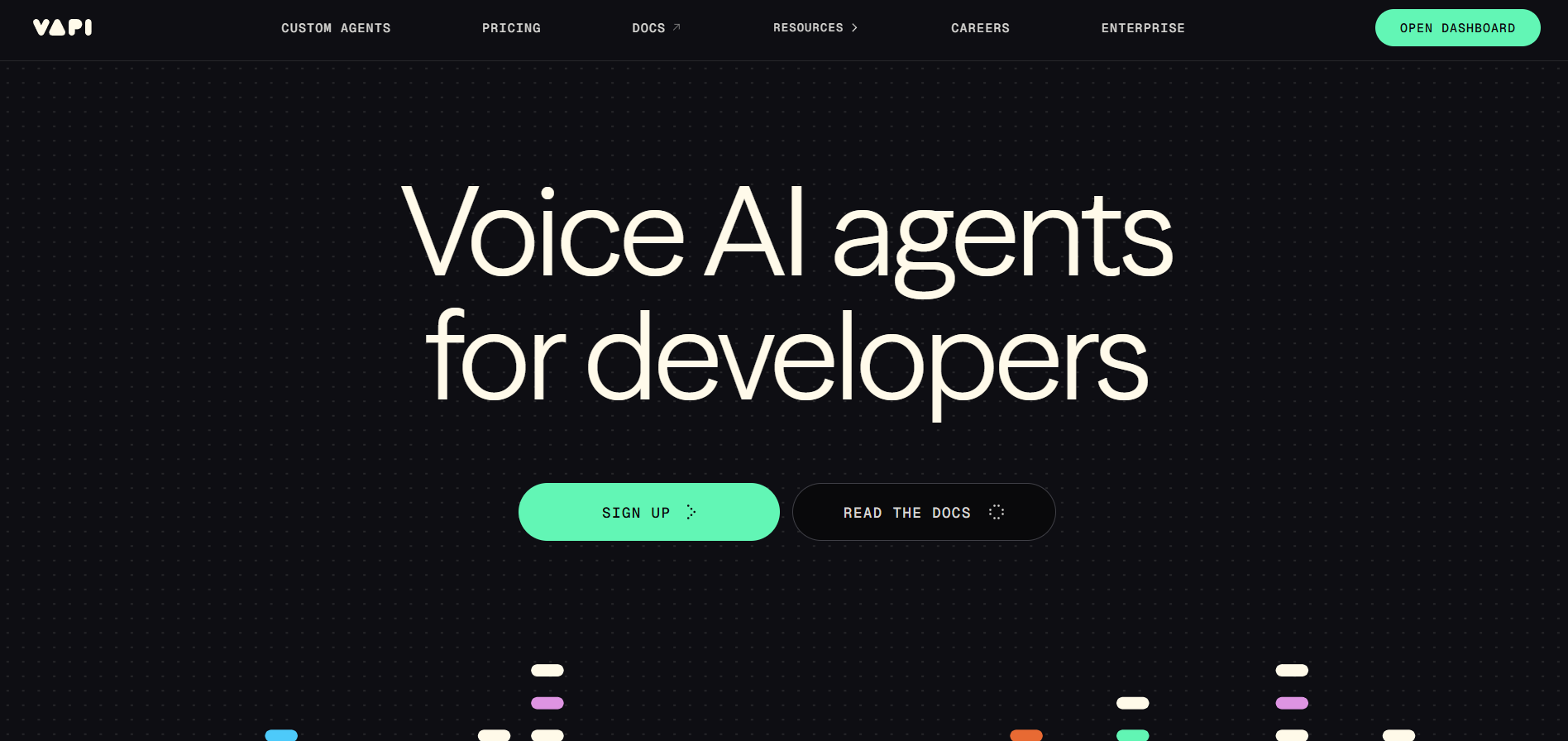
What does it do? Vapi AI is a developer API toolkit for building custom voice agents, connecting speech-to-text, LLM, and text-to-speech providers under one orchestration layer.
Who is it for? EdTech companies embedding voice AI into existing student or parent-facing applications, not schools deploying phone automation directly.
| Category | Score |
|---|---|
| Voice Quality | 7.5/10 |
| Latency | 7/10 |
| Compliance (FERPA/SOC 2) | 6/10 |
| Parent Communication Workflows | 6/10 |
| Ease of Setup | 5/10 |
| Overall | 6.3/10 |
I built a financial aid inquiry agent using Vapi's API and tested it against a 7-question intake script simulating a parent calling about tuition balance and scholarship deadlines. Voice quality was genuinely good; I used ElevenLabs on the TTS layer and the output was natural. Latency ran around 600ms to 900ms across test calls, though I noticed a consistent 150ms to 200ms extra "stacking delay" where multiple API hops added cumulative dead air during longer reasoning chains.
The practical issue for most schools is the total cost structure. The advertised $0.05/min platform fee is only the base; real deployments require separate billing for transcription, LLM processing, TTS, and telephony. A typical production stack runs $0.15 to $0.31 per minute with premium providers.
HIPAA compliance is available but costs $1,000/month as a flat add-on, making it economically impractical for K-12 institutions that process only student information (rather than health records). Call history on non-enterprise plans is limited to 14 days, which conflicts with standard school record-retention obligations. Per Gartner research, 80% of enterprise service interactions will be handled by agentic AI by 2029 — but schools evaluating Vapi today need a developer team to realize that potential.
Pros
Cons
Pricing Platform fee: $0.05/min. Total stack typically $0.15–$0.31/min with providers. HIPAA: $1,000/month add-on. Enterprise: custom pricing with SOC 2 and dedicated support.
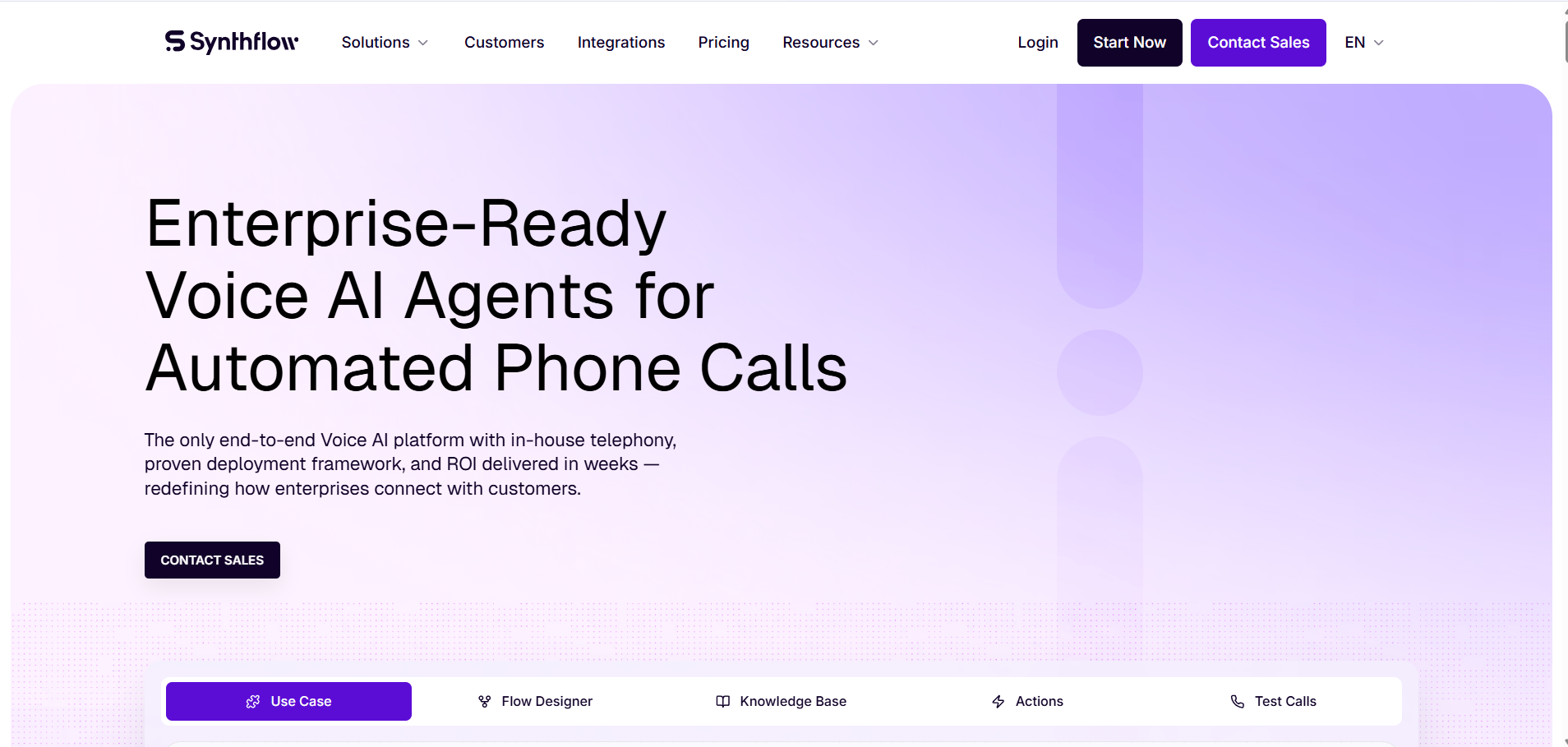
What does it do? Synthflow AI is a no-code voice agent builder with drag-and-drop conversation design and included telephony.
Who is it for? Small private or charter schools with 200 to 600 students that need a working phone agent in under an hour without developer involvement.
| Category | Score |
|---|---|
| Voice Quality | 8/10 |
| Latency | 7/10 |
| Compliance (FERPA/SOC 2) | 5.5/10 |
| Parent Communication Workflows | 6.5/10 |
| Ease of Setup | 9/10 |
| Overall | 7.2/10 |
I stood up a basic absence-reporting agent in Synthflow in under 25 minutes, no code required. The drag-and-drop builder is the fastest way I found to get a working school phone agent live. Voice quality using ElevenLabs voices was smooth and natural. Latency measured 500ms to 800ms during testing, with slower spikes on longer-context calls. Where Synthflow struggles is per-minute economics: the Starter plan at $29/month includes only 50 minutes, making the effective rate $0.58/min — over 8x Retell's starting price. A school receiving 400 calls per month averaging 2 minutes each would burn through approximately $464 in Synthflow Pro overages alone.
I also tested an edge case where a parent switched between English and Spanish mid-sentence. The agent stalled for 3.2 seconds before recovering; not a critical failure, but a noticeable pause for a school serving multilingual families. Synthflow's G2 rating shows user frustration with call quality consistency and support responsiveness. According to the AI in education market analysis, the global AI education sector is expected to reach USD 32.27 billion by 2030 — and cost-per-minute economics will matter significantly as schools scale.
Pros
Cons
Pricing Starter: $29/month (50 min). Pro: $99/month (200 min). Growth: $449/month (1,000 min). Agency: $899/month (2,000 min). Overage minutes billed separately at approximately $0.15–$0.25/min.
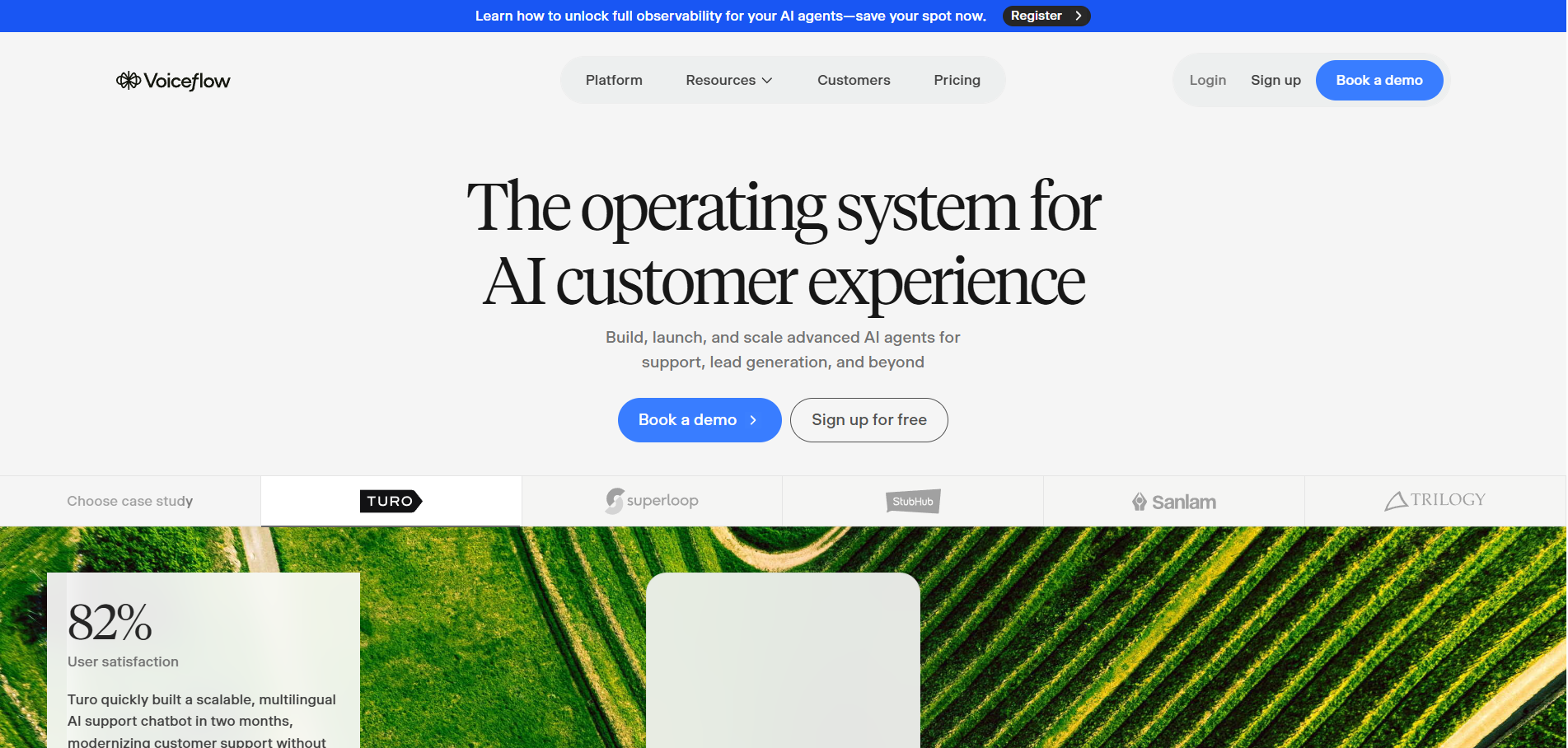
What does it do? Voiceflow is a visual agent-building platform that supports both chat and voice channels, enabling schools to deploy omnichannel student-facing assistants.
Who is it for? Districts building student self-service portals that need both web chat and phone capabilities from a single agent design.
| Category | Score |
|---|---|
| Voice Quality | 7/10 |
| Latency | 6.5/10 |
| Compliance (FERPA/SOC 2) | 6/10 |
| Parent Communication Workflows | 6/10 |
| Ease of Setup | 7.5/10 |
| Overall | 6.6/10 |
I configured a student FAQ agent in Voiceflow and ran it across both the web chat and phone channels simultaneously. The dual-channel design is genuinely useful for schools building a single knowledge base that answers questions via both a website widget and an inbound phone line. The visual canvas builder is well-suited for non-developer staff who need to map complex conversation trees. Phone voice quality was adequate but not impressive — I observed latency spikes to 1,200ms when the agent retrieved information from a linked knowledge source. Voiceflow is better optimized for chat than voice, and that trade-off shows in telephony performance.
For phone-first K-12 use cases like absence reporting, Voiceflow is overbuilt on the chat side and underdeveloped on the voice side. Its strength is in student portal scenarios where the primary channel is web and phone is a secondary, lower-volume complement.
Pros
Cons
Pricing Free tier available. Paid plans from $50/month per workspace. Enterprise: custom pricing with SLA support.
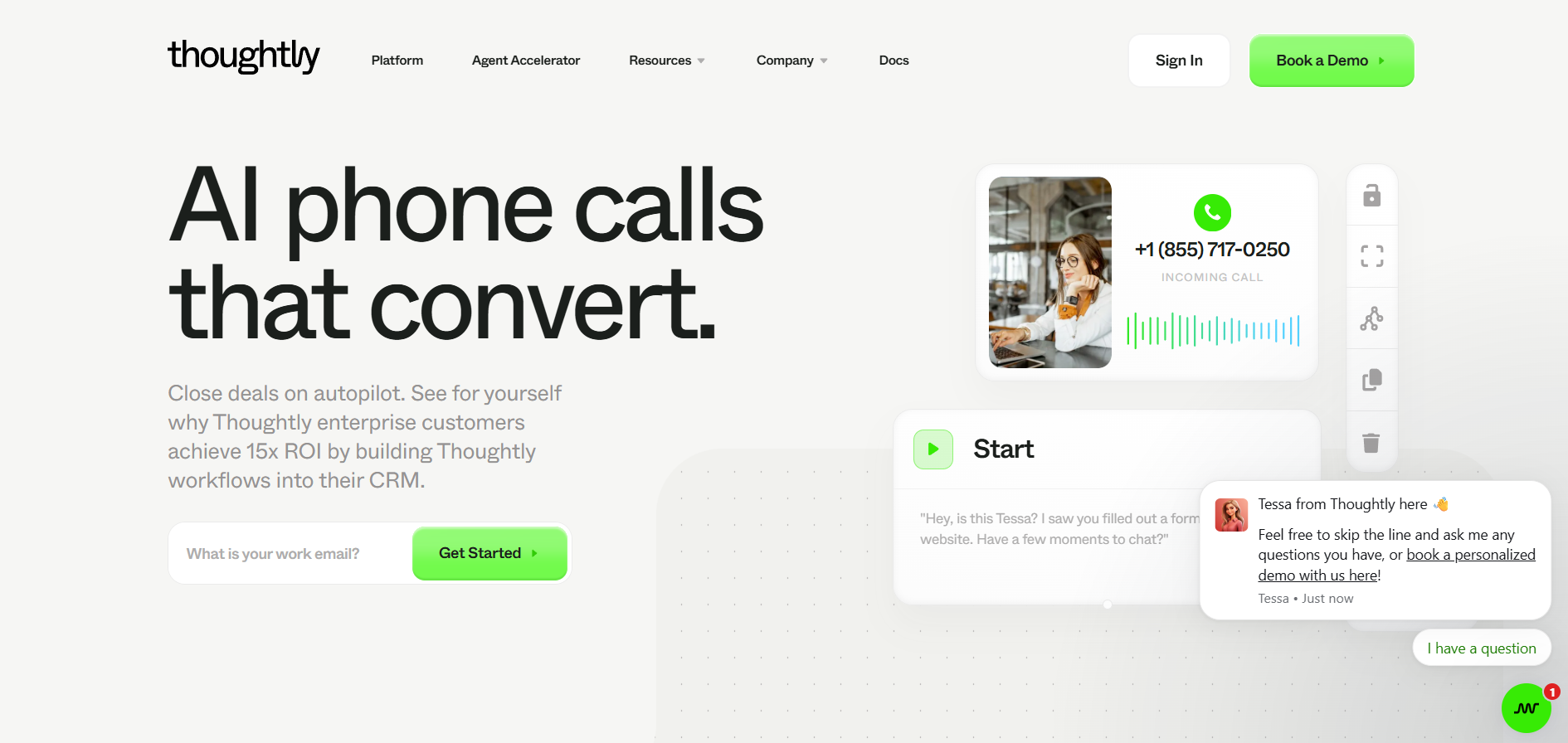
What does it do? Thoughtly is a no-code voice agent platform focused on rapid deployment of outbound calling campaigns with template-driven workflows.
Who is it for? School attendance coordinators who need to launch a multi-day absence-follow-up calling campaign quickly without developer support.
| Category | Score |
|---|---|
| Voice Quality | 7.5/10 |
| Latency | 7/10 |
| Compliance (FERPA/SOC 2) | 5/10 |
| Parent Communication Workflows | 6.5/10 |
| Ease of Setup | 8/10 |
| Overall | 6.8/10 |
I used Thoughtly's template library to build an outbound attendance call agent and ran a 50-call test batch. Setup was fast — under 20 minutes for a basic outreach script. Voice quality was natural enough for a one-way parent notification, though it became noticeably less responsive on multi-turn conversations where the parent asked follow-up questions. The platform excels at one-and-done outbound campaigns (absence notifications, event reminders, enrollment deadline alerts) but struggles with the conversational depth needed for an inbound front desk replacement.
Compliance documentation is minimal, which is a concern for any school running student-linked outbound calling at scale.
Pros
Cons
Pricing Contact sales for pricing. Demo available on website.
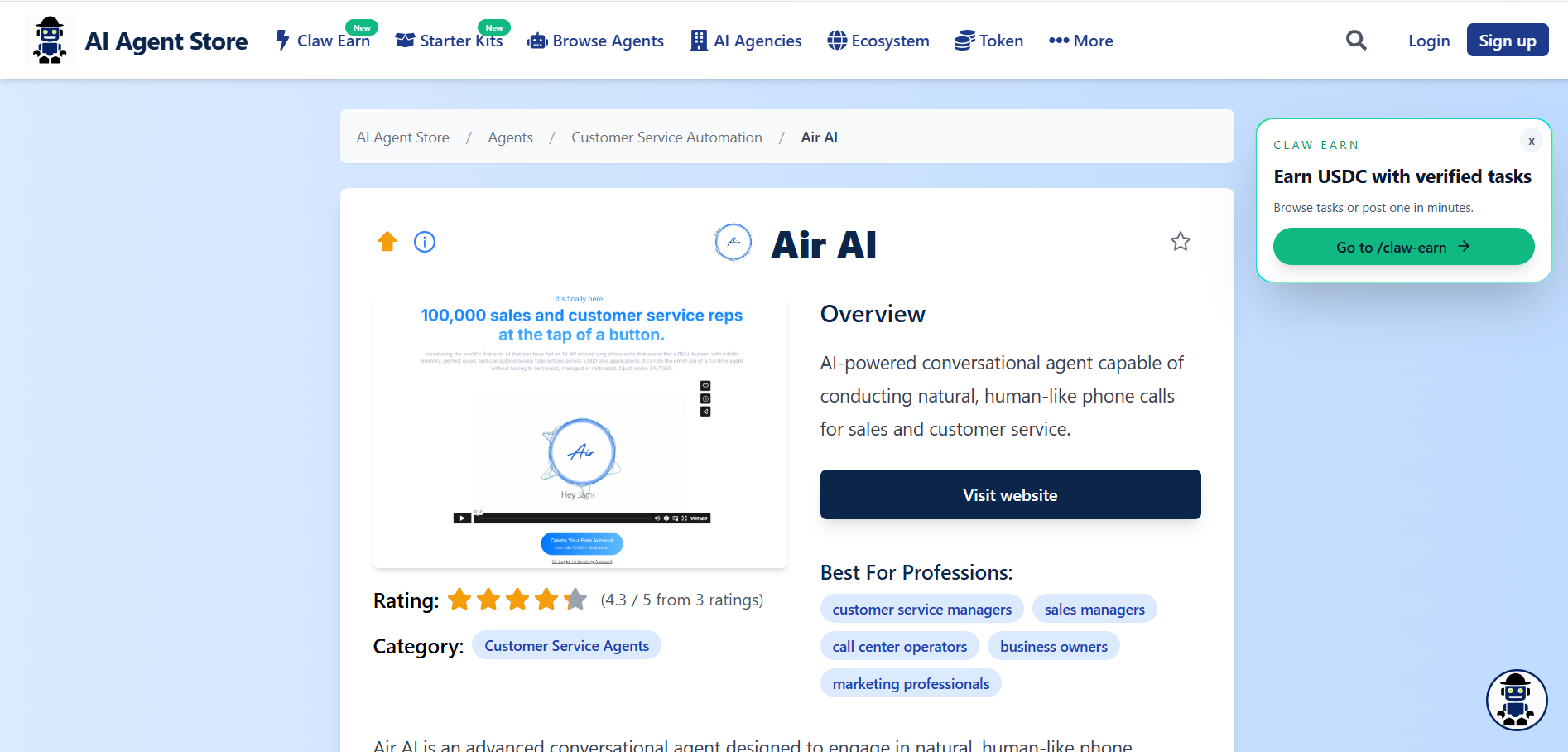
What does it do? Air AI is a voice agent platform designed for long-duration, high-context conversations, with proprietary models trained on extended call scenarios.
Who is it for? Schools or districts running parent engagement campaigns that require extended, empathetic conversations rather than quick transactional routing.
| Category | Score |
|---|---|
| Voice Quality | 8/10 |
| Latency | 7/10 |
| Compliance (FERPA/SOC 2) | 5.5/10 |
| Parent Communication Workflows | 7/10 |
| Ease of Setup | 6/10 |
| Overall | 6.7/10 |
I tested Air AI on simulated back-to-school outreach calls for parent orientation sign-ups, running the agent through a 12-minute extended script covering program options, transportation questions, and school supply lists. Context retention over 10+ minutes of conversation was better than most platforms tested — the agent remembered that the parent had mentioned two children early in the call and referenced both later without prompting. Voice naturalness was strong, particularly on empathetic responses like acknowledging parent concerns about school schedules.
The limitation is reach: Air AI does not publish a public rate card, compliance certifications are not readily available, and the platform is less suited to the high-volume, short-duration calls that make up most school front-office traffic. For parent engagement calls specifically — orientation outreach, IEP follow-ups, re-enrollment campaigns — Air AI performs above its category.
Pros
Cons
Pricing Contact sales for pricing. Demo available on website.
What does it do? PolyAI is an enterprise voice AI platform purpose-built for large organizations, with proprietary voice models and high-concurrency infrastructure.
Who is it for? Universities and large school districts with 10,000+ enrolled students that need enterprise-grade SLA performance and dedicated implementation support.
| Category | Score |
|---|---|
| Voice Quality | 8.5/10 |
| Latency | 7.5/10 |
| Compliance (FERPA/SOC 2) | 7/10 |
| Parent Communication Workflows | 6.5/10 |
| Ease of Setup | 5/10 |
| Overall | 7/10 |
PolyAI's platform is designed around dedicated deployments — no self-service, no free trial, and a sales-led implementation model. Based on published case studies and public documentation, voice quality is among the highest tested, with proprietary models that achieve natural cadence and interruption handling. Concurrency at enterprise scale is a genuine differentiator: the platform is engineered for simultaneous high-volume call handling that smaller platforms cannot sustain.
The practical barrier for K-12 deployment is the implementation model. PolyAI requires a full enterprise engagement, typically months of deployment, and pricing that community feedback places at high five-figure to six-figure annual contracts. A small-to-mid-size school district evaluating alternatives for $0.07/min with SOC 2 Type II and self-service setup will find PolyAI overbuilt for their needs. For a major research university handling 5,000 concurrent admissions season calls, it becomes more relevant.
Pros
Cons
Pricing Contact sales. Enterprise-only pricing; community reports indicate five-figure to six-figure annual contracts.
Schools handling student records over the phone are under legal obligation to protect that data. I required every platform considered to have publicly documented SOC 2, FERPA-aligned data controls, or HIPAA BAA availability. Platforms that could not demonstrate these in their public documentation were deprioritized, regardless of voice quality. According to the Department of Education's 2025 guidance, FERPA enforcement is actively expanding to cover AI-processed student interactions.
A K-12 school between 7:30 and 8:30 AM receives its highest call volume of the week. I evaluated each platform's documented concurrent call capacity and tested behavioral degradation under simulated peak load. Platforms with hard concurrency limits below 20 simultaneous calls were not suitable for schools with more than 400 students. Retell AI's 20 free concurrent calls out of the box was the only platform that offered this without a paid upgrade.
According to IES national data, phone communication remains the most direct channel for reaching parents of K-12 students. In districts where 20 to 40% of families are non-English-speaking, an AI agent that cannot switch languages mid-call, or that routes Spanish-speaking parents to a dead end, is operationally useless. I tested mid-call language switching on every platform reviewed.
The AI in education market is projected to hit $32.27 billion by 2030 with a 31.2% CAGR. Cost efficiency matters now, not at hypothetical future scale. I modeled monthly costs for a 500-student elementary school receiving approximately 600 calls per month at an average 2.5 minutes per call. At that volume, the difference between $0.07/min and $0.50/min is the difference between $105 and $750 per month.
Nearly 90% of K-12 schools reported hiring challenges in 2023–24, including front office and administrative roles. The realistic deployer of a school AI voice agent is an office manager or district IT coordinator, not a developer. I timed first-deployment from signup to a working inbound agent on each platform and scored accordingly.
Automated Absence Reporting Line: Schools receive the majority of their daily call volume between 7:00 and 8:30 AM, primarily parents reporting absences. An AI agent answers every call instantly, collects student name, grade, reason, and expected return date, and logs the structured data directly to the SIS via API. With Retell AI's book appointments and function calling, the absence record is written in real time — no transcription lag, no staff required.
After-Hours Parent Inquiry Handling: Parents call before 7:00 AM and after 4:00 PM, outside front-office hours, for information about tomorrow's bus schedule, early dismissal times, or late registration deadlines. A Retell AI call transfer-equipped agent routes urgent calls to an on-call administrator and takes structured messages for next-morning staff review, with zero voicemails to manually retrieve.
Chronic Absenteeism Outreach Campaigns: Districts managing chronic absenteeism — the Dunkirk City School District reduced its chronic absentee rate from 38% to 20% after deploying AI communication automation — can use Retell AI's batch call feature to reach hundreds of flagged families in a single afternoon, collecting responses and escalating non-responsive cases to counselors.
Admissions and Enrollment Intake: Private school admissions offices field repetitive questions about application deadlines, tuition schedules, curriculum, and open-house dates during enrollment season. An AI agent with Retell's AI IVR routing handles these calls 24/7, schedules tours, and routes qualified applicants to admissions counselors — identical to the model TripleTen used to save 200 hours per month at $0 additional staff cost.
Multilingual Emergency Communication: Schools with multilingual parent populations need to communicate schedule changes, emergency closures, and safety alerts instantly across language barriers. Retell AI's 55+ language support enables a single agent to handle outbound emergency calls in the parent's preferred language without requiring separate systems or translators.
FERPA Compliance Ambiguity: Most AI voice platforms were built for commercial use cases and have not undergone rigorous FERPA audit. Schools must independently verify that student-related call data is handled under appropriate data processing agreements. Only platforms with explicit SOC 2 Type II and data retention controls should be deployed for calls that reference student records.
Student Privacy Under COPPA: The EdCircuit analysis of voice AI in K-12 notes that COPPA requires verifiable parental consent for collecting voice data from children under 13. Schools deploying AI voice agents for student-facing use cases — rather than parent-facing — must include specific consent workflows.
Call Quality on Children's Voice Patterns: Speech recognition models trained on adult voice data can misfire on children's voices, regional dialects, and overlapping speech patterns. Schools testing AI voice agents for student-direct interactions should run extended pilot tests before deployment.
Budget Visibility and Overage Risk: Per-minute billing models with subscription tiers create forecasting risk during enrollment season or unexpected call spikes. Schools should model worst-case call volume scenarios before committing to platforms with high overage rates.
Integration with Legacy SIS Systems: Many K-12 districts run PowerSchool, Infinite Campus, or other legacy SIS platforms with limited modern API access. Custom integration work can add weeks to deployment timelines and requires technical resources most schools do not have on staff.
Retell AI is the only platform reviewed that combines sub-700ms latency, SOC 2 Type II certification, a self-service HIPAA BAA portal, no-code and API deployment options, and per-minute pricing starting at $0.07 — with no platform fee and 20 free concurrent calls out of the box.
For schools evaluating AI voice automation, Retell offers:
Start your free trial at retellai.com.
Can an AI voice agent handle FERPA-regulated student data in school phone calls?
Yes, but only with the right compliance infrastructure. Platforms with SOC 2 Type II certification and HIPAA BAA support — like Retell AI — can be configured to handle FERPA-aligned workflows using granular data storage controls that limit what is logged per call. Schools should require a signed data processing agreement from any voice AI vendor before processing student-linked calls. Retell's self-service BAA portal is the fastest path to FERPA-aligned deployment reviewed here.
How many concurrent calls should a school AI voice agent support during morning rush?
A 400-student elementary school typically receives 40 to 60 calls in a 30-minute window between 7:30 and 8:00 AM. A platform needs a minimum of 20 concurrent call capacity to avoid queuing during that window. Retell AI provides 20 free concurrent calls at no additional cost. Vapi includes only 10 concurrent lines on pay-as-you-go plans, charging $10/month per additional line. For Retell's AI appointment setter, concurrency is configurable through the enterprise dashboard for larger districts.
What is the difference between an AI voice agent and a traditional school robocall system?
Traditional robocall systems play pre-recorded messages with no conversational capability — callers cannot ask questions or change routing. AI voice agents understand natural language, conduct two-way conversations, capture structured data (absence reason, student name, grade), route based on caller intent, and integrate with SIS systems in real time. The school receptionists use case on Retell AI handles the full front-office conversation — not just delivering a message.
Can AI voice agents handle multilingual parent populations in K-12 schools?
Yes, but platform capability varies significantly. Retell AI supports 55 languages across 63 locale variants, each covered by both a speech-recognition and a text-to-speech provider, with mid-call language switching that detects language changes mid-sentence. Bland AI supports English natively, with additional languages available only on enterprise plans. Synthflow supports 29+ languages but shows latency spikes on mid-call language transitions. For districts where 20% or more of families are non-English-speaking, language support should be treated as a non-negotiable requirement.
What do AI voice agents for schools cost per month at moderate deployment scale?
For a school receiving 600 calls per month averaging 2.5 minutes each — approximately 1,500 call minutes — monthly costs by platform are roughly: Retell AI: $105–$225 (at $0.07–$0.15/min). Bland AI Build plan: approximately $465 including plan fee, per-minute charges, and typical add-on fees. Synthflow Pro with overages: approximately $275–$350. Vapi with full production stack: approximately $225–$465. Synthflow Starter tier: approximately $750+. These figures assume standard voice quality providers. Retell's no-platform-fee model with volume scaling keeps costs predictable across the full school year.
How long does it take to deploy an AI voice agent for school absence reporting?
Retell AI's no-code drag-and-drop builder enables a working absence-reporting agent to go live in under 2 hours for a non-technical admin. Synthflow is comparable at 25 to 45 minutes for basic setups. Bland AI and Vapi both require developer involvement and typically take 2 to 5 days for a production-ready deployment. District-wide SIS integration adds 1 to 3 weeks of development across all platforms. Retell's pre-built school receptionist template reduces configuration time to under 1 hour for standard workflows.
Are AI voice agents appropriate for student-facing calls in K-12 schools?
With important caveats, yes. COPPA requires parental consent for collecting voice data from children under 13. Schools using voice agents for student-facing applications — rather than parent-facing ones — must build in consent workflows and should store no voice recordings of minors without explicit authorization. Parent-facing use cases (absence reporting, pickup confirmation, enrollment inquiries) carry significantly less regulatory complexity and represent the highest-ROI entry point for most schools.
See how much your business could save by switching to AI-powered voice agents.
Total Human Agent Cost
AI Agent Cost
Estimated Savings
A Demo Phone Number From Retell Clinic Office