7 Best Decagon Alternatives For AI Customer Support
18
MIN READ
September 17, 2026
Decagon AI is an AI platform designed for enterprise-level customer support automation. The idea is to create AI agents across channels that can think and solve problems like your best human agents.
However, Decagon isn't the best fit for every business, especially for leaner teams or businesses seeking deeper task automation, flexible workflows, or faster deployment.
As customer expectations evolve, businesses are realizing Decagon's standalone platform doesn't work well for them, especially if you're looking to improve your current setup, not tear it down and start over.
We've put together a list of the 7 best alternatives and compared them across features, pricing, and user reviews. For each tool, we've called out what it does well and who should go for it, based on our testing.
Let's get started.
The magic of Decagon is that it builds AI agents that do more than just read from a script. They learn from your past support conversations and can actually take action for customers across chat, email, and even voice calls.
Still, many teams end up searching for Decagon alternatives for a few solid reasons:
Decagon is attacking the forward-deployed-engineering model it helped popularise, and moving toward customer ownership because buyers are demanding it. That direction is right. The question is what ownership means in practice.
A good forward-deployed engineer is a consultant, not a crutch: someone who makes the case, ships the deployment, and leaves you able to run it. The test is what happens afterwards. If improving the agent means filing a request and waiting, you do not own it, whatever the interface looks like.
Retell pairs the same hands-on deployment support with real control. You keep the ability to see and change the agent yourself, so a change does not become a ticket, a queue, or another SOW.
To put this list together, we didn't just pull names out of a hat. Each tool was tested in realistic scenarios, including managing high volumes of customer interactions, tracking multi-channel journeys, identifying friction points, and enabling teams to respond quickly and effectively.
Here's how we tested them:
This approach helped us cut through the noise and focus on platforms that don't just promise efficiency, but actually deliver it where it counts.
If you're exploring tools that are easier to implement, scale AI automation, and deliver faster ROI without the heavy orchestration stack, these 7 Decagon alternatives will help you find the right fit.
What does it do? Retell AI is an enterprise-ready AI voice agent platform that's a powerful mix of no-code and API infrastructure that lets everyone from enterprises to lean teams successfully build, deploy and monitor phone-based AI agents.
Who is it for? Retell works best for businesses that enjoy customisability without the technical headache. Anyone from sales to support teams across industries can automate outbound and inbound calls through its agents.
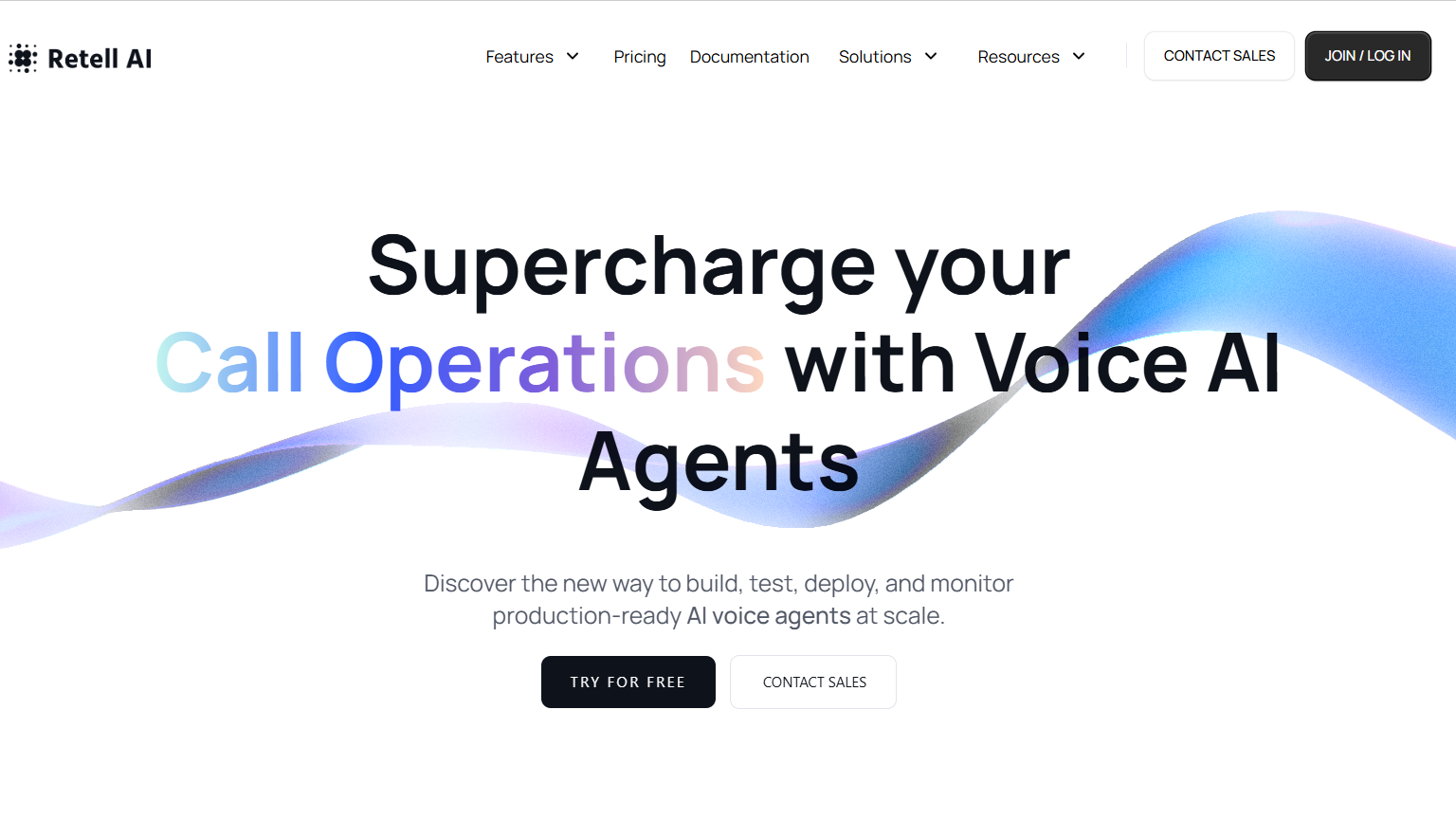
Retell AI is one of the top Decagon alternatives, especially for teams that prioritise voice-first, omnichannel customer interactions. At Retell AI, our agents are designed for continuity, the same intelligence, conversation flows, and logic across voice, SMS, and chat.
With Retell, you can:
Decagon does run voice agents, in 70+ languages. The difference is what sits underneath. Retell gives you SIP into the dialer you already run, branded caller ID, verified numbers and TCPA handling, so voice is infrastructure you control rather than a channel you rent.
One of Retell AI's most powerful features is its webhook support, allowing businesses to automate workflows and synchronise data in real time. Instead of relying on inefficient polling methods, webhooks ensure that every event is acted upon in real-time.
From updating spreadsheets to booking an appointment, Retell webhooks do it all, keeping operations efficient according to your business needs.
For businesses looking to move beyond basic AI call automation, Retell AI delivers a complete AI call operations solution, one that enhances every step of the customer journey with smarter, more efficient communication.
Retell connects natively to Salesforce, HubSpot, Zendesk, GoHighLevel, Zoho CRM and Microsoft Dynamics 365 on the CRM and ticketing side, with Twilio, Vonage and your own SIP trunk on telephony. ServiceNow, Pipedrive, Stripe and Shopify connect through automation platforms including Make, n8n and Zapier.
Retell AI offers published per-minute pricing with no platform fee and no feature gating. You pay only for the minutes and resources you consume.
New users get $10 in free credits and full platform access with no contract, including simulation testing, call analytics and 20 free concurrent calls.
What does it do? Ada is an AI-native customer service automation platform that sits on top of your existing help desk and uses a proprietary Reasoning Engine to resolve support inquiries across chat, email, voice and social.
Who is it for? If you're looking for an enterprise-quality customer support solution that spans across multiple channels and requires minimum human intervention, then Ada can be a great option. However, it's important to note that it's expensive compared to other options in the list (for example, Retell AI).
If you're an enterprise already running Zendesk or Salesforce, then Ada can be an excellent AI support platform. Unlike Decagon, where you had to replace your support platform, Ada lets you add it at the top of your existing stack.
The platform rests on four product pillars:
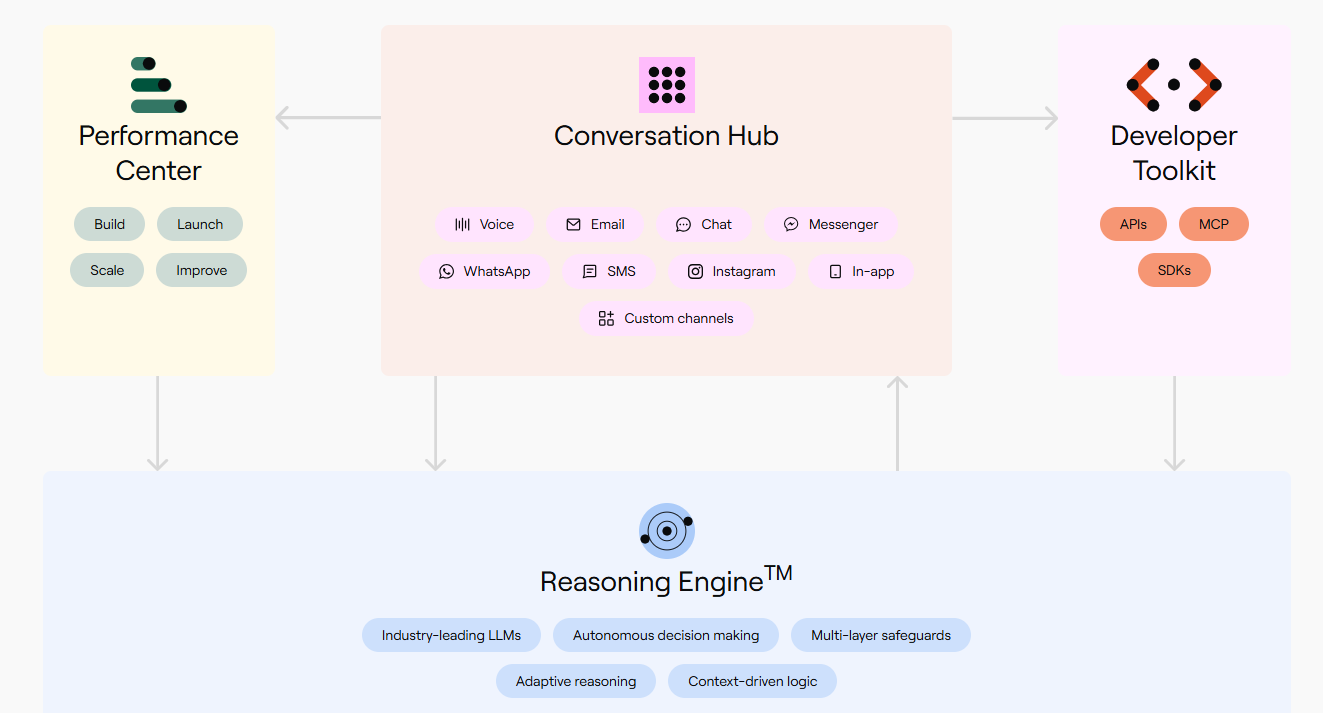
This structure decides how your AI agents think, talk, track and build across channels. It's a full-stack AI system, not just a chatbot that handles conversations just like humans.
The initial setup of Ada is remarkably easy and smooth. Ada's playbook feature allows for the easy implementation of existing SOPs into successful flows without having to build complex ones from scratch.
Furthermore, the support from their team, including hyper-care support and assistance from the solutions team and our Customer Success Manager, is amazing.
Ada integrates with 13+ helpdesk and contact centre systems, including Zendesk, Freshworks, Salesforce, Help Scout, Twilio Flex and more.
Ada does not publish pricing. Enterprise deals are negotiated, and reported contract values run well into six figures.
What does it do? Fin AI is a complete, fully configurable AI agent system that's built on advanced AI technology with a no-code interface for total control.
Who is it for? Fin AI is a standalone platform without adopting the full Intercom platform. Businesses using Zendesk, Salesforce, or any other helpdesk can add Fin to their existing stack.
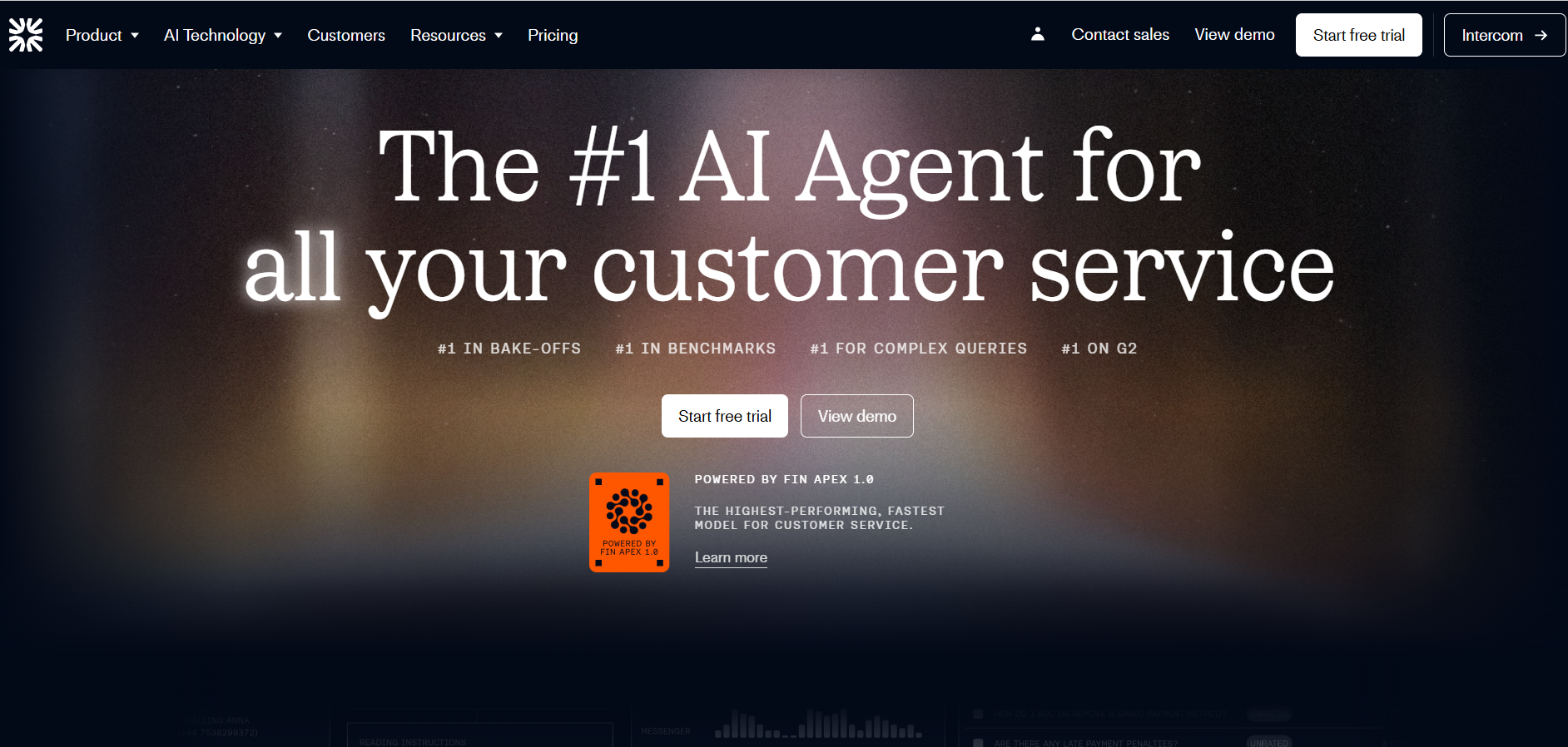
Fin AI is a powerful customer agent in the market that can resolve your most complex queries on all your channels.
What makes Intercom Fin AI different from other AI tools is its architecture. It offers a three-layer system designed for continuous learning.
Each layer in the Fin's architecture is optimized for accuracy and speed to deliver higher-quality answers across multiple brands, channels, and languages.
Its no-code infrastructure lets you customise, test and improve agent performance without engineering or vendor involvement, and each piece of behaviour stays separately editable rather than bundled into one asset your team has to unpick.
Fin connects to the systems and channels you already use, through MCP or API Data Connectors. It supports integrations to every channel, from chat and email to voice.
Fin charges $0.99 per outcome when integrated with your current helpdesk, including Zendesk, Salesforce, HubSpot, and more.
However, when using Intercom's helpdesk, you'll have to pay $0.99 per outcome +$29 per helpdesk seat per month.
What does it do? Zendesk is a cloud-based customer service platform that helps businesses organize all their customer interactions in one sleek place. It includes a world-class ticketing system, robust live chat, a flexible help centre builder, and powerful reporting dashboards.
Who is it for? Zendesk is incredibly versatile. While it works excellently for external customer support, many teams also use it internally for IT help desks or HR requests. Also, it works just as well for a small team as it does for a global enterprise.
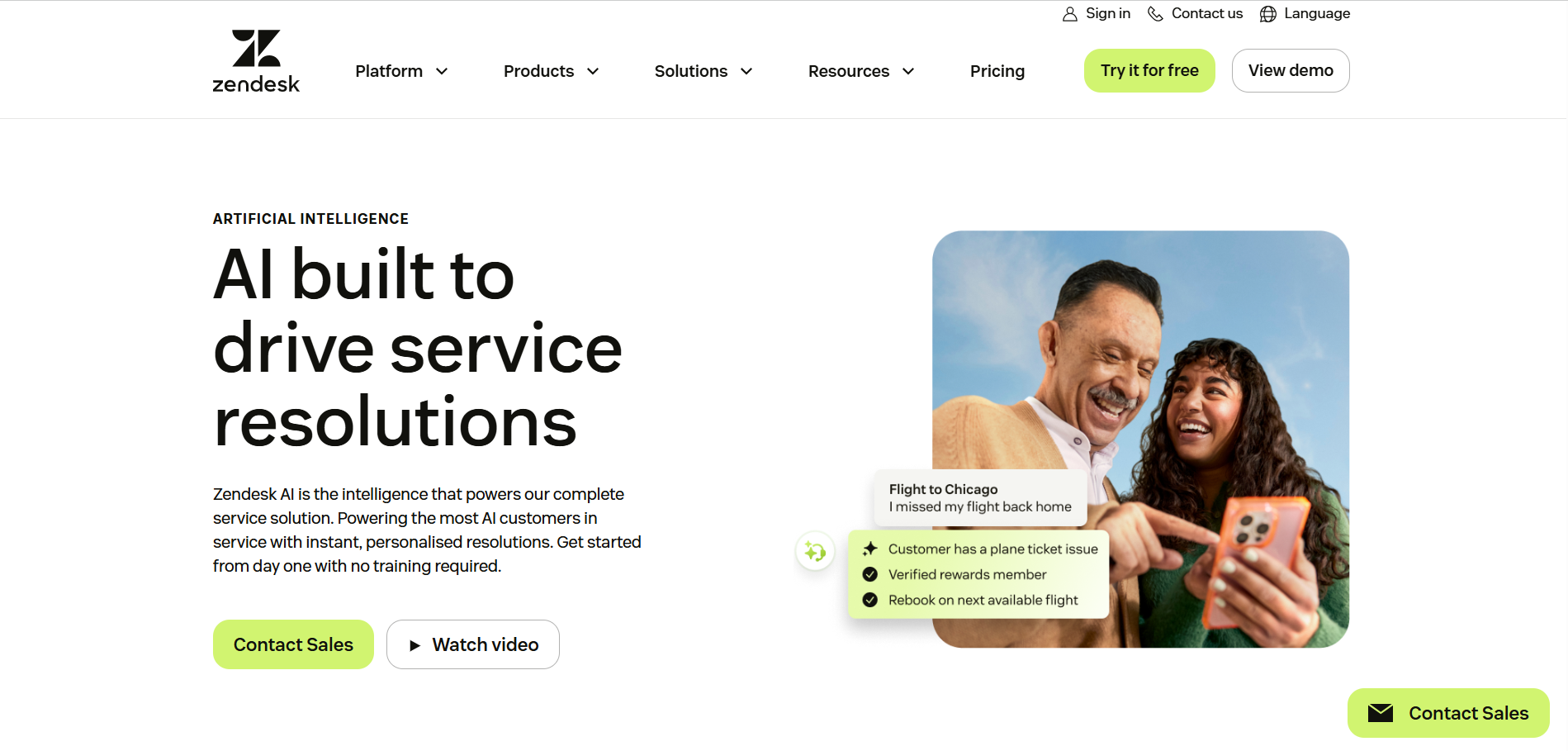
Zendesk AI is the intelligence layer built on top of Zendesk's established customer service platform. If you're already using Zendesk for messaging and ticketing, the AI feature integrates natively into your existing workflows.
The platform focuses on three main areas:
Because Zendesk is so powerful and feature-rich, the platform offers an incredible amount of enterprise-grade functionality. Its tool is built for experts; it provides extensive opportunities for custom workflows, triggers, and automations.
Zendesk's advantage is scale. If you're already using Zendesk, the AI features plug right into your existing setup. Conversation history stays unified. Agent handoff happens within the same workspace.
The Zendesk Marketplace offers over 1000 integrations, making it easier to connect with tools you already use.
Zendesk AI makes the most sense for teams already invested in the Zendesk ecosystem who want to add AI capabilities without switching platforms.
Zendesk offers transparent, tiered pricing:
| Plan | Pricing | AI Features Included |
|---|---|---|
| Support Team | $25/agent/month | AI agents (Essential) |
| Suite Team | $69/agent/month | AI agents, Generative replies, Knowledge Builder |
| Suite Professional | $149/agent/month | Above + Copilot (5 uses/month), Up to 5 help centers |
| Suite Enterprise | $219/agent/month | Above + Up to 300 help centers |
What does it do? Vapi AI is a voice AI platform designed for teams who want to build AI voice agents from scratch.
Who is it for? If you already have a tech stack that you use to run AI voice agents, then Vapi AI can be a good choice. Businesses with limited technical bandwidth might struggle to maintain it due to multiple configurations.
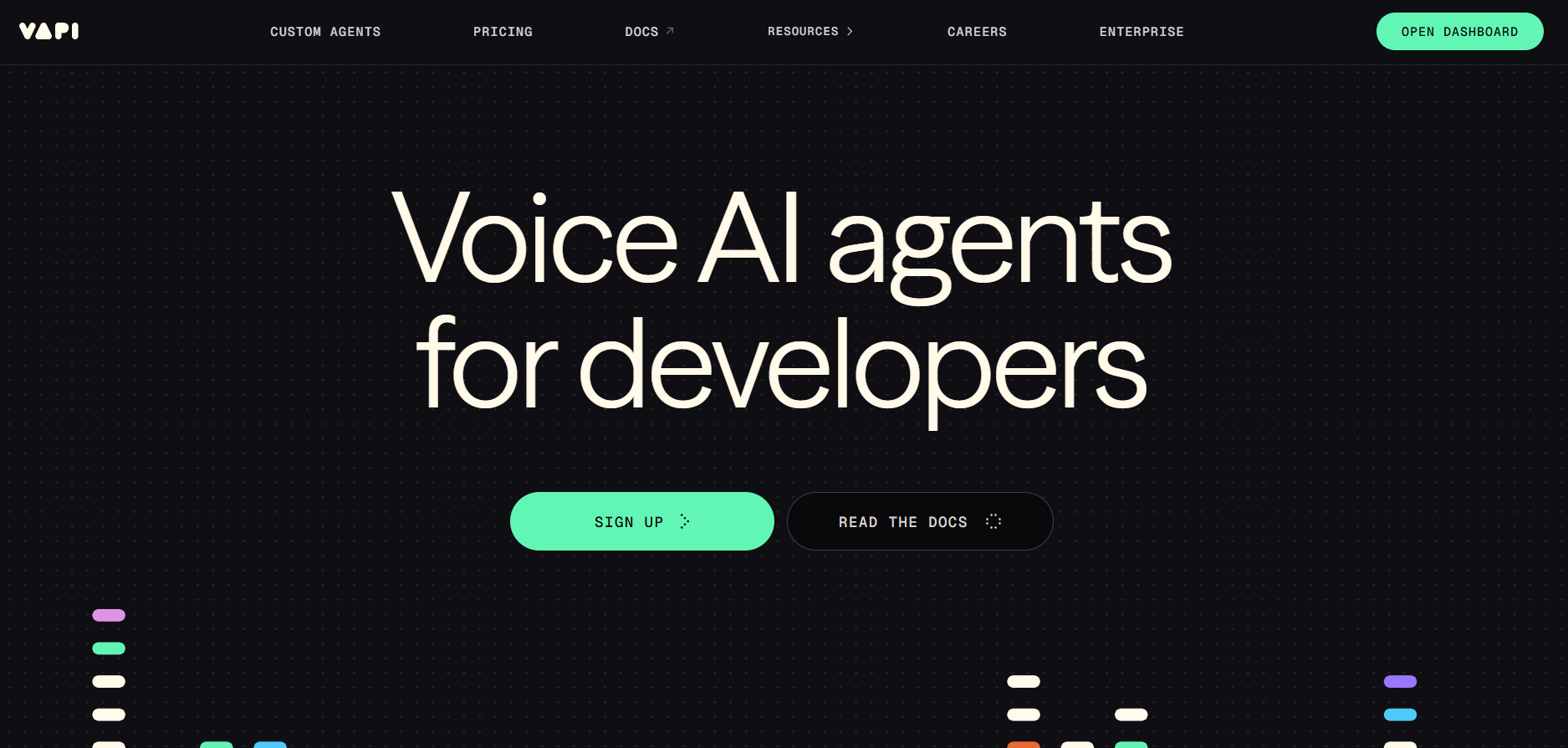
Vapi AI is a developer-centric AI voice assistant platform that allows you to create, test and deploy voice assistants into web or mobile apps, CRMs, or customer service systems. You get to choose the speech-to-text, a large language model, and text-to-speech, and Vapi handles the call.
While Vapi AI offers built-in tools for the most common use cases, like booking appointments or sending messages, you can extend the capabilities for your agent by connecting it to external APIs, databases, or business logic.
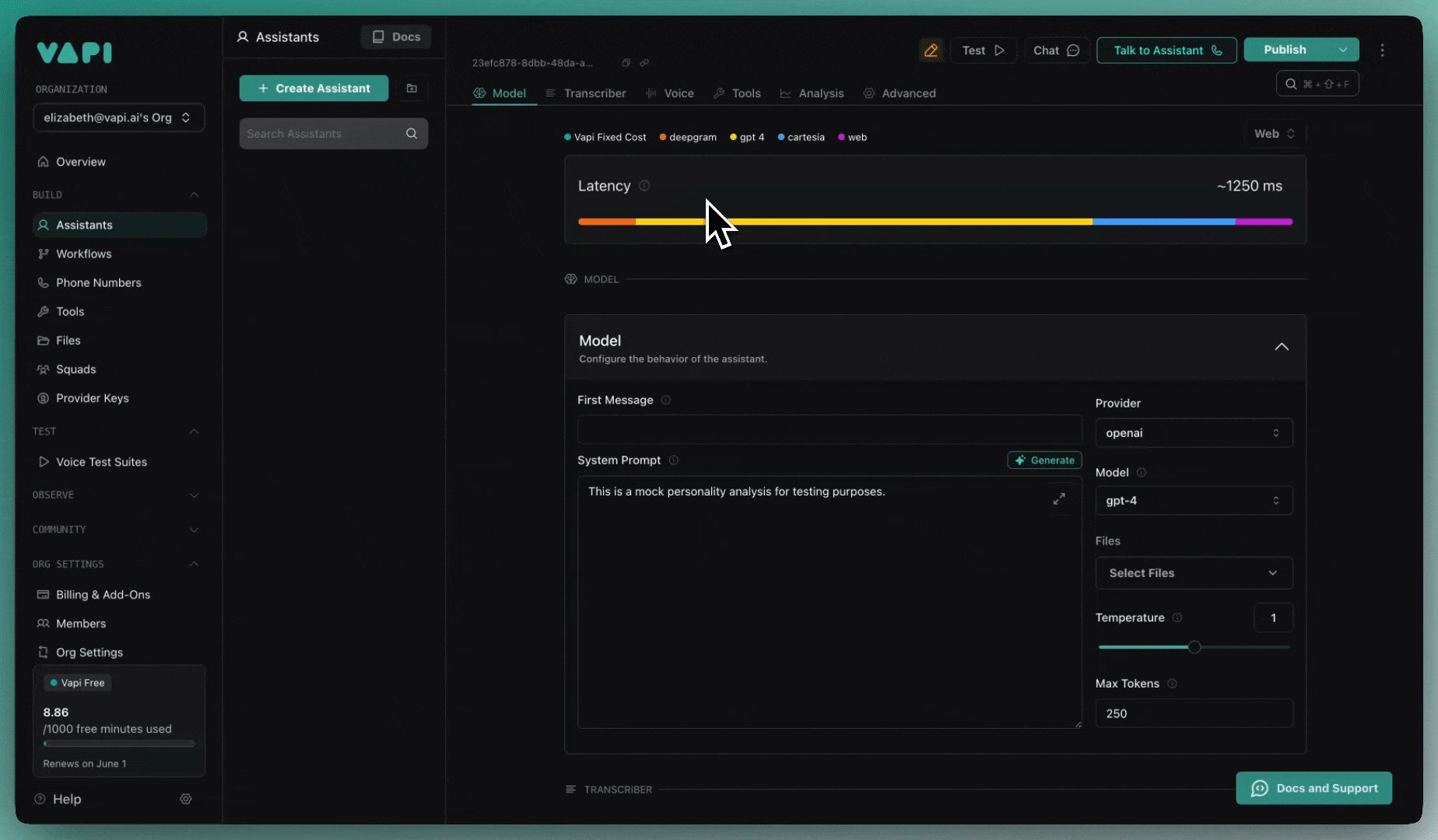
This way, you can:
Custom tools go beyond simple conversions and provide systems with up-to-date insights that are outside their LLM's knowledge repository, like raising an invoice or looking up a customer's status in CRM.
While this may seem like a dream setup, businesses with limited tech bandwidth often struggle to maintain it; besides, they have to bear the cost of the speech-to-text, LLM, and voice model, along with Vapi's premium pricing.
Vapi AI offers limited pre-built integrations, however you can seamlessly connect with GoHighLevel, Make, Google Calendar, Google Sheet and Slack. For other integrations, you can create custom webhooks to be accessed via calls.
Vapi's hosting cost starts at $0.05 per minute, but it's actually a fraction of the total deployment cost. The true meaning of "bring your own stack" means that you've paid for all the providers, including Vapi's hosting fee, to run your AI voice agent efficiently.
When you add this up, the actual cost comes around $0.13 - $0.31+
Besides, businesses choosing "pay-as-you-go" pricing have to pay $1,000 per month add-on for HIPAA compliance.
What does it do? Freddy AI is an AI layer that's built into the Freshworks ecosystem, designed to help the customer support team rather than replace them.
Who is it for? Freddy AI is best for teams already committed to Freshworks. The deep integration with Freshdesk, Freshsales and Freshservice means seamless data flow and unified reporting.
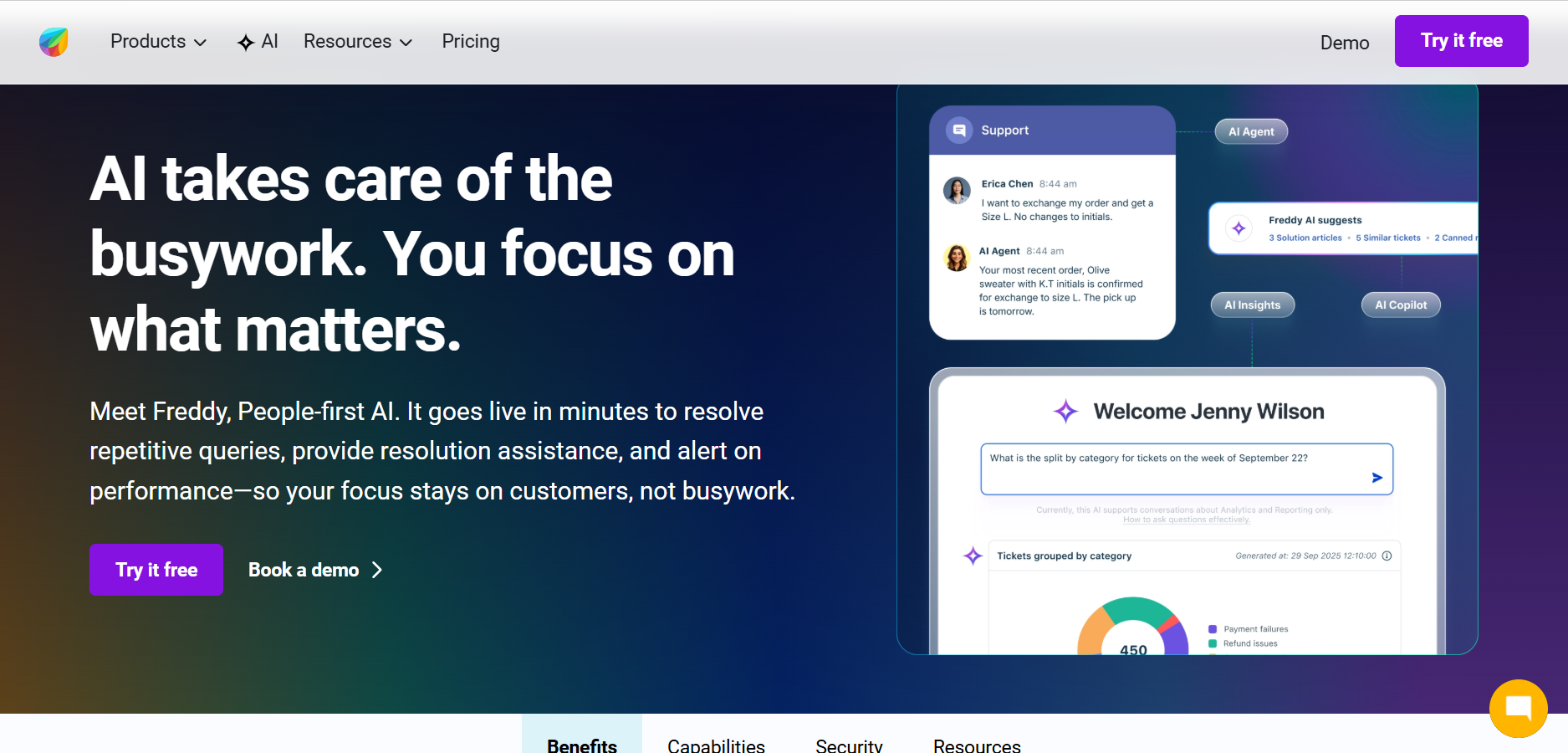
Freshdesk is a mature customer support platform that has been around since 2010 and serves over 74,000 businesses worldwide. Freddy AI is the AI layer that adds automation and intelligence to the existing Freshdesk platform.
It operates on a simple premise: connecting your existing Freshworks account, enabling the features you want and letting the system learn from your data.
Freshworks positions it as "People-first AI" that works alongside your team. It comes with three core components:
For the AI agent component, you get access to pre-built "Vertical AI Agents" that come with 50+ agentic workflows for common scenarios. This includes order tracking, subscription changes, refund processing and appointment scheduling.
The agents integrate directly with Shopify, Stripe, PayPal, FedEx, and other tools to take real actions, not just provide answers.
Freddy AI can handle conversations consistently across email, webchat, WhatsApp, Facebook Messenger, and Instagram without dropping context. It also supports over 60+ languages, making it accessible for global support operations.
Freddy AI integrates with over 1,200 enterprise apps across industry verticals. You can also access pre-built connectors that connect Freshworks' suite of products to any API-enabled system, be it cloud or legacy on-prem applications.
To access Freddy AI features, you'll want to be on one of Freshworks' professional-tier plans:
These plans are excellent for established teams, and both come with an initial 500 sessions with the AI Agent for free.
What does it do? Bland AI offers an easy-to-integrate API infrastructure that makes sending an AI phone call simple. It can handle thousands of calls a day, all from your own dedicated GPUs.
Who is it for? Bland AI is trusted for its scalability, making it ideal for organizations that handle high call volumes like healthcare, logistics, and fintech. It's primarily designed for enterprises and developer-heavy teams that want extreme flexibility and deep integration.
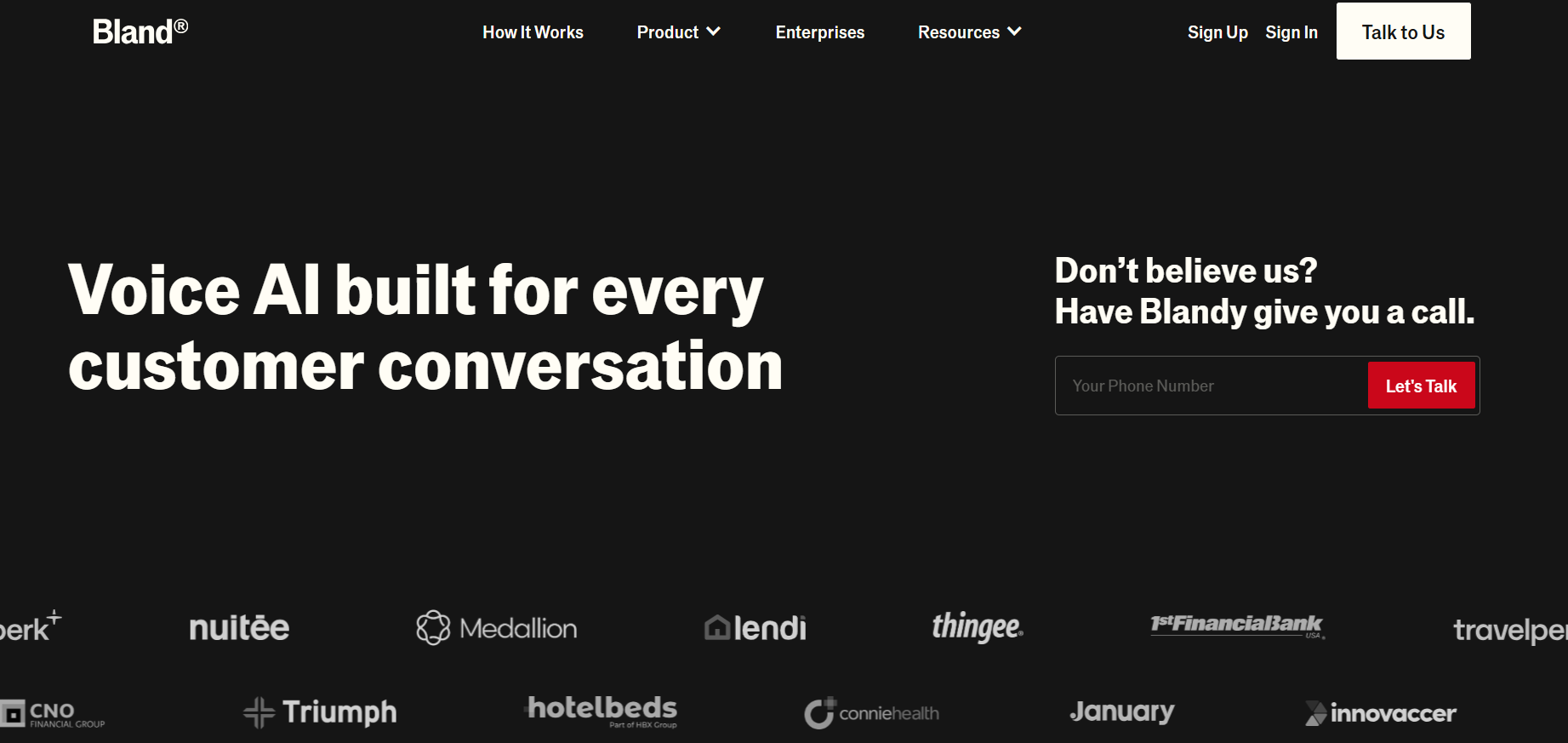
Bland AI focuses exclusively on voice and SMS automation for enterprises. It offers an in-built easy-to-integrate voice call API that makes sending an AI phone call simple (just requiring ten lines of code).
Rather than hand-holding your team into creating voice agents, it provides raw building blocks like webhooks, memory stores, pathways and voice cloning, so you can craft a unique voice agent build for your business needs.
In short, Bland AI can:
Besides integration with your favourite tools, Bland AI allows you to create custom tools and fine-tune mid-call sessions using APIs, leading to lower latency and contextual answers.
However, without technical knowledge, it would be difficult to create custom tools and integrate them with your voice bot. You can utilize some of its pre-made templates, but if you want to customize your voice agent, you'll need to work with Bland's staff.
Bland AI offers live integration with Salesforce CRM, Cal.com & Calendly, Notion, Twilio and native SMS integration.
Bland AI offers a simple usage-based pricing per $0.09 / min inbound and outbound voice calls. This is your baseline cost for any connected call lasting more than a few seconds.
There are different costs subject to a $0.015 minimum cost each attempt, call transfers ($0.025 per minute) and voicemails ($0.09 / min).
Choosing the right Decagon alternative depends on how you currently run support, how much control you want over automation, and whether you're optimizing for speed, flexibility, or deep customization. Some tools act as full AI agents that handle conversations end-to-end, while others layer intelligence on top of your existing systems.
Here's how to think about it:
If you want a voice-first AI agent that can handle conversations and actions end-to-end, Retell AI is the strongest fit. It's built for teams that want to automate inbound and outbound calls, manage multi-turn conversations, and trigger real-time workflows (like bookings or CRM updates) without heavy engineering. It works especially well if voice is a core support or sales channel.
If your priority is adding AI on top of your existing helpdesk (without replacing it), Ada and Intercom Fin AI are better choices. Ada is ideal for enterprise teams that want structured automation, strong analytics, and multi-channel orchestration. Fin AI, on the other hand, offers more flexibility and no-code control, making it easier for teams to customize behavior, tone, and workflows without relying on engineers.
If you're already deeply invested in a support ecosystem, Zendesk AI or Freddy AI (Freshworks) make the most sense. These tools integrate natively into their respective platforms, keeping your workflows, ticket history, and reporting unified. They're best for teams that want to enhance existing operations rather than introduce a new system.
If you need maximum flexibility and are comfortable with a developer-heavy setup, Vapi AI and Bland AI are worth considering. These platforms give you full control over how your AI agents are built, from choosing models to designing logic and integrations. They're powerful, but they require technical resources to implement and maintain effectively.
If your main concern is avoiding complexity and speeding up deployment, tools like Retell AI and Intercom Fin AI stand out again. They offer faster time-to-value with minimal setup, making them ideal for lean teams or companies that want to start seeing ROI quickly.
These come up repeatedly once teams are past the demo. They apply to every platform on this page, including ours.
All of these Decagon alternatives offer unique strengths that can transform your customer interaction, but which one should you choose?
When evaluating vendors, prioritize:
Considering these factors, Retell AI is the voice-first pick: low-latency infrastructure you can point at your own carrier, published pricing with no platform fee, and a deployment you can start today rather than after a procurement cycle.
Prove it on your own calls before you sign anything. Run a pilot on the workflow you care most about, against your real volume, and compare the outcomes to what you have now. No enterprise agreement required to find out. Start your free trial with Retell today.
Businesses often look for alternatives to Decagon AI because of its standalone setup that requires replacing existing tools like help desks, which adds friction for teams with established workflows.
Platforms like Retell AI support more advanced orchestration by enabling structured workflows, modular logic, and task-based automation. This allows multiple specialized flows or agents to handle different parts of a conversation, making them better suited for complex support environments.
Decagon, Retell AI, Freddy AI and Bland AI all run voice and chat from one platform. The question worth asking is whether the voice side is built on the vendor's own telephony or resold, and whether you can point it at the carrier and dialer you already have.
Decagon charges a platform fee of around $50,000 a year before a single conversation is handled, then per-conversation or per-resolution usage on top. Third-party contract data puts the median annual deal near $386,000. Retell charges no platform fee and no subscription: you pay per voice minute and per chat message, every plan opens the entire platform, and you can start at zero.
Both platforms warm-transfer with context. Retell goes further down the stack: it can sit inside an existing CCaaS or dialer over SIP, so the transfer lands in the queue your agents already work in rather than in a second system they have to watch.
See how much your business could save by switching to AI-powered voice agents.
Total Human Agent Cost
AI Agent Cost
Estimated Savings
A Demo Phone Number From Retell Clinic Office