Top 8 AI Voice Agents for Appointment Scheduling in Clinics and Healthcare in 2026 (Tried and Tested)
AI voice agents can now answer patient phone calls, book appointments, and manage scheduling changes without human staff involvement. In healthcare environments where front desks are often overwhelmed with routine appointment requests, these systems can significantly reduce call volume while keeping scheduling workflows accurate.
When I began evaluating voice AI tools designed for clinics, it quickly became clear that most platforms claiming to automate scheduling were not built for real patient conversations. Booking a medical AI appointment setter involves more than recognizing a request. The system must interpret patient intent, check provider availability, handle rescheduling or cancellations, and route complex cases to staff. The platforms reviewed in this guide were tested specifically for those real-world scheduling workflows.
Yes. AI voice agents can answer patient phone calls and schedule medical appointments by connecting directly to clinic calendars or scheduling systems. During a call, the voice AI assistant can check appointment availability, confirm booking details, reschedule visits, or cancel appointments while updating the clinic’s scheduling system in real time.
Unlike traditional phone trees, modern AI voice agents manage natural conversations. Patients can request new appointments, change existing bookings, or ask questions about availability without navigating rigid menus. The voice agent interprets the request, interacts with the scheduling system, and confirms the appointment during the call.
This ability to manage real appointment workflows is why voice AI is increasingly used by clinics to reduce front desk call volume and improve patient access to scheduling.
An AI voice agent for healthcare appointment scheduling is a system that answers incoming clinic phone calls and manages patient appointment workflows through natural voice conversations.
Instead of waiting for a receptionist, patients interact directly with an automated assistant capable of understanding requests such as booking a new appointment, changing an existing one, or canceling a visit.
In practical terms, these systems act as an automated front desk operating through phone conversations. When a patient calls the clinic, the AI agent answers the call, understands the request, and performs the required action inside the clinic’s scheduling system.
Typical appointment workflows handled by voice agents include:
What makes healthcare scheduling unique compared to other automation use cases is the complexity of clinic calendars. Appointment slots often depend on provider availability, appointment type, clinic hours, and patient eligibility.
Because of these constraints, a scheduling voice agent must interact directly with the clinic’s calendar system rather than simply collecting information from the caller.
The platforms in this guide were evaluated based on how well they handled real appointment scheduling calls, not demo conversations.
In testing voice AI systems for healthcare environments, the most important factor is whether the system can manage unpredictable human conversations while still completing the scheduling task accurately.
To assess this properly, I used the following evaluation criteria.
Patients rarely speak in perfectly structured sentences. The system must understand interruptions, corrections, and varied phrasing while maintaining a natural conversation.
A voice agent must retrieve provider availability and book appointments correctly. Errors such as double bookings or incorrect time slots can create operational problems for clinics.
Reliable scheduling requires integration with clinic calendars, electronic health record scheduling modules, or third-party booking systems.
A large portion of patient calls involve changing existing appointments. The system must locate the appointment and update it correctly.
Voice agents operate in real-time environments. Response latency, speech recognition accuracy, and telephony stability all influence whether patients can successfully complete scheduling tasks.
Healthcare calls often involve identity verification, privacy considerations, and compliance requirements that many general-purpose voice tools are not designed to handle.
Using this framework allowed the comparison to focus on platforms capable of supporting real clinic operations rather than simple voice demos.
In my experience evaluating clinic scheduling workflows, voice AI delivers the most value when front desk teams spend a significant portion of their day answering routine phone calls.
Clinics typically benefit most from voice scheduling automation when they experience:
In these situations, an AI voice agent can answer calls immediately, manage routine scheduling interactions, and only transfer complex requests to staff.
This hybrid model allows clinics to reduce call backlogs while maintaining human support when patients need it.
Before diving into detailed platform reviews, the table below summarizes the eight voice AI platforms evaluated in this guide.
| Platform | Best For | Scheduling Capabilities | Healthcare Suitability | Pricing |
|---|---|---|---|---|
| Retell AI | Production-grade voice agents for appointment scheduling | Booking, rescheduling, cancellations, call routing | High | \~$0.07–$0.09 per minute |
| Hyro | Healthcare conversational AI systems | Patient scheduling workflows | High | Enterprise pricing |
| Vapi | Developer-focused voice AI infrastructure | Custom scheduling flows | Medium | \~$0.05–$0.07 per minute + model cost |
| Bland AI | Automated phone agents | Scheduling workflows with configuration | Medium | \~$0.09 per minute |
| Kore.ai | Enterprise conversational automation | Complex workflow orchestration | Medium–High | Enterprise pricing |
| Nuance (Microsoft Dragon / DAX) | Healthcare AI ecosystem | Clinical and scheduling support | High | Enterprise licensing |
| Google Dialogflow CX | Conversational AI platform | Custom scheduling integrations | Medium | \~$0.06 voice interaction equivalent |
| Amazon Lex | AWS conversational AI | Custom appointment automation | Medium | \~$0.0065 per speech request |
The most noticeable difference across these platforms is their design philosophy. Some tools are built specifically for voice call automation, while others are general conversational AI platforms that require additional development to support clinic scheduling workflows.
The following sections analyze how each platform performs when handling real patient appointment calls.
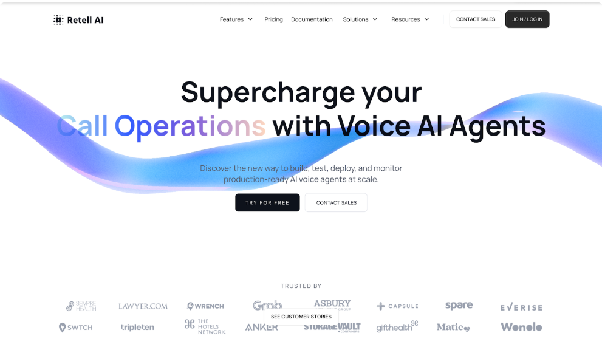
Retell AI stands out among voice AI platforms because it was built specifically for real-time phone automation rather than chatbot-style conversational interfaces. In healthcare scheduling environments, this distinction matters. Appointment calls often involve multiple steps: identifying the patient, checking provider availability, confirming appointment types, and updating the scheduling system without creating conflicts. Platforms designed primarily for chatbot automation frequently struggle with these multi-step voice interactions.
In testing appointment scheduling workflows, Retell performed consistently across common clinic scenarios such as booking new visits, rescheduling existing appointments, and routing patients to staff when requests required human intervention. The platform’s infrastructure focuses heavily on live-call reliability. Response latency remained stable during longer conversations, which is critical when patients ask follow-up questions or change their preferred appointment time during the interaction.
Another advantage is Retell’s developer-friendly integration model. Clinics or healthtech teams can connect the voice agent directly to scheduling systems or EHR appointment calendars. This allows the AI agent to retrieve available time slots in real time rather than simply collecting patient information for manual follow-up. As a result, the automation actually completes the scheduling task rather than acting as a call intake system.
During testing, Retell handled complex scheduling requests more smoothly than most platforms evaluated. Patients could ask for different time slots or reschedule appointments mid-conversation without breaking the workflow. The system also transitioned reliably to human agents when calls required manual intervention.
Enterprise platforms such as Kore.ai provide more extensive analytics dashboards and enterprise workflow management tools.
Very small clinics with extremely low call volume may not need a fully programmable voice infrastructure.
G2 Rating: 4.7 / 5
User quote: "Retell allowed us to automate our appointment call flow while keeping the conversation natural for patients."
Retell typically uses usage-based pricing around $0.07–$0.09 per minute of voice interaction, making it scalable for clinics experiencing fluctuating call volumes.
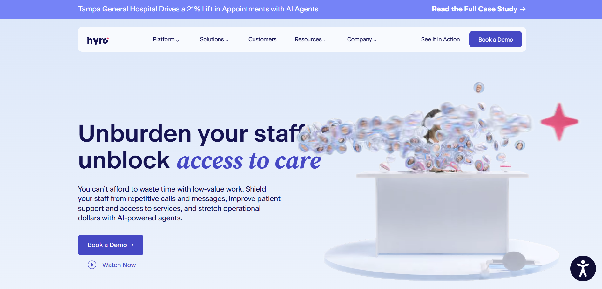
Hyro is one of the few conversational AI vendors that focuses heavily on healthcare organizations. Rather than targeting general business automation, the platform was built to support patient engagement workflows such as appointment inquiries, clinic navigation, and information requests. This healthcare specialization gives Hyro an advantage in environments where patient calls often involve multiple departments or services.
In scheduling scenarios, Hyro’s strength lies in its ability to interpret patient questions and route them correctly. A patient calling to schedule an appointment might first ask about clinic hours, insurance coverage, or provider availability. Hyro is designed to understand these conversational transitions and guide the caller toward the correct scheduling workflow.
Hyro integrates with hospital systems and scheduling software used by large healthcare networks. Instead of operating as a standalone booking system, it typically connects to existing scheduling infrastructure and assists patients in navigating those systems through voice conversations.
However, many deployments still rely on routing patients to scheduling staff rather than fully automating appointment creation. Large healthcare organizations often prefer this hybrid approach because it allows the system to filter routine calls while keeping human staff involved for more complex scheduling requests.
Hyro performed well at understanding patient intent and directing calls to the appropriate scheduling workflow. In scenarios where callers asked general healthcare questions before scheduling, the platform handled conversational transitions smoothly.
Developer-oriented voice infrastructure platforms allow deeper customization of automated scheduling flows.
Smaller clinics without enterprise IT teams may find Hyro’s implementation process too complex.
G2 Rating: 4.6 / 5
User quote: "Hyro helped us reduce patient call volume by automating common appointment requests."
Hyro pricing is enterprise-based and typically customized for healthcare organizations, depending on system integrations and call volume.
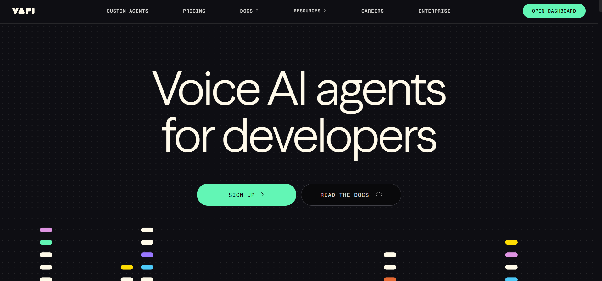
Vapi positions itself as voice AI infrastructure for developers building custom voice agents. Instead of providing pre-built healthcare workflows, the platform offers APIs and tools that allow engineering teams to create voice applications from the ground up. This makes it attractive for digital health startups or product teams building scheduling systems directly into their platforms.
In appointment scheduling use cases, Vapi can support sophisticated voice workflows if integrated correctly with calendar systems or EHR scheduling modules. Developers can design conversational flows that retrieve available appointment slots, confirm patient details, and update calendars programmatically.
The trade-off is that Vapi requires more technical work than healthcare-focused conversational tools. Clinics without development resources may struggle to configure the scheduling workflows required to automate patient calls effectively.
However, for teams building custom digital health infrastructure, Vapi offers a level of control that more packaged solutions often lack.
In testing, Vapi handled conversational input well but required custom workflow design to complete scheduling tasks. Once configured correctly, it supported detailed appointment booking logic.
Healthcare-focused platforms often provide ready-made scheduling workflows.
Clinics without technical teams.
G2 Rating: 4.5 / 5
User quote: "Vapi gives developers full control over how voice agents behave."
Pricing typically starts around $0.05–$0.07 per minute of voice usage, with additional model costs depending on configuration.
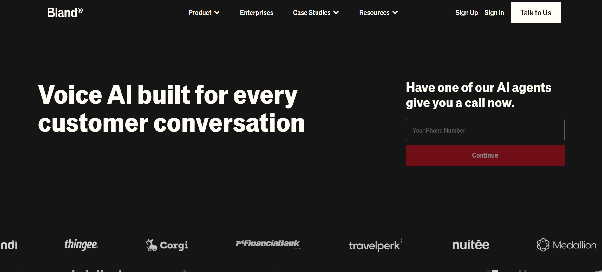
Bland AI focuses on automating phone calls at scale. The platform was designed to allow organizations to deploy AI agents that handle thousands of phone conversations, including inbound support calls and outbound customer interactions.
For healthcare appointment scheduling, Bland AI can support booking and rescheduling workflows when integrated with a clinic’s scheduling system. The platform is particularly effective for high-volume call environments where clinics receive large numbers of appointment requests or confirmation calls.
Bland AI’s infrastructure prioritizes call throughput and automation efficiency. In practice, this means the system performs well when handling large numbers of short scheduling calls such as appointment confirmations or simple booking requests.
However, healthcare-specific workflow logic often needs to be configured manually. Clinics using Bland AI typically integrate it with external scheduling systems so the voice agent can retrieve available time slots during conversations.
Bland AI handled straightforward booking requests reliably but required configuration for more complex scheduling scenarios.
Healthcare-specialized platforms often handle medical scheduling workflows more naturally.
Clinics seeking plug-and-play healthcare automation.
G2 Rating: 4.4 / 5
User quote: "Bland AI made it possible for us to automate thousands of calls weekly."
Pricing generally begins around $0.09 per minute of voice interaction, depending on configuration.
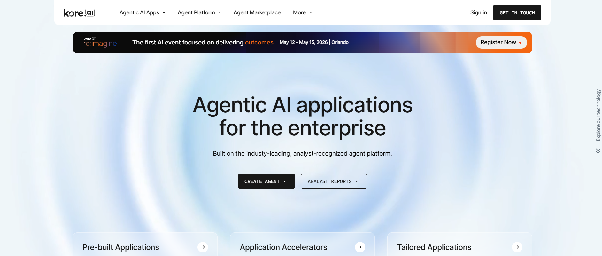
Kore.ai is an enterprise conversational automation platform used by large organizations to build complex voice and chat workflows. It offers extensive tooling for designing conversational experiences and integrating AI agents into customer service operations.
In healthcare environments, Kore.ai can be used to automate appointment scheduling interactions by connecting to hospital scheduling systems. The platform excels in structured workflows where patient requests follow predictable patterns.
Kore.ai performed well when scheduling workflows were clearly defined. However, conversational flexibility depended heavily on configuration.
Developer-focused platforms may allow faster iteration for voice automation projects.
Small clinics with limited IT infrastructure.
G2 Rating: 4.6 / 5
User quote: "Kore.ai provides powerful conversational automation capabilities."
Pricing is enterprise-based and varies depending on deployment scale.
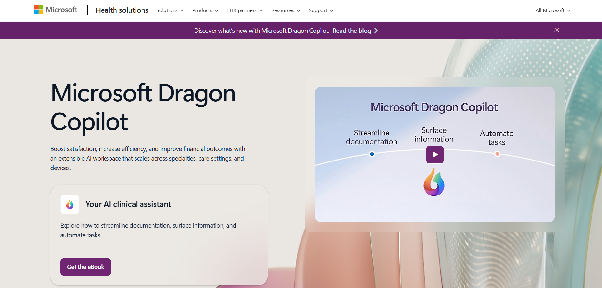
Nuance, now part of Microsoft, has long been one of the most recognized names in healthcare speech technology. While the company is best known for clinical documentation tools such as Dragon Medical and DAX, its broader conversational AI capabilities also extend to patient interaction workflows, including appointment scheduling and call routing.
In healthcare environments, Nuance systems are typically integrated directly with electronic health record platforms and hospital communication systems. This integration allows voice agents to support scheduling inquiries, confirm appointment details, and route calls to appropriate departments within a hospital or clinic network.
For appointment scheduling, Nuance solutions are often deployed as part of larger patient engagement systems rather than standalone voice agents. Patients calling a clinic may interact with the voice system to check availability or navigate appointment options before being transferred to scheduling staff or completing the booking process through integrated systems.
Nuance performed particularly well in speech recognition accuracy during patient conversations. However, the scheduling automation itself often depends heavily on integration with existing hospital systems rather than the voice agent independently completing bookings.
Developer-focused voice AI platforms often allow faster customization of scheduling workflows.
Smaller clinics without enterprise IT infrastructure may find Nuance deployments too heavy.
G2 Rating: 4.5 / 5
User quote: "Nuance remains one of the most reliable speech technologies used across healthcare environments."
Nuance solutions are typically delivered through enterprise licensing agreements with Microsoft healthcare services, and pricing varies significantly depending on deployment size and integrations.
Google Dialogflow CX is a powerful conversational AI platform designed for building complex dialogue systems across voice and chat channels. While it is not specifically designed for healthcare appointment scheduling, it provides the tools necessary for developers to build voice agents capable of managing scheduling workflows.
In clinic environments, Dialogflow CX can be configured to answer patient calls, capture appointment requests, and interact with scheduling systems through API integrations. For example, a patient calling to book an appointment might interact with a Dialogflow-powered voice agent that checks calendar availability, confirms appointment details, and updates the scheduling system automatically.
Because Dialogflow CX is designed as a general conversational AI platform, clinics must invest development effort to adapt it to healthcare-specific scheduling needs.
Dialogflow CX handled natural patient conversations well during testing. However, scheduling automation required custom integrations with calendar systems, making deployment more complex compared to specialized voice automation tools.
Platforms built specifically for voice automation often provide faster deployment for scheduling workflows.
Clinics without development resources may struggle to configure Dialogflow for scheduling automation.
G2 Rating: 4.5 / 5
User quote: "Dialogflow CX offers excellent conversational control but requires engineering effort to deploy effectively."
Dialogflow CX uses usage-based pricing, with voice interactions typically costing around $0.06 per voice interaction equivalent, depending on traffic and configuration.
Amazon Lex is AWS’s conversational AI service for building voice and chat assistants. The platform powers many custom voice applications across industries and can be used to create automated appointment scheduling systems when integrated with clinic calendars and healthcare platforms.
For healthcare organizations already operating within the AWS ecosystem, Lex provides a flexible way to build custom voice agents that handle patient scheduling calls. Developers can design conversational flows that allow patients to request appointment times, confirm details, and modify existing bookings. These workflows typically connect to scheduling systems through APIs that retrieve available appointment slots in real time.
However, unlike healthcare-focused voice platforms, Lex does not provide prebuilt appointment scheduling workflows. As a result, organizations must design and maintain the scheduling logic themselves.
During testing, Lex handled voice input reliably but required custom workflow development to manage scheduling interactions effectively.
Platforms designed specifically for voice automation provide faster deployment for healthcare scheduling workflows.
Clinics seeking ready-to-use voice scheduling solutions without development effort.
G2 Rating: 4.4 / 5
User quote: "Amazon Lex is powerful for building conversational systems but requires technical expertise."
Amazon Lex pricing is usage-based, typically starting around $0.0065 per speech request, though overall costs depend on the number of interactions and infrastructure usage.
After reviewing how these platforms handle real clinic scheduling workflows, the differences between them become clearer.
Best overall AI voice agent for healthcare scheduling
Retell AI — Designed specifically for real phone call environments. It handled natural patient conversations smoothly during scheduling interactions and allowed direct integration with scheduling systems, making it particularly effective for all types of appointment booking automation.
Best enterprise healthcare conversational AI platform
Kore.ai — Suitable for large healthcare organizations that want deep conversational AI capabilities and integrations with complex enterprise systems.
Best option for healthcare organizations already using Microsoft clinical tools
Nuance (Microsoft Dragon / DAX) — Strong speech technology and healthcare ecosystem integrations, particularly within large hospital networks.
Best developer-focused voice automation platforms
Vapi and Bland AI — Flexible platforms that allow engineering teams to build custom voice agents for appointment scheduling workflows.
Best cloud infrastructure conversational AI platforms
Google Dialogflow CX and Amazon Lex — Powerful conversational platforms, but require custom development to support healthcare scheduling workflows.
Best conversational automation platform for patient support flows
Hyro — Designed for healthcare conversational experiences, though often focused more on broader patient engagement than appointment scheduling alone.
When I evaluate voice AI agents for healthcare scheduling, the most important features are rarely the ones highlighted in product demos. What matters operationally is whether the system can manage real patient conversations while reliably interacting with scheduling infrastructure.
Clinic appointment calls often involve multiple steps. Patients may ask about provider availability, confirm appointment types, change dates, or request cancellations. A voice system must manage these transitions smoothly without forcing patients into rigid scripted flows.
Several capabilities consistently determine whether a voice agent actually improves front desk operations.
When these capabilities are implemented well, a voice agent can handle a large portion of routine scheduling calls while still allowing staff to intervene when necessary.
While voice AI scheduling systems can significantly reduce front desk workload, deploying them in healthcare environments introduces challenges that many vendors underestimate.
One of the most common difficulties is complex scheduling logic. Medical appointments are rarely interchangeable time slots. Clinics may schedule different visit types, provider specialties, or appointment durations. A voice agent must understand these rules before it can schedule appointments reliably.
Another issue involves appointment conflicts. If the scheduling system does not update quickly enough, the voice agent may offer time slots that are no longer available. This creates frustration for patients and additional work for clinic staff.
Patient verification also presents challenges. Healthcare organizations must ensure that patient information is handled securely and that scheduling changes are associated with the correct individual.
Some clinics also encounter unexpected call types. Patients may call with medical concerns, prescription questions, or urgent issues that the voice agent should not attempt to resolve automatically. In these situations the system must route the caller to appropriate staff quickly.
Finally, exception handling becomes important. Real patient conversations rarely follow perfect workflows. A patient might request a different provider, ask about insurance, or change the appointment type during the call.
Voice automation works best when it handles routine scheduling efficiently while recognizing when human staff should take over.
Selecting a voice AI platform for appointment scheduling is less about choosing the most advanced technology and more about choosing the system that fits the clinic’s operational workflow.
When I review voice AI tools for healthcare environments, several factors consistently determine whether the deployment succeeds.
Evaluating these factors carefully helps clinics choose a platform that actually improves patient access rather than creating additional operational complexity.
Why Retell AI Stood Out in My Evaluation of Healthcare Scheduling Voice Agents?
After evaluating multiple voice AI platforms used in healthcare environments, Retell AI consistently stood out for its ability to handle real patient conversations while interacting directly with scheduling systems.
The platform’s voice-first architecture makes it particularly effective for managing live appointment calls, allowing clinics to automate booking, rescheduling, and cancellation requests without forcing patients into rigid phone menus.
For healthcare teams looking to reduce front desk workload while maintaining a natural patient experience, voice AI systems designed specifically for phone interactions tend to deliver the most reliable results.
Automating appointment scheduling calls has become one of the most practical uses of voice AI in healthcare. Clinics spend a large portion of their day managing routine scheduling requests, and voice agents can handle many of these interactions efficiently.
However, the effectiveness of these systems depends heavily on how well they manage real patient conversations. Voice agents must understand natural speech, interact with scheduling systems accurately, and recognize when human assistance is required.
When those pieces work together, automation can significantly reduce front desk workload while improving patient access to care.
The goal is not to replace clinic staff but to allow voice systems to manage routine scheduling conversations so healthcare teams can focus on patient care.
Can AI voice agents schedule medical appointments?
Yes. AI voice agents can answer patient phone calls, check appointment availability, and schedule visits directly within clinic calendar systems. When integrated with scheduling software or EHR platforms, these systems can book, reschedule, and cancel appointments automatically.
How do AI voice assistants book clinic appointments?
Voice AI assistants interpret the patient’s request, check available appointment slots in the scheduling system, and confirm the booking during the conversation. The system records patient details and updates the clinic calendar without requiring staff intervention.
Are AI voice scheduling tools safe for healthcare use?
Many voice AI systems are designed to operate within healthcare environments and can support compliance and data security requirements. Clinics should ensure that any platform used for patient interactions meets the necessary privacy and regulatory standards.
Can voice AI handle appointment cancellations?
Yes. Voice AI agents can locate existing appointments in scheduling systems and cancel them when patients request changes. Some systems can also offer alternative time slots to reschedule the appointment during the same conversation.
How accurate are AI voice scheduling systems?
Accuracy depends largely on how well the voice system integrates with the clinic’s scheduling infrastructure. Platforms connected directly to calendar systems can retrieve real-time availability and complete bookings with high accuracy.
Do AI voice agents integrate with clinic calendars?
Most modern voice AI scheduling tools integrate with clinic scheduling systems through APIs or healthcare software integrations. This allows the voice agent to access real-time availability and update appointment records automatically.
See how much your business could save by switching to AI-powered voice agents.
Total Human Agent Cost
AI Agent Cost
Estimated Savings
A Demo Phone Number From Retell Clinic Office