AI Customer Feedback Analysis: Benefits, Use Cases and Setup
17
MIN READ
September 11, 2026

AI customer feedback helps customer support teams automatically collect, process and interpret large volumes of customer feedback from support tickets, NPS comments, reviews, surveys and social media to turn it into clear, prioritized signals your team can act on today.
This shift isn't just about speed. It's about moving from reactive damage control to proactive customer experience management.
Think of it this way: 93% of customers are likely to make repeat purchases with companies that offer excellent customer service. But what qualifies as 'excellent' to your customers?
If you don't know what's right, you can't do more of it. If you don't know what's wrong, you can't do less of it.
In this blog we will dive in on how artificial intelligence analyzes customer feedback, its benefits and how you can select the best AI customer feedback tool for your business.
AI customer feedback analysis refers to using artificial intelligence to collect, analyze and interpret customer feedback at scale, without spending hours manually reviewing each interaction.
These AI models are trained on understanding language patterns to understand sentiment, categorize issues, and extract key information. They surface patterns that even humans miss. No one has to read through every support ticket or call transcript.
This type of AI feedback analysis is especially useful for unstructured feedback, such as:
For example, if hundreds of callers tell your AI voice agent that they couldn't find available appointment slots, AI can analyze the call transcripts, identify recurring themes such as "appointment availability", summarize the most common concerns, and determine whether customer sentiment around scheduling is positive, neutral, or negative.
This makes it easier for teams to spot trends and improve the customer experience at scale.
Customers today expect a seamless and hassle-free interaction with businesses. A dissatisfied and frustrated customer will quickly opt to switch. Thus, for the service provided, it becomes crucial to understand customer feedback and promptly take action.
One traditional metric often used to analyze customer feedback is surveys and NPS. However, in 2026, it might not be the best answer for capturing customer feedback.
The problem with surveys is not their format — it's their epistemology. A survey and NPS assume the researcher knows in advance what questions to ask and what answer options matter.
For instance, a survey forces a person to translate a messy experience — "the onboarding was fine, but I almost gave up at the integration step" — into a 1-to-5 dropdown. The nuance evaporates before it's ever recorded. A low NPS or CSAT score might show that something is wrong, but the customer's written comment explains why.
The survey era is also straining on its own terms. According to Qualtrics, average response rates across its platform dropped 27% from 2020 to 2024. Email-based NPS surveys now generate only 6%–25% response rates, with most benchmarks settling between 12% and 15%.
AI customer feedback uses artificial intelligence to collect, analyze, and act on what customers tell a business, turning open-text responses into structured, prioritized insight without manual coding.
The core difference is that traditional feedback flattens customers into fields, while AI customer feedback lets people speak their mind and then does the structuring for you. It closes the loop across all three stages — collection, analysis, and action — often in near real time.
That mechanic unlocks every category of work where the value is the "why," not the "what", including:
The pattern: any time a real human researcher would have followed up on an answer, an AI interviewer can do the same thing — at the scale of every respondent, simultaneously.
The best way to use AI customer feedback is to treat it as a broad customer feedback management system. Start with a clear feedback source, apply the right analysis technique, and then turn results into actions.
AI speeds up analysis, but the quality of insights still depends on what you collect, what insights you draw from the feedback and how you plan on implementing it.
This is where AI agents gather input in the customer's own words instead of forcing them through a form.
The most advanced version is to set up a conversation interview, and an AI interviewer will ask open-ended questions, listen and follow up on whatever the customer actually said.
Retell's AI agent does exactly this at scale, running hundreds of interviews simultaneously and probing vague answers the way a human researcher would.
Start by gathering feedback from the places where customers are already sharing their thoughts. This could include:
The goal is to make feedback collection feel like a natural conversation rather than another survey. When customers can explain problems, frustrations, and successes in their own words, organizations gain access to the context needed to identify root causes and make meaningful improvements.
Before applying AI, decide what you want to learn from the feedback. For instance:
This helps you analyze feedback with a clear goal. When you target everything, feedback often becomes diluted and harder to act on.
Once feedback has been collected, AI generates a summary of the most common topics. This helps teams quickly understand what customers are talking about without manually reading every response.
With Retell's post-call analysis, customer support teams can generate call summaries, view recurring topics, and quickly understand key themes from large volumes of customer feedback.
To make insights actionable, Retell AI provides flexible ways to access data:
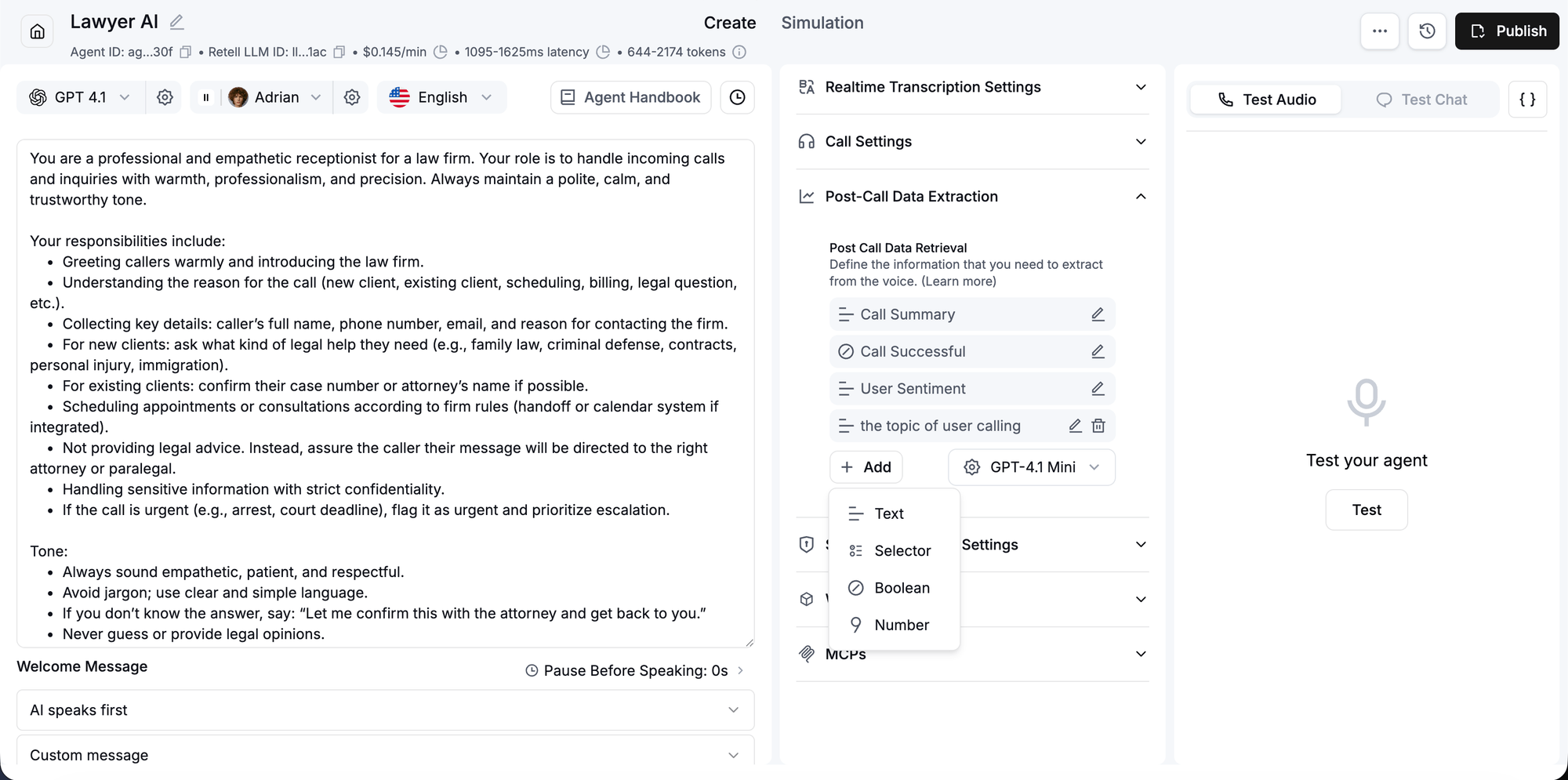
Using natural language processing (NLP) and machine learning, the system reads unstructured data. It analyzes recurring themes, sentiment, intent, and churn signals across thousands of conversations into a handful of prioritized issues.
This is the affinity-mapping stage — the wall of sticky notes where a researcher physically clusters codes into themes. AI compresses this into an LLM-assisted clustering pass.
The AI agent takes the above customer feedback and produces three things:
For example, "onboarding confusion" may surface in 47 of 120 conversations, while "pricing concerns" appear in 31 and "integration challenges" in 22. While volume alone doesn't determine business impact, it helps highlight where to investigate first.
For example, customers mentioning onboarding difficulties may also express signs of churn risk. These connections often provide deeper insight than looking at each theme in isolation.
The output of this stage should be a structured summary with topics such as "checkout", "navigation", "pricing", "login issues", or "delivery issues", which the human can scan in 15 minutes.
This makes it easier to see which issues appear most often and which areas of the customer journey need attention.
Not every piece of feedback has the same level of urgency. AI sentiment analysis can help identify whether feedback is positive, negative or neutral, while also showing which topics may require faster action.
Retell AI's sentiment analysis engine calculates a numerical score from -1.0 (extremely negative) to +1.0 (extremely positive). When sentiment drops below -0.6, indicating significant customer frustration, an immediate alert triggers.
For instance, a recurring negative topic around "payment errors" may need immediate attention, while a neutral comment about "more filter options" may be useful for the product backlog.
Proactive outreach to negative sentiment calls results in 67% recovery rate for at-risk accounts and prevents an estimated 40% of potential churn cases.
This is the most important layer that many customer support teams skip, and the reason why nothing changes when you talk to customers again.
Tier your team's actions by scope. For instance:
Attach relevant customer quotes and conversation excerpts to every action item so prioritization remains anchored in real customer needs rather than assumptions. Use a shared CX workspace to assign ownership, track progress, and ensure product, operations, and customer success teams are accountable for driving changes through to completion.
Echo is the phase that actually closes the loop: you go back to the customer and tell them about the changes you made because of their feedback. Without Echo, you have an internal improvement process, not a closed loop, and the customer never learns their voice mattered.
For instance, you send a direct, personal follow-up call saying, "You flagged the chat-to-email bounce — we fixed it; here's what's different." Then invite the next round of feedback to restart the loop — continuous, not annual.
If you're a small business or a startup, manually collecting and monitoring customer feedback might not be that challenging. However, as your business scales, so does your number of business interactions, and you might miss important insights.
That's where AI swoops in. Let's dive into the key benefits of using AI for customer feedback:
Most customer feedback lives in unstructured formats such as conversations, call recordings, emails, support tickets, reviews, and survey responses. AI can process this data at scale, turning thousands of fragmented interactions into clear, actionable insights in real time.
Unlike manual analysis, which is slow and often limited to small samples, AI can review every customer interaction, identify recurring themes, detect sentiment, uncover emerging issues, and highlight trends within seconds. This allows teams to move from anecdotal feedback to evidence-based decision-making.
For organizations collecting feedback across multiple channels, AI eliminates the challenge of manually sorting and interpreting large volumes of data. Instead of spending weeks compiling reports, teams can instantly understand what customers are experiencing, why problems occur, and where improvements will have the greatest impact.
AI can identify churn signals long before they become obvious to customer success or support teams, giving businesses time to intervene before a customer decides to leave.
Common early warning signs include:
Rather than relying on a single interaction, AI establishes a behavioral baseline for each customer and continuously monitors for meaningful changes. When engagement drops, sentiment deteriorates, or risk indicators begin to accumulate, teams receive early alerts.
This proactive approach enables customer success teams to address concerns, strengthen relationships, and take corrective action while there is still an opportunity to retain the customer. The earlier the churn risk is detected, the greater the likelihood of preventing it.
Customer feedback is more than a collection of comments, complaints, and suggestions—it contains valuable emotional context that helps businesses understand how customers truly feel. AI-powered sentiment analysis automatically evaluates feedback across conversations, surveys, support interactions, reviews, and call transcripts to identify sentiment, urgency, and underlying concerns.
For example, imagine your company collects feedback from 1,000 customer conversations, surveys, and support tickets each week. Manually reviewing every interaction would be nearly impossible. AI can instantly analyze this feedback, categorize it by sentiment, and surface the issues that require immediate attention.
By now, you probably have a ton of feedback on how you can implement AI feedback analysis in your current workflow, but to give you even more inspiration, we've got you covered.
Here's a list of potential use cases for different roles, including marketers, product, and customer success professionals.
AI can help marketing teams move beyond surface-level metrics to understand how customers actually perceive messaging, campaigns, and brand positioning.
AI helps product teams transform large volumes of feedback into prioritized insights and actionable product decisions.
AI enables customer success teams to proactively identify risks, improve customer experiences, and uncover growth opportunities.
The right customer feedback tool should do more than just generate a quick summary. It should help you analyze open-text comments, collect feedback, identify trends, and turn insights into action.
When comparing the best AI tools, look for platforms that provide the following features:
Choose a platform that can analyze customer feedback from multiple sources like support tickets, sales calls, chat logs and other resources mentioned above. This is important because it helps get cohesive feedback across channels.
The tool should be able to:
Retell's post-call analysis uses AI to generate feedback summaries, highlight key trends, and help teams prioritize feedback based on sentiment.
If fast processing of feedback is important, implementation speed is important. Some AI customer feedback analysis tools can take weeks (even months) to set up initially. And, your team will probably make changes as you refine your analysis process, especially to tailor it to your industry and use case.
It makes a difference if you can make those changes yourself in just a few hours versus when you have to contact support and potentially wait several days.
That's why it's important to select an AI customer feedback analysis tool that can ingest data quickly, make interactive changes, and get results back almost in real time.
A strong AI feedback analysis tool should not just tell you they're unhappy but also why they are unhappy.
For instance, Retell allows you to set up the extraction of powerful insights like:
This allows voice AI to deliver a full spectrum view of customer sentiment far beyond a 1–5 score, and surfaces insights that traditional surveys can't touch. Tackling feedback with this approach unlocks a gold mine of data for enterprises focused on keeping their products and services in line with customer expectations, while being far ahead of the competition.
Even if you operate in one country, there's a chance your customers might not leave feedback in the same language.
If your customer or employee base is multinational, you cannot afford only to analyze feedback in one language. On top of that, people from different cultures and countries may experience your brand in a different way.
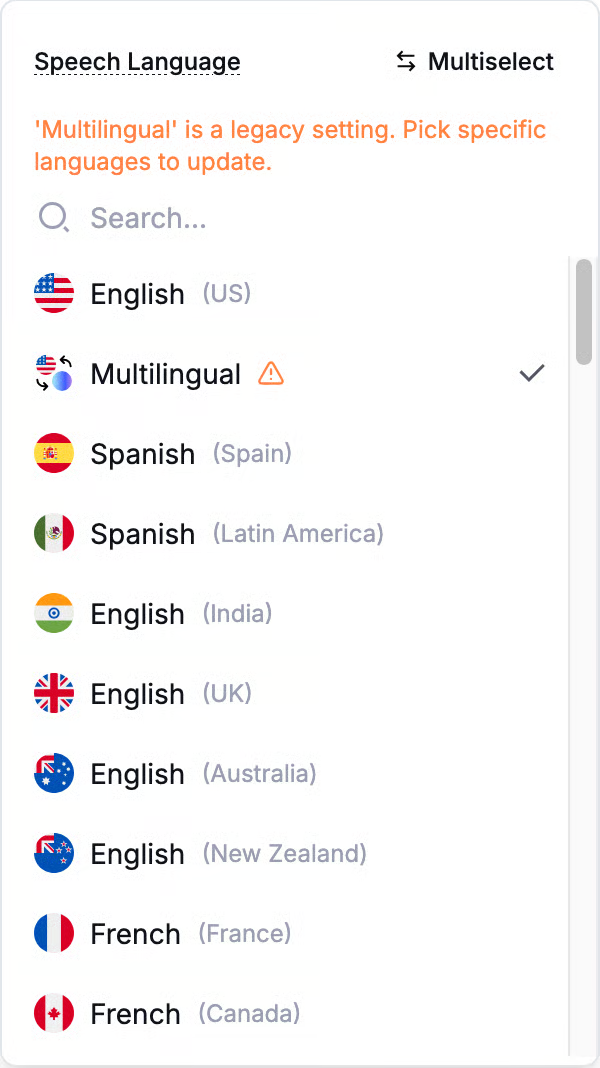
Retell AI currently supports 50+ languages through GPT-4-class models to translate and generate native responses in milliseconds. You can also clone your voice and convert it to any of our languages. These AI voices are capable of rapidly adapting to accents, idioms, and pacing to deliver remarkably natural-sounding voices.
AI-generated summaries are only useful when teams act on them. The best AI customer feedback analysis tools assign follow-up actions, share insights, set alerts, and connect feedback to existing workflows.
For instance, Retell AI helps CX teams identify a recurring issue, send the insight to the ecommerce team and follow up on whether sentiment improves after the fix.
Customer feedback can contain sensitive information, so data security should be part of the discussion.
Look for a tool that is GDPR compliant and SOC 2 Type II certified. Further, check how the AI functionality is hosted, how data is processed, and whether the platform fits your organization's privacy requirements.
For instance, Retell AI connects directly to existing systems:
These connections ensure that insights don't stay siloed—they flow directly into existing workflows and decision engines.
Customer calls shouldn't be one-way transactions. Every conversation handled by an AI voice agent is a chance to gather insight, strengthen relationships, and spot issues before they grow.
Retell AI is built for the AI-conversation side of the feedback stack, where the "why" matters more than the "what." It can run hundreds of AI interviews simultaneously, follow up on vague answers automatically, and produce synthesis-ready summaries without a researcher in the loop.
For CX teams looking to transform from manual customer feedback collection into a strategic growth driver, now is the time to act. Request a demo to see how Retell AI can help your teams scale intelligence without scaling headcount.
Yes. AI can collect, analyze, and interpret customer feedback from sources such as support tickets, surveys, reviews, call transcripts, chat logs, and social media. Instead of manually reviewing thousands of interactions, AI identifies recurring themes, measures sentiment, detects emerging issues, and highlights actionable insights, helping teams understand customer needs and improve experiences at scale.
AI customer feedback analysis starts by collecting feedback from channels like support conversations, surveys, reviews, and AI interviews. It then uses natural language processing to identify themes, categorize issues, detect sentiment, uncover patterns, and prioritize findings. The resulting insights help teams understand customer concerns, identify opportunities, and take action faster without manually reviewing every response.
Generative AI for customer feedback refers to AI models that can understand, summarize, and synthesize large volumes of open-ended customer responses. Rather than simply categorizing comments, generative AI can explain why customers feel a certain way, generate concise summaries, identify root causes, and surface key insights, making feedback easier to interpret and act on.
AI can be highly effective at identifying sentiment, recurring themes, intent, and customer concerns across large datasets. Its accuracy depends on factors such as the quality of feedback collected, the AI model used, and the context available. While AI significantly reduces manual effort and often uncovers patterns humans miss, teams should still validate important business decisions with human oversight.
Absolutely. AI is widely used in customer service to handle conversations, answer questions, collect feedback, analyze interactions, and identify customer issues. It can support customers in real time, summarize calls, detect churn risks, and provide teams with insights from customer conversations. This helps organizations improve service quality while scaling support operations efficiently.
NPS measures customer loyalty using a predefined score and often relies on limited follow-up comments. Customer feedback AI goes further by analyzing open-ended responses and conversations to uncover the reasons behind customer opinions. While NPS tells you what customers think, AI feedback analysis helps explain why they feel that way and what actions should be taken next.
See how much your business could save by switching to AI-powered voice agents.
Total Human Agent Cost
AI Agent Cost
Estimated Savings
A Demo Phone Number From Retell Clinic Office