What is Call Center Automation: The 2026 Guide That You Actually Need
12
MIN READ
September 3, 2026
Customers expect everything at their fingertips, and customer service is no different. CX leaders surveyed cite keeping pace with customers' rising expectations as their greatest challenge.
But it's not just always-on customer service that's ratcheting up demand. Customers also want increased personalization, more proactive support and more effective self-service options.
Enter call center automation, which is where most of that investment is going.
Using AI and machine learning to automate repetitive inquiries and give customers an easy way to self-service is one of the most effective ways to make agents' work-life easier and solve information and call overload.
The good news is that contact center and customer support operations are finally seeing the innovation investment they deserve.
An impressive 98% of business leaders say that their organization plans to devote more resources to migrating service volume to digital and self-service channels in the next 12 months.
In this blog, we’ll dive into what call center automation is, its benefits and the changing roles of human agents. We’ll also help you choose the best call center automation and what features to look for.
Call center automation means using AI and machine learning algorithms to handle tasks that would usually be done by human agents. This includes answering repetitive questions, scheduling appointments, routing calls to specialists and even analysing call recordings.
Unlike a traditional IVR system, which is an endless maze of robotic prompts, a major frustration point for customers, with 98% trying to skip it, automation understands natural language and customer intent, creating a system that is accountable, aiming to ease the workload of human agents.
For instance, Retell AI voice agents use Natural Language Processing (NLP) and machine learning to lead customer experience through:
These innovations make customer interactions more efficient, more informed, and more personal.
Contact center automation relies on a series of interconnected technologies that work behind the scenes to keep operations running and reflect evolving contact center automation trends. At the heart of these systems lie tools such as AI, NLP, ML and RPA, each playing a unique role in making Automation successful.
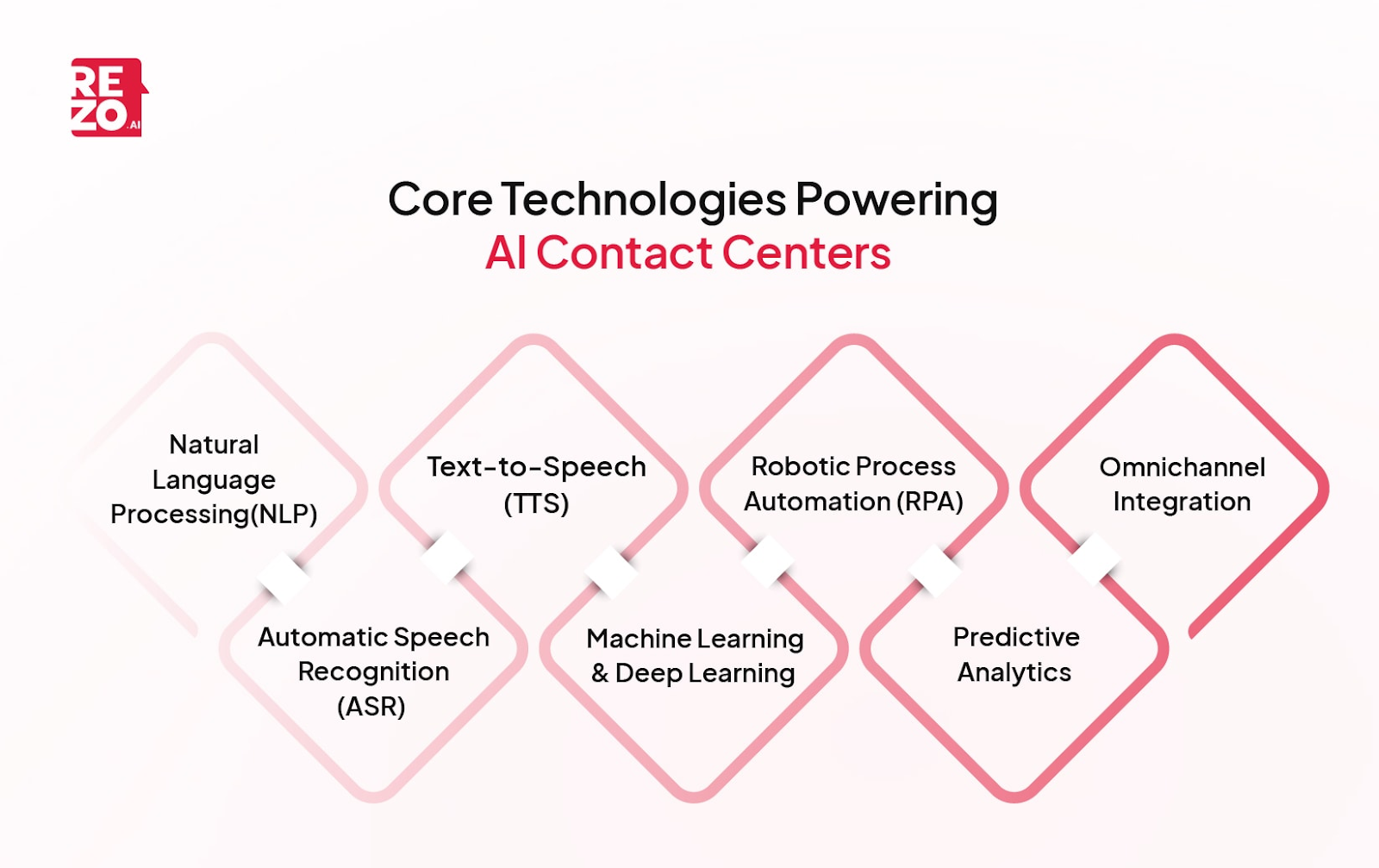
Research shows ninety-three percent (93%) of contact center and IT leaders consider contact center Automation a very or extremely important focus.
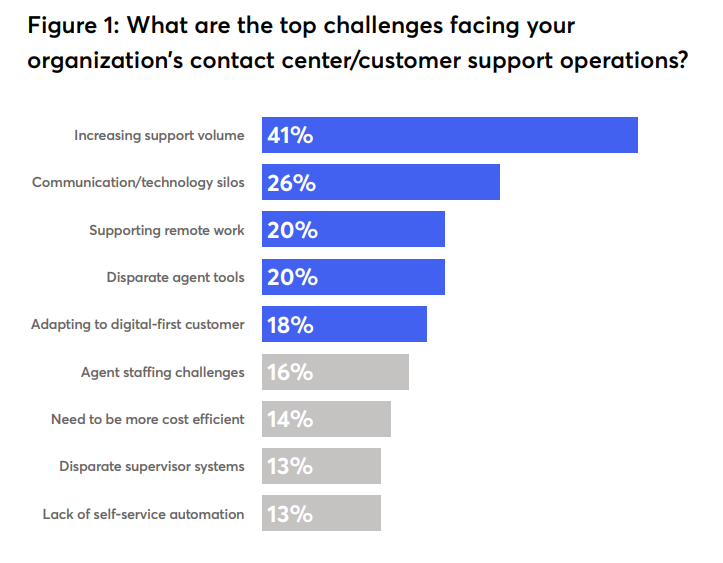
A major reason for this rise in adoption is largely because of increased support volume, staffing challenges and the need to be more cost-efficient. So it's no surprise that CX leaders are eager to declutter this mess through technology.
Here's how Automation is beneficial both inside and outside of the contact center:
When customers have a problem, the first thing they do is reach out to your customer support team. That's where the importance of omnichannel customer service comes in, giving customers the freedom to choose from their preferred channel.
But not every communication pathway was made equal. A majority of customers look for phone support (57%) when looking to solve a problem, followed by a website (56%) and email (43%).
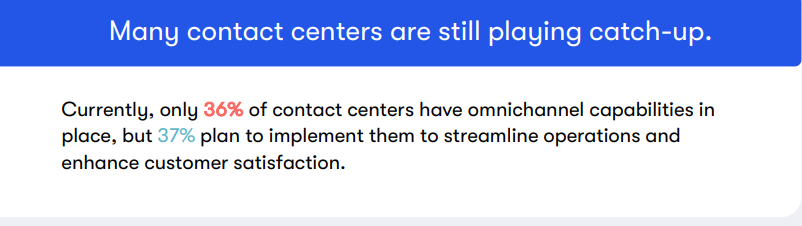
An automated call center works across channels, letting your customers connect with your business using their favorite channel.
For instance, Retell AI voice agents handle real-time conversations and integrate outcomes into CRM, help desk, or marketing platforms. Plus, switch conversations to SMS, email, or chat when appropriate (e.g., sending documentation or confirmation links).
Waiting in a queue, whether via chat or phone, is a reality for consumers. But the length of the wait can either be a source of frustration or satisfaction.
Only 13% of consumers globally say they've waited less than five minutes; most people wait five to 30 minutes (59%). Frustratingly, 29% of consumers are waiting 30 minutes or more, including 8%
who were on hold for more than an hour.
AI in call centers smoothens the process of getting a resolution. The moment a customer reaches the call center, AI IVR system begins gathering data like:
Instead of making the person wait on calls, conversational AI voice bots gather relevant information and help customers with routine, repetitive, and monotonous queries. If things are complex, these voice bots simply escalate resolution to human agents with other relevant information.
When consumers are satisfied with wait times, they are 2.6x more likely to trust, repurchase from,
And 3x more likely to recommend the company to others.
In 8x8's survey of more than 300 contact center and IT leaders says increasing support volume is their top challenge their organisation is facing. It's no surprise that 82 percent of service reps say customers are asking for more help than they used to.
Processing thousands of these support calls means more than answering phones. It means consistently delivering value during every interaction while managing operational costs.
Traditional call centers face multiple breaking points:
These challenges explain why many contact center leaders are investing in AI capabilities.
AI voice agents represent a fundamental shift from managing calls to processing them without needing any human guidance.
Unlike traditional call center setups that degrade under pressure, Retell AI employs an elastic concurrency architecture that scales from 5 to 5,000 simultaneous calls without degradation. This means:
That's how Retell AI can confidently handle high volumes while maintaining quality standards without burning out human employees.
Without AI-first customer service, you won't get the benefits of breaking the traditional linear growth model. The quality of your customer service will be limited by the size of your support team, needing to add (and recruit, onboard, and train) new staff to handle any business growth.
That's why the true value of conversational AI for customer service goes beyond cost reduction; it delivers improved support quality, scalability, and overall business impact.
At Retell, our most successful clients think about the return on investment through two lenses: increased bandwidth and cost efficiency.
|
Simplified example: Let’s say your support operation handles 1,000 conversations per month, with a $4 cost per human resolution. Total cost per month, pre-AI: $4 × 1,000 = $4,000 Now you adopt the Retell AI Agent, which resolves 50% of conversations at $0.50 per resolution. Instead of paying $4 for every resolution, you now pay $4 for 50% of conversations and $0.50 for the other 50%. That’s a savings of $3.50 per AI-resolved conversation. AI resolutions: ($0.50) × 500 = $250 Human resolutions: ($4) × 500 = $2,000 Total cost per month, post-AI: $2,500 Result: This saves your business $1,500 per 1,000 conversations. |
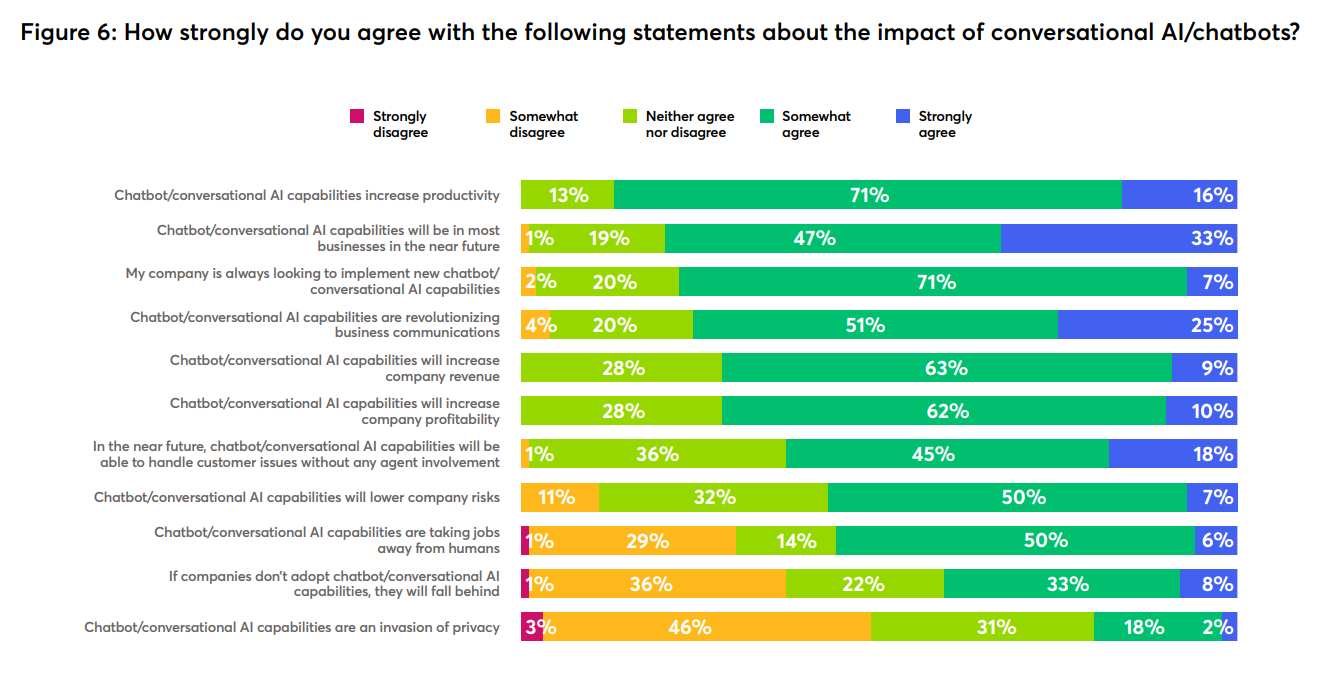
It's not about replacing human agents; it's enabling the team to focus on more impactful and rewarding tasks. That's exactly why 72% of leaders believe these capabilities will increase company profitability and revenue and lower company risks (57%).
According to Salesforce data, 64% of customers expect companies to respond in real time, a demand that's easily met by AI tools for repetitive questions. For complex issues, however, 59% of customers still prefer to speak with a human agent.
AI's greatest promise is its ability to make agents' jobs easier and more productive, but it won't take the place of those jobs. Research claims that human connections continue to be a vital ingredient of positive customer experiences in 2025.
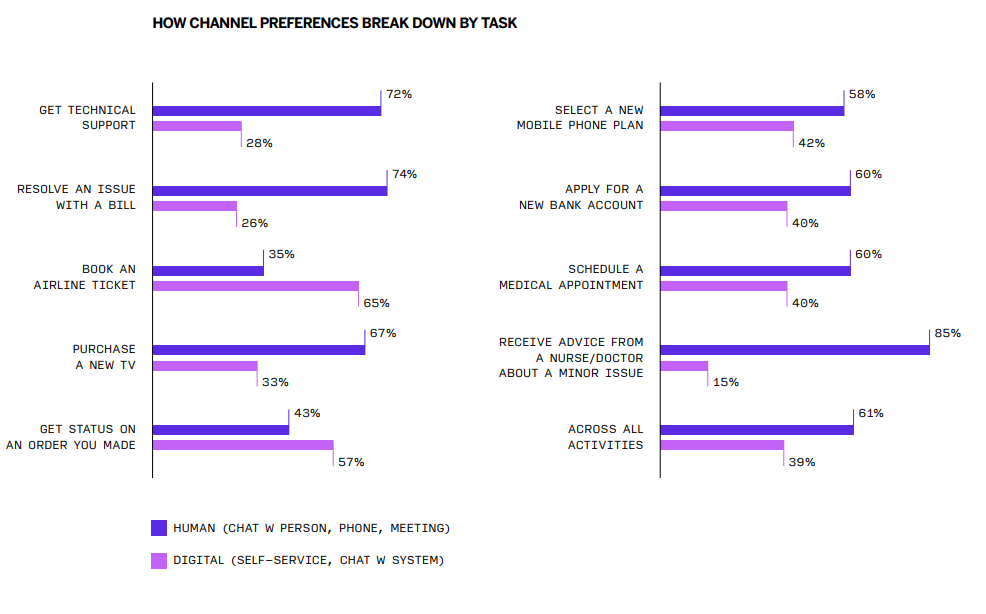
Even customers prefer AI for basic activities like booking an airplane ticket or getting updates on their order. However, for technical resolution or money-related activities, humans are their first choice.You can appoint an AI answering machine to handle such repetitive queries.
This is where human agents remain essential:
Another benefit of AI for the future workforce would be in increasing agent and manager productivity. Nearly half of contact center employees say that if they had AI tools that made it faster or easier to complete their work, they would increase the quality of work with the time saved.
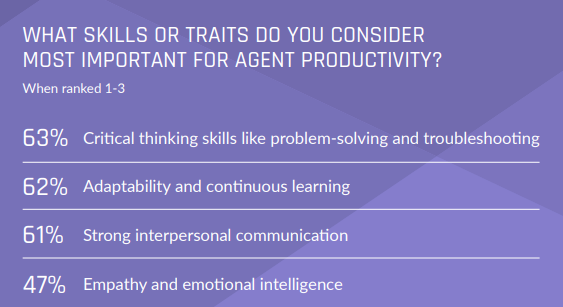
Now, as AI and Automation become more successful at handling simple customer service requests, agents need to think on their feet to handle the more complex cases that are directed their way. It's no surprise that more than 60% of managers cited critical thinking and adaptability as top skills needed by the agents in the future.
To make customer experience better, Retell's AI-powered warm transfer feature keeps every customer handoff contextual and human-like. So, when voice agents transfer calls to a human agent, they already know what they're dealing with and how they can help the customers quickly.
That improves the customer experience and agent efficiency at the same time.
Call center automation, including AI phone agents, IVRs, and automated dialers, is legal in most jurisdictions. But legality depends entirely on how it is used. Automation does not create an exemption from telecom, privacy, or consumer-protection laws; in many cases, it increases regulatory scrutiny.
At a high level, automated calling is compliant when it follows the same rules that apply to human-led calls, around consent, disclosure, content, and conduct.
Key compliance pillars include:
Violating the Telephone Consumer Protection Act (TCPA) can quickly push call centers into serious legal trouble.
Statutory damages range from $500 per call or message, and can increase to $1,500 per violation if the conduct is found to be knowing or willful.
Each non-compliant call counts as a separate violation, meaning a single campaign can translate into millions of dollars in potential liability.
The TCPA also allows consumers to sue telemarketers who ignore the National Do Not Call Registry or internal opt-out requests, with penalties of $500 per call for every prohibited contact after the first.
In short, call center automation is legal when it is designed for compliance by default. The risk lies not in using AI, but in scaling non-compliant behavior faster.
The market of call automation software is crowded. From conversational AI platform providers to RPA vendors, it's difficult to choose the best fit. A structured evaluation framework helps cut through the noise.
Here are the key features to consider when choosing a call center automation platform:
Selecting the right platform is the most important decision in any automation rollout, our review of the best call center voice AI tools compares the top options on cost, latency, and integration depth.
Retell AI is a Y combinator backed voice AI platform that lets enterprises build, test and deploy conversational AI production-ready voice agents for your call center.
Its features include:
Performance metrics:
Ready to see how real-time voice agents can transform your customer interactions? Try Retell AI for free.
AI call center automation uses artificial intelligence, machine learning, and natural language processing to handle customer interactions without human agents. This includes answering calls, routing requests, scheduling appointments, resolving common issues, and escalating complex cases to live agents when needed.
Traditional IVR relies on rigid menus and keypad inputs, while AI-powered Automation understands natural language and customer intent. AI voice agents allow callers to speak freely, interpret context in real time, and resolve issues conversationally, eliminating the frustration of endless "Press 1" menus.
No. AI is designed to augment, not replace, human agents. AI handles repetitive, high-volume inquiries, while human agents focus on complex, emotional, or revenue-driving conversations such as dispute resolution, sales, and technical troubleshooting.
AI voice agents answer calls instantly, gather customer context automatically, and resolve routine issues without queues. For complex cases, they pass structured information to human agents, significantly reducing average handle time (AHT).
Yes. AI-powered platforms use elastic concurrency architectures that scale from a handful of calls to thousands simultaneously, without performance degradation, busy signals, or staffing constraints.
AI uses CRM data, past interactions, and real-time signals to tailor responses. This allows voice agents to greet customers by context, anticipate needs, and provide relevant solutions instead of generic scripts.
Enterprise-grade platforms offer strong security controls such as encryption, access management, audit logs, and certifications like SOC 2 and HIPAA, making them suitable for regulated industries.
See how much your business could save by switching to AI-powered voice agents.
Total Human Agent Cost
AI Agent Cost
Estimated Savings
A Demo Phone Number From Retell Clinic Office