Conversational AI in Ecommerce Operations and Customer Experience
11
MIN READ
September 26, 2026
Today, customers expect more from ecommerce brands.
Sure, they want the “basics”-great service, quality products, and excellent communication when they shop.
But, considering the majority of today’s global customer population grew up with the internet and the ability to buy virtually anything from anywhere on any channel, they’re looking for even more.
They want personalized recommendations, 24*7 customer support and a frictionless experience right from choosing the right product to making a purchase or returns. That’s where conversational AI platform helps ecommerce businesses scale.
More than 60% of consumers have already used conversational AI for shopping. For CX leaders, this presents an unprecedented opportunity, with 95% of customer interaction can be handled through AI.
This doesn't mean replacing 95% of your human agents; it means transforming their roles from routine task handlers to complex problem solvers and relationship builders.
This article will dive into the exciting world of Conversational AI in eCommerce, with benefits and use cases, applying which can help ecommerce businesses transform their eCommerce operations and achieve tangible results.
The modern customer moves fast, from web to mobile to social platforms without pause. Shoppers browse more than they buy, but getting the online journey right at every touchpoint can turn clicks into sales.
To reduce this uncertainty and help shoppers move confidently from browsing to buying, AI-driven voice assistants embedded directly into product pages represent a new frontier.
Voice assistants in ecommerce reframe how users engage with product information. Integrated voice systems use speech-to-text (STT) to capture user questions, large language models (LLMs) to interpret intent, and text-to-speech (TTS) to reply naturally, and this is all done with low latency and embedded context.
These act like virtual in-store sales helpers, conversing naturally with shoppers, answering questions, comparing products, and guiding choices - all in real time, interacting the same way you would with a human sales assistant in a physical store environment.
For instance, Amazon’s conversational AI bot, Rufus, was used by over 250 million shoppers to find the best product for their needs. Customers who use such bots during a shopping journey are 60% more likely to complete a purchase.
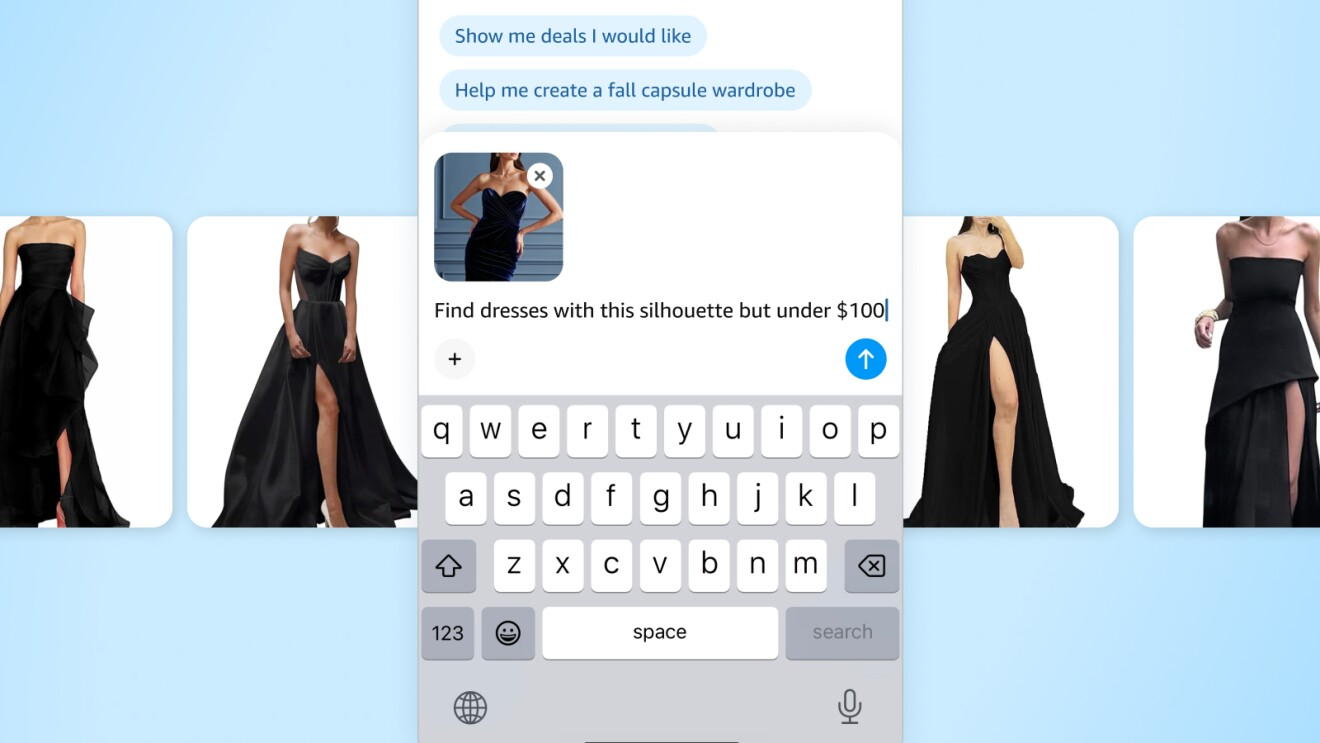
Conversational AI brings together advanced technologies to create bots that can not only understand what humans are saying but also respond to them in a way that humans would.
Four key components are crucial to the whole process:
Like “This hasn’t arrived yet”, “My package is late again” or “Still waiting on my order”, are all asking the same question. NLU connects these variations to a delivery delay/order tracking intent, even when no explicit request is made.
At face value, both traditional chatbots look quite similar to conversational AI chatbots.
Both are designed to provide assistance and engage customers at important points in the shopping journey. They are often deployed at the chat window on the website or mobile app to emulate customer conversations that shoppers might get through an in-store experience.
But this was the resemblance between both ends. While the interface feels familiar, the way conversational AI can interact with online shoppers is completely revolutionary.
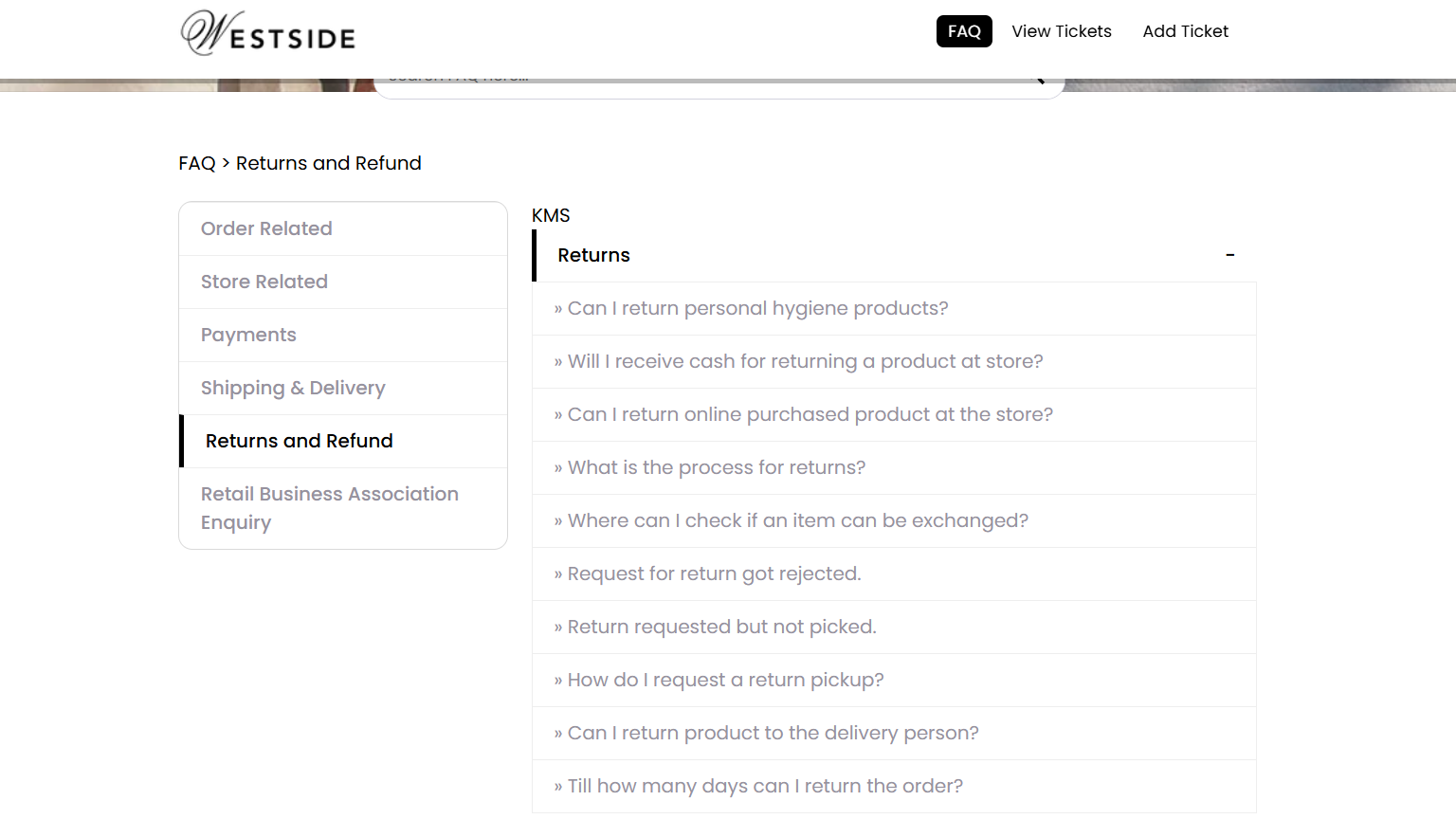
That’s because ecommerce chatbots are limited to a rule-based system that restricts communication to a set of pre-determined responses. You had to play by the chatbot’s rules to get any value out of it.
For instance, such FAQ based assistance feels limiting to customers. They present rigid menus, guiding users through a series of preset choices to reach default answers.
But these limitations are a thing of the past thanks to conversational AI. Today, AI-powered chatbots can listen, chat and learn, and are capable of offering responses that go well beyond a basic script.
Not only does conversational AI understand what a user is saying. It can also generate responses beyond what a rule-based system could ever do. Owing to advanced technologies like machine learning, NLPs and generative AI, it can create appropriate and relevant responses within a real-time conversation.
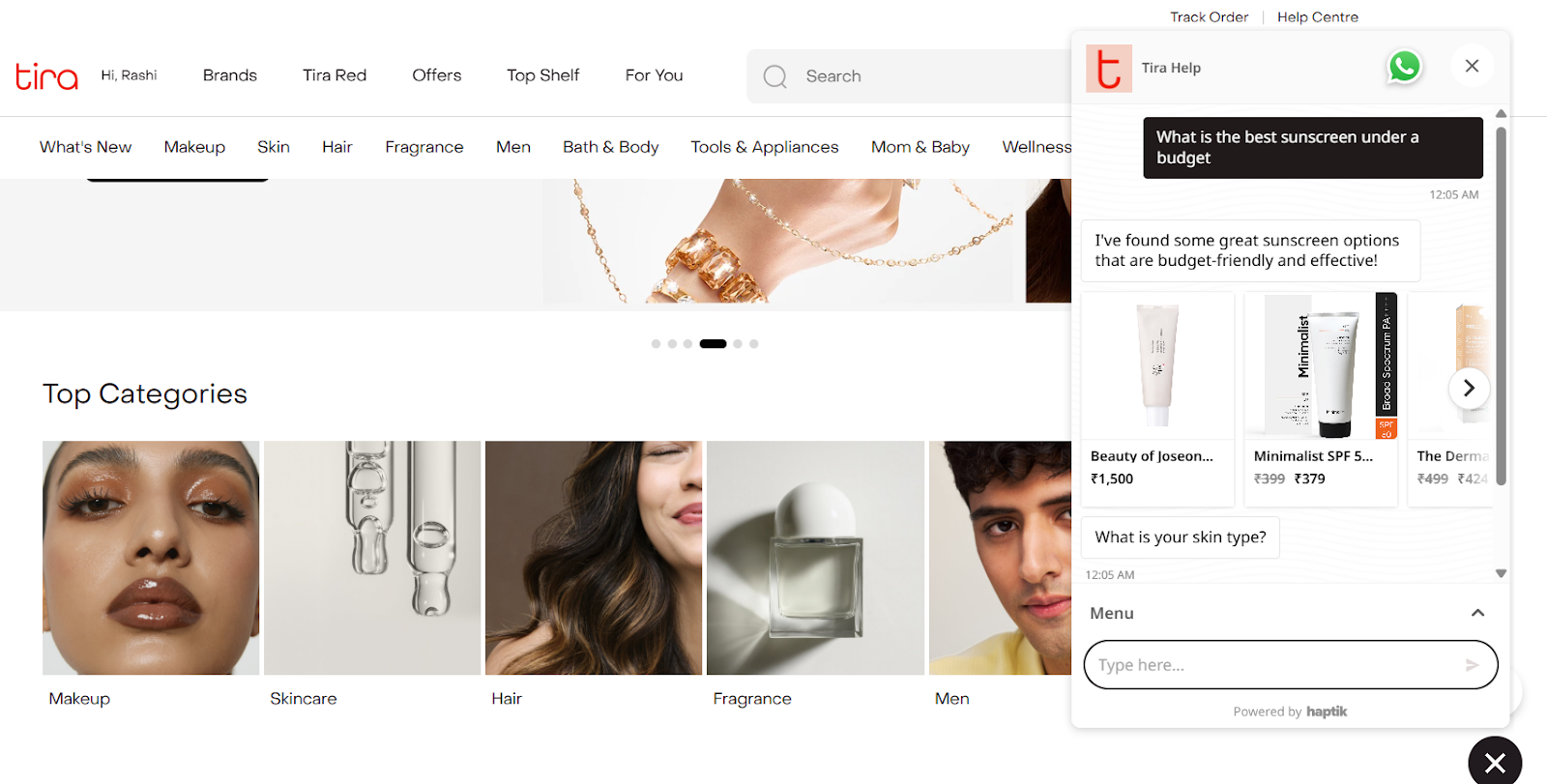
Having a conversation that truly grows and deepens as customers interact is the crux of conversational AI. It can learn from users’ responses, incorporate suggestions and guide customers throughout their buyer’s journey just like a human agent.
The benefits of AI implementation are already being realized across the retail and eCommerce industries, but they are more notable in certain areas.
For example, 46% of respondents report faster time-to-market for new products and services, 42% have seen improved customer retention and loyalty, and 41% have experienced increased employee productivity.
These outcomes demonstrate the tangible value AI brings to retail and eCommerce businesses, spanning from operational agility to customer satisfaction and workforce efficiency.
At Retell, we’ve worked closely with various e-commerce businesses, and we’ve noticed that managing customer support is often one of the most challenging aspects. Whether it's handling customer complaints, providing timely responses, or managing support in multiple languages, there’s always something that can be improved.
Plus, high volume periods such as promotions, holidays or new product launches place significant strain on support teams. In fact, 75% of customer reps saw the highest-ever ticket volume in 2024.
The good news is 80% of those support tickets could easily be resolved through conversational AI, including questions about:
Conversational AI uses natural language processing, machine learning, and other AI technology to understand customer intent and respond in a human-like, conversational manner.
It integrates directly into systems, including your ecommerce platform, payment gateways, ERP and CRMs, to pull out real-time data. So, when a customer asks, “Where is my order?”, it fetches live order status and shares tracking links instantly.
As a result, support teams save hours from answering basic, repetitive questions and can focus on complex, high-impact customer issues that truly require human attention.
Ecommerce leaders and agents alike are feeling the push to deliver faster service. What was once considered a VIP service (think: instant replies or always-on support) is now the baseline.
In fact, nearly three-quarters (74%) of consumers say that, due to AI, they now expect conversational AI for customer service to be available 24/7.
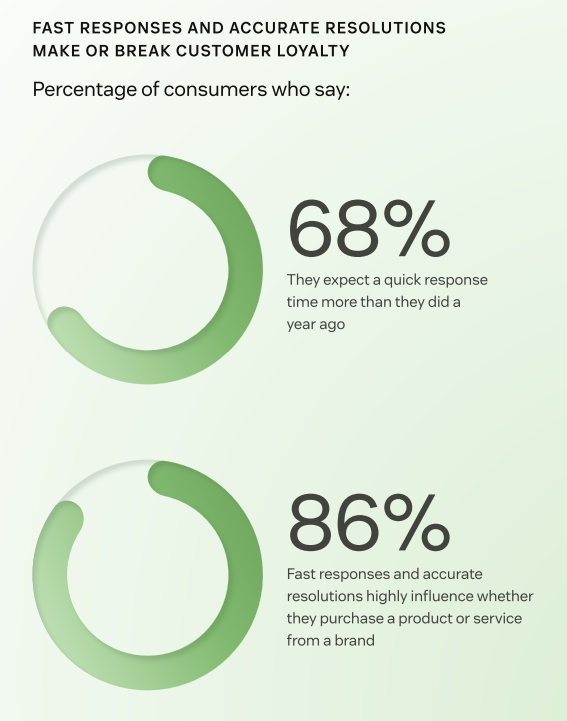
Modern conversational AI for ecommerce closes this gap with around-the-clock availability, making support faster, more natural, and more inclusive. Platforms like Retell, as an enterprise conversational AI platform, bring human-like tone, pacing, and even emotional intelligence into real phone calls, allowing businesses to scale support without increased operational costs.
For enterprises, this means customer service that is not only scalable and efficient but also deeply human, something no scripted chatbot could ever deliver.
Ecommerce brands face a persistent and costly challenge that most visitors leave before buying. Average add-to-cart rates hover around 8%, meaning fewer than one in ten visitors signal purchase intent via product commitment.
Only a fraction of those convert to a completed order, with typical conversion rates being in the 1.5-2.5% range.
Even among visitors who do add items, 70% or more abandon their carts without purchasing. These gaps reflect persistent frictions caused by:
Unlike traditional digital support mechanisms like static help text, FAQ pages, or live chat widgets, voice assistants in ecommerce are not stylistic add-ons. It offers:
For enterprise commerce teams focused on CX, voice assistants are a conversion-centric experience that drives commerce outcomes by resolving uncertainty at the exact moment it affects the buying decision.
For an ecommerce business to scale globally, it needs to be able to support customers who speak different languages and use multiple devices.
Harvard research shows consumers are “72 % more likely to purchase when information is provided in their native language”. In addition, customers prefer brands that offer them an omnichannel experience so that they can connect with support anytime, anywhere.
An AI voice agent helps you achieve such seamless interaction without all of the resources and investment demanded by human teams.
Retell AI operates on multiple various voice and digital channels with 50+ multilanguage capabilities, meaning customers can choose how they interact and even swap channels mid-purchase.
Whether they connect over social media, website or ecommerce channels, your AI voice agent would be well aware of all past interactions.
Research reveals that AI implementation is most advanced in ecommerce with at least 59% businesses reporting “very advanced” AI implementations.
From product discovery to post-purchase support, conversational AI offers innovative ways to streamline the buying journey. It can handle repetitive tasks like order processing and inventory updates, reducing errors and freeing up resources across multiple selling platforms.
It can even be used in fraud detection, cybersecurity, demand forecasting, and product optimization.
Let’s dive into some of the top applications:
Just as the way people shop has changed, so have their expectations. According to a 2025 DHL ecommerce report, AI-powered shopping assistants are the most asked shopping features that customers want.
Today’s customers want personalized assistance, and when retailers deliver that, they’re rewarded with:
Owing to the success, brands like Pinterest are launching a conversational AI bot for its 600 million users to take personalization to the next level. You can simply talk to the bot, and it will give users exactly what they’re searching for.
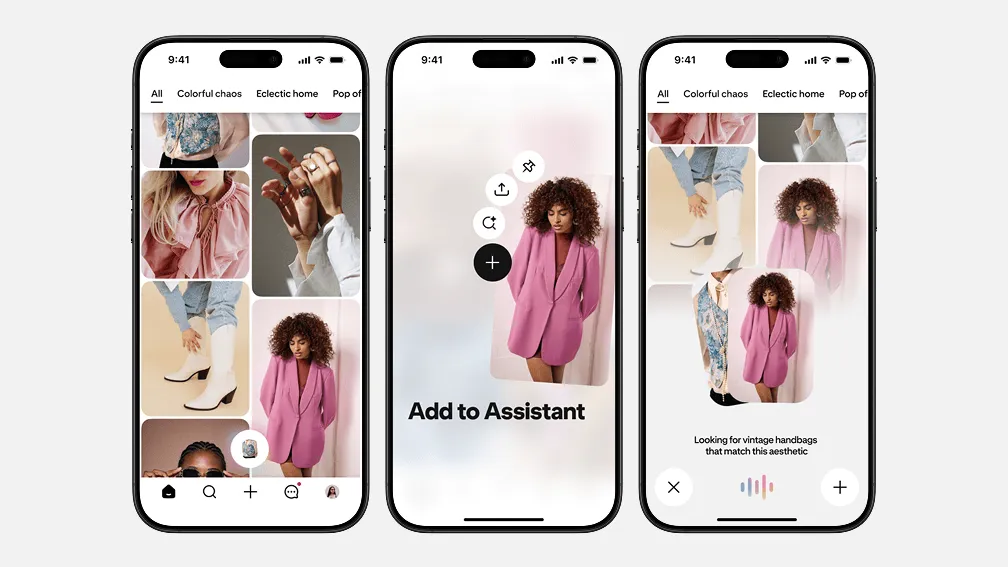
Traditional recommendations were simpler; if they chose this, then recommend this. However, conversational AI doesn’t just rely on clicks or past purchases. It blends:
For example, if a returning customer asks, “Show me something similar but cheaper”, the AI instantly references previous purchases and price sensitivity.
This level of personalisation makes shoppers feel that their needs are understood, which, of course, can significantly boost the likelihood of a purchase.
Online shoppers don’t want to “search” online. They want the experience to feel as natural as talking to a store associate. But most ecommerce search engines still treat every user query like a static string of keywords, not a real-time dialogue.
That’s exactly what conversational search enables. Conversational search uses natural language processing (NLP) and artificial intelligence (AI) to stimulate two-way conversations, instead of relying on exact-matching keywords. It interprets intent and guides users toward relevant results through a sequence of adaptive, intelligent questions.
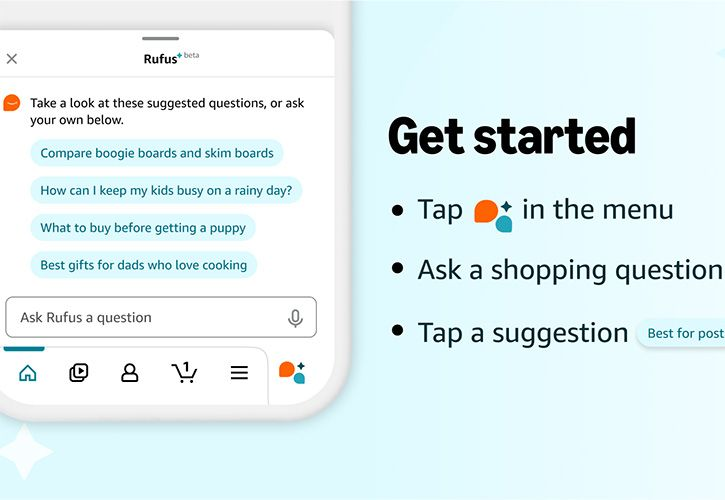
For instance, Amazon’s Rufus’s conversational AI provides personalized recommendations to help customers make the right decisions. Customers can:
Customers are often impatient when it comes to orders; no wonder why WISMO (Where Is My Order) inquiries can account for 20–40% of support tickets and up to 50% of inbound calls. During busy seasons, that number could climb even higher.
Manually handling these requests wastes a significant amount of agents' time and frustrates customers. With AI answering service, ecommerce brands can automate these calls and provide real-time order tracking.
Not to forget, the cost implications are huge. Answering the same WISMO question thousands of times is an enormous drain on support resources. Compared to conversational AI, you can reduce at least 80% of those queries and provide instant response at a quarter of the price.
A capable voice agent from Retell AI can:
This gives customers the transparency they expect and reduces repetitive manual work for your team.
Due to the nature of online shopping, ecommerce businesses see much higher return rates than brick-and-mortar stores.
In the U.S., a massive 15.8% of all retail merchandise sold in 2025 came back.
How you handle returns determines whether a customer walks away or becomes an advocate for your brand.
Unlike generic bots that are rigid, keyword-driven scripts, AI agents are built on large language models (LLMs). They understand natural, human language, figure out what the user truly wants, and can even pick up on their mood.
Once the AI knows what a customer wants, it communicates with your backend systems. It connects to your:
Based on the information, the AI takes the final action. This could be anything from politely telling the customer their item is ineligible to fully resolving the issue by issuing a return, exchange or refund.
In this new, exciting era of conversational AI, ecommerce brands and retailers need to see beyond the perceived notion of what chatbots can do.
Conversational AI opens up a whole new shopping experience for your customers, making it possible for brands to deliver quick, accessible, low-effort support at scale.
This is where platforms like RetellAI play a role, enabling teams to deploy conversational AI directly into production customer service workflows rather than controlled experiments.
With Retell AI, your voice agent will be up and running in less than five minutes. Our clients have achieved over 80% resolution rate and automated at least 40-50% of customer calls with voice agents.
Want to see Retell AI in action? Try Retell AI for free!
Conversational AI in ecommerce refers to AI-powered chatbots and voice assistants that interact with customers using natural language to handle shopping, support, and post-purchase tasks, such as product discovery, order tracking, returns, and customer service, across chat, voice, and messaging channels.
Traditional chatbots follow rule-based scripts, while Conversational AI uses natural language processing (NLP) and machine learning to understand intent, context, and past interactions, enabling more human-like, personalized conversations.
No. Conversational AI augments human agents by handling repetitive tasks while escalating complex, emotional, or high-value conversations to humans when needed.
Yes. Conversational AI integrates with platforms like Shopify, Magento, Salesforce, and ERP/CRM systems to access order data, inventory, customer profiles, and shipping information in real time.
Conversational AI automates high-volume operational tasks such as order tracking, returns and exchanges, refund status queries and shipping and delivery updates.
See how much your business could save by switching to AI-powered voice agents.
Total Human Agent Cost
AI Agent Cost
Estimated Savings
A Demo Phone Number From Retell Clinic Office