9 Contact Center Automation Trends Transforming 2026
11
MIN READ
October 11, 2026
For the past few years, contact center automation has been fueled by AI hype. In 2026, that era is over. The focus has shifted from what’s possible to what actually performs.
Today’s contact center leaders are under pressure to prove ROI, meet rising compliance standards, and deliver measurable customer experience gains, without letting costs spiral.
The result: a new wave of contact center automation built around accountability, control, and outcomes, not demos and dashboards.
In this guide, we break down 9 contact center automation trends shaping 2026, from AI agents including an AI voice agent that own resolution end-to-end to systems that optimize quality, compliance, and revenue in real time.
CX experts have faced pressure to implement AI as a solution to cost challenges. A slick demo no longer gets budget approval. Today's leadership wants a straight answer to a simple question: What does this automation actually do for the business?
Why it matters now:
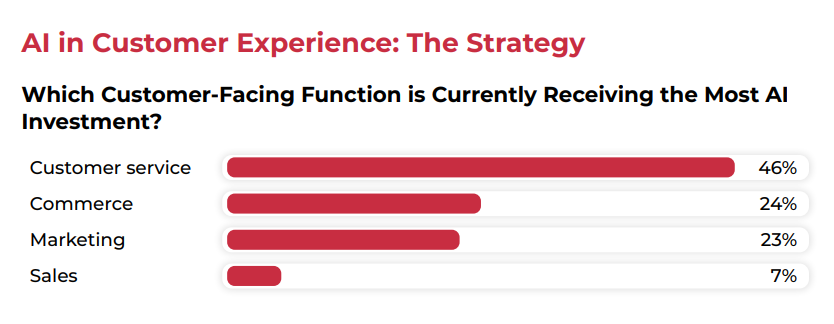
A recent report by TechIntelligence even suggests that 46 percent of businesses have pumped more AI investment into a single customer-facing function, i.e., sales, service, or marketing - than anywhere else in the business.
But, most projects don’t deliver. AI funding has shifted from innovation teams to finance-led governance. AI projects that cannot demonstrate payback within 12–18 months are increasingly deprioritized or sunset.
The costs are real though. A misrouted call increases handle time and drops customer satisfaction (CSAT) scores. Survey shows that nearly half of executives said that they couldn’t quantify any return from their AI spending in customer service and call center automation initiatives.
The failure rate for AI in customer service is higher than most leaders think.
What this looks like in 2026:
The most common reason AI projects fail is lack of business goals or CX metrics.
Without clearly defined KPIs, value can’t be demonstrated. Will AI cut average wait times by 15%? Improve first-call resolution by 10 points? Lift customer satisfaction by half a star?
For instance,enterprise clients at Retell, get quantifiable metrics right from the start. Retell helped a healthcare client achieve ROI-driven voice automation by reducing wait time and cost per contact with quantifiable results. The team saw:
If those outcomes aren’t set upfront, the initiative lacks direction, and eventually loses momentum.
CIOs and CFOs are determined to invest in projects that demonstrate clear results and ROIs. If it doesn’t, the project will be slashed.
As AI hype accelerates and Big Tech’s influence expands, consumers are demanding, more than just convenience, they’re demanding accountability.
In 2025, trust has evolved from a compliance checkbox into a central consumer concern.
According to Mickensey, consumers want to know a company’s data and AI policies before buying its products or services.
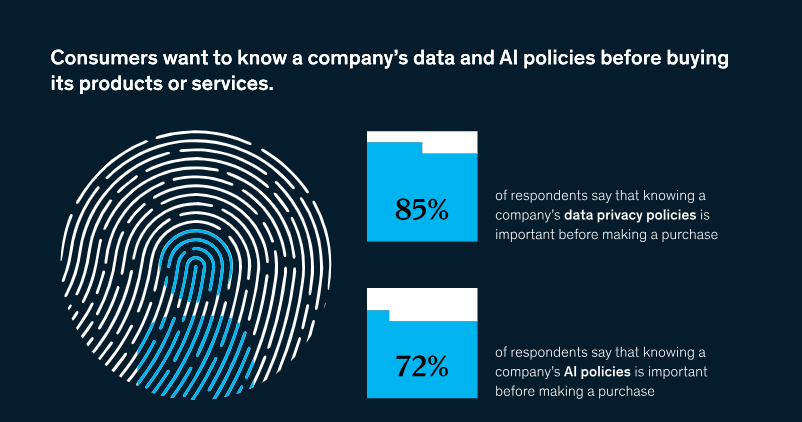
Almost half of buyers (46%) will consider switching brands when companies data practices are unclear. Many will only buy from companies that are known for protecting consumer data.
Why Data Security is Critical for Contact Centers
Predictive dialers routinely make thousands of calls and handle highly sensitive customer data, including:
Besides legal fines, the higher price you pay for non-compliance is devastating data breaches. Data breaches cost organizations an average of USD 5.52 million per incident.
What Embedded Compliance Looks Like in Modern Contact Centers
Leading contact center platforms are building compliance directly into their automation stack, including:
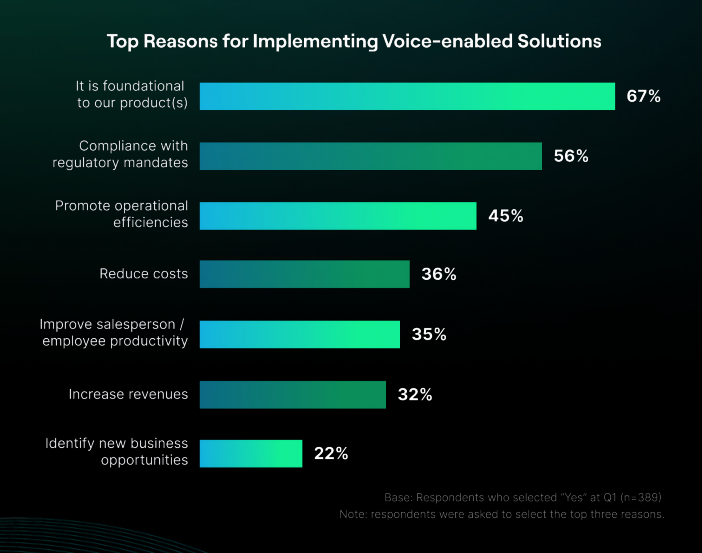
According to Deepgram, 56% of respondents cite compliance with regulatory mandates as a primary driver for voice AI implementation.
Companies are exploring compliant voice AI solutions to simultaneously improve accessibility and enhance customer experience that deliver measurable ROI beyond mere regulatory checkbox-ticking.
For example, contact centers are already using voice-enabled AI like Retell to automatically transcribe and summarize customer calls, capture dispositions, and update CRM records in real time.
By ensuring secure data handling and regulatory compliance, these tools streamline agent workflows, reduce after-call work, and improve both agent productivity and customer experience.
Classic systems like AI IVR systems are giving way to more advanced voice technology.
A majority of organizations (52%) believe “customer service or task automation” to be the most transformative use case for voice technology.
But, there are more use cases, including:
30% to initiate/ resolve service request
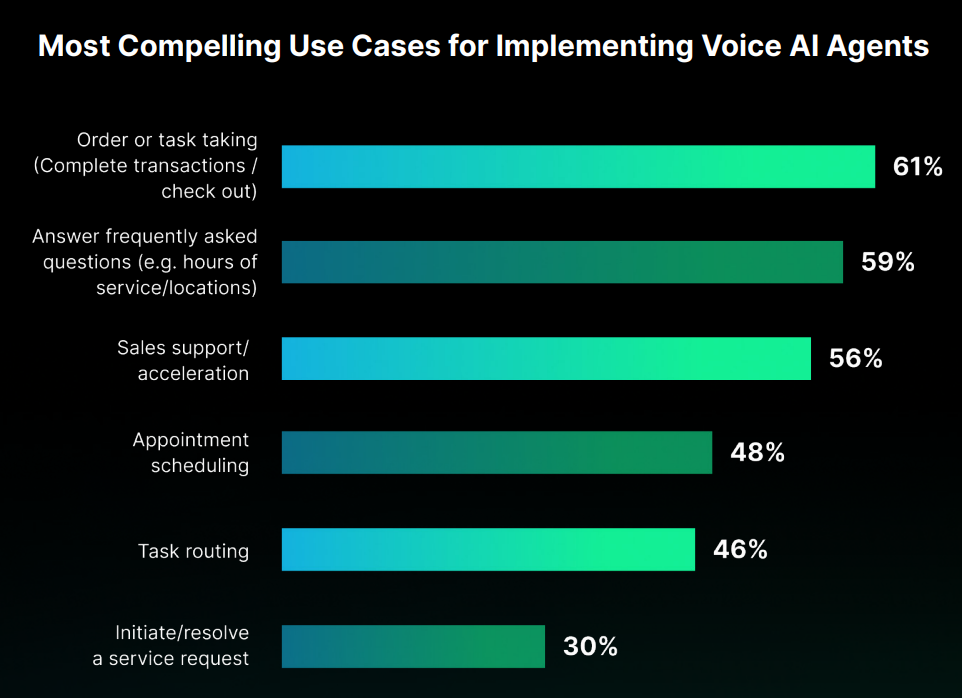
Voice AI delivers the most value when it’s used to automate high-volume, low-value tasks—like password resets,order-status lookups, appointment scheduling or identity verification–that take a whopping 60% of an agent's time. These clog up phone lines and increase wait times.
Retell’s low-latency, AI voice model integrates with your tech stack and fully automates these routine workflows end-to-end. It can handle thousands of calls simultaneously and provide seamless human handoff that frees up agents’ capacity for complex, high-empathy interactions.
Plus, Retell supports over 50+ languages, so for businesses with global clients, it can save them a lot of money and resources.
Beyond that, 45% use voice AI to improve operational efficiency, and 35% rely on it to boost productivity across sales teams and employees.
Modern contact centers face an unprecedented combination of operational pressures that traditional solutions like chatbots simply can't address effectively.
Agentic AI systems are designed to handle complex goals and workflows with limited direct human supervision. It demonstrates genuine problem-solving capabilities and adapts its approach based on context, customer history and real-time data analysis.
Agentic AI leverages innovations like:
Here's how agentic AI transforms a simple customer request into a seamless, automated experience:
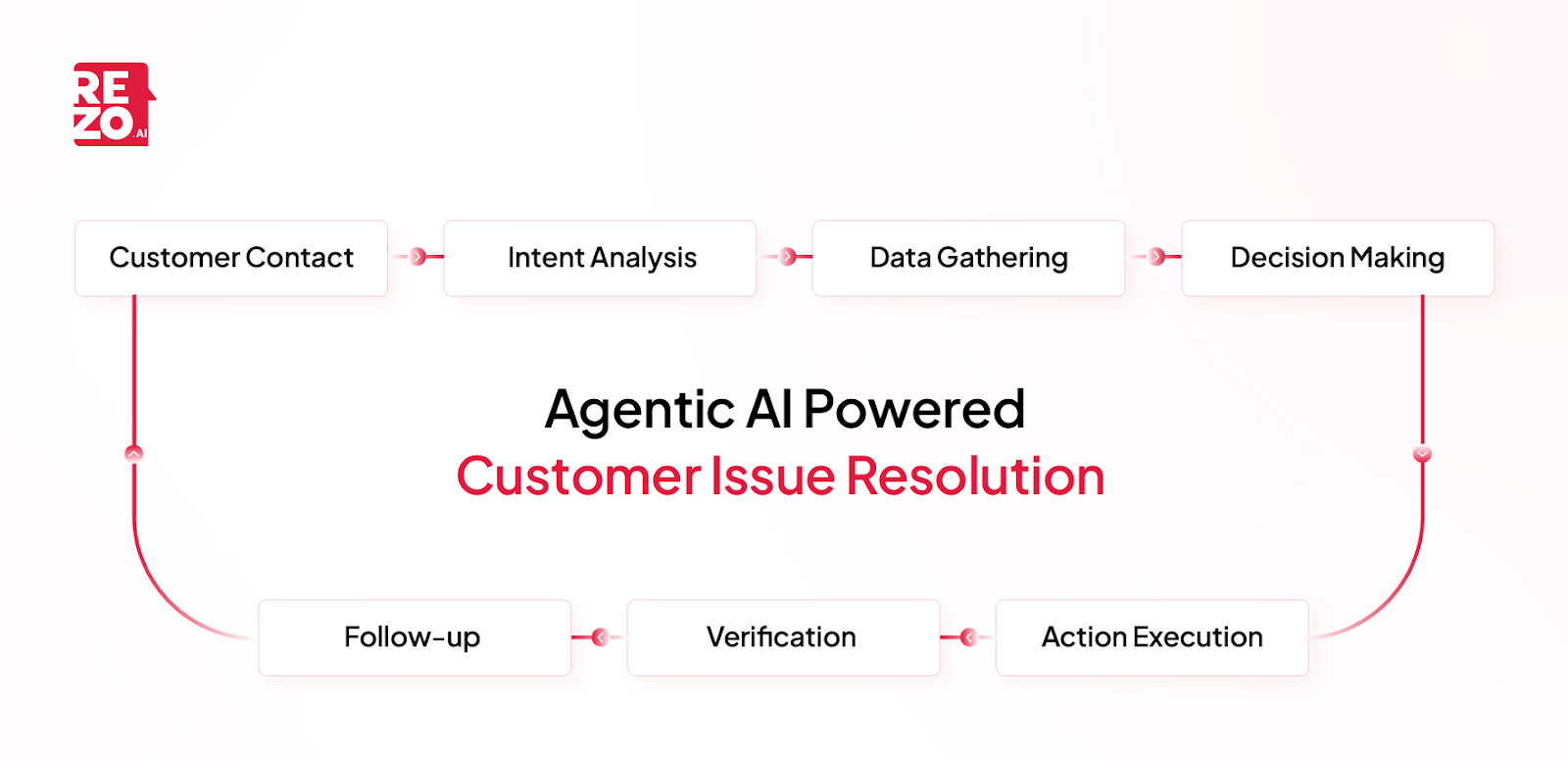
Companies using Agentic AI see:
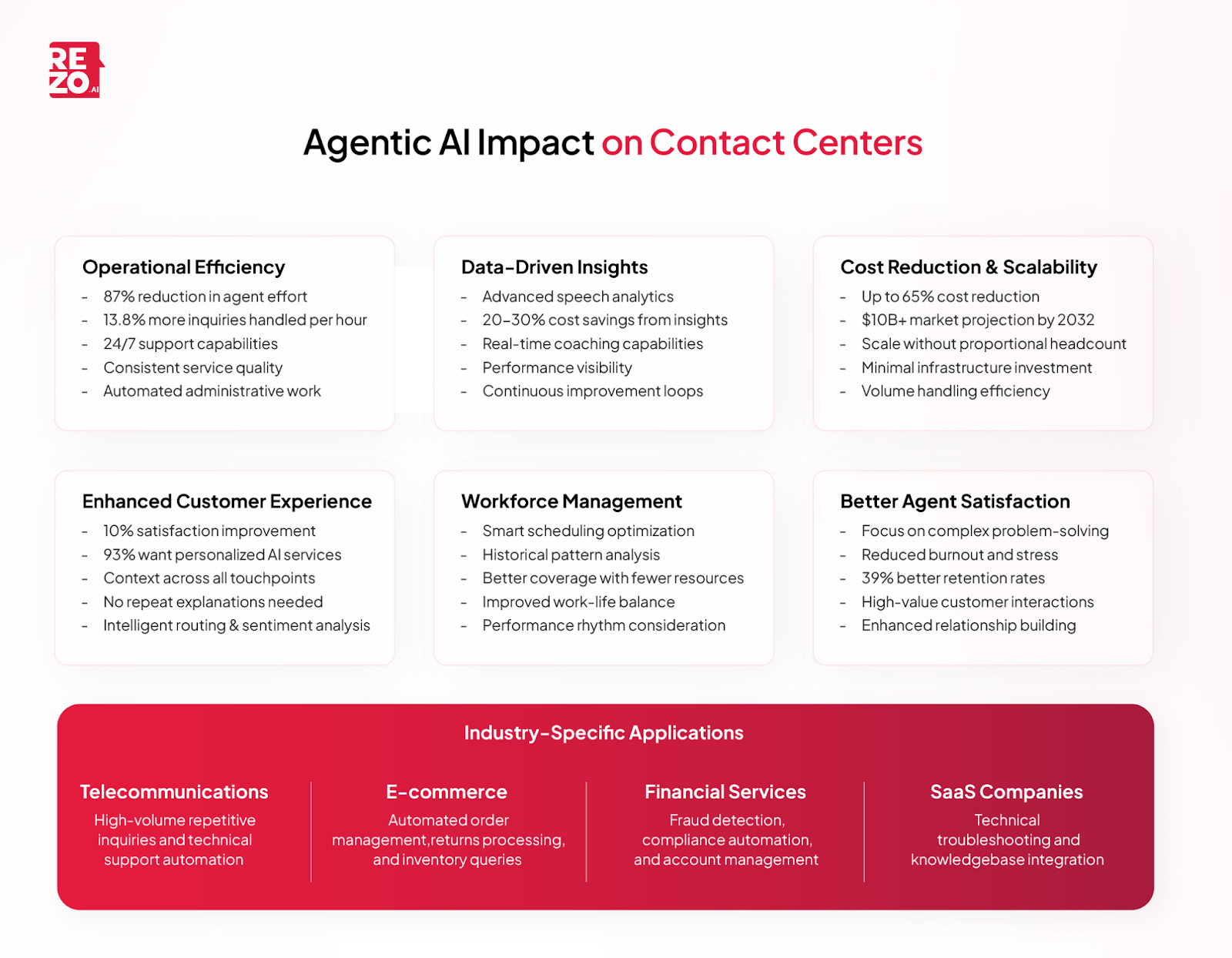
As Daniel O’Sullivan, Senior Director Analyst in the Gartner Customer Service & Support Practice, says, “Unlike traditional chatbots that simply assist users with information, agentic AI will proactively resolve service requests on behalf of customers, marking a new era in customer engagement.”
AI agents are capable of acting, helping and supporting contact centers in a way that chatbots could never.
| Simple issues (Act) | Medium issues (Helps) | Complex issues (Supports) |
|---|---|---|
| Answers customer autonomously | Creates suggested solution | Gives human agent customer info |
| Creates personalized response | Human reviews it | Suggests next steps in real-time |
| Solves customer problem | AI learns from feedback | Finds relevant policies/procedures |
By 2029, agentic AI will autonomously resolve 80% of common customer service issues without human intervention. Contact centers will need to rethink their approach to managing customer interactions; otherwise, they might fall behind.
Generative AI agents are an advanced type of artificial intelligence that creates new content including text, images, music, audio and video by analyzing large training datasets and producing new outputs that mirror the patterns and characteristics of the original content.
In 2026, customer service (55%), after software development (57%), is expected to see the greatest near-term impact from AI agents, according to Claude.
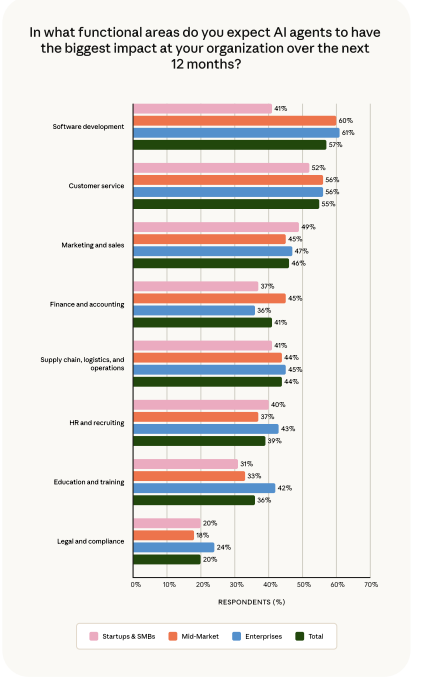
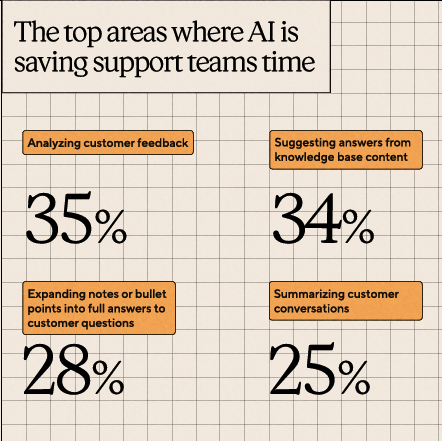
AI assistance can alleviate many of the pressures that support teams face and free up their time to focus on more value-adding activities.
A recent Intercom report reveals, the top areas where AI is saving support teams are:
Most contact centers are swimming in data, but they’re often used to look at the past. The real power comes from shifting your focus from what did happen to what will happen.
Predictive analytics is a branch of advanced analytics that makes predictions about future outcomes using historical data, artificial intelligence (AI), and machine learning (ML) to forecast future outcomes.
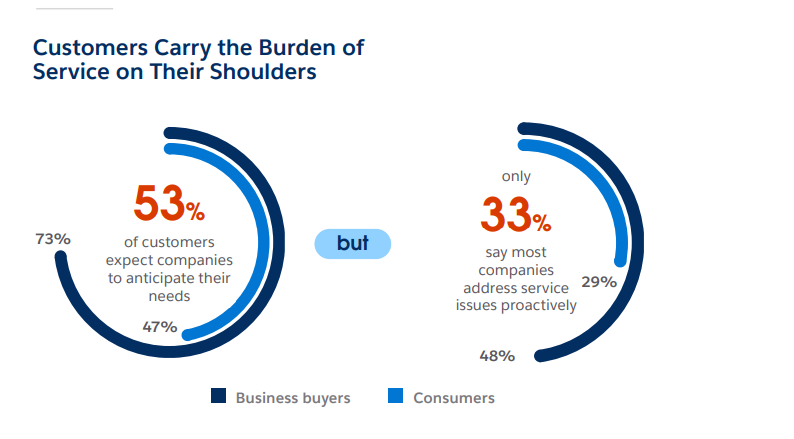
Increasingly, customers expect companies to deliver proactive conversational AI for customer service rather than relying on them to file the initial case. According to Salesforce, 53% of customers expect companies to anticipate their needs, but only 33% say most companies address service issues proactively.
Predictive models can save call centers millions, cut handling times by 40%, through:
This isn’t a minor trend; it’s a major industry transformation. The contact center analytics market has expanded from $2.23 billion to $2.57 billion and is on track to more than double to $5.08 billion, driven by a strong 18.5% CAGR.
Customers value consistency across channels, devices, and departments. However, consistency is not the norm, and 56% customers find themselves repeating themselves to different representatives — a sign of siloed information.
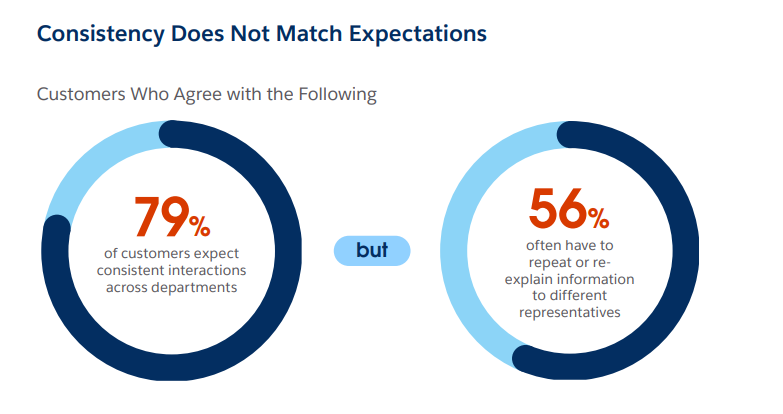
Ultimately, when technology and processes aren’t well connected, 55% of customers say their experience feels fragmented, as if they’re dealing with separate departments instead of one unified organization.
Here are some key components of effective omnichannel support:
This allows agents to deliver personalized support without requiring customers to repeat their information, regardless of which channel they choose.
According to Forrestor, integrated omnichannel solutions experienced a 31% reduction in first-resolution times and a 39% decrease in customer wait times.
A recent interview from Custify, a customer success software company, reveals that 86% of customer success managers want to quit in 2025. On average, call centers face turnover rates of 30-45%, more than double the average for other industries.
Tech automation offers hope for burned-out service agents.
More than three-quarters of service agents report a lack of technology in their current role. By investing in AI and automation, service leaders can free overwhelmed agents from tedious, repetitive tasks, allowing them to focus on higher-value, complex issues that directly improve customer satisfaction.
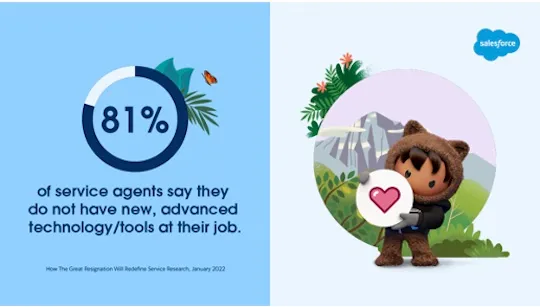
Service leaders are making investments in automation to attract and retain talent, including:
After every call, agents spend anywhere from 2 to 10 minutes logging notes, updating fields, tagging issues, and completing after-call work (ACW). AI-powered wrap-up tools now auto-generate call summaries, extract key customer details, update CRM fields, and log next steps, saving 60% of agents’ time.
Unlike traditional QA, which only reviews 1–3% of total interactions, modern systems can automatically analyze 100% of calls, chats, and emails in real time. They score interactions on key metrics like empathy, compliance, accuracy, tone, resolution, and adherence to process.
Agents receive continuous, fair, data-backed feedback, along with targeted coaching tips tailored to their strengths and gaps.
Studies show that constant exposure to negative interactions can spike stress levels and lower job satisfaction.
Modern AI tools can detect tone, emotion, urgency, and frustration levels across calls, chats, and emails in real time. They flag moments when a conversation is escalating, allowing supervisors to step in proactively or provide live guidance.
A Salesforce study on automation confirms 89% of users feel more satisfied with their jobs as a result of using automation in the workplace. Automation also reported to:
Ultimately, advanced technology may be the key to boosting customer satisfaction while finally giving overworked agents the support they need.
AI adoption is now the norm. Enterprises are embedding it across healthcare, legal, support and development.
Yet security has not kept pace. Most organizations do not have clear governance plans. This leads to an increasing “security debt” in AI, as risks accumulate more quickly than controls can effectively address them. Adhering to standards is complex.
IBM’s latest breach report shows that AI adds over $670,000 in breach costs. Of those compromised, 97% report not having AI access controls in place. The data shows 63% of breached organizations either don't have an AI governance policy or are still developing a policy.

In an AI-driven world, your organization needs a reliable way to prove that its use of artificial intelligence is both secure and responsible.
This is where AI governance frameworks come in, including:
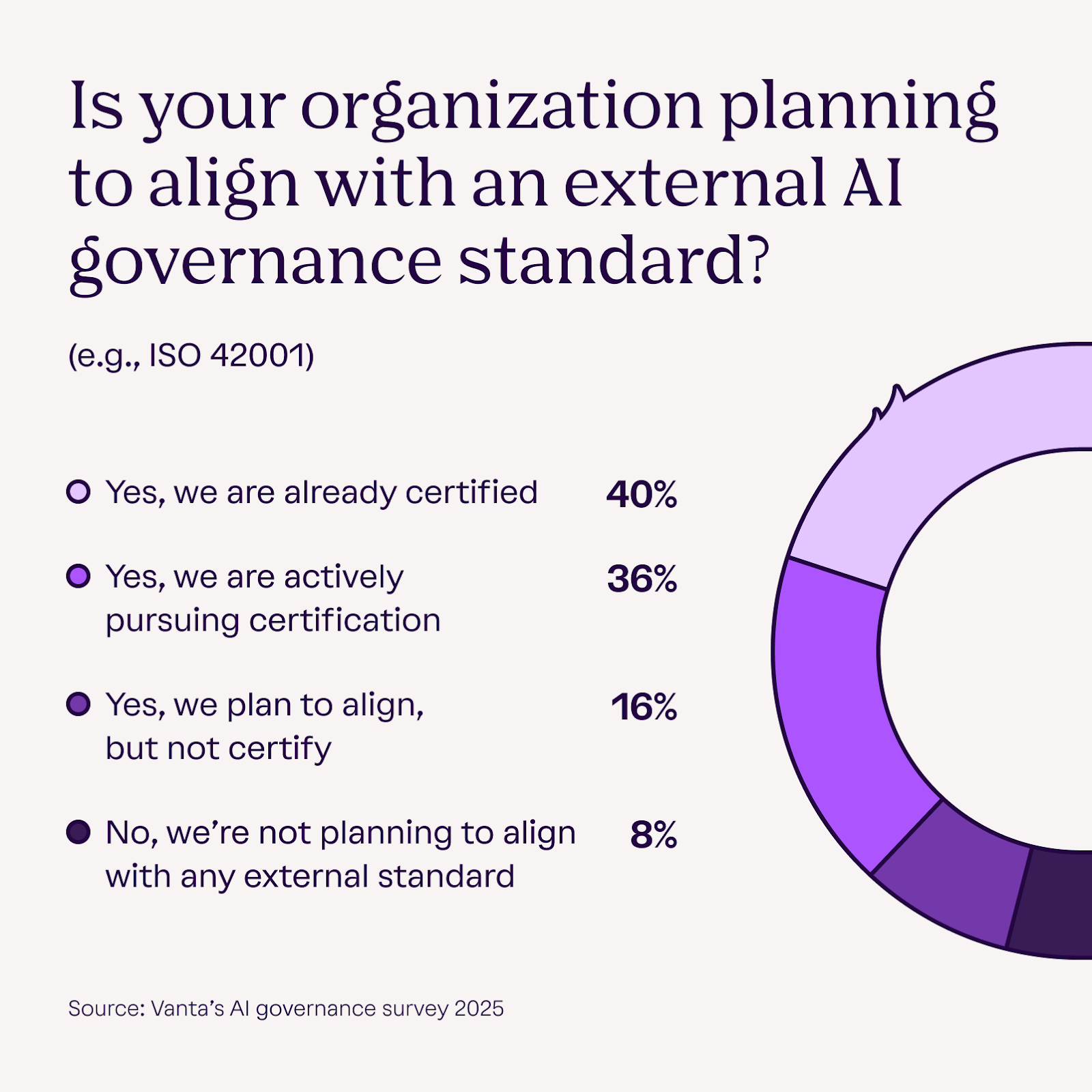
AI governance is no longer a theoretical concern; it’s a real and rising pressure point for organizations in 2026. According to Vanta, 62% of leaders say they’re very concerned about AI compliance, and 36% are actively pursuing certification to meet regulatory expectations.
Also, opt for tools that follow security and compliance guidelines to avoid any financial and reputational threats. Retell AI addresses these enterprise requirements for voice AI automation, with:
Businesses that implement a comprehensive AI governance deliver 300-2000% returns compared to ones that don’t deploy.
To truly thrive in 2026, enterprises must rethink customer service as an active, data-driven engine of their overall strategy. AI’s success depends on infrastructure work that most organizations don’t have in place.
Data readiness, strong governance frameworks, cultural alignment, and clear orchestration strategies aren’t nice-to-haves. They’re prerequisites. Organizations that dedicate 2026 to fixing these foundational gaps will be the ones positioned to unlock genuine value from AI.
Ready to explore how secure AI voice agents can transform your call operations? Book a Retell demo and watch how AI voice agents can slash call volumes by 50% or more while dramatically reducing wait times and operational load.
See how much your business could save by switching to AI-powered voice agents.
Total Human Agent Cost
AI Agent Cost
Estimated Savings
A Demo Phone Number From Retell Clinic Office