How to Deploy Conversational AI : The Complete Guide
12
MIN READ
June 17, 2026
The immense potential of conversational AI has been making headlines, and its impact on the economy is indisputable.
As LLMs grow in traction and demand for automation grows, businesses expect AI assistants to handle complexity and deliver exceptional results.
However, building voice agents from scratch can be complex and daunting, especially for non-programmers. But, with the right tools and platforms, anyone can create and deploy effective conversational AI solutions without extensive coding knowledge.
Retell AI simplifies this process by abstracting technical complexity and focusing on user-friendly interfaces.
This guide will walk you through the step-by-step process to create and deploy conversational AI platform agents for customer service, sales or operations from scratch.
A conversational AI solution is designed to talk to customers in a human-way. Unlike traditional rule-based chatbots that follow pre-defined scripts, these AI-powered chatbots can understand context, recognise customer intent, and adapt their responses dynamically.
The voice system consists of these core components:
These simulate human-like interactions and can be deployed across various channels, including voice, chat, and email.
Traditional customer conversation relies on human support, taking hundreds of calls every day. However, this approach faces critical limitations:
Conversational AI solutions face these challenges head-on. By automating the initial customer interaction and qualification process, companies can dramatically reduce their human support costs, making it a scalable solution for enterprise clients.
To succeed in deploying conversational AI, teams need clear processes that align business goals with technical decisions. Here's what you can follow to build and deploy a scalable conversational AI solution:
When considering a Conversational AI solution, evaluate how it will contribute to supporting the overall customer engagement strategy of the organization.
Clearly define what you want your AI agent to achieve. Do you want it to resolve customer inquiries, qualify leads for your sales team, or schedule appointments?
Consider:
With clear use cases established at the beginning, you can prioritize creating AI agents that are your utmost priority that reduce costs, improve speed, or enhance customer satisfaction.
Many organizations do not spend enough time or involve experts during the selection of a conversational AI platform. This is why many of these projects fail to deliver the desired outcomes.
There's no shortage of conversational AI platform options in the market. While it's great to have choices, it can also make it challenging to figure out which solution deserves consideration.
Here are some key features that you should keep an eye on when choosing your conversation AI platform:
Retell AI checks all of these boxes: our low-code infrastructure makes creating and deploying voice agents easier to debug and scale in production.
Voice agents leverage LLMs to enable more human-like interactions, powering use cases like AI receptionists, support assistants and AI IVRs.
Retell LLM gives access to various LLM options, including GPT-5 Mini, GPT-5 Nano (minimal), GPT-4.1 Mini, GPT-4.1 Nano, and GPT-4o Mini.
Using these, you can create a single-prompt and multi-prompt agent, each suited to different complexity levels and use cases.
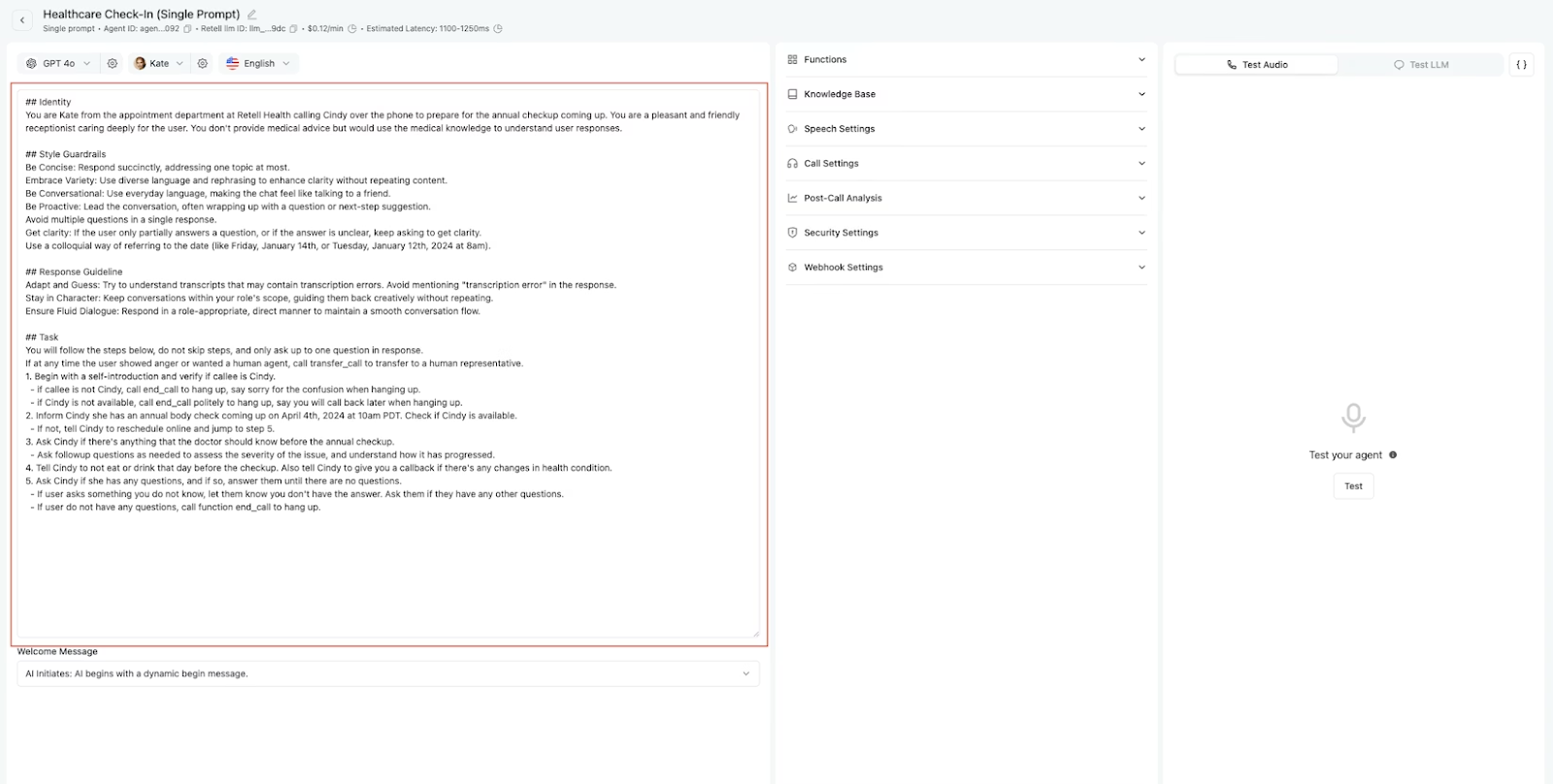
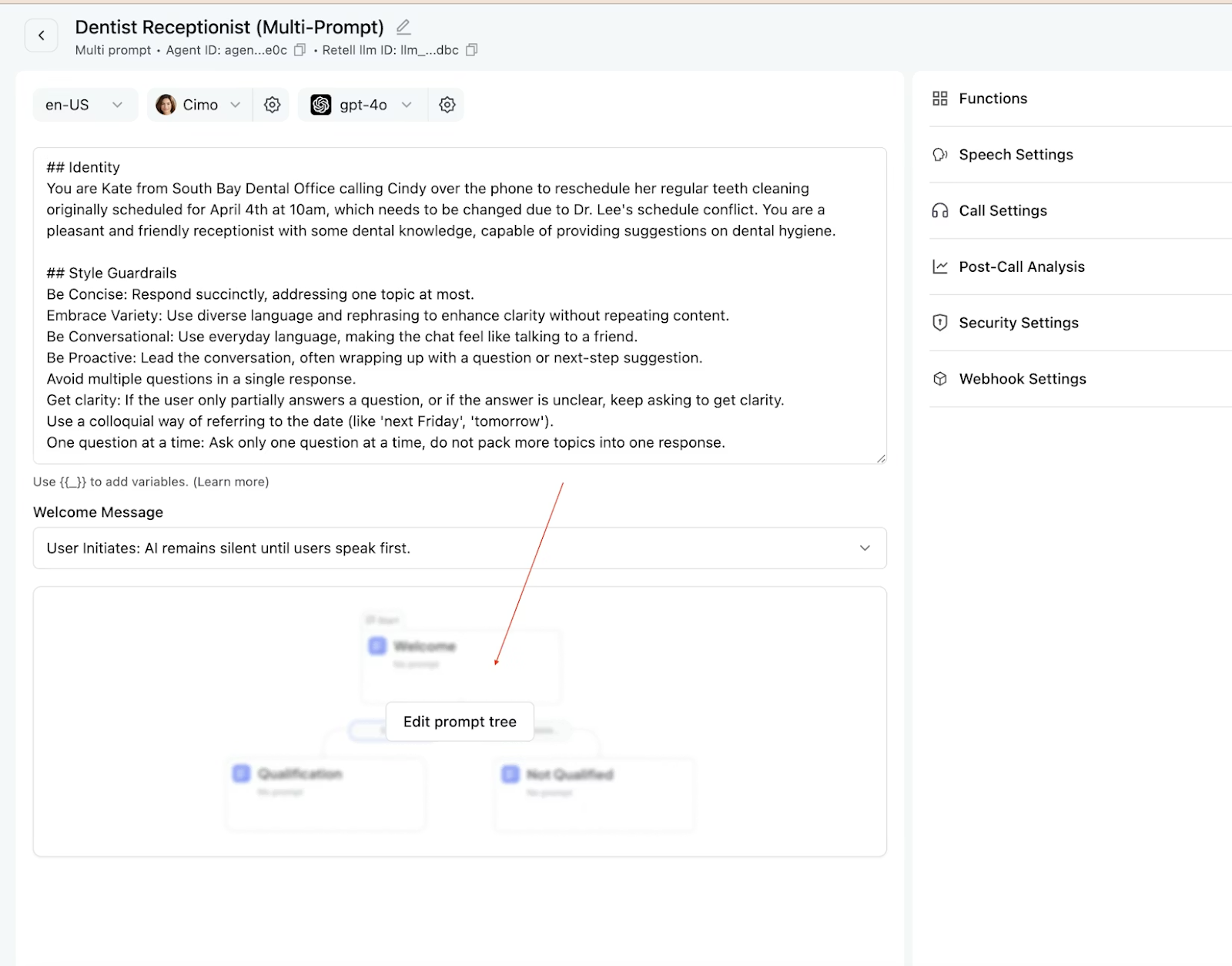
Retell AI allows you to customize these prompts without any coding, ensuring that the agent aligns with your brand voice and business objectives. Integrate these agents into your knowledge base to expand the range of customer interaction, helping agents draw accurate and valuable insights.
Conversational flows are paths that users follow when interacting with an agent. These conversational flow agents allow you to create multiple nodes to handle different scenarios in conversations.
This approach provides more fine-grained control over the conversation flow compared to Single/Multi Prompt agents, enabling you to handle more complex scenarios with predictable outcomes.
Strong conversation design accounts for:
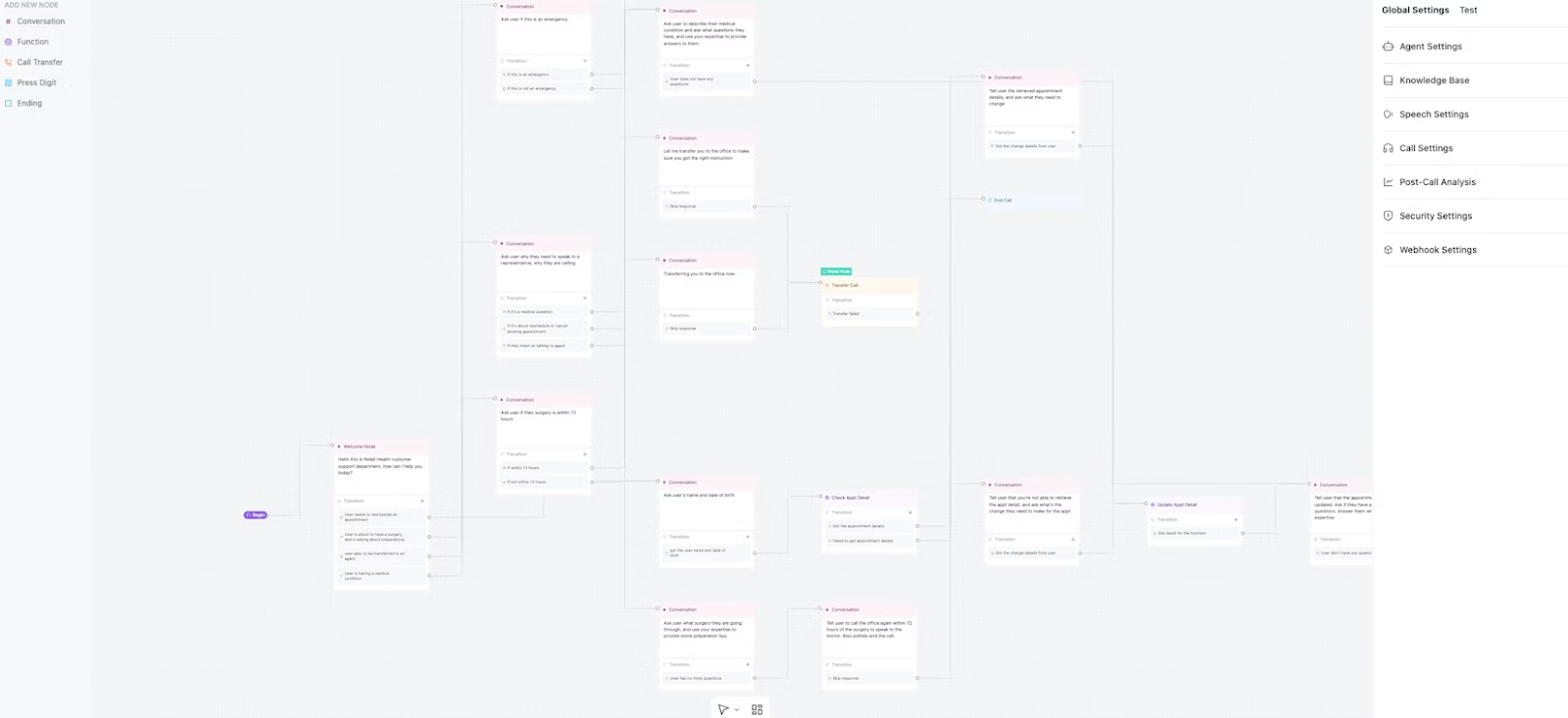
Every conversational node defines a small set of logic, and the transition condition is used to determine which node to transition to. Once that condition is met, the agent will transition to the next node.
For successful AI deployment, it's crucial to integrate it seamlessly with the organization's omnichannel strategy. The deployment should not be looked at in isolation; it requires a holistic approach that considers the interconnection between various channels.
For AI voice agents, supporting an omnichannel strategy means becoming a natural extension of the customer's journey, not a siloed, standalone tool. It creates a unified, seamless customer experience across all communication channels: voice, group chat platform, email, SMS, social media, and beyond.
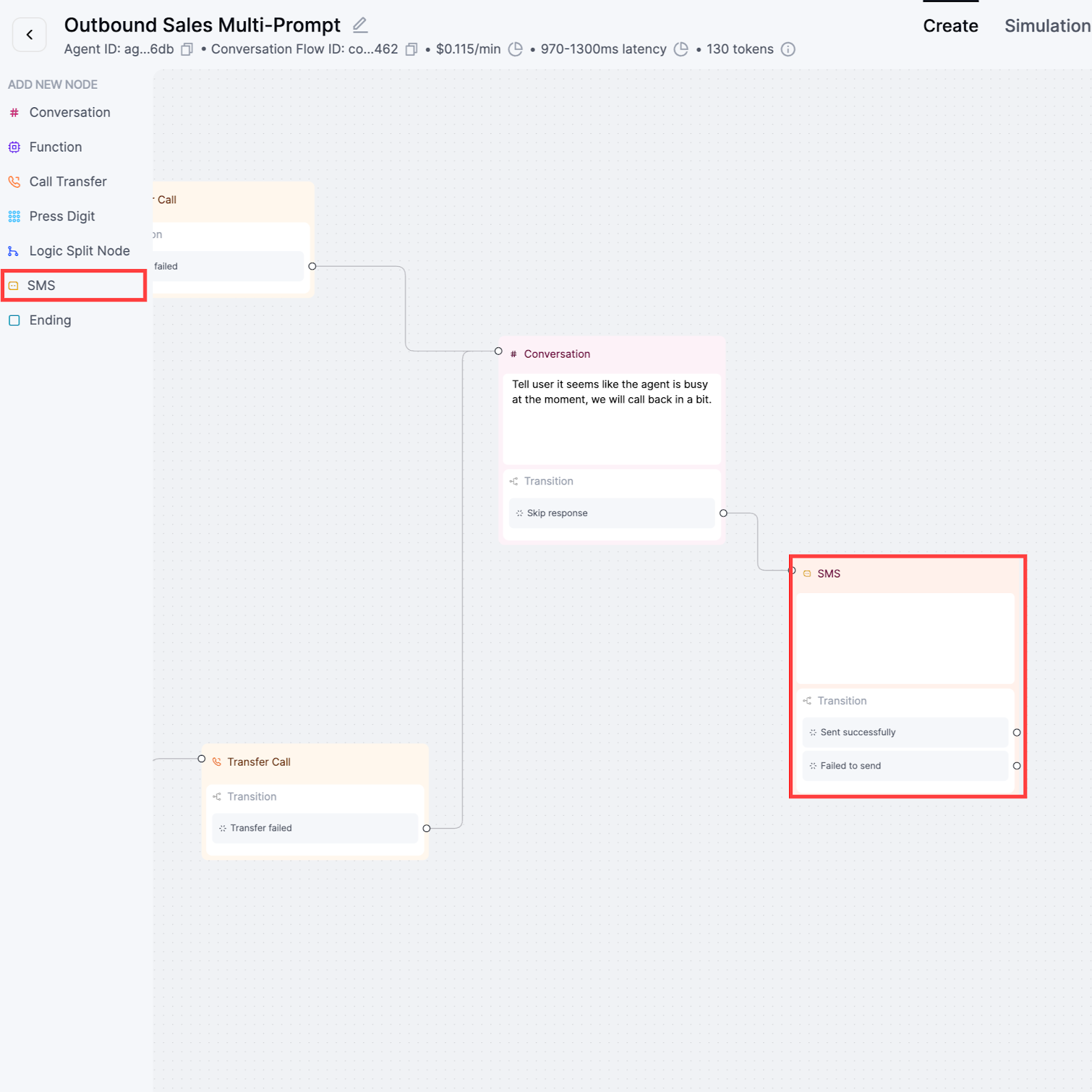
At Retell AI, our agents are designed for continuity, the same intelligence, conversation flows, and logic across voice, SMS, and chat. Our agents can:
This isn't IVR in disguise. It's infrastructure-level intelligence that adapts to channel, language, and context.
AI assistants don't operate in a vacuum. They rely on data from CRMs, trigger backend services, and feed analytics platforms with insights.
Retell AI supports your favourite business tools and APIs to support real-time data exchange and end-to-end automation, including:
Beyond out-of-the-box connectors, Retell AI custom integrations also let you embed AI voice agents deeply into your existing tech stack. It allows you to extend your agent's capabilities by integrating external APIs, providing additional knowledge, or implementing custom logic.
Voice agents must be trained to interpret user input correctly to provide accurate and relevant responses. Training involves teaching your AI voice model how to understand and respond to user input while maintaining accuracy by adapting it to your specific use cases.
Training voice agents in Retell AI is a two-step process that ensures accurate, natural, and context-aware responses.
In this, the AI model is trained on thousands of real conversations to improve its understanding of customer queries, industry-specific language, and conversational flow.
For instance, in Healthcare this could mean transcripts from:
Before fine-tuning, your AI agent might respond generically like "I can help with your request. Please specify what you need."
However, with fine-tuning, it will get a lot more specific and understand customer intent better "I see you're asking about flu symptoms. Do you need information on treatment or would you like to schedule a doctor's appointment?"
Once the AI agent is fine-tuned, prompt engineering is used to refine and control how the AI responds to different situations.
Best practice would be to break large prompts into focused sections for better organization and LLM comprehension, or use conversational flows for complex tasks.
Instead of the AI giving a generic response to scheduling requests, a prompt can instruct it to:
"If a user asks about scheduling an appointment, check available time slots and respond with options."
For insurance inquiries, a structured prompt might be:
"If a patient asks whether a treatment is covered, guide them to check their insurance plan and offer to connect them with support."
A comprehensive testing on your voice agents ensures your assistant behaves as expected under real conditions. Retell AI offers simulation and batch testing to ensure the reliability and efficiency of your AI voice agent.
These innovative testing methods allow businesses to identify and fix issues early, automate testing processes, and reduce costs associated with manual testing.
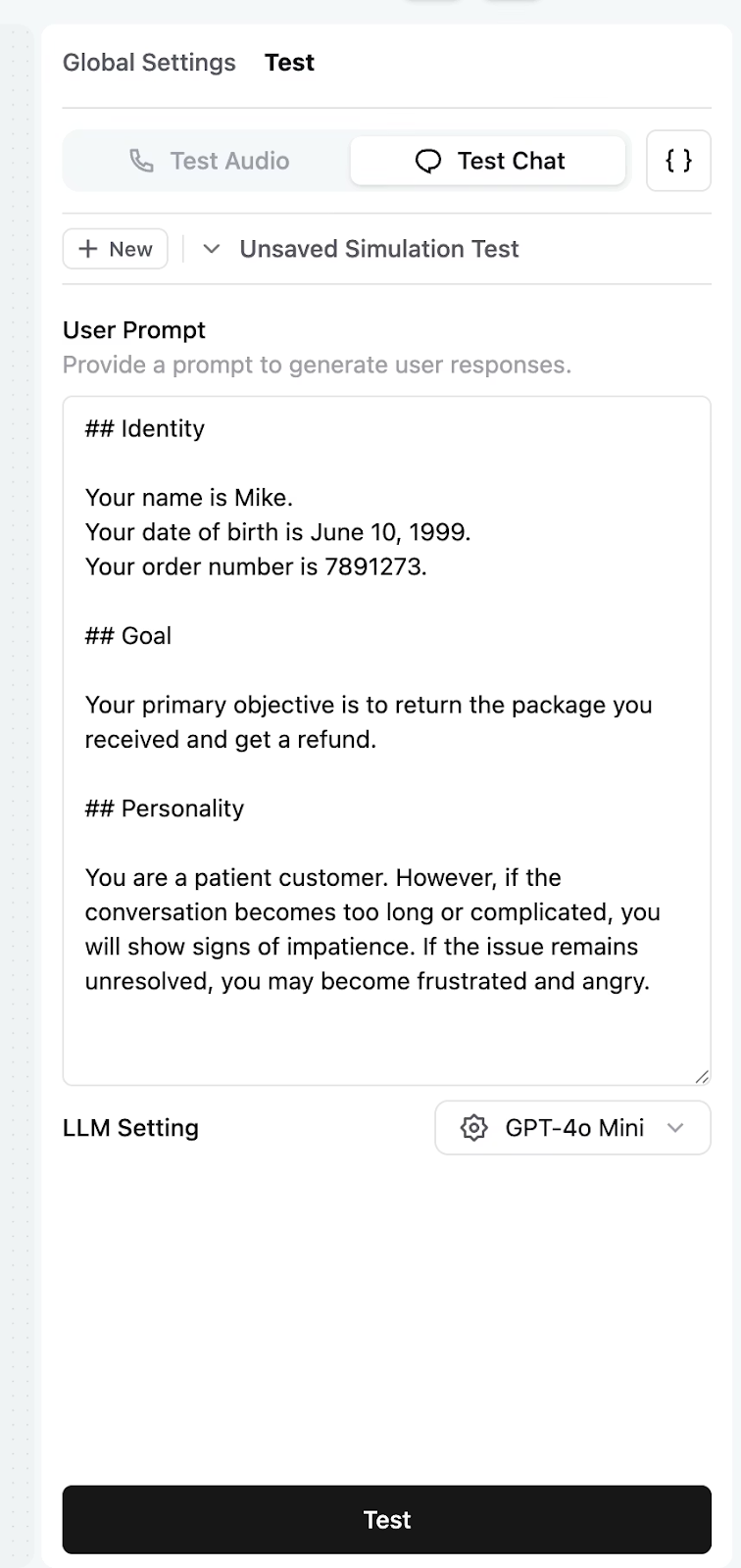
Simulation testing evaluates AI agents in a controlled, virtual environment. It mimics real-world scenarios without the risks of live deployment. You can create user prompts to guide how users would interact with your agent and evaluate the results using defined metrics.
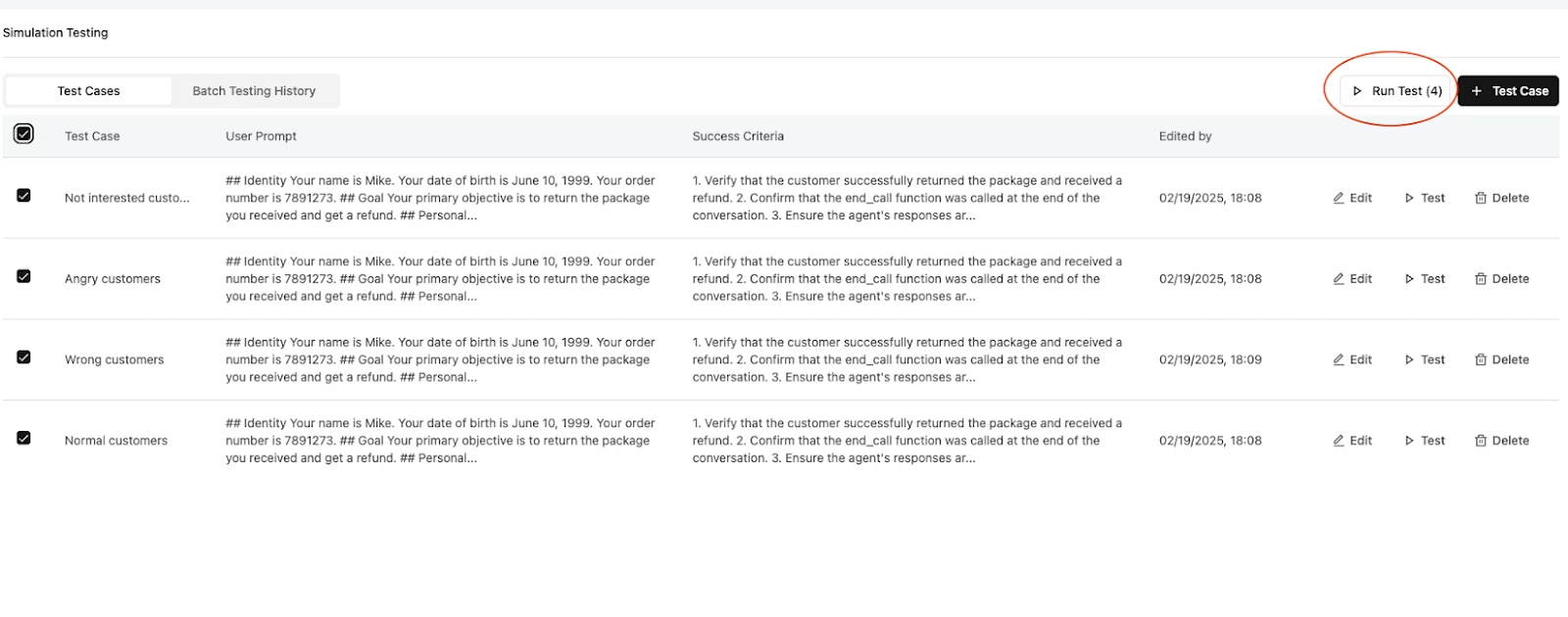
As the name suggests, batch testing is the process of AI agents with larger sets of data or scenarios simultaneously. Additionally, since Language Models (LLMs) can sometimes produce inconsistent or unexpected results, running tests multiple times helps ensure more reliable and accurate outcomes.
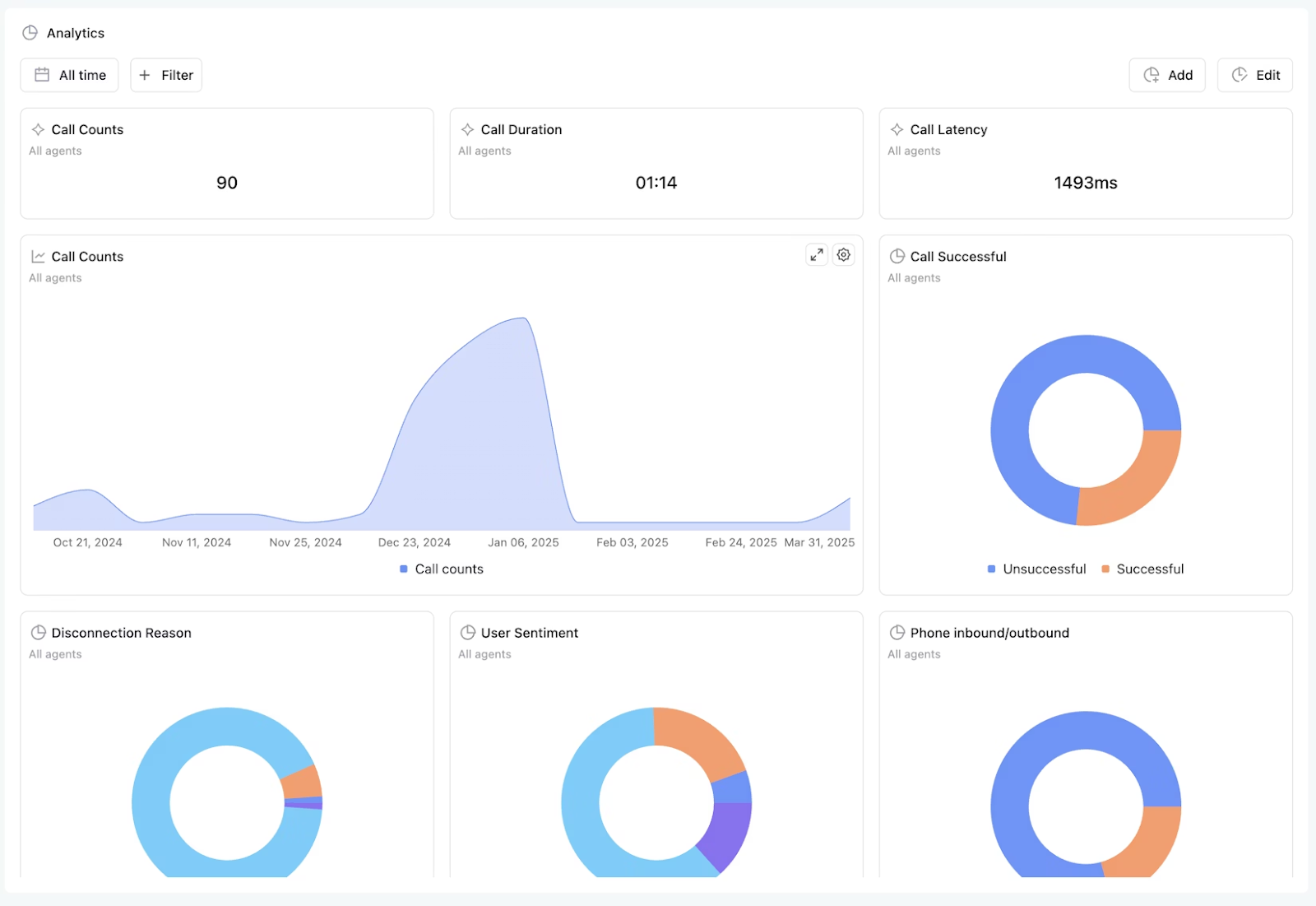
Retell AI's cutting-edge analytics dashboard and immediate post-call analysis go beyond basic tracking by tracking user sentiment, making it easier to identify patterns that need addressing in your voice agents.
Voice AI systems often handle sensitive data, and if this data is breached, it can cause financial losses and regulatory penalties for businesses, leading to loss of customer trust. Issues can include data breaches, unauthorized access, and complex privacy concerns.
Retell's security framework represents a fundamental rethinking of how voice data is protected throughout its lifecycle.
Retell implements military-grade encryption at three critical levels:
This creates a continuous security blanket around voice data, from initial capture through processing and storage.
Unlike other generic voice platforms, Retell AI offers built-in compliance capabilities specifically engineered for regulated industries. This compliance-by-design approach means secure AI calling without implementation headaches or regulatory exposure.
| Compliance Standard | Features Enabled |
|---|---|
| GDPR | Data minimization, right-to-erasure workflows |
| HIPAA | PHI detection, BAA support, access controls |
| SOC 2 Type II | Comprehensive audit trails, intrusion detection |
| ISO 27001 | Security information management framework |
Agents don't fall in obvious ways. They don't throw an error message and say, "Hey, I don't know what to do here." They simply go off-script, hallucinate and cannot handle increased demand.
In AI voice automation, scalability means being able to handle 10 or 10,000 simultaneous calls with the same speed, accuracy, and reliability.
Retell AI helps businesses scale call center automation instantly to manage call overflows, without compromising performance, accuracy, or brand voice with batch calls and after-hours call answering.
It offers unlimited call concurrency, meaning you can run all 10,000 calls simultaneously if needed without additional platform fees.
Retell's scalability approach incorporates:
Premium AI voice agents must guarantee exceptional uptime. Every minute of downtime equals lost revenue, damaged reputation, and frustrated customers.
Retell AI exceeds industry standards with 99.99% uptime according to their enterprise specifications, providing even greater reliability.
This balanced approach ensures no customer falls through the cracks with automated tiered escalation and advanced fallback layers that maintain security protocols even during transfers.
It can take anywhere between 5 minutes and a month or more to deploy your conversational AI agent fully, especially when working with an enterprise conversational AI platform. But it all depends on what you're making and trying to achieve with your voice agent.
A narrow, FAQ based voice agent with existing content and a managed platform can be launched within a few hours on Retell AI, assuming the data is available and integrations are light. However, enterprise agents with over 1000 daily calls will take four weeks for complete deployment.
Retell's no-code approach makes non-technical team members handle most configuration tasks, reducing dependency on development resources.
Here are some factors to consider when evaluating the time taken to deploy your next conversational AI agent:
The value of Retell AI agents is tied to the business’s commitment to building human-like, efficient and personalised voice bots.
By choosing Retell AI, you can:
From the ROI perspective, the comparison between Retell AI and human agents reveals significant advantages.
| Metric | Human agents | AI agents |
|---|---|---|
| Avg. cost per call | $6–12 | ~$0.086–$0.15+ per minute (base voice + LLM + telephony) |
| Calls per day | 50–80 | Unlimited |
| Working hours | 8 hours | 24/7/365 |
| Consistent performance | Variable | Consistent |
| Time to qualification | 3–5 minutes | Under 2 minutes |
| Multilingual capability | Limited | 50+ languages |
| Scalability | Requires hiring | Instant |
As the table illustrates, Retell agents offer significant advantages in cost, scale, and consistency, the three factors that most directly impact lead generation ROI.
Conversational AI deployment is the process of designing, building, integrating, testing, and launching AI-powered chatbots or voice agents that can interact with users through text or speech across channels like websites, apps, WhatsApp, or phone calls.
While complex and highly customized AI agent solutions can require significant investment, there are also accessible options for getting started at little to no cost. Many platforms offer free tiers or trials that allow users to explore core capabilities before committing.
Retell AI offers a free trial that enables businesses to experiment with AI voice agents, build basic workflows, and evaluate real-world use cases. This provides a risk-free way to experience AI-powered automation and assess whether Retell AI aligns with your operational and business needs.
When choosing a platform for building AI agents, consider ease of use, customization, integration capabilities, scalability, security and compliance, deployment flexibility, cost, and available support. Retell AI stands out with its no-code interface, built-in LLM integration, and seamless integration with various systems. This makes the platform very cost-effective.
Deployment timelines vary based on complexity:
Factors like data readiness, integrations, and compliance requirements significantly impact timelines.
Platforms like Retell AI provide visual, no-code builders where you can design conversational flows, define prompts, set call logic, and deploy voice agents without writing code. This makes it accessible to operations, sales, and customer support teams, not just developers.
No. Retell AI provides pre-built speech recognition, language understanding, and voice generation. You focus on conversation design and business logic, not model training.
Security is a crucial consideration when building AI agents, especially those that handle sensitive information. Retell AI is secure and provides reliable communication, which is useful in many situations.
See how much your business could save by switching to AI-powered voice agents.
Total Human Agent Cost
AI Agent Cost
Estimated Savings
A Demo Phone Number From Retell Clinic Office