Conversational AI for Sales: 2026 Guide to Automation, Conversion, and Revenue Growth
12
MIN READ
September 7, 2026
Implementing conversational AI in sales has been messy, time-consuming and far from flawless. But the greater risk lies in doing nothing.
Companies that hesitate face a mounting productivity tax, ballooning human SDR costs, and missed revenue opportunities that competitors are capitalizing on, while also stretching their tech stacks with redundant, isolated tools that frequently conflict across departments.
Companies that use AI in sales achieve over a 5% increase in revenue.
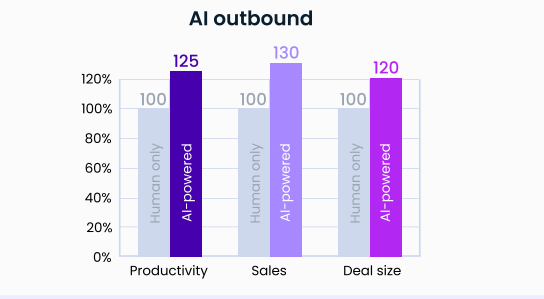
AI-driven outbound teams also see 25% higher productivity, 30% shorter sales cycles, and 20% larger deal sizes compared to human-only outbound efforts.
We've come a long way from the early scripted chatbots that many people associate with. Conversational AI for sales is much more advanced and scalable.
This guide explains conversational AI platfoms for sales, its core use cases, and how to choose the right tool in 2026.
Conversational AI in sales refers to the use of AI-powered chatbots including an AI voice agent for voice conversations and virtual assistants that engage prospects and customers in natural, human-like conversations across channels such as websites, messaging apps, email, and voice.
This technology combines:
In a sales context, conversational AI goes beyond basic chat support. It can qualify leads, answer product questions, recommend solutions, book meetings using an AI appointment setter send follow-ups, and even assist reps during live conversations.
The data supports use of conversational AI and is expected to reduce client service costs by up to $11 billion in 2025 through digital assistants.
At Retell itself, we’ve helped our clients automate inbound and outbound customer interactions, so human agents can regain their time and focus on discussions that bring value.
More sales and marketing professionals are clocking longer hours, but the extra time isn’t translating into better results. In 2024, 75% of respondents worked more weekly hours than planned. Some logged over 20 extra hours, resulting in 12-hour workdays.
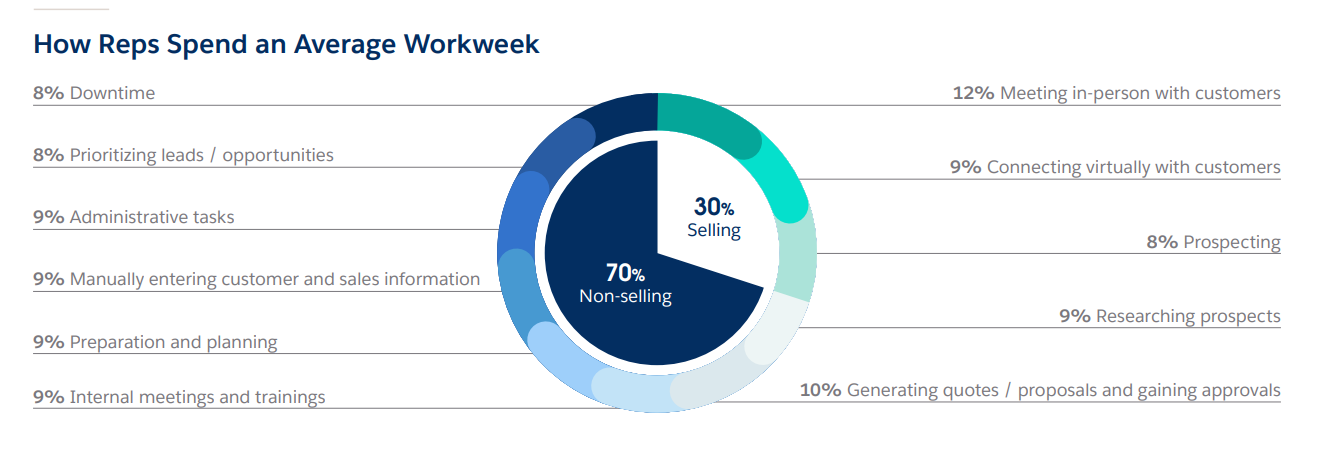
Likely contributors to this burnout are the vast amount of selling activities that take up a seller’s time–all of which prevent sellers from maximizing their time to advance and close deals.
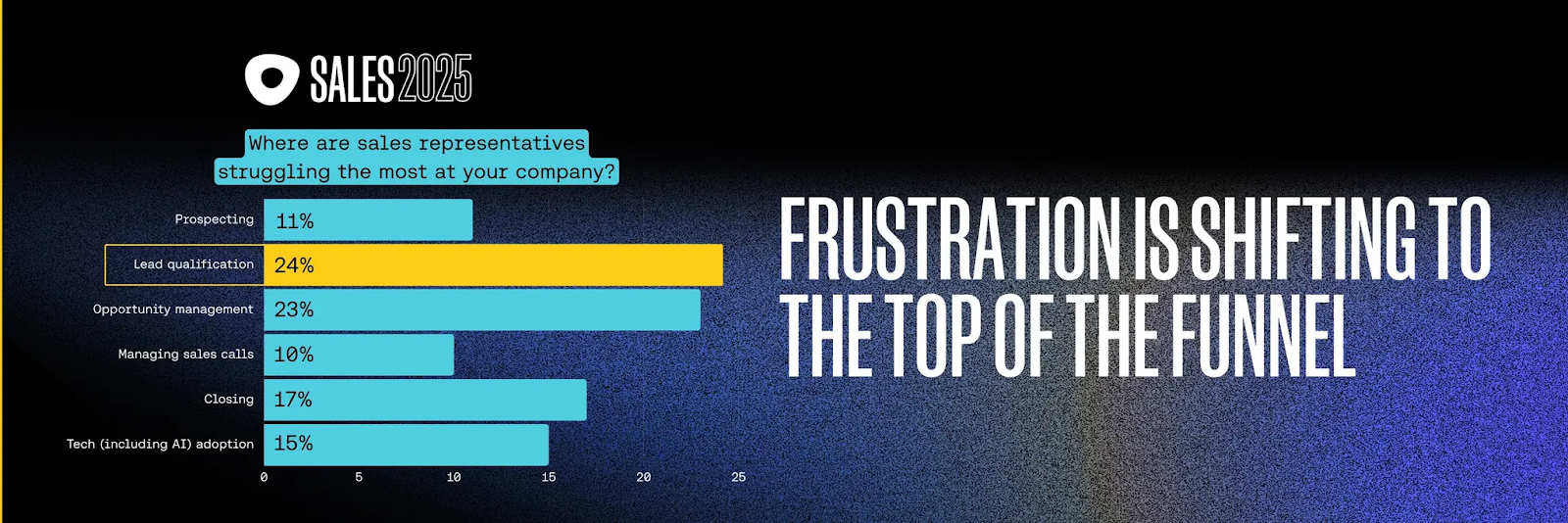
Owing to such a time crunch, sales teams were more concerned about deal execution—navigating opportunities and managing calls. According to our latest survey data, lead qualification is now the #1 challenge for sellers. Many sellers are struggling to understand which leads are worth chasing.
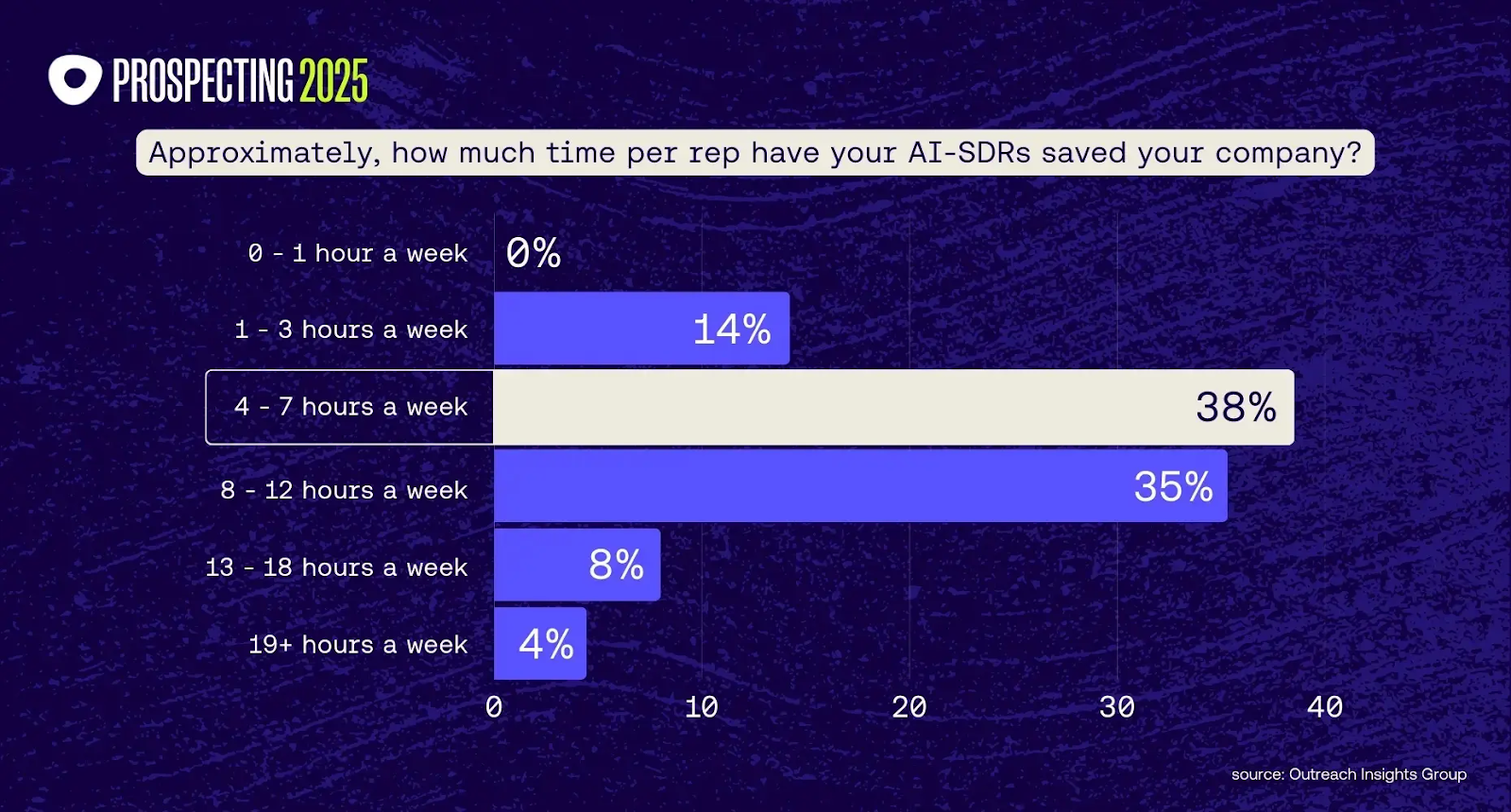
In Outreach’s Prospecting 2025 report, sellers who used AI-powered SDRs described them in the most compelling terms: “effective, time-saving, and pipeline-generating.” AI SDRs offer a speed-to-lead advantage that helps with lead qualification, handles self-service channels and makes quick handovers to sellers.
In fact, 100% of sales team reports saving more than one hour per week, and nearly 40% saved 4–7 hours per week with an AI assist. Whether it's cleaner prospecting, faster research or more effective outreach, the upside is clear.
Another Squarespace report says, 27% of polled sales leaders agreed to permanently shifting field sellers to virtual sellers.” In a recent report (The Future of Sales), Gartner estimates that by 2025, 80% of B2B Sales interactions between vendors and buyers will take place in digital channels, largely due to buyer preference.
The shift toward hybrid sales models is accelerating, blending digital and in-person interactions to improve efficiency and engagement. Such hybrid teams have demonstrated up to 57% higher revenue growth than traditional human-to-human sales models.
If you're wondering whether your sales team needs a conversational AI tool, ask these questions yourself:
If your answers are mostly yes, conversational AI will be a valuable asset for your sales team.
As we here at Retell AI continue to develop and implement conversational AI solutions, we’re seeing firsthand the impact it can have on sales performance and customer satisfaction.
Conversational AI offers a transformative edge for sales teams to take their sales and marketing efforts including outbound outreach via AI telemarketing to a whole new level. Here are some of the standout benefits:
According to Pipedrive’s State of Sales report, 51% of sales professionals are struggling with lead generation. This is despite the fact that many have said prospecting is their second-most time-consuming activity.
Why? Because many sellers are struggling to figure out which leads are worth chasing. With the growing amount of inbound leads and sellers are now stuck doing detective work just to figure out who’s a real buyer.
With conversational AI, prospects don’t need to wait hours or days for a human rep to follow up; conversational AI engages them and qualifies them in real time.
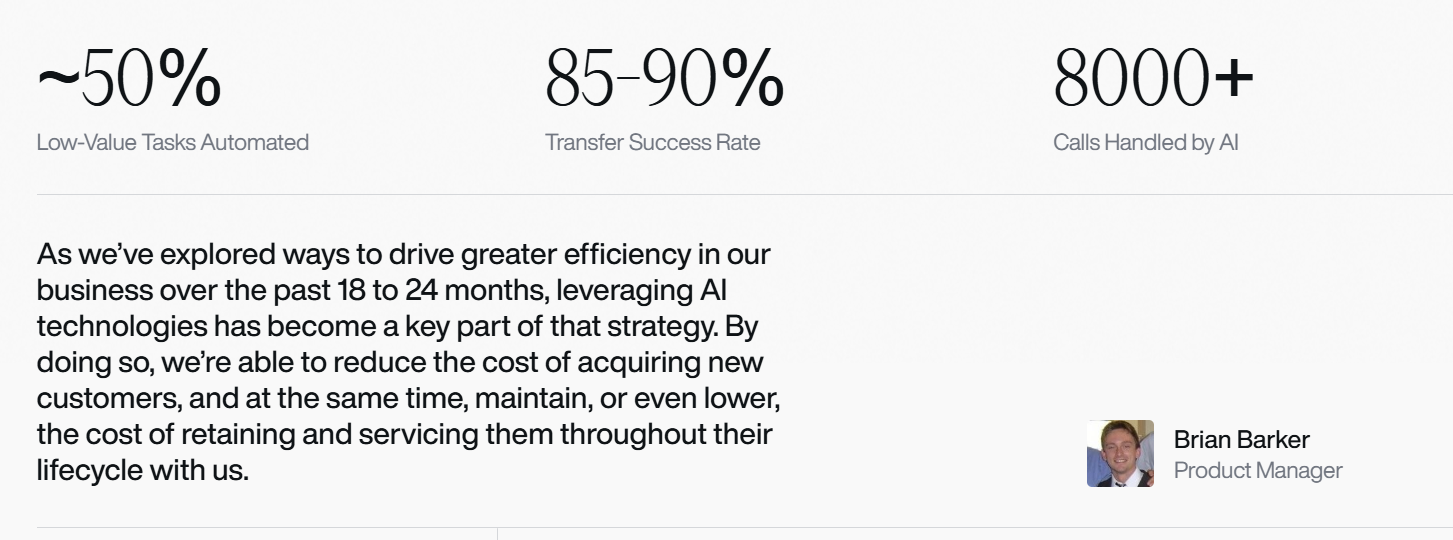
Brian Barker, product manager at Matic, a digital insurance agency, shares how Retell AI helped his team:
Scaling customer interaction is often a challenge, but conversational AI makes it effortless. While humans struggle to keep demand, conversational AI can handle thousands of interactions simultaneously, delivering consistent and high-quality responses.
Data from leading conversational AI vendors shows that agent interactions can surge by up to 250% during peak periods across industries, without any decline in service quality.
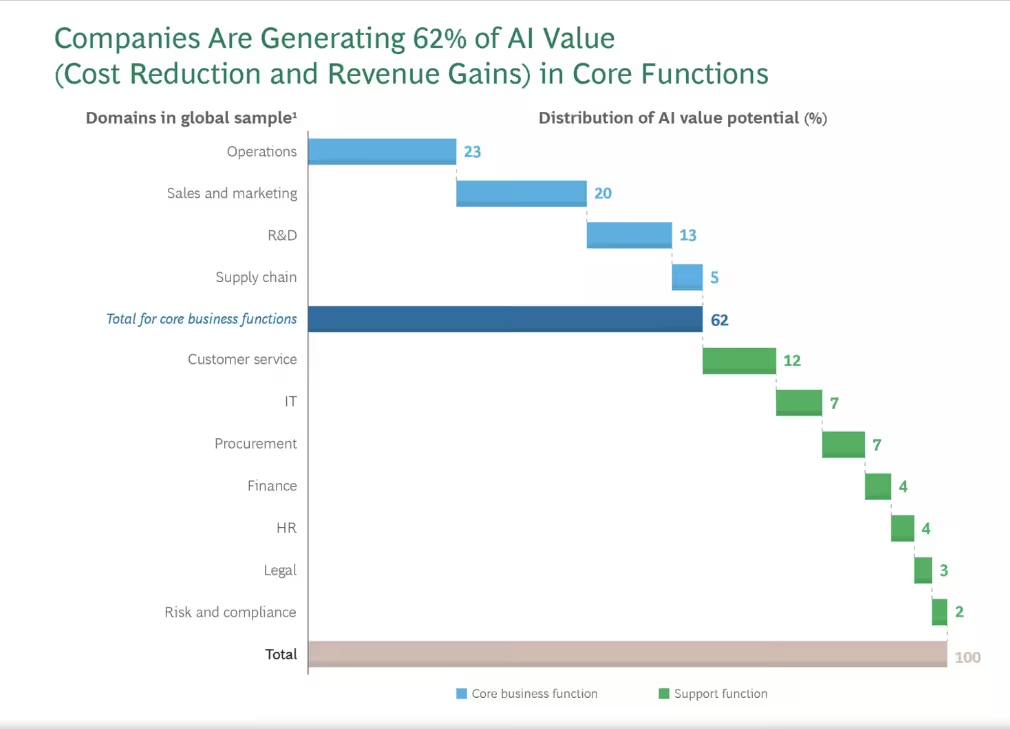
Also, a BCG report highlights that 62% of AI-driven value is created within core business functions, with sales and marketing emerging as the second-largest contributor.
Most sales reps are CRM babysitters. The average reps spend only 28% of their time selling. Modern B2B sales tools automate the admin so reps can focus on selling.
The rest 72% of their time goes into updating the CRM, taking notes, and administering non-selling activities that slow them down.
Conversational agents handle some of your agents’ administrative workload. Automating meeting scheduling and CRM data entry frees sales reps from manual work, making the entire team more productive and effective.
For instance, a virtual assistant integrated with sales management software can automatically update CRM records, send timely reminders, and coordinate sales meetings, keeping workflows smooth and boosting overall productivity.
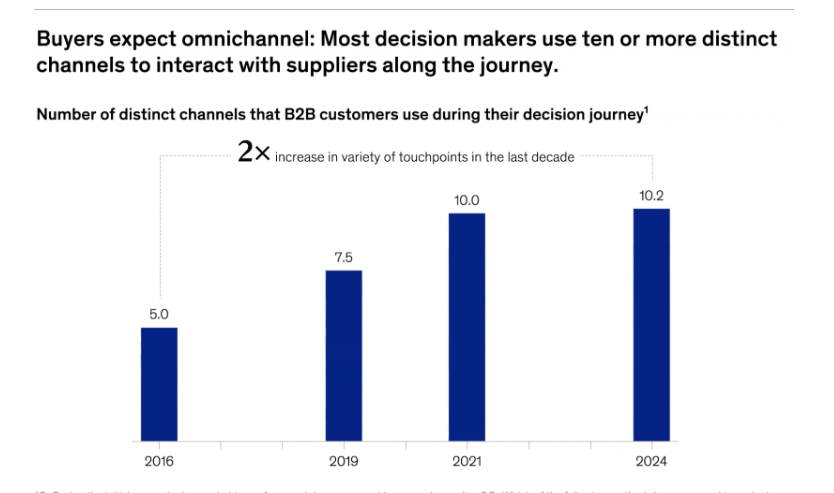
McKinsey’s 2024 Pulse Survey found that B2B customers use an average of 10 channels throughout their buying journey, with over half of respondents expecting a seamless omnichannel experience that lets them move effortlessly between channels.
One key driver behind the rapid adoption of AI SDRs is their ability to handle multi-turn conversations. These agents can remember past interactions with prospects and use that context to move conversations forward.
In contrast, repetitive qualification calls with human sellers are often inefficient and can frustrate buyers, who may see them as a poor use of their valuable time.
What if your sales team could double its efficiency without adding a single new member? That’s exactly what conversational AI makes possible. It qualifies leads with personalized interactions, engages prospects like a human and offers round-the-clock support while keeping the tone friendly and consistent.
Let’s dive into how conversational AI helps sellers across the sales funnel:
According to MarketingSherpa, only 27% of leads are sales-ready when they first enter the pipeline, meaning nearly three-quarters of the leads that companies throw over the fence to sales teams are unqualified duds that go nowhere.
Lead qualification is the process of identifying whether a prospect aligns with your ideal customer profile and is ready to engage with your sales team.
When a lead engages through your voicebot or chatbot, the AI qualifies them based on their engagement behaviour, response timing, and sentiment. A real estate company using Retell AI saw an increase in 20-30 demos booked weekly via AI.
Moreover, the Retell AI agent qualifies leads, shares a Calendly link and guides them step-by-step to book a live demo with the sales team. Saving time on unqualified prospects.
This is a task that conversational AI agents easily automate. Every minute spent double-checking calendars or chasing confirmations is a minute lost to revenue growth.
A Juniper Research Study estimates businesses lose over $8 billion annually due to inefficient customer service processes, with scheduling bottlenecks as a major contributor.
Conversational AI is redefining what scheduling can do. Unlike traditional bots, Retell AI uses dual RAG + Knowledge Graph technology to understand conversation context and execute multi-step workflows autonomously.
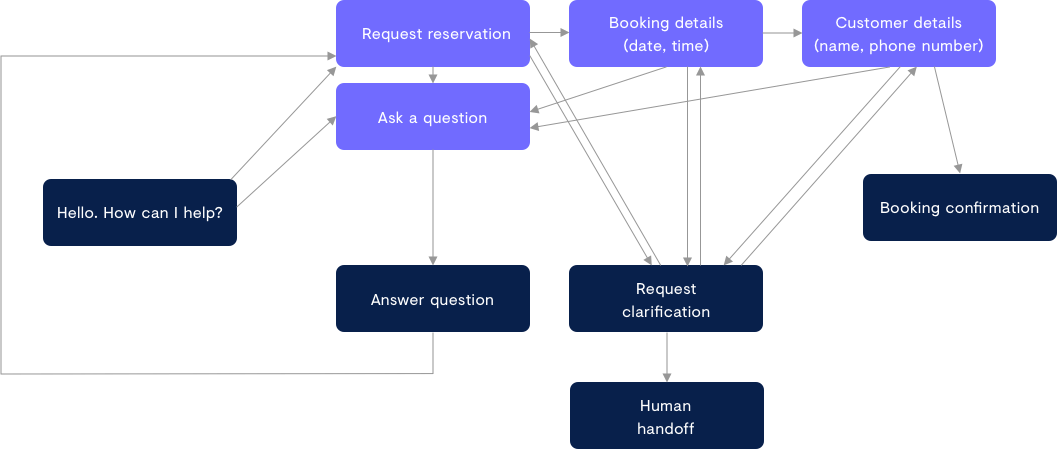
The following diagram shows a simplified version of the potential customer journeys through the reservation flow.
Powered by advanced NLP and real-time integrations, AI booking agents now:
For instance, a real estate firm streamlined its booking process by implementing an AI agent that automatically schedules property viewings, manages time-zone availability, and collects deposits through Stripe—without any human involvement.
In the early days of call center automation technology, summarization tools were designed to relieve agents of manual note-taking. However, these tools were limited:
The rise of AI-driven text summarization, or automatic summarization, was a major turning point. For businesses implementing AI voice agents, transcription serves as the connecting bridge between spoken conversations and meaningful business actions.
Retell’s high-quality live transcription works in the following way:
A B2B insurance provider uses Retell AI to transcribe every incoming claims call. Each transcript is automatically categorized by claim type, such as auto, home, or health, and synced to the CRM, reducing downstream case processing time by 40%.
One of the biggest challenges for sales leaders is getting their team to sell like stars. However, with numerous other responsibilities and expectations placed on them, many leaders are succumbing to stress and burnout.
However, AI aims to ensure efficient, unsupervised training with personalized simulations. Here are some of the use cases to consider:
Becoming skilled in sales demands perpetual refinement. Conversational AI helps replicate real-world sales scenarios through phone calls or virtual meetings. It gives sales professionals a dedicated platform to practice and refine their skills, supported by instant, actionable feedback.
In sales, product knowledge is essential, but anticipating every possible client question is difficult.
In these situations, a conversational AI trained on product details can support reps with real-time, tailored guidance. It doesn’t just provide answers, it continuously learns from each interaction to deliver even better support over time.
Traditional sales training models are not one-size-fits-all, as they do not always meet the varied needs of the sales team.
In contrast, conversational AI delivers personalized training by analyzing each salesperson’s strengths and gaps, tailoring learning for maximum impact. Integrated with CRM data and fundamental client interactions.
By syncing with CRM systems and evaluating real-world client interactions, this AI pinpoints specific areas of improvement in each individual.
When it comes to sales, it's all about follow-ups.
On average, only 2% sales are made during the first point of contact. That means if you don’t follow up, you’re missing out on potentially 98% of your sales. That’s no small amount.
Conversational AI tools like Retell can handle follow-ups efficiently without manual effort. Plus, these calls are personalized, so people don’t feel they’re starting from scratch.
Here’s how voice agents personalize follow-ups:
A B2B SaaS company uses Retell AI to follow up with free trial users, with the AI voice agent personalizing each call by referencing the prospect’s company name, product tier, and usage history. It then offers to schedule time with a sales representative, driving 3× higher conversions compared to generic call scripts.
A sales team spends a vast majority of their time updating CRMs. However, with conversational AI, CRM records get updated automatically. This not only saves time but also keeps CRM data more accurate. Every information, like pain points, deal stages, etc., gets updated in real time.
This removes the burden of accuracy from sales agents. Instead, they’re focused on what moves the needle, whether that involves discussing next steps or spreading out questions on a sales call.
When evaluating conversational AI vendors, sales leaders must look beyond flashy demos and generic automation promises to capabilities such as AI IVR that drive efficient call handling.
The right platform should directly impact pipeline velocity, lead quality, seller productivity, and buyer experience, especially in high-intent moments like inbound inquiries, qualification, demo scheduling, and follow-ups.
| Features | Why it matters | Look for a conversational AI vendor that offers |
|---|---|---|
| Language Understanding, Conversation Quality, and Personalization | If the AI misunderstands buyer intent or sounds robotic, prospects disengage—or worse, lose trust before a human ever enters the conversation. |
|
| Deep Integrations with CRM, Marketing Automation, and Sales Tools | Sales AI only drives revenue when it can move deals forward, not just talk. |
|
| Orchestration, Handoff, and Seller Enablement | Sales conversations are rarely linear. The AI must know when to persist, and when to escalate. |
|
| Security, Privacy, and Compliance | Sales conversations involve sensitive commercial data, pricing discussions, and customer intelligence. |
|
| Analytics, Revenue Insights, and Optimization Loops | Sales AI should make performance visible, not opaque. |
|
Conversational AI has redefined what’s possible in sales, enabling sales teams to streamline operations, deliver personalized interactions and scale efficiently. However, challenges like system integration, data security, and user adoption often hinder progress.
Retell AI solves these challenges effortlessly. With industry-specific expertise, multilingual capabilities and seamless integration, Retell empowers sales teams to achieve game-changing results–70% automation, reduced costs, and improved customer loyalty.
Conversational AI has redefined what’s possible in sales, enabling sales teams to streamline operations, deliver personalized interactions and scale efficiently. However, challenges like system integration, data security, and user adoption often hinder progress. Schedule a personalized demo to see our AI voice agents in action and learn how they integrate with your existing systems.
Conversational AI in sales refers to AI-powered chatbots and voice agents that engage prospects through natural, human-like conversations across channels such as chat, email, SMS, and voice. These systems help sales teams qualify leads, answer questions, book meetings, follow up with prospects, and update CRM records automatically.
No. Conversational AI is designed to augment, not replace, sales reps. It handles repetitive, time-consuming tasks like qualification, scheduling, and follow-ups so human sellers can focus on high-value conversations, deal strategy, and closing.
Conversational AI qualifies leads by analyzing responses, intent, engagement patterns, sentiment, and predefined criteria such as budget, use case, or readiness to buy. This ensures sales teams only spend time on leads that match their ideal customer profile.
Absolutely. Conversational AI is especially effective in B2B sales environments with long sales cycles, complex products, and high lead volumes. It helps manage omnichannel conversations, reduces SDR workload, and improves pipeline efficiency.
Enterprise-grade conversational AI platforms like Retell AI offer end-to-end encryption, audit logs, and compliance with standards like GDPR, SOC 2, and ISO 27001, making them suitable for handling sensitive pricing and commercial discussions.
See how much your business could save by switching to AI-powered voice agents.
Total Human Agent Cost
AI Agent Cost
Estimated Savings
A Demo Phone Number From Retell Clinic Office