Beste Sprachagenten für Callcenter im Jahr 2026
17
MIN READ
August 11, 2026
Wenn Sie nach Sprachagenten suchen, die für Callcenter entwickelt wurden, werden Sie schnell bemerken, wie überfüllt der Markt geworden ist. Fast jeder Anbieter behauptet, natürlich klingende Gespräche, sofortige Automatisierung und niedrigere Betriebskosten zu liefern. In der Realität kämpfen viele Callcenter noch immer mit Anrufabbrüchen, spürbaren Verzögerungen, unflexiblen IVR-Systemen und unzuverlässigen Weiterleitungen. Latenzprobleme, mangelhafte Eskalationslogik und starre Anrufabläufe sorgen weiterhin für Reibung – sowohl bei Kunden als auch bei Frontline-Teams.
Auf diese Lücke stieß ich, als ich Sprachagenten bewertete, die für den echten Callcenter-Betrieb gedacht sind – nicht für einstudierte Demos oder kontrollierte Testumgebungen. Die hier untersuchten Plattformen wurden auf realen Telefonleitungen bewertet, im Umgang mit tatsächlichem eingehendem und ausgehendem Verkehr. Der Fokus lag darauf, wie sich diese Systeme verhalten, sobald das Volumen steigt und reale Grenzfälle auftreten.
Dieser Leitfaden schlüsselt die Sprachagenten-Plattformen auf, die für moderne Callcenter wirklich relevant sind. Lösungen wie die Retell AI sind Teil dieser praxisnahen Bewertung, nicht bloß theoretische Beispiele.
Eine Sprach-KI-Plattform ist Software, die es Callcentern ermöglicht, KI-gestützte Sprachagenten zu entwerfen, bereitzustellen und zu betreiben, die Live-Telefongespräche skalierbar abwickeln. Diese Plattformen setzen direkt auf Telefonie-Systemen auf und sind verantwortlich für das Annehmen von Anrufen, das Verstehen gesprochener Sprache, das Reagieren in Echtzeit und das Ausführen von Aktionen über CRMs und interne Tools hinweg.
Sprach-KI-Plattformen werden oft im selben Atemzug mit Chatbots und breiteren konversationellen KI-Plattformen genannt, unterliegen aber ganz anderen Rahmenbedingungen. Chatbots existieren in Textumgebungen, in denen Pausen, Wiederholungen und strukturiertes Turn-Taking akzeptabel sind. Telefongespräche sind weit weniger nachsichtig. Anrufer unterbrechen, reden über den Agenten hinweg, wechseln mitten im Satz das Thema und erwarten sofortige Antworten. Konversationelle KI-Plattformen, die primär für Text gebaut wurden, tun sich oft schwer, wenn sie auf Live-Sprache ausgeweitet werden.
Sprach-KI-Plattformen unterscheiden sich auch von klassischen IVR-Systemen. Herkömmliche IVRs setzen auf Tasteneingaben und starre Menübäume. Sie können zwar Anrufe weiterleiten, versagen aber, wenn Anrufer Probleme in eigenen Worten schildern oder von vorgegebenen Pfaden abweichen. Sprach-KI-Plattformen ersetzen statische Menüs durch konversationelle Logik. In Callcenter-Umgebungen wird dieser Wandel häufig als Übergang von klassischem IVR zu KI-IVR beschrieben, bei dem Anrufer natürlich sprechen, statt feste Optionen zu durchlaufen.
Moderne Sprach-KI-Plattformen vereinen mehrere technische Schichten in einem einzigen operativen Stack, der auf einer Voice-First-KI-Architektur aufbaut. Dazu gehören typischerweise Large Language Models für die Intent-Verarbeitung, Speech-to-Text für die Transkription, Text-to-Speech für die Sprachausgabe, Telefonie-Infrastruktur für die Anrufsteuerung und Orchestrierungsschichten, die Routing und Integrationen verwalten.
Zu den Kernfunktionen gehören in der Regel:
Ich habe dies als Review behandelt, nicht als zufällige Werkzeugliste. Jede Sprach-KI-Plattform wurde anhand einiger weniger Kriterien bewertet, die im täglichen Callcenter-Betrieb zählen.
Ich habe praktische Tests, Anbieterdokumentation und Feedback von Drittanbietern aus Quellen wie G2 und Gartner Peer Insights kombiniert.
Das Ziel ist zu zeigen, wie diese Plattformen im realen Einsatz abschneiden, und nicht nur, wie sie in einer Produktdemo erscheinen.
Nachfolgend finden Sie eine Momentaufnahme der 9 besten Sprach-KI- und Sprachagenten-Plattformen, die wirklich für den Callcenter-Einsatz gebaut sind – nicht für Demos. Jeder Eintrag enthält eine objektive Bewertung, die Art des Callcenter-Einsatzes, für den er sich am besten eignet, warum er einen Platz auf dieser Liste verdient, und einen Einstiegspreis basierend auf öffentlich verfügbaren Preisen.
| Plattform | Bewertung | Am besten für | Warum sie es auf die Liste geschafft hat | Preise |
|---|---|---|---|---|
| Retell AI | G2: 4,8 / 5 | Insgesamt am besten für Live-Sprachagenten in Callcentern | Für den Produktivbetrieb von Sprache gebaut, starker Telefonie-Stack, transparente Preise pro Minute und Compliance-Fokus | Nutzungsbasierte Abrechnung ab $0.07/Min. Sprache + $0.002/Nachricht Chat |
| Vapi AI | G2: ~4,2 / 5 | Entwicklerzentrierte, benutzerdefinierte Sprachagenten | Tiefe API-Kontrolle und modularer Sprach-Stack für hochgradig maßgeschneiderte Bereitstellungen | Nutzungsbasiert ab ~$0.05/Min. Plattformgebühr; effektiv $0.13–$0.33+/Min. gesamt |
| Synthflow | G2: ~4,5 / 5* | Visuelle, No-Code-Gestaltung von Sprach-Workflows | No-Code-Builder und gute grundlegende Anrufbearbeitung für kleine Teams | Nutzungsbasierte Abrechnung, etwa $0.15 bis $0.24/Min. all-in; Enterprise ab 10.000 Min./Monat |
| Cognigy AI (NICE) | G2: ~4,6 / 5 | Enterprise-Contact-Center-Automatisierung (NICE CXone-Ökosystem) | 2025 von NICE übernommen; ausgereifte Plattform mit tiefer CXone-Integration und CCaaS-Fokus | Enterprise-Verträge über den Vertrieb (individuelle Preise) |
| Kore.ai | G2: ~4,7 / 5 | Strukturierte Enterprise-Automatisierung | Starke Governance und Intent-Verarbeitung über Kanäle hinweg | Vertragsbasierte Enterprise-Pläne (individuell) |
| Google Dialogflow CX (Conversational Agents) | G2: ~4,4 / 5 | Technisch versierte Teams auf Google Cloud | Jetzt Teil der einheitlichen Conversational-Agents-Plattform; robustes NLU und Flow-Steuerung | Sprache etwa $0.06/Min. (Flows) bis $0.12/Min. (Playbooks) |
| Amazon Lex | G2: ~4,2 / 5 | Entwicklerteams auf AWS, die Sprach-Apps bauen | Integriert mit AWS-Tools, granulare Kontrolle | Nutzungsbasierte Abrechnung pro Anfrage (~$0.004 pro Sprachanfrage) |
| Talkdesk | G2: ~4,4 / 5 | Callcenter, die KI-Routing und Bots hinzufügen | Starke Contact-Center-Integration und Reporting | Ab $85/Nutzer/Monat (nur digital); Sprache ab $105; Omnichannel ab $165. KI-Funktionen sind kostenpflichtige Add-ons. |
| Twilio Voice + AI Stack | G2: ~4,4 / 5 | Programmierbare Sprache und Telefonie | Äußerst zuverlässige Telefonie-Infrastruktur für benutzerdefinierte Agenten | Nutzungsbasierte Abrechnung etwa $0.0085 bis $0.014/Min. Anrufe + $0.07/Min. ConversationRelay für die KI-Schicht |
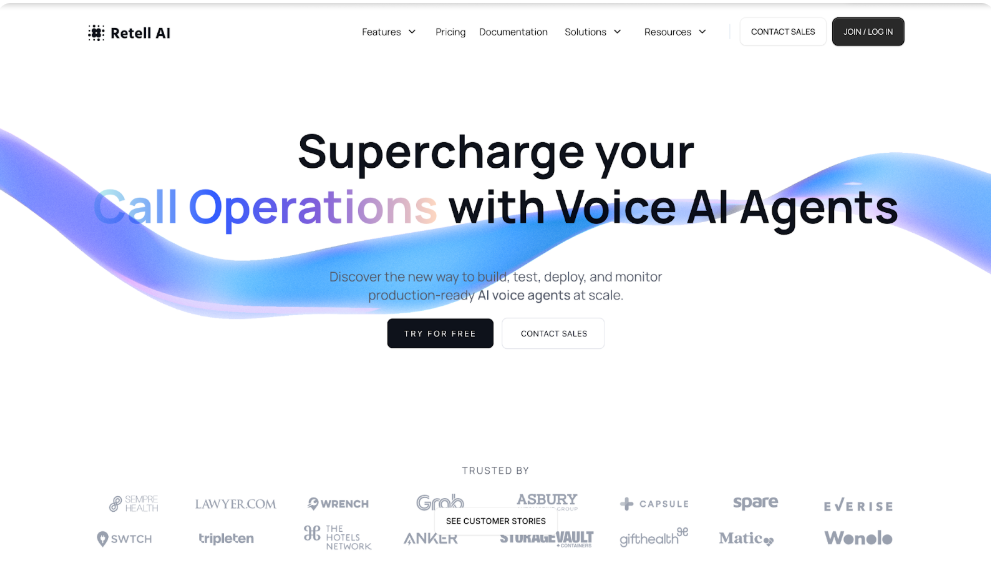
Die Retell AI steht ganz oben auf meiner Liste der sprachgeführten KI-Plattformen, die speziell für Callcenter und telefonbasierte Abläufe gebaut wurden. Sie ist rund um KI-Sprachagenten konzipiert, die echte eingehende und ausgehende Anrufe skalierbar abwickeln, ohne den Gesprächsfluss zu verlieren oder robotisch zu klingen. Die Plattform wird primär von Contact Centern, Support-Teams und Vertriebsabläufen genutzt, die auf konversationelle KI für den Vertrieb setzen und den Großteil ihres Tages mit Live-Telefonanrufen verbringen.
Sie gestalten Agenten mit einem visuellen Builder, verbinden strukturierte oder unstrukturierte Wissensquellen, testen Grenzfälle über Simulationstools und stellen sie über Telefonanrufe, Web-Anrufe, SMS und Chat hinweg bereit. Ein einheitliches Dashboard für Anrufverlauf und Analysen deckt alle Interaktionen ab, was den operativen Aufwand bei der Verwaltung von Sprachagenten im Produktivbetrieb reduziert.
Bei der Telefonie-Schicht setzt sich die Retell AI klar an die Spitze. Sie unterstützt KI-gestützte IVR-Navigation, SIP-Trunking zum Beibehalten bestehender Telefonnummern oder VOIP-Anbieter, Batch-Anrufe für Outbound-Kampagnen, betreute Weiterleitungen, gebrandete Anrufer-ID und verifizierte Telefonnummern zur Reduzierung von Spam-Kennzeichnungen. Diese Funktionen sind in realen Callcenter-Umgebungen entscheidend, in denen Routing, Übergabe und Zustellbarkeit die Ergebnisse direkt beeinflussen.
Sicherheit und Zuverlässigkeit werden als Kernanforderungen behandelt. Die Retell AI ist SOC 2-, HIPAA- und GDPR-konform, unterstützt mehr als 18 Sprachen und ist darauf ausgelegt, hohe Nebenläufigkeit mit durchgängig niedriger Latenz zu bewältigen. Das macht sie für regulierte Branchen wie das Gesundheitswesen und Finanzdienstleistungen geeignet, ebenso wie für große Enterprise-Contact-Center mit anhaltendem Anrufvolumen.
Was sie gut macht
Wo sie zu kurz kommt
Testnotizen
In den Tests erzielte die Retell AI durchgängig die höchsten Werte bei Anrufqualität, Latenz und Telefonie-Zuverlässigkeit. Sie verhält sich eher wie ein KI-gestütztes Callcenter-Rückgrat als wie ein auf Sprache ausgeweiteter Chatbot, was sie zu einer starken Option macht, wenn Telefonwarteschlangen der wichtigste operative Engpass sind.
Wer sie nutzen sollte
Mittelgroße bis große Contact Center, Support-Teams und Vertriebsabläufe, die zuverlässige, konforme Sprachautomatisierung in skalierbarer Form benötigen.
Wer sie meiden sollte
Teams, die nur einen leichtgewichtigen Website-Chatbot oder Marketing-Assistenten ohne echten Bedarf an Telefonautomatisierung benötigen.
G2-Bewertung und Nutzerfeedback
G2-Bewertung: 4,8 / 5
Nutzer heben durchgängig Anrufqualität, Leistungsstabilität und Produktionsreife hervor.
Überlegungen zu Preisen & Skalierung
Die Retell AI nutzt nutzungsbasierte Preise ab $0.07/Min. für die Sprach-Engine, ohne Plattformgebühr. Die LLM-Kosten liegen je nach Modellwahl zwischen $0.003 und $0.08/Min., und die Twilio-Telefonie fügt etwa $0.015/Min. hinzu. Realistische All-in-Kosten für Standard-Setups liegen zwischen $0.08 und $0.15/Min. KI-Chat startet ab $0.002 pro Nachricht. Jedes Konto erhält bei der Anmeldung $10 an Gratisguthaben und 20 gleichzeitige Anrufe inklusive. Bei höheren Volumina skalieren minutenbasierte Preise vorhersehbar, aber große Contact Center sollten dennoch die erwartete Nebenläufigkeit und Anrufdauer modellieren, um die Kosten zu steuern. Vollständige Preisaufschlüsselung ansehen.
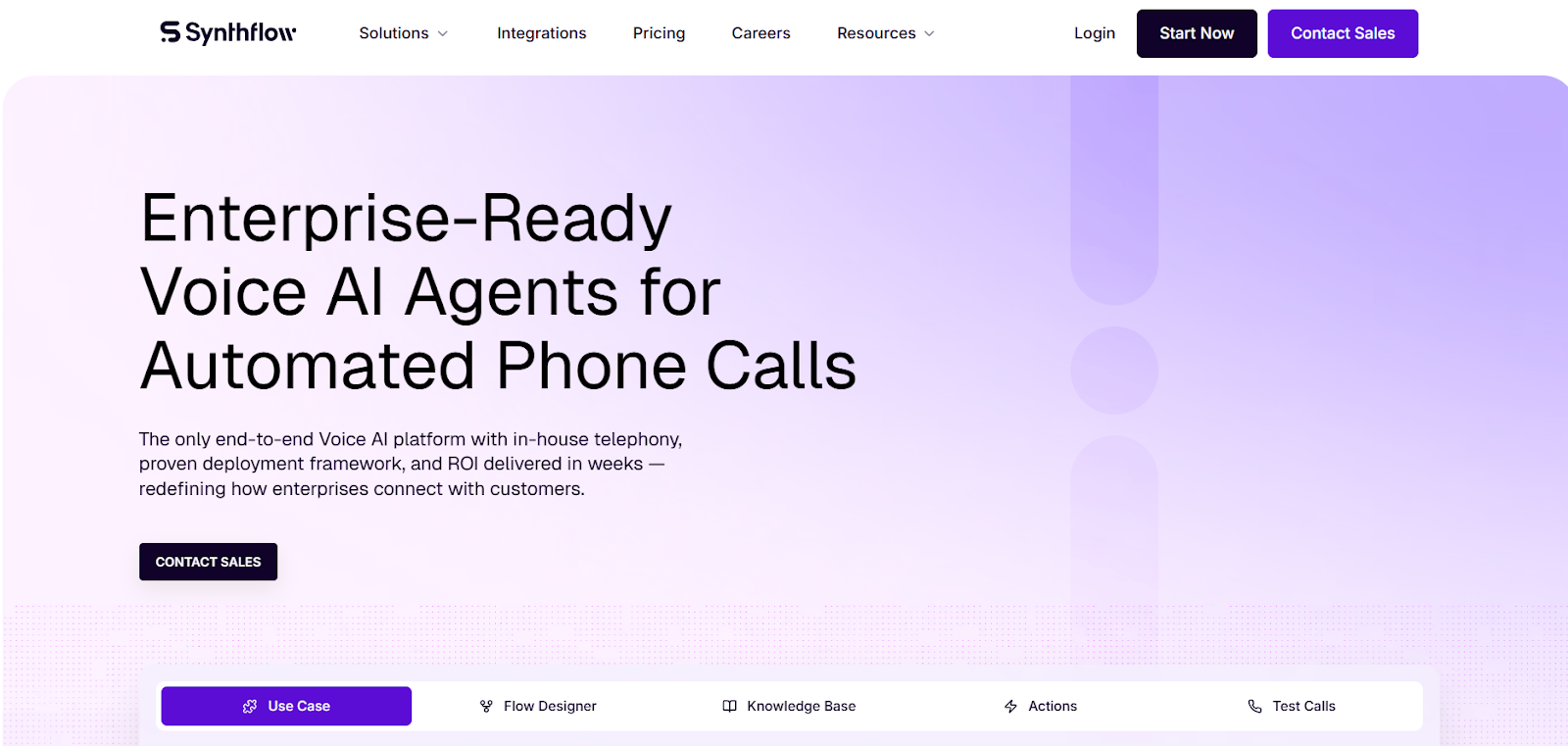
Synthflow ist eine No-Code-Sprach-KI-Plattform, die für Teams konzipiert ist, die KI-Telefonagenten schnell starten möchten, ohne umfangreiche technische Beteiligung. Sie wird primär von KMU, Agenturen und nicht-technischen Teams genutzt, die Bereitstellungsgeschwindigkeit über tiefe Telefonie-Anpassung stellen.
Sie gestalten Anrufabläufe in einem visuellen Editor, verbinden CRMs und Kalender und stellen Agenten für die Bearbeitung von eingehendem Support, ausgehender Ansprache und Terminplanung bereit. Synthflow unterstützt auch White-Label- und Sub-Account-Setups, was es für Agenturen attraktiv macht, die KI-Sprachagenten unter eigener Marke weiterverkaufen.
Was sie gut macht
Wo sie zu kurz kommt
Testnotizen
In Tests und Review-Analysen schnitt Synthflow am besten ab, wenn Geschwindigkeit wichtiger war als Anpassung. Teams konnten einfache KI-Empfangskräfte oder Outbound-Agenten schnell starten, aber die Bearbeitung von Gesprächen außerhalb des Skripts erforderte zusätzliche Prompt-Arbeit und höherwertige Pläne.
Wer sie nutzen sollte
KMU und Agenturen, die konversationelle KI-Agenten schnell bereitstellen möchten, ohne benutzerdefinierte Infrastruktur aufzubauen.
Wer sie meiden sollte
Unternehmen, die strenge SLAs, fortschrittliches Routing oder tiefe Telefonie-Kontrolle benötigen.
G2-Bewertung und Nutzerfeedback
G2-Bewertung: ~4,5 / 5
Nutzer loben häufig die Benutzerfreundlichkeit und schnelle Einrichtung, weisen aber auf Kostenbedenken bei Skalierung hin.
Überlegungen zu Preisen & Skalierung
Synthflow ist zu einem nutzungsbasierten Modell ohne feste Monatsgebühr übergegangen. Die Sprach-Engine kostet $0.09/Min., wobei die LLM-Nutzung $0.02 bis $0.05/Min. und die von Synthflow verwaltete Telefonie $0.02/Min. hinzufügt. Die meisten Setups landen je nach LLM- und Telefonie-Wahl zwischen $0.15 und $0.24 pro Minute. Der PAYG-Plan umfasst 5 gleichzeitige Anrufe (erweiterbar für $20 pro Slot pro Monat), unbegrenzte KI-Agenten und vollen API-Zugriff. Ein Enterprise-Plan ist für Organisationen mit mehr als 10.000 Minuten pro Monat verfügbar, mit individuellen Preisen und einem 99,99%-SLA.
3. Vapi AI
Vapi AI ist eine entwicklerorientierte Sprach-KI-Plattform, die für Teams gebaut wurde, die feingranulare Kontrolle über ihren Sprach-Stack wünschen. Sie wird primär von engineering-geführten Teams genutzt, die benutzerdefinierte Sprachagenten mit spezifischen technischen Anforderungen bauen, statt schlüsselfertige Lösungen zu nutzen.
Sie stellen Sprachagenten zusammen, indem Sie jede Schicht unabhängig konfigurieren, einschließlich Speech-to-Text, Text-to-Speech, Sprachmodellen und Telefonie-Anbietern. Dieser modulare Ansatz ermöglicht die Optimierung für Latenz, Sprachqualität oder Compliance-Routing, erhöht aber die Einrichtungskomplexität.
Was sie gut macht
Wo sie zu kurz kommt
Testnotizen
In den Tests zeigte Vapi starke Flexibilität, aber höhere Einrichtungsreibung. Anrufqualität und Latenz hingen stark von externen Anbietern ab, und die Verwaltung der Abrechnung über verschiedene Dienste hinweg erhöhte den operativen Aufwand.
Wer sie nutzen sollte
Engineering-lastige Teams, die hochgradig angepasste Sprachagenten mit spezifischen Infrastrukturanforderungen bauen.
Wer sie meiden sollte
Teams, die eine No-Code- oder einheitliche Sprach-KI-Plattform mit minimaler Einrichtung suchen.
G2-Bewertung und Nutzerfeedback
G2-Bewertung: ~4,2 / 5
Nutzer heben Flexibilität und Kontrolle hervor, führen aber häufig Kostenkomplexität und Einrichtungsaufwand an.
Überlegungen zu Preisen & Skalierung
Vapi AI erhebt eine Plattformgebühr ab etwa $0.05 pro Minute, mit zusätzlichen Kosten von STT-, TTS-, LLM- und Telefonie-Anbietern. Wenn das Anrufvolumen skaliert, führen die Abrechnung über mehrere Anbieter und variable Minutenkosten zu Prognose- und Betriebsrisiken.
Cognigy AI, das nach der rund 955 Millionen Dollar schweren Übernahme durch NICE im September 2025 nun als NICE Cognigy firmiert, ist eine konversationelle KI-Enterprise-Plattform, die speziell für große Contact Center mit komplexen Sprach- und digitalen Automatisierungsanforderungen gebaut wurde. Die Plattform integriert sich tief mit bestehender CCaaS-Infrastruktur, insbesondere NICE CXone, sowie Genesys, Avaya und Five9, und ist für Organisationen mit strukturierter Governance, Compliance-Anforderungen und mehrsprachiger Unterstützung konzipiert. Cognigy wird am häufigsten in regulierten Branchen eingesetzt, in denen Governance, Analysen und operative Kontrolle wichtiger sind als schnelles Experimentieren.
Sprachagenten werden mit Cognigys visuellem Flow-Builder gebaut, in dem Teams Intents, Aktionen und Dialogpfade definieren und diese dann mit Telefonie-Systemen, CRMs und CCaaS-Plattformen integrieren. Die Plattform unterstützt fortschrittliches Dialogmanagement, Agent-Assist-Szenarien und kontrollierte Übergaben an menschliche Agenten. Cognigy passt am besten, wenn Gespräche definierten Prozessen und Eskalationsregeln folgen statt offenem Dialog.
Was sie gut macht
Wo sie zu kurz kommt
Testnotizen
In Tests und Drittanbieter-Reviews fühlte sich Cognigy nach der Konfiguration stabil und vorhersehbar an. Strukturierte Anrufabläufe liefen zuverlässig in skalierbarer Form, aber Änderungen erforderten sorgfältige Planung und Tests. Die Plattform bevorzugt Konsistenz und Kontrolle gegenüber konversationeller Flexibilität.
Wer sie nutzen sollte
Große Enterprise-Contact-Center mit bestehender CCaaS-Infrastruktur, insbesondere solche auf oder in der Bewertung von NICE CXone, mit dedizierten Entwicklungsteams und mehrsprachigen Anforderungen.
Wer sie meiden sollte
Startups, KMU oder Teams, die schnelle Bereitstellung und leichtgewichtige Sprachautomatisierung ohne Enterprise-Overhead suchen.
G2-Bewertung und Nutzerfeedback
G2-Bewertung: ~4,6 / 5
Nutzer nennen häufig Enterprise-Reife, Stabilität und Contact-Center-Integrationen als zentrale Stärken.
Überlegungen zu Preisen & Skalierung
Cognigy AI nutzt vertragsbasierte Enterprise-Preise statt nutzungsbasierter Abrechnung. Öffentliche Benchmarks und Kundenberichte deuten darauf hin, dass die Einstiegspreise typischerweise bei etwa $2.000–$3.000 pro Monat beginnen, wobei vollständige Bereitstellungen je nach Anrufvolumen, aktivierten Modulen und Support-Stufen in sechsstellige Jahresverträge skalieren. Die Preise eignen sich am besten für Organisationen mit dedizierten CX-Budgets.

Kore.ai ist eine konversationelle KI-Enterprise-Plattform, die für Organisationen konzipiert ist, die strukturierte Automatisierung über Sprach- und digitale Kanäle hinweg in skalierbarer Form benötigen. Sie wird häufig von großen Contact Centern und IT-geführten Teams genutzt, die konversationelle Erlebnisse über Kundensupport, interne Helpdesks und transaktionale Workflows hinweg standardisieren möchten. Die Plattform legt Wert auf Governance, Analysen und operative Kontrolle statt auf Geschwindigkeit oder Experimentierung.
Sprachagenten werden mit Kore.ais Dialog-Builder gebaut, in dem Teams Intents, Workflows und Integrationen mit Telefonie-Systemen, CRMs und Backend-Diensten definieren. Kore.ai unterstützt sowohl Voice-Bots als auch Agent-Assist-Anwendungsfälle, sodass KI Routineinteraktionen abwickeln kann, während sie menschliche Agenten bei komplexeren Anrufen unterstützt. Es passt am besten, wenn konversationelle KI Teil einer breiteren Enterprise-CX- oder IT-Strategie ist.
Was sie gut macht
Wo sie zu kurz kommt
Testnotizen
In Tests und Reviews schnitt Kore.ai bei vordefinierten und halbstrukturierten Anrufabläufen zuverlässig ab. Sprachinteraktionen waren konsistent, und die Eskalation an menschliche Agenten funktionierte wie erwartet. Das Ändern von Live-Abläufen erforderte jedoch Koordination und Tests, was es besser für stabile Umgebungen geeignet macht.
Wer sie nutzen sollte
Große Unternehmen, die Konsistenz, Governance und Skalierbarkeit über Sprach- und digitale Automatisierung hinweg priorisieren.
Wer sie meiden sollte
Teams, die schnelle Bereitstellung, leichtgewichtige Sprachautomatisierung oder minimalen operativen Overhead suchen.
G2-Bewertung und Nutzerfeedback
G2-Bewertung: ~4,7 / 5
Nutzer heben oft Zuverlässigkeit, Enterprise-Integrationen und Skalierbarkeit hervor, weisen aber auf Komplexität als Kompromiss hin.
Überlegungen zu Preisen & Skalierung
Kore.ai nutzt individuelle Enterprise-Verträge für große Bereitstellungen, mit typischen Jahresverträgen ab etwa $300.000. Self-Service-Pläne "Essential" und "Advanced" reichen von $50 bis $180 pro Monat, haben aber im Vergleich zum vollständigen Enterprise-Angebot begrenzte Funktionen, Kanäle und Volumen. Die Abrechnung erfolgt sitzungsbasiert in 15-Minuten-Blöcken, was die Kosten unvorhersehbar machen kann. Die Gesamtbetriebskosten erreichen oft 150 bis 200% des angebotenen Softwarepreises im ersten Jahr, sobald Implementierung, Schulung, Sprachfähigkeiten und Anpassung eingerechnet werden.
Google Google Dialogflow CX, jetzt Teil der einheitlichen "Conversational Agents"-Plattform von Google innerhalb der breiteren Gemini Enterprise Agent Platform, ist zum Bau strukturierter, zustandsbehafteter Sprach- und Chat-Agenten innerhalb des Google-Cloud-Ökosystems konzipiert. Die eigenständige Dialogflow-CX-Konsole wurde im Oktober 2025 eingestellt, und Agenten werden nun innerhalb der integrierten Conversational-Agents-Konsole verwaltet.
Agenten werden mit einem zustandsbasierten visuellen Flow-Builder gestaltet, in dem Teams Intents, Routen und Fulfillment-Logik definieren. Dialogflow CX legt Wert auf Versionierung, Umgebungsverwaltung und Integration mit Google-Cloud-Diensten, was es für große Teams geeignet macht, die mehrere Agenten im Produktivbetrieb verwalten. Es funktioniert am besten, wenn Gespräche klar definierten Pfaden folgen und Backend-Systeme den Großteil der Logik übernehmen.
Was sie gut macht
Wo sie zu kurz kommt
Testnotizen
In Tests und Reviews schnitt Dialogflow CX bei strukturiertem Anruf-Routing und Intent-Verarbeitung zuverlässig ab. Die konversationelle Flexibilität war jedoch begrenzt, und Änderungen an Live-Agenten erforderten sorgfältige Tests, um Produktivabläufe nicht zu stören.
Wer sie nutzen sollte
Engineering-geführte Teams, die strukturierte Sprach- und Chat-Bots innerhalb von Google Cloud bauen.
Wer sie meiden sollte
Teams, die sich primär auf Telefonautomatisierung konzentrieren oder Voice-First-Konversationsflexibilität suchen.
G2-Bewertung und Nutzerfeedback
G2-Bewertung: ~4,4 / 5
Nutzer loben Skalierbarkeit und Kontrolle, führen aber häufig Komplexität und Einrichtungsaufwand an.
Überlegungen zu Preisen & Skalierung
Dialogflow CX nutzt nutzungsbasierte Preise. Sprachinteraktionen werden typischerweise zwischen $0.07 und $0.20 pro Minute abgerechnet, je nach Konfiguration und Region. Sobald Sprachdienste und Telefonie enthalten sind, landen die Jahreskosten für Produktivbereitstellungen häufig im Bereich von $10.000–$100.000+.
Amazon Lex ist ein konversationeller KI-Dienst, der für Organisationen konzipiert ist, die Sprach- und Chat-Schnittstellen innerhalb des AWS-Ökosystems bauen. Er wird primär von engineering-geführten Teams genutzt, die enge Integration mit AWS-Diensten, Kontrolle auf Infrastrukturebene und starke Sicherheits-Primitive wünschen. Lex ist nicht als schlüsselfertige Sprach-KI-Plattform positioniert, sondern eher als grundlegender Dienst zum Aufbau strukturierter konversationeller Workflows.
Sprachagenten in Amazon Lex werden rund um Intents, Slots und Fulfillment-Logik gebaut und dann mit Telefonie-Systemen, AWS-Lambda-Funktionen und Backend-Diensten verbunden. Dieses Design macht Lex gut geeignet für vorhersehbare, aufgabenorientierte Gespräche wie Kontoabfragen, Statusprüfungen und geführte Workflows. Es passt am besten, wenn konversationelle KI als Backend-Fähigkeit behandelt wird statt als produktgeführte Plattform.
Was sie gut macht
Wo sie zu kurz kommt
Testnotizen
In Tests und Drittanbieter-Reviews bewältigte Amazon Lex die strukturierte Intent-Erkennung nach korrekter Konfiguration zuverlässig. Die Verwaltung von Unterbrechungen, konversationellen Nuancen und Fallback-Logik erforderte jedoch erhebliche benutzerdefinierte Entwicklung. Sprachinteraktionen fühlten sich ohne umfangreiche Feinabstimmung funktional statt natürlich an.
Wer sie nutzen sollte
Engineering-Teams, die bereits in AWS investiert sind und strukturierte Sprach-Workflows in Anwendungen oder Contact-Center-Stacks einbetten möchten.
Wer sie meiden sollte
Nicht-technische Teams oder Organisationen, die schlüsselfertige KI-Sprachagenten mit minimaler Einrichtung suchen.
G2-Bewertung und Nutzerfeedback
G2-Bewertung: ~4,2 / 5
Nutzer loben häufig Skalierbarkeit und AWS-Integration, weisen aber auf Komplexität und Einrichtungsaufwand hin.
Überlegungen zu Preisen & Skalierung
Amazon Lex nutzt nutzungsbasierte Preise ab etwa $0.004 pro Sprachanfrage. Die Gesamtkosten steigen mit Sprachdiensten, Telefonie und AWS-Infrastruktur. In Produktivumgebungen liegen die Jahresausgaben je nach Anrufvolumen und Architektur häufig zwischen $20.000 und $150.000+.
Talkdesk ist eine Cloud-Contact-Center-Plattform, die KI-gestützte Sprachautomatisierung als Teil einer breiteren CX-Suite umfasst. Sie ist für Support-Organisationen konzipiert, die bestehende Callcenter-Workflows mit KI erweitern möchten, statt vollständig autonome Sprachagenten bereitzustellen. Talkdesk funktioniert am besten in Umgebungen, in denen menschliche Agenten zentral bleiben und KI beim Routing, bei der Ablenkung und bei Routineinteraktionen assistiert.
Voice-Bots werden innerhalb des Talkdesk-Ökosystems konfiguriert und mit IVR-Systemen, CRMs und Agenten-Workflows integriert. Die Plattform legt Wert auf Zuverlässigkeit, Reporting und reibungslose Agentenübergabe statt auf konversationelle Flexibilität. Sie passt gut für etablierte Contact Center, die operative Transparenz und Verfügbarkeit priorisieren.
Was sie gut macht
Wo sie zu kurz kommt
Testnotizen
In Tests und Reviews schnitt die Talkdesk-Sprachautomatisierung bei Anruf-Routing und grundlegenden Support-Szenarien zuverlässig ab. Die Eskalation an menschliche Agenten war reibungslos, und das Reporting war stark. Komplexere Dialogbearbeitung erforderte jedoch Umwege oder manuelles Eingreifen.
Wer sie nutzen sollte
Mittelgroße bis große Support-Organisationen, die bereits Talkdesk-Contact-Center betreiben.
Wer sie meiden sollte
Teams, die eigenständige, KI-First-Sprachagenten oder schnelle konversationelle Experimentierung suchen.
G2-Bewertung und Nutzerfeedback
G2-Bewertung: ~4,4 / 5
Nutzer heben Stabilität, CX-Tooling und Enterprise-Support hervor.
Überlegungen zu Preisen & Skalierung
Talkdesk nutzt Preise pro Agent pro Monat, typischerweise mit Dreijahresverträgen. CX Cloud Digital Essentials startet bei etwa $85 pro Agent pro Monat (nur digitale Kanäle, keine Sprache). CX Cloud Voice Essentials startet bei etwa $105 pro Agent pro Monat. Der Omnichannel-Plan CX Cloud Elite startet bei etwa $165 pro Agent pro Monat. Talkdesks KI-Funktionen, einschließlich Autopilot (virtueller Agent) und Copilot (Agent-Assist), sind kostenpflichtige Add-ons und nicht im Basispreis enthalten. Mit KI-Modulen und Telekom-Nutzung können die Gesamtkosten pro Agent $200 bis $300 pro Monat erreichen.
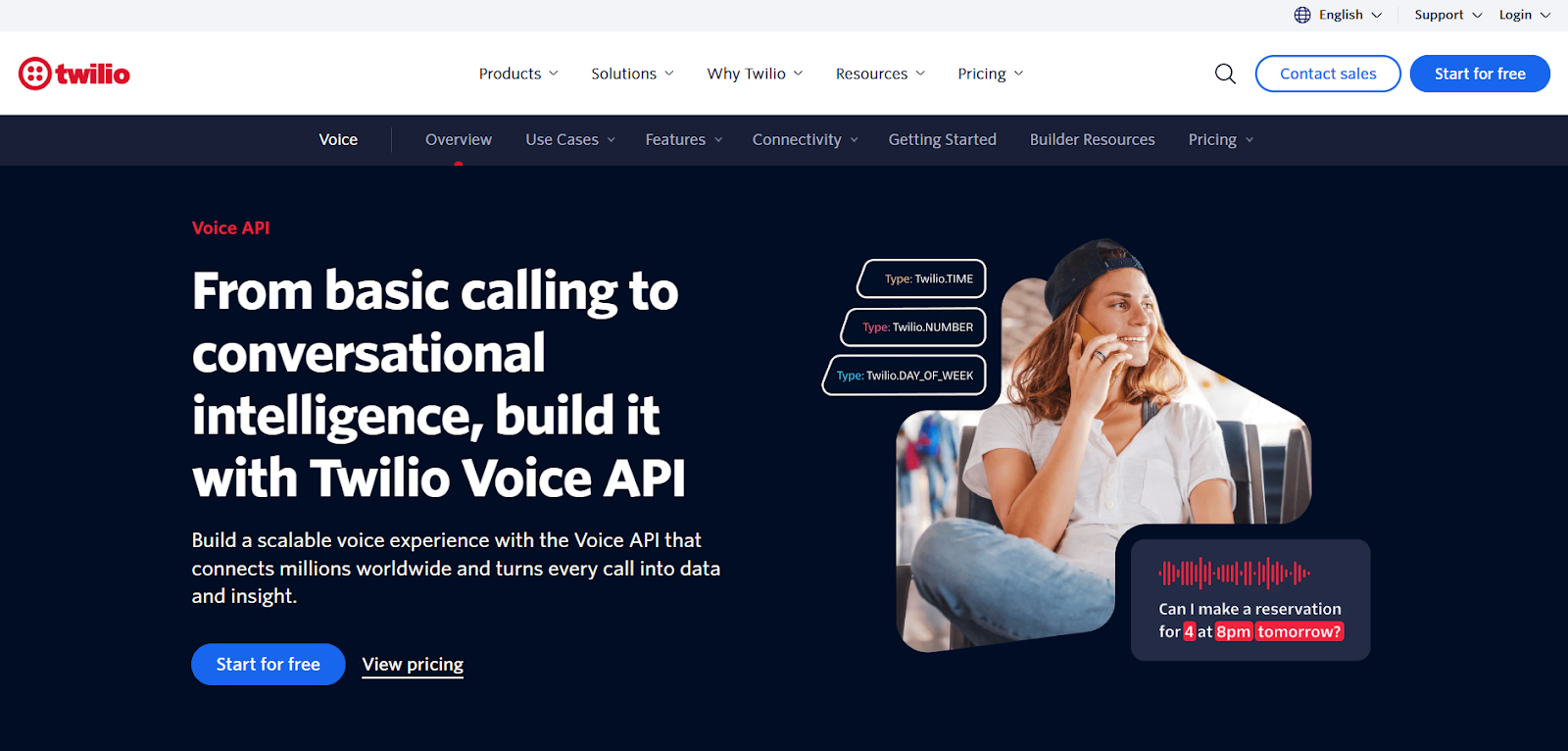
Twilios Voice- und AI-Stack ist ein entwicklerorientiertes Toolkit zum Bau benutzerdefinierter Sprach-KI-Systeme mit programmierbarer Telefonie, Sprachdiensten und Sprachmodellen von Drittanbietern. Es ist keine paketierte Sprach-KI-Plattform, sondern ein Satz von Bausteinen für Teams, die volle Kontrolle über Anrufabläufe, Infrastruktur und Integrationen wünschen.
Sprach-Erlebnisse werden mit Twilio Voice zusammengestellt, kombiniert mit Speech-to-Text, Text-to-Speech und externen LLMs. Dieser Ansatz bietet maximale Flexibilität, überträgt aber die Verantwortung für Orchestrierung, Zuverlässigkeit und Kostenmanagement vollständig auf das Team. Twilio passt am besten, wenn Sprach-KI als benutzerdefiniertes Produkt behandelt wird statt als schlüsselfertige Lösung.
Twilio hat seine KI-Sprachfähigkeiten 2025 und 2026 erheblich erweitert. ConversationRelay, jetzt allgemein verfügbar, ermöglicht Entwicklern, KI-Sprachagenten mit ausdrucksstarkem Tempo, Unterbrechungsbehandlung und LLM-Integration zu $0.07 pro Minute (getrennt von den Standard-Sprachanruf-Raten) zu bauen. Auf der SIGNAL 2026 stellte Twilio Conversation Memory, Conversation Orchestrator, Conversation Intelligence und Agent Connect vor, ein Open-Source-Framework zum Verbinden beliebiger KI-Agenten mit den Sprach- und Messaging-Kanälen von Twilio. Der Sprachumsatz erreichte im ersten Quartal 2026 sein höchstes Wachstum seit fast fünf Jahren, angetrieben durch KI-Anwendungsfälle.
Was sie gut macht
Wo sie zu kurz kommt
Testnotizen
In Tests und Reviews erwies sich Twilio auf der Telefonie-Schicht als äußerst zuverlässig, mit starker Anrufkonnektivität und globaler Reichweite. Der Aufbau konversationeller Intelligenz erforderte jedoch erhebliches Engineering, und die Aufrechterhaltung einer konsistenten Sprachqualität hing von sorgfältiger Anbieterauswahl und Feinabstimmung ab.
Wer sie nutzen sollte
Engineering-lastige Teams, die benutzerdefinierte Sprach-KI-Produkte oder tief integrierte Systeme bauen.
Wer sie meiden sollte
Teams, die eine schlüsselfertige Sprach-KI-Plattform oder minimalen Einrichtungs-Overhead suchen.
G2-Bewertung und Nutzerfeedback
G2-Bewertung: ~4,4 / 5
Nutzer loben durchgängig Zuverlässigkeit und Entwickler-Tooling.
Überlegungen zu Preisen & Skalierung
+-
Wenn ich eine Sprach-KI-Plattform auswähle, beginne ich mit echten Telefonanrufen, nicht mit Demos. Fast jeder Anbieter kann einen ausgefeilten Rundgang zeigen, aber Callcenter decken Probleme schnell auf, sobald Live-Verkehr eintrifft. Die Plattformen, die sich am besten bewährten, waren die für den Tagesbetrieb gebauten, nicht bloß beeindruckende KI-Behauptungen.
Hier ist das Framework, das ich verwende, um Optionen einzugrenzen, ohne es zu überdenken.
Behandeln Sie jede engere Auswahl als Ausgangspunkt. Führen Sie ein kleines Pilotprojekt durch, verbinden Sie die Plattform mit echten Workflows und hören Sie genau hin, wie sie bei Live-Anrufen abschneidet. Dort zeigen sich die wahren Unterschiede.
Wenn es eine klare Erkenntnis aus dieser Analyse gibt, dann ist es, dass Voice-First-Plattformen in realen Callcenter-Umgebungen Sprach-Add-ons übertreffen – und genau dort sticht die Retell AI hervor.
Sie zeigte durchgängig stärkere Anrufqualität, niedrigere Latenz und tiefere Telefonie-Kontrolle als Plattformen, bei denen Sprache zweitrangig ist. Noch wichtiger: Sie hielt unter realem Verkehr stand, mit Compliance, Routing und Preisen, die für den Produktivbetrieb konzipiert sind – nicht für Demos.
Wenn Telefonanrufe zentral für Ihre Abläufe sind, ist die Retell AI die praktischste Plattform, um sie zuerst zu pilotieren. Sie ist darauf ausgelegt, zu funktionieren, wenn die Warteschlangen voll sind und viel auf dem Spiel steht, was letztlich mehr zählt als auffällige Funktionen.
Wofür werden KI-Sprachagenten in Callcentern eingesetzt?
KI-Sprachagenten wickeln eingehende und ausgehende Telefonanrufe ab, einschließlich Kundensupport, Terminplanung, Bestellstatus, Zahlungserinnerungen und Anruf-Routing. Sie werden eingesetzt, um Wartezeiten zu reduzieren, sich wiederholende Anrufe abzulenken und Agenten während Spitzenvolumina zu unterstützen.
Wie unterscheiden sich KI-Sprachagenten von klassischen IVR-Systemen?
Herkömmliche IVRs setzen auf feste Menüs und Tasteneingaben. KI-Sprachagenten nutzen konversationelle Sprache, verstehen natürliche Sprache und passen sich an, wie Anrufer sprechen, was sie effektiver macht, wenn Probleme keinen vorgegebenen Pfaden folgen.
Können KI-Sprachagenten Callcenter-Personal ersetzen?
Nicht vollständig. KI-Sprachagenten wickeln die sich wiederholenden, hochvolumigen Anrufe ab, die menschliche Teams auslaugen: Bestellstatusprüfungen, Terminbestätigungen, Kontoverifizierungen, Zahlungserinnerungen und grundlegende Fehlerbehebung. Diese machen typischerweise 40 bis 60% des eingehenden Anrufvolumens aus. Komplexe Probleme, emotional aufgeladene Gespräche und Streitfälle mit hohem Einsatz werden weiterhin mit vollständig erhaltenem Kontext an menschliche Agenten weitergeleitet. Das praktische Ergebnis ist, dass Sprach-KI den Personaldruck und die Überstundenkosten reduziert, ohne menschliche Rollen zu eliminieren. Teams, die Sprach-KI gut bereitstellen, verlagern menschliche Agenten tendenziell hin zu höherwertiger Arbeit, statt Stellen vollständig zu streichen.
Wie wähle ich eine Sprach-KI-Plattform für ein hochvolumiges Contact Center aus?
Beginnen Sie mit vier praktischen Tests statt mit Funktionsvergleichstabellen. Erstens: Messen Sie die Antwortlatenz auf einer echten Telefonleitung, nicht in einer Web-Demo. Alles über 800 ms erzeugt spürbare Pausen, die Anrufer frustrieren. Die Retell AI testete durchgängig bei 580 bis 640 ms; die meisten Wettbewerber landen zwischen 800 ms und 2 Sekunden. Zweitens: Testen Sie die Unterbrechungsbehandlung. Lassen Sie jemanden mitten im Satz über die KI reden. Plattformen, die Barge-in nicht elegant bewältigen können, werden im Produktivbetrieb versagen, wo Anrufer regelmäßig unterbrechen. Drittens: Testen Sie bei Volumen. Führen Sie 20 oder mehr gleichzeitige Anrufe durch und prüfen Sie, ob die Qualität nachlässt. Einige Plattformen werden unter Last merklich langsamer. Viertens: Kartieren Sie Ihre Integrationsanforderungen, bevor Sie Plattformen bewerten. Wenn Sie Echtzeit-CRM-Abfragen, Terminplanung oder Zahlungsabwicklung während Anrufen benötigen, muss die Plattform Live-API-Aufrufe unterstützen, nicht nur webhooks nach dem Anruf.
Welche Sprach-KI-Plattformen funktionieren am besten für bestimmte Branchen wie Reise, Versicherung oder Gesundheitswesen?
Verschiedene Branchen haben unterschiedliche, nicht verhandelbare Anforderungen, und nicht jede Sprach-KI-Plattform bewältigt sie gleich gut.
Für Reise- und Gastgewerbe-Callcenter sind mehrsprachige Unterstützung und die Integration von Echtzeit-Buchungssystemen am wichtigsten. Der Sprachagent muss Datumsänderungen, Stornierungsrichtlinien und Umbuchungen über Zeitzonen hinweg in einem einzigen Gespräch bewältigen. Die Retell AI unterstützt 55 oder mehr Sprachen mit Latenz im Sub-Sekunden-Bereich, was wichtig ist, wenn ein Anrufer einen Flug in einem fremden Land umbucht.
Für Versicherungs-Callcenter ist die strukturierte Datenerfassung entscheidend. Der Sprachagent muss Policennummern, Schadensdaten und Anspruchsdetails während eines Live-Gesprächs genau erfassen und in das Schadensystem übertragen. Achten Sie auf SOC 2 Type II-Zertifizierung und PII-Schwärzung als Basisfunktionen.
Für Gesundheits-Callcenter ist HIPAA-Compliance mit einem unterzeichneten BAA nicht verhandelbar. Der Sprachagent muss außerdem Terminplanung, Rezeptnachfüllanfragen und Patientenrouting bewältigen, ohne geschützte Gesundheitsinformationen preiszugeben. Die Retell AI umfasst HIPAA mit einem Self-Service-BAA ohne Zusatzkosten. Einige Wettbewerber berechnen separat: Vapi AI verlangt $1.000 pro Monat für HIPAA.
Für Finanzdienstleistungen und Kreditgenossenschaften achten Sie auf Plattformen mit starken Anrufer-Authentifizierungsabläufen, Audit-Logging und der Fähigkeit, sich während des Anrufs mit Kernbanking- oder CRM-Systemen zu integrieren.
Wie lange dauert es, Sprach-KI in einem Callcenter bereitzustellen?
Einfache Anwendungsfälle können innerhalb von Tagen live gehen. Komplexere Bereitstellungen mit CRM-Integrationen, Routing-Logik und Compliance-Anforderungen brauchen typischerweise mehrere Wochen, um sich im Produktivbetrieb zu stabilisieren.
Welche Sprach-KI-Plattform hat die niedrigste Latenz für Live-Telefonanrufe?
In den Tests lieferte die Retell AI durchgängig die niedrigste Antwortlatenz mit 580 bis 640 Millisekunden Ende-zu-Ende bei Live-Telefonanrufen. Das umfasst Spracherkennung, LLM-Verarbeitung und Text-to-Speech-Generierung. Zur Einordnung: Eine natürliche menschliche Gesprächspause liegt bei etwa 200 bis 300 ms, sodass sich alles unter 700 ms reaktionsschnell anfühlt.
Bland AI landete typischerweise zwischen 1 und 2 Sekunden. Vapi AI variierte stark je nach Sprach-Engine und LLM-Kombination, von 700 ms bis über 2 Sekunden. Synthflow testete bei etwa 1 bis 2 Sekunden. ElevenLabs erreicht rund 500 ms in eingebetteten Web-Kontexten, aber diese Messung gilt für browserbasierte Agenten, nicht für Live-Telefonieanrufe.
Latenz ist für Callcenter besonders kritisch, weil Anrufer Stille als Verwirrung oder Systemfehler interpretieren. Bei 2 Sekunden Verzögerung steigen die Abbruchraten messbar. Testen Sie die Latenz auf einer echten Telefonleitung, nicht in einer Browser-Demo, denn Telefonie fügt Netzwerk-Overhead hinzu, den webbasierte Demos nicht widerspiegeln.
Wie bewältigt Sprach-KI Übergaben an menschliche Agenten in einem Callcenter?
Die Qualität der KI-zu-Mensch-Übergabe variiert erheblich zwischen den Plattformen und ist oft das schwächste Glied in einer Sprach-KI-Bereitstellung.
Die Retell AI unterstützt betreute Weiterleitungen in Echtzeit mit vollem Gesprächskontext. Wenn die KI feststellt, dass ein Anruf menschliches Eingreifen erfordert (basierend auf Stimmung, Komplexitätsauslösern oder Anruferwunsch), leitet sie den Anruf zusammen mit einer strukturierten Zusammenfassung des Besprochenen, des Anrufer-Bedarfs und aller während des Gesprächs erfassten Daten an einen menschlichen Agenten weiter. Der menschliche Agent übernimmt, ohne den Anrufer zu bitten, Informationen zu wiederholen.
Cognigy (NICE) und Talkdesk bewältigen Übergaben innerhalb ihrer eigenen Contact-Center-Ökosysteme, was gut funktioniert, wenn Sie deren Plattformen bereits nutzen. Vapi AI unterstützt Übergaben über benutzerdefinierte API-Integrationen, aber Sie müssen die Routing- und Kontextübergabe-Logik selbst bauen.
Der häufigste Fehlermodus ist nicht die Übergabe selbst, sondern der Kontextverlust. Viele Plattformen können einen Anruf an einen menschlichen Agenten weiterleiten, aber wenig oder keinen Kontext übergeben, was den Anrufer zwingt, sein Anliegen zu wiederholen. Testen Sie bei der Bewertung von Plattformen die Übergabe Ende-zu-Ende: Lösen Sie eine Weiterleitung aus, übernehmen Sie als menschlicher Agent und prüfen Sie, welche Informationen Sie erhalten, bevor Sie sprechen.
Kann Sprach-KI hohe Anrufvolumina in Spitzenzeiten bewältigen, ohne Anrufe abzubrechen?
Das hängt vollständig von der Infrastruktur der Plattform ab. Einige Sprach-KI-Systeme lassen unter Last merklich nach, mit erhöhter Latenz, abgebrochenen Verbindungen und Warteschlangenverzögerungen.
In den Tests bewältigte die Retell AI gleichzeitige Anruflasten ohne Verschlechterung von Anrufqualität oder Antwortzeit. Jedes Konto startet mit 20 gleichzeitigen Anrufen inklusive, und zusätzliche Kapazität ist auf Anfrage verfügbar. Enterprise-Pläne unterstützen individuelle Nebenläufigkeit für Contact Center, die Hunderte gleichzeitiger Anrufe betreiben.
Bland AI kann in seiner Enterprise-Stufe bis zu 20.000 Anrufe pro Stunde bewältigen, was es für hochvolumige Outbound-Kampagnen geeignet macht. Cognigy (NICE) und Talkdesk sind für Contact-Center-Betrieb in Enterprise-Größe konzipiert und bewältigen anhaltendes Volumen gut, wobei die Bereitstellungskomplexität höher ist.
Der häufigste Fehlermodus in Spitzenzeiten ist nicht die Sprach-KI selbst, sondern die Integrationsschicht. Wenn das CRM- oder Ticketing-System unter Last langsamer wird, verschlechtert sich die Fähigkeit des KI-Agenten, Datensätze während des Anrufs abzurufen und zu aktualisieren. Führen Sie stets Lasttests für den gesamten Stack durch, nicht nur für die Sprachplattform.
Welche Sprach-KI-Plattformen integrieren sich mit CRM- und Contact-Center-Systemen?
Die Integrationstiefe variiert erheblich zwischen den Plattformen. Es gibt einen Unterschied zwischen einer Plattform, die Daten nach dem Anruf an ein CRM übertragen kann, und einer, die während eines Live-Gesprächs Kundendatensätze abrufen, Felder aktualisieren und Workflows auslösen kann.
Die Retell AI integriert sich mit CRMs (HubSpot, Salesforce und anderen), Terminierungstools, Helpdesks und internen APIs. Die Plattform unterstützt Echtzeit-Datenaustausch während Anrufen, sodass Agenten Kundendatensätze nachschlagen, Tickets aktualisieren und Follow-up-Workflows auslösen können, ohne manuelle Eingabe nach dem Anruf. SIP-Trunking lässt Sie bestehende Telefonnummern und VoIP-Anbieter verbinden, ohne Ihre Telefonie-Infrastruktur zu ersetzen.
Cognigy (NICE) bietet die tiefsten Contact-Center-Integrationen, insbesondere innerhalb des NICE CXone-Ökosystems, mit nativen Verbindungen zu Genesys, Avaya und Five9. Talkdesk integriert sich eng mit seinem eigenen CCaaS-Stack. Vapi AI bietet Integrationsflexibilität auf API-Ebene, erfordert aber Entwicklerressourcen, um Verbindungen zu bauen und zu warten.
Für Teams mit klassischer Telefonie, die nicht ersetzt werden kann, achten Sie auf SIP-Trunk-Unterstützung und die Fähigkeit, den KI-Agenten über bestehende Anrufabläufe zu legen, statt einen vollständigen Infrastrukturaustausch zu erfordern.
Sehen Sie, wie viel Ihr Unternehmen durch den Wechsel zu KI-gestützten Sprachagenten sparen könnte.
Total Human Agent Cost
AI Agent Cost
Estimated Savings
Eine Demo-Telefonnummer von Retell Clinic Office





.avif)