Session Initiation Protocol (SIP) is the signaling protocol phone systems use to set up, change, and end calls over the internet. SIP carries the instructions for a call. The audio travels separately, typically over the Real-time Transport Protocol (RTP).
How does a SIP call work?
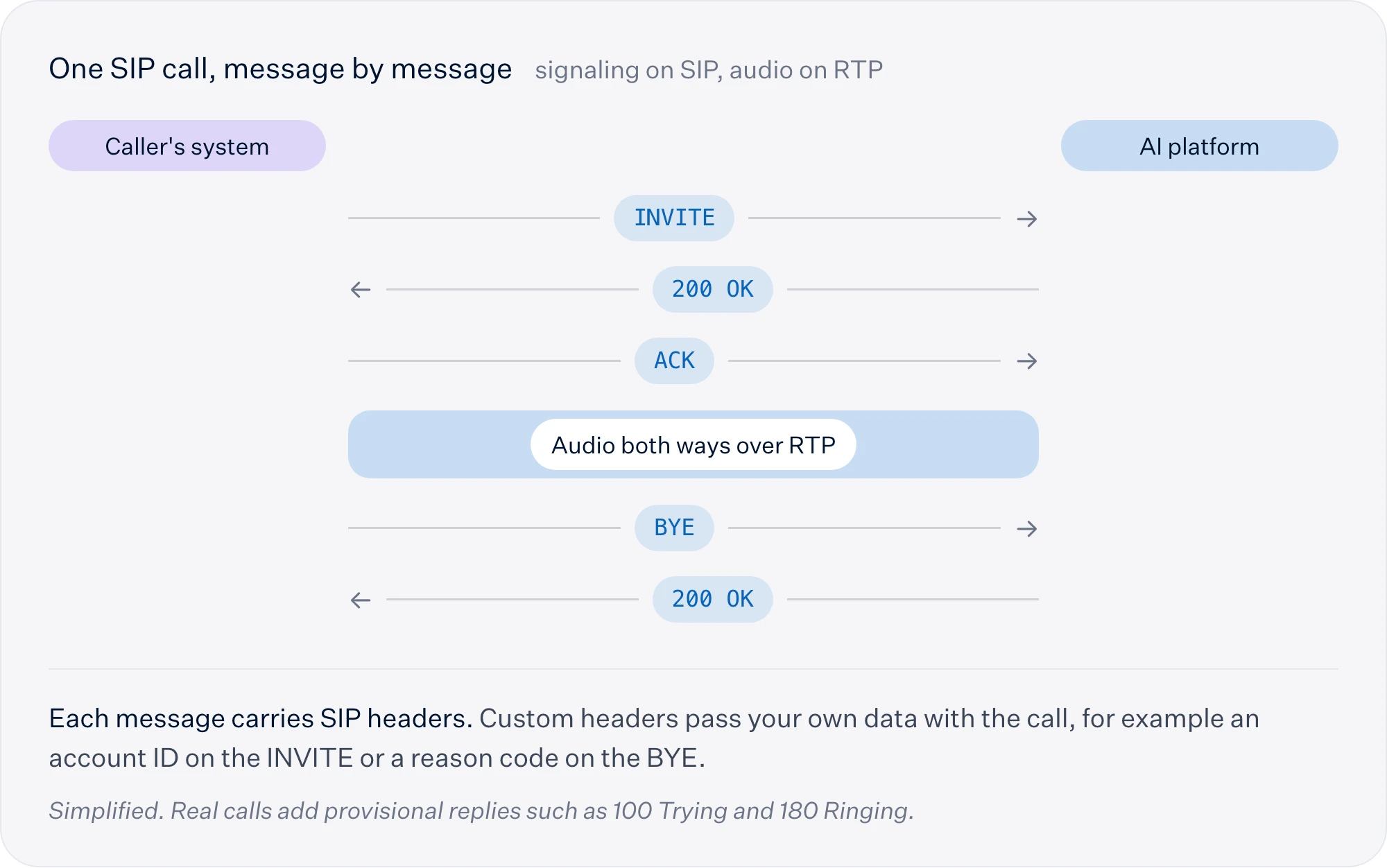
A SIP call is an exchange of messages:
| Message | Meaning |
|---|---|
| INVITE | "I want to start a call" |
| 200 OK | "Accepted" |
| ACK | "Confirmed, the call is up" |
| BYE | "The call is over" |
Each message carries SIP headers, fields that hold information about the call, such as who is calling and who is being called. Systems can add custom headers to pass their own data along with a call, for example an account or campaign identifier.
How do AI voice agents use SIP?
SIP is how a phone call reaches an AI voice agent from a carrier or a company phone system. A business connects its phone system to the AI platform with a SIP trunk, and each call arrives as a SIP INVITE. Custom SIP headers let the business send context with the call, and receive context back on a transfer or at the end of the call.
Retell AI supports custom SIP headers, including on BYE messages. See the SIP headers documentation.
What is the difference between SIP and WebRTC?
SIP is signaling for phone systems. WebRTC is a set of standards for live audio and video in browsers and apps, and it does not define one signaling protocol. Phone calls typically arrive over SIP. Browser calls use WebRTC. A voice AI gateway handles both.
Frequently asked questions
Is SIP the same as VoIP?
No. VoIP means voice calls carried over the internet. SIP is the most common protocol used to set those calls up.
Does SIP carry the audio?
No. SIP carries signaling. Audio usually travels over RTP, on a path the SIP messages negotiate.
What is a SIP BYE?
The SIP message that signals the end of a call.
Related terms and reading
Security & compliance for regulated deployments
How Retell handles audits, data retention and access control.
Further Reading
Related terms
Table of contents