A SIP trunk is a direct SIP connection between two phone systems. It replaces physical phone lines with a connection over the internet, and it can carry many calls at once.
How is a SIP trunk used with AI voice agents?
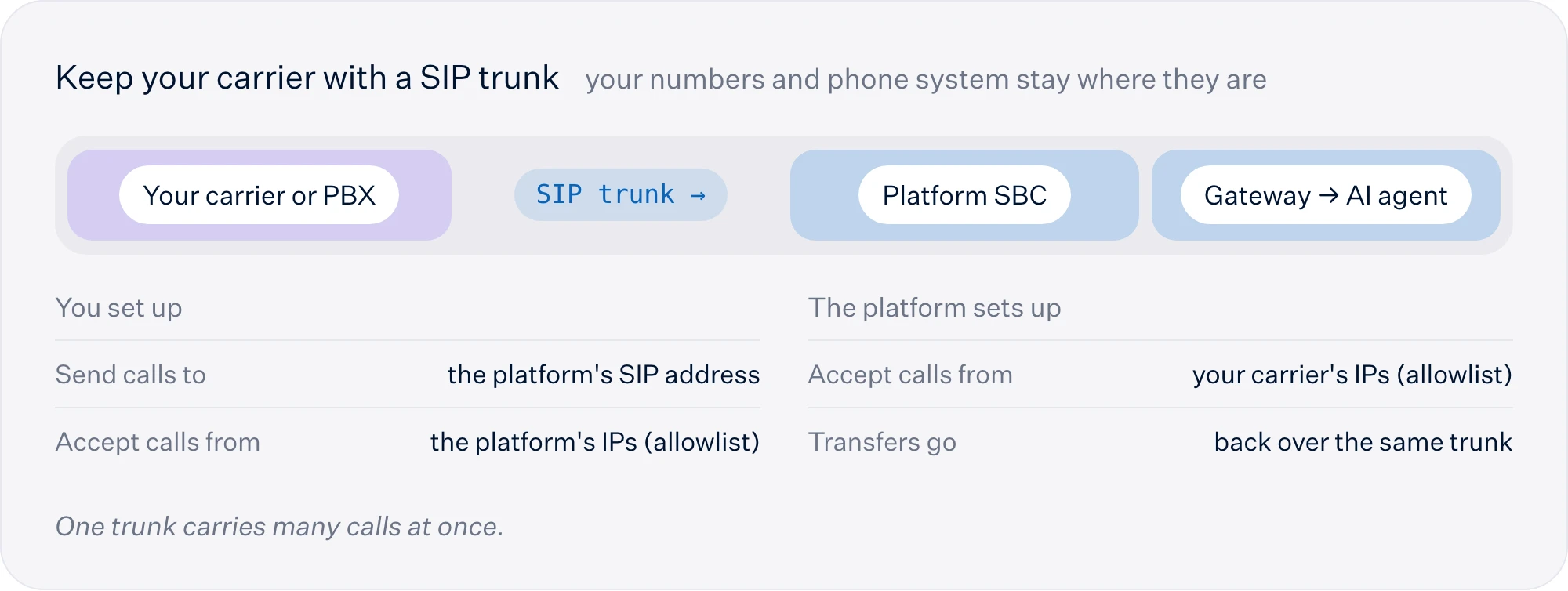
A SIP trunk lets a business keep its carrier, its phone numbers, and its phone system, and still send calls to AI voice agents. The business points a trunk from its carrier or phone system at the AI platform's address. Calls then flow to the AI agent, and transfers flow back to human agents the same way.
Setup usually involves two things on each side: the address to send calls to, and an allowlist, the list of addresses a phone system accepts calls from.
Retell AI supports this through custom telephony. See the custom telephony guide and our guide on keeping your existing phone number with a SIP connection.
SIP trunk vs phone number from the platform
| Your own SIP trunk | Number from the AI platform | |
|---|---|---|
| Carrier relationship | You keep yours | The platform's |
| Existing numbers | Stay where they are | Bought new or ported |
| Setup | Addresses and allowlists on both sides | A few clicks |
| Best for | Contact centers with existing telephony | New lines and fast starts |
For a longer explanation of the technology, see AI in SIP calling and telephony.
Frequently asked questions
What is the difference between SIP and a SIP trunk?
SIP is the protocol. A SIP trunk is a connection between two systems that uses it.
Do I need a SIP trunk to use AI voice agents?
No. You can use a number supplied by the platform. A SIP trunk is for keeping your existing carrier, numbers, or phone system.
What does bring your own carrier (BYOC) mean?
It means connecting your existing carrier to a platform over a SIP trunk, so you keep your carrier contract and numbers.
Related terms and reading
Security & compliance for regulated deployments
How Retell handles audits, data retention and access control.
Further Reading
Related terms
Table of contents